
Identify the animal
Opossum vs Rat: How to Tell Them Apart, Especially a Young Opossum
A gray animal with a long, bare tail under the deck or by the trash cans looks like a rat at first glance, especially at night. It may be an opossum, and a young opossum can be close to rat size. The two need completely different handling: rats are trapped and kept out; opossums are wildlife with their own rules. Here is how to tell them apart by size, face, ears, tail and feet, what each leaves behind, and what to do about each.
Short answer
- Size first. An adult opossum is about the size of a house cat and usually weighs 4 to 7 pounds (UC IPM). An adult Norway rat weighs 7 to 18 ounces, a roof rat 5 to 10 ounces.
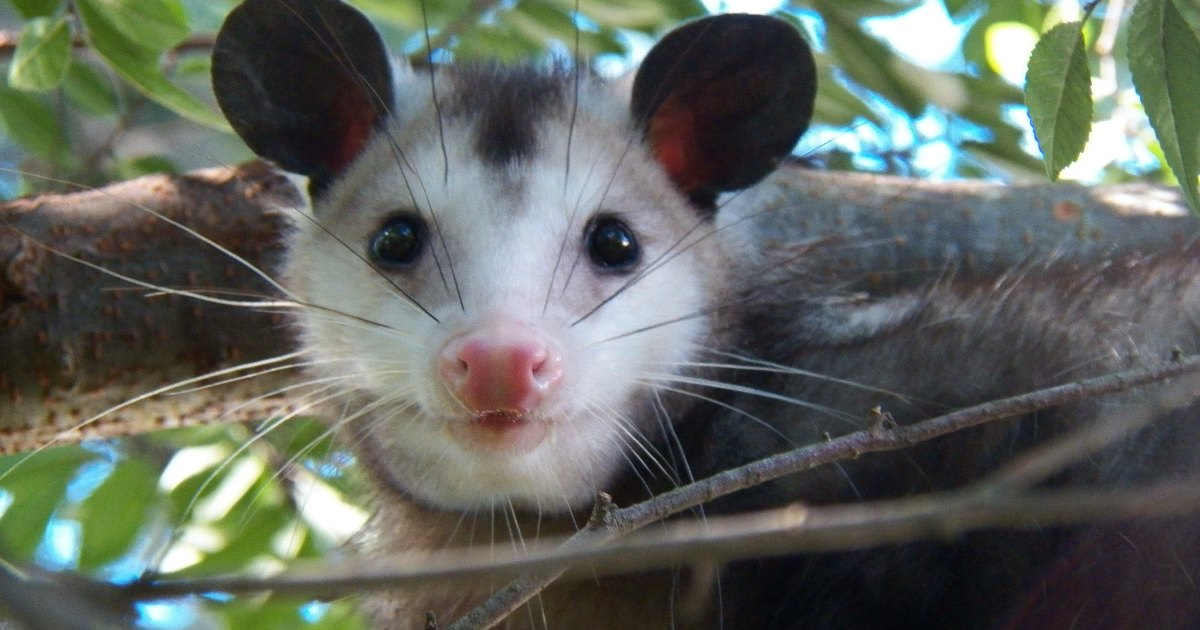
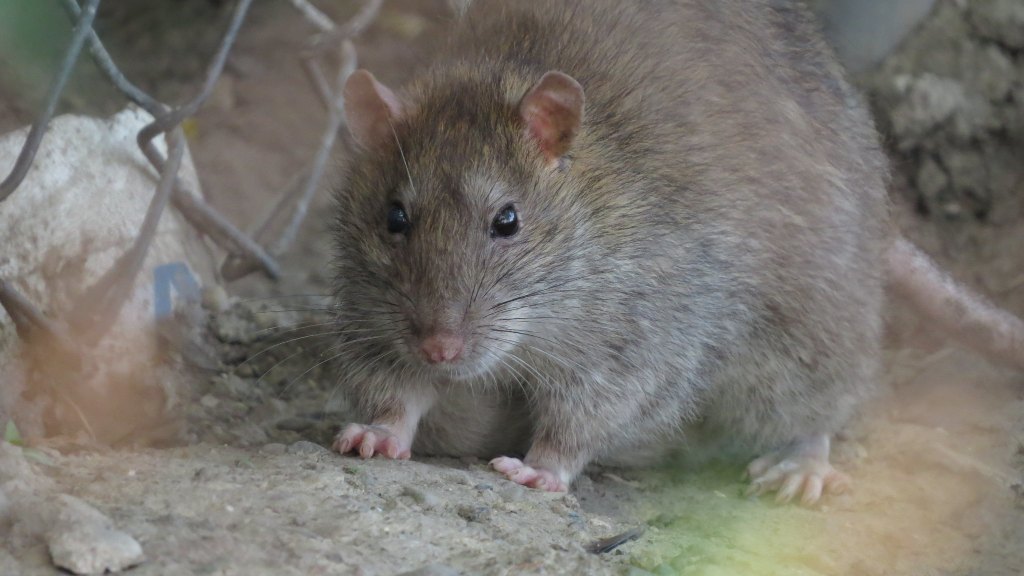
- Then the face. An opossum has a long, pointed, whitish face, dark, rounded, hairless ears and a mouthful of sharp teeth. A rat has a gray-brown head, smaller furred ears and two long front teeth.
- Feet tell it at once: opossums have hand-like feet with five spread toes and an opposable, clawless thumb on each hind foot (UC IPM).
- Behavior: a cornered opossum hisses, shows its teeth or plays dead. A rat runs.
- Different fixes. Rats: snap traps and sealing gaps. Opossums: remove food, block openings once the animal has left, and check local rules before trapping. Never use rat poison for an opossum.
Opossum vs rat at a glance
| Feature | Opossum | Rat |
|---|---|---|
| What it is | A marsupial, the only one native to North America; carries its young in a pouch | A rodent (Norway rat or roof rat) |
| Size | House-cat size; about 2 to 3 feet long with the tail; most weigh 4 to 7 pounds, up to about 14 to 15 | Norway rat 7 to 18 ounces; roof rat 5 to 10 ounces |
| Face | Long, pointed, often white or pale; 50 teeth with prominent fangs | Gray-brown; blunt muzzle (Norway) or pointed muzzle (roof rat); two long front teeth |
| Ears | Rounded, hairless, dark | Furred; roof rat ears reach the eyes when folded, Norway rat ears do not |
| Tail | Hairless and rat-like, slightly under half its total length, and prehensile: it can grip | Scaly and mostly hairless; cannot grip |
| Feet | Hand-like, five widely spread toes; clawless opposable thumb on the hind feet | Small, clawed toes; no thumb-like toe |
| When threatened | Hisses, growls, shows teeth, gives off a smelly musk, or “plays possum” | Runs for cover |
| Gets in by | Using openings that already exist; not destructive or strong | Gnawing and squeezing through small gaps; young rats fit under a door with a 1/2-inch gap |
Sources: UC IPM Pest Notes on opossums and rats, ICWDM.
The confusing one: a young opossum
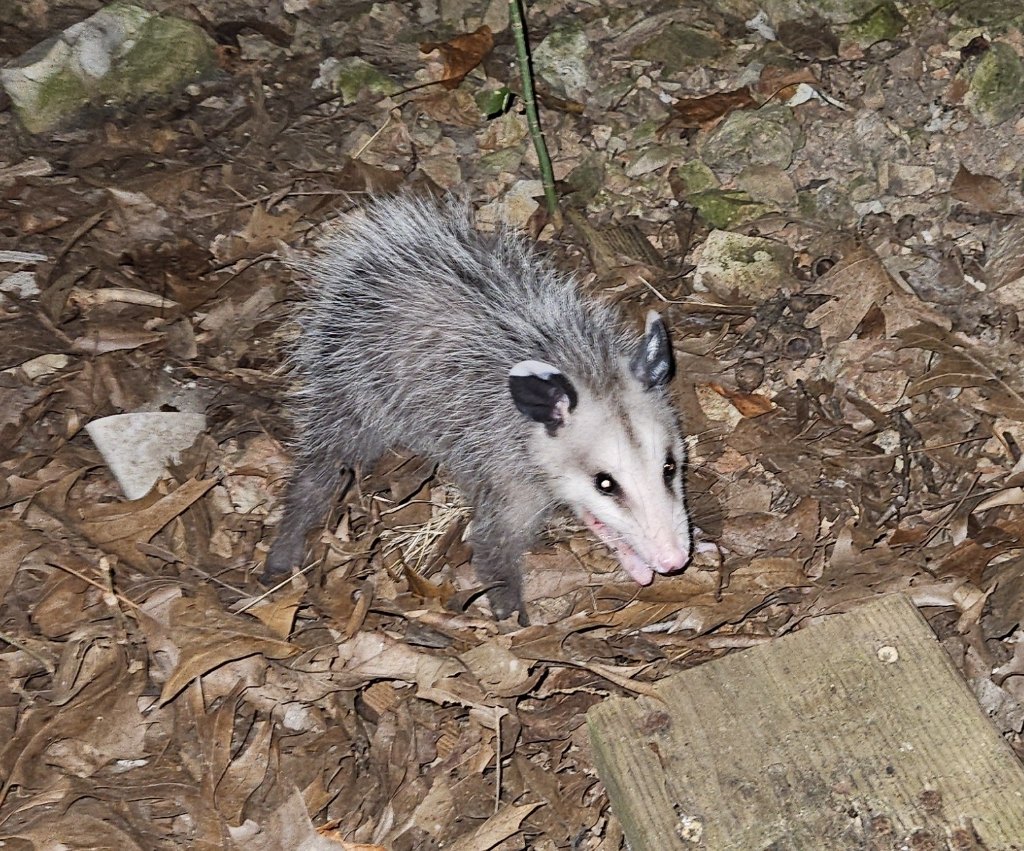
Most mix-ups happen with young opossums. UC IPM says opossum young leave the pouch for short periods at about 11 weeks and are weaned at about 14 weeks, when they are about 9 inches long without the tail. With a bare tail added, that is in the range of an adult rat. In California, UC IPM says the second litter of the year is ready to leave the mother by fall.
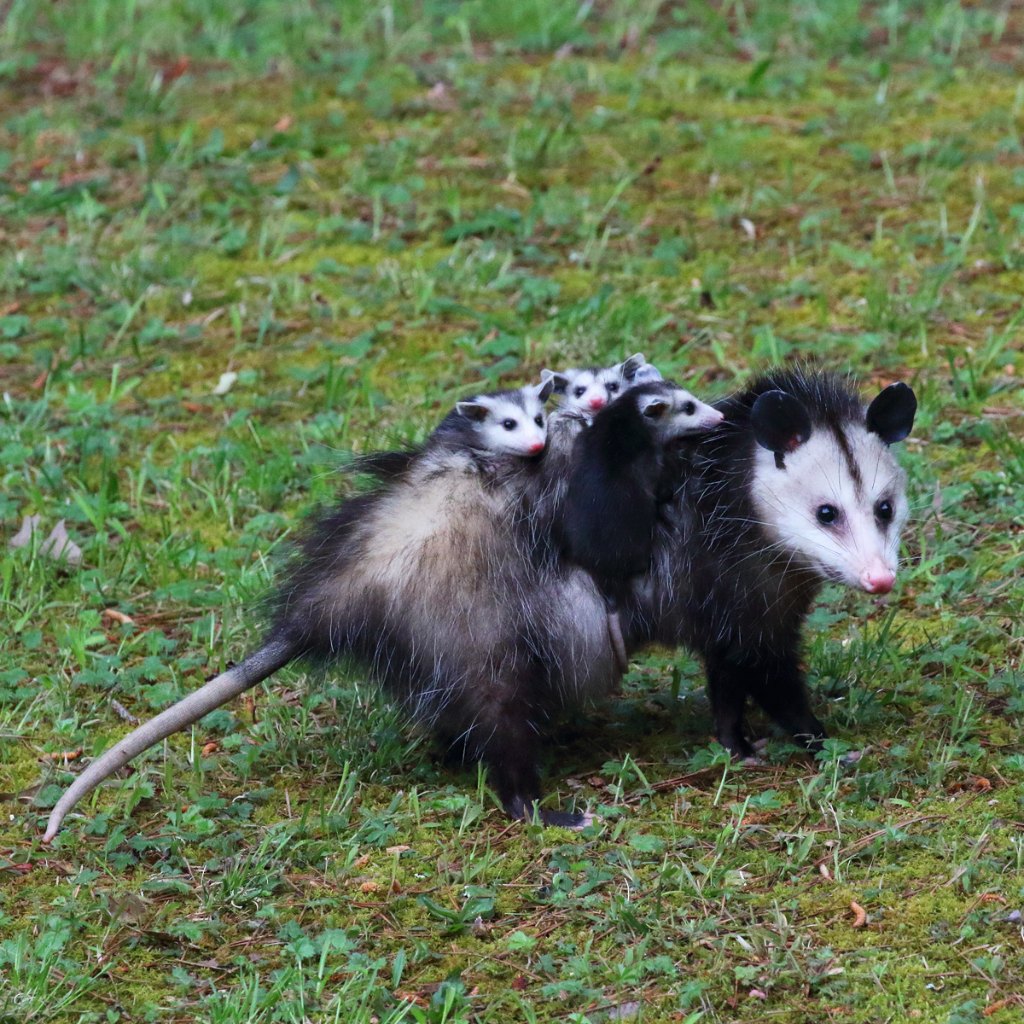
Look past the size. Even a small opossum has the pale, pointed face, the dark, naked, rounded ears and the hand-like feet with a thumb on the hind foot. A rat of that size has a gray-brown face, smaller furred ears and ordinary clawed toes. Young opossums that are too big to fit in the pouch also ride on the mother’s back (UC IPM).
What each one leaves behind
- Droppings. Rat droppings are capsule-shaped, roughly 1/2 inch for roof rats and up to about 3/4 inch for Norway rats, and turn up along routes and near food; see mouse droppings vs rat droppings. UC IPM says opossum droppings are hard to describe because the animal eats so many kinds of food, so there is no typical size or shape; they are usually in leafy, sheltered spots and sometimes on paths and patios.
- Gnawing. Rats gnaw wires, wood and containers (UC IPM). ICWDM says opossums are not destructive and use openings that already exist, so fresh gnaw marks point to rodents; see rodent gnaw marks.
- Burrows and nests. Norway rats dig burrows along foundations and under trash and woodpiles (UC IPM); see rat nest. Opossums do not dig their own; they den in other animals’ burrows, brush piles, and under decks, porches and sheds, in an untidy pile of sticks and whatever is at hand (UC IPM).
- Food that goes missing. Both raid pet food, garbage, compost and fallen fruit. Disappearing pet food left out overnight is often the first clue to an opossum (UC IPM).
- Tracks. ICWDM says a correctly identified hind-foot track is definitive for an opossum; UC IPM points to the unusual arrangement of the hind toes, with the thumb-like toe set apart.
Which one is the bigger problem?
For a house, usually the rat. Rats live in and under buildings, breed fast, gnaw, and contaminate food; see how to get rid of rats. An opossum is more often a passing visitor or a tenant under the deck.
Opossums still matter. UC IPM lists leptospirosis, tularemia, spotted fever and toxoplasmosis among diseases they carry, and says they carry cat and dog fleas, which in Southern California is a concern for flea-borne typhus. ICWDM says opossums are more resistant to rabies than other mammals but not immune, that they prey on chickens, ducks and eggs, and that they can enter homes through large gaps around pipes under sinks. Pets that tangle with an opossum can be badly bitten (UC IPM).
Opossums also eat mice and rats, along with insects, snails, fruit and carrion (UC IPM). That does not make them rat control, but it is one reason not to treat every opossum as a pest.
What to do
If it is a rat
- Remove food and shelter: pet food, bird seed, fallen fruit, open garbage and clutter.
- Trap with rat-size snap traps along walls and runways; see best rat traps.
- Seal openings: UC IPM says to seal holes larger than 1/4 inch to keep out both rats and mice; see how to seal entry points.
- Which rat it is matters for trap placement: roof rat vs Norway rat.
If it is an opossum
- Take away what draws it: bring pet food in by nightfall, put tight lids on garbage cans, keep food out of compost, pick up fallen fruit, and stack firewood tightly (UC IPM). Secure chickens at night; see rats in the chicken coop for coop-proofing that also helps here.
- Block the den, but only when it is empty. UC IPM suggests a smooth layer of flour about 1/8 inch thick in front of the opening; footprints leading out after dark mean the animal has left. Then close the opening with 1/4-inch hardware cloth, buried up to 6 inches. That mesh also keeps out rats and house mice.
- Do not use poison. UC IPM says there are no registered poisons for opossums and that rodent baits must never be used against them. Mothballs and ammonia are neither legal nor recommended as opossum repellents.
- Check the rules before trapping. Opossums are easy to catch in a live trap, but moving them is illegal in some states without a permit; in California, for example, relocating wildlife requires written permission (UC IPM). Your state wildlife agency or a licensed wildlife control operator can tell you what is allowed.
- An opossum that will not move may be playing dead. ICWDM advises keeping people and pets away and giving it time to leave; if it has not moved within 24 hours, assume it is sick or injured and call for help.
Questions people ask
Is an opossum a rat?
No. An opossum is a marsupial, an animal that carries its young in a pouch, and the only marsupial native to North America (UC IPM). Rats are rodents.
Can an opossum get into my house like a rat?
Into some parts of it. ICWDM says opossums climb into insulation under trailer houses, move through mobile home ductwork and come in through large gaps around pipes under sinks. UC IPM says they may use pet doors. Unlike rats, they do not chew their way in.
Do opossums keep rats away?
Not reliably. They do eat mice and rats (UC IPM), but they also eat the pet food, garbage and fruit that feed rats. No source we found treats opossums as a way to control rats.
Are opossums dangerous?
They are not aggressive unless cornered, when they may hiss, growl and show their teeth (UC IPM). Do not handle one, keep pets away, and see a doctor after any bite.
Do opossums carry rabies?
Rarely. ICWDM says they are more resistant to rabies than other mammals but not immune. Treat any bite or scratch from a wild animal seriously.
In short
An opossum is cat-sized, with a pale pointed face, dark naked ears, a gripping tail and hand-like feet with a thumb; a rat is a fraction of that weight, with a gray-brown face, furred ears and ordinary clawed toes. Young opossums can be rat-sized, so look at the face, ears and feet, not the size. Rats get traps and sealed gaps. Opossums get their food taken away and their den closed once they have left; check local rules before trapping, and never use rat poison on them.
Sources and verification
- UC IPM — Pest Notes: Opossum (Baldwin, Publication 74123, October 2015)Marsupial; house-cat size, 2 to 3 feet, 4 to 7 pounds typical; pale pointed face, hairless rounded ears, prehensile tail; hand-like feet and opposable hind thumb; dens and nests; diet including mice and rats; young weaned at about 14 weeks, about 9 inches without tail; defensive behavior and playing possum; diseases and fleas; detection and droppings; habitat changes; flour tracking patch; 1/4-inch hardware cloth; live trapping and relocation rules; no registered toxicants; rodent baits never used.
- ICWDM — Opossums and Opossum Damage IdentificationUp to 40 inches; rat-like hairless tail slightly under half the length; 4 to 12 pounds average; 50 teeth; hind-foot track definitive; enter existing openings, not destructive; trailer houses, ductwork, gaps under sinks; prey on poultry and eggs; resistant to rabies but not immune; playing dead and the 24-hour rule.
- UC IPM — Pest Notes: Rats (June 2025)Roof rat and Norway rat weight, ears, muzzle and scaly tails; burrows; gnawing; young rats under a 1/2-inch door gap; sealing holes larger than 1/4 inch; snap traps and placement.