
Identify the animal
Gopher vs Mole: How to Tell Their Mounds Apart and What to Do About a Gopher
Fresh piles of dirt in the lawn mean something is digging underneath, and in much of the western and central United States it may be a pocket gopher rather than a mole. The two are easy to tell apart once you look at the shape of the mound and where the hole is, and the difference matters: a gopher is a rodent that eats roots and chews irrigation lines, a mole is an insect-eater, and the traps for one rarely work on the other. Here is how to read the mounds, where gophers live, what damage they do and how to deal with one.
Short answer
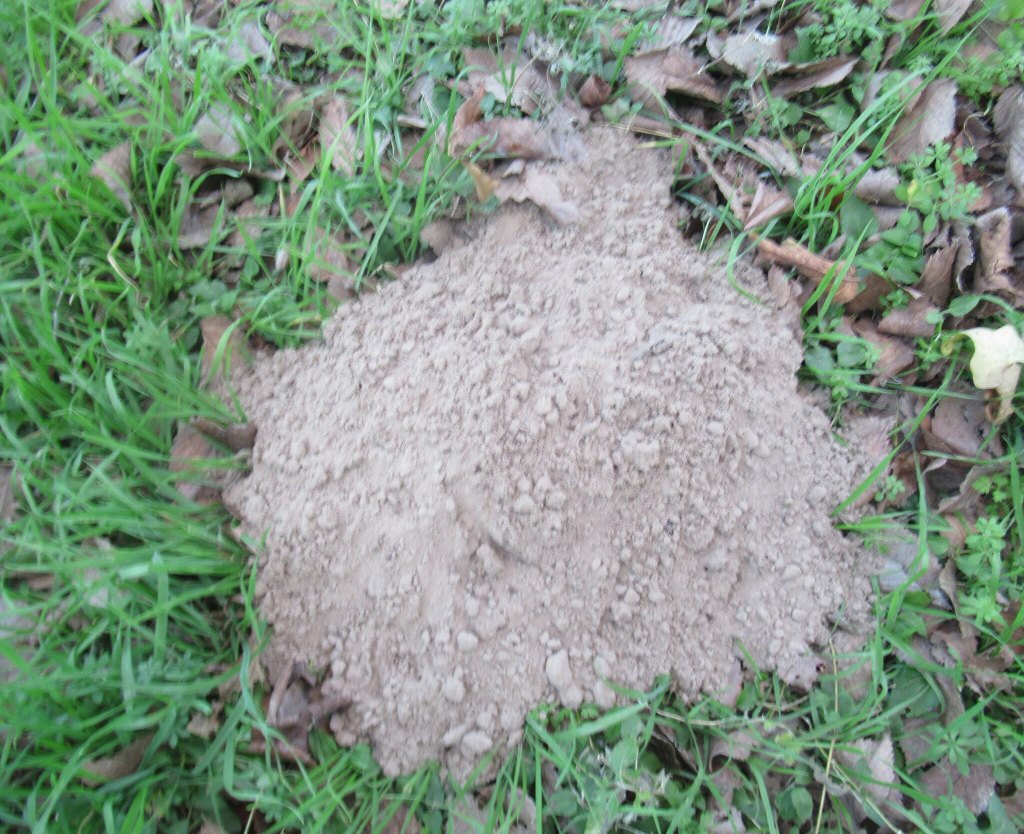
- Look at the mound from above. UC IPM says gopher mounds are crescent- or horseshoe-shaped, with a plugged hole off to one side. Mole mounds are more circular, volcano-shaped, with the plug in the middle.
- Look for ridges. Moles leave raised ridges just under the surface; gophers do not (UC IPM).
- Look at the damage. Plants pulled down from below, chewed roots, bulbs and drip lines point to a gopher. Moles eat worms and insects.
- Check where you live. Pocket gophers live in the West, the central plains and parts of Florida, Georgia and Alabama (ICWDM). In the Northeast and Mid-Atlantic, mounds in the lawn are moles.
- For a gopher: gopher traps set in the main tunnel and wire mesh under beds and around roots. Repellents, plants, vibrating stakes, ultrasonic devices and smoke cartridges do not work (UC IPM).
Gopher vs mole at a glance
| Feature | Pocket gopher | Mole |
|---|---|---|
| What it is | A burrowing rodent with fur-lined cheek pouches | An insect-eater, related to shrews; not a rodent |
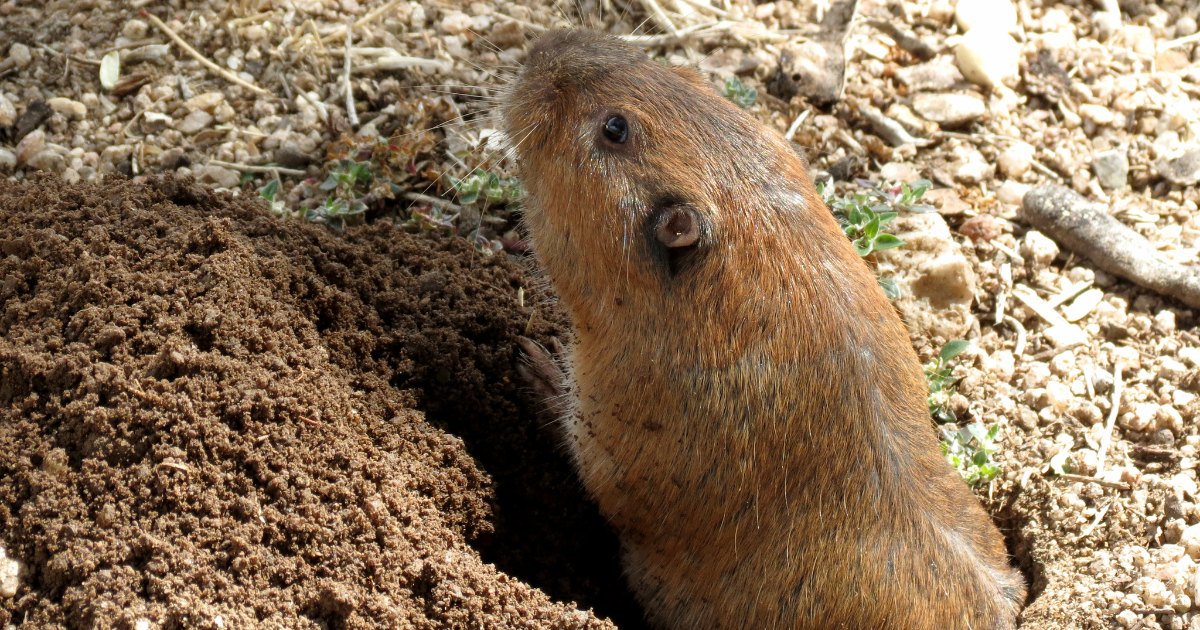
| Looks | About 5 to 14 inches long; small eyes and ears, short tail, big front claws, four large front teeth | Eyes and ears hidden in velvety fur, pointed hairless snout, huge spade-like front feet |
| Eats | Roots and other plant parts; sometimes plants at the edge of a hole | Mainly earthworms, grubs and other insects |
| Mound shape | Crescent or horseshoe, fine soil, plugged hole off to one side | Round, volcano-shaped, plug in the middle, soil often in clods |
| Surface ridges | No | Yes, raised feeding tunnels that sink underfoot |
| Other signs | “Feed holes” with no mound and a ring of clipped plants; earthen cores on the ground after snow melts | Lines of mounds over a connecting tunnel |
| Damage | Eats roots and bulbs, pulls plants into the tunnel, chews drip lines and plastic irrigation pipe | Tunneling lifts plants and dries roots; unsightly lawn |
| Trap | Gopher traps (pincer or box) in the main tunnel | Mole traps (harpoon, scissor-jaw, choker); see vole vs mole |
Sources: UC IPM Pest Notes on pocket gophers and moles; ICWDM. Mole details are in our vole vs mole guide.
Reading the mound
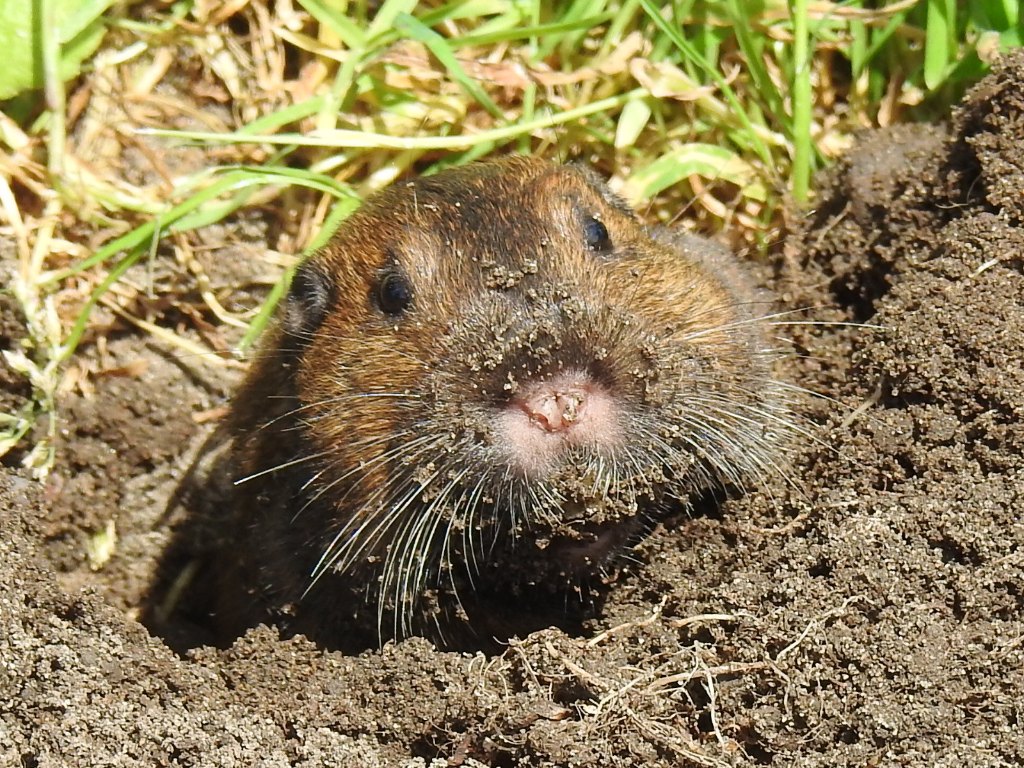
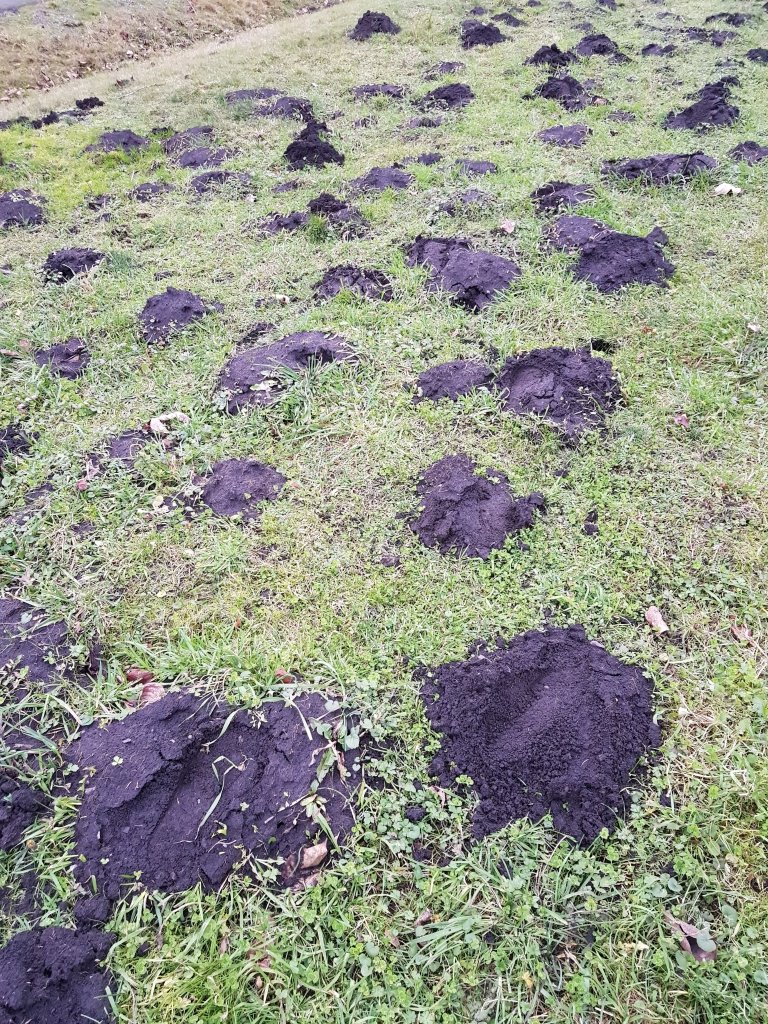
The mound is the best sign, because you will rarely see the animal. UC IPM says gophers stay underground almost all the time, push loose soil to the surface as they dig, and can make several mounds in a day. Viewed from above, a gopher mound is crescent- or horseshoe-shaped, and the hole, off to one side, is usually plugged with soil.
A mole mound is more circular and volcano-shaped in profile, with a plug in the middle that may not be distinct (UC IPM). Moles also leave raised ridges where they feed just under the surface, which gophers do not. If you see both mounds and a ridge running between them, think mole.
Two more gopher signs from UC IPM: feed holes, which are open burrow openings with no dirt mound and a circle of clipped plants around them, and, in snowy places, long earthen cores left lying on the surface after the snow melts, where the gopher packed soil into tunnels it dug through the snow.
Timing. In lawns and gardens that are watered, gophers can dig at any time of year; where there is no irrigation, mound building peaks in winter and spring when the soil is moist (UC IPM). Gophers do not hibernate and can be active day or night.
Do you even have gophers where you live?
Pocket gophers live only in the Americas. ICWDM lists 14 species in the United States: plains pocket gophers in the central plains from Canada to Texas and Louisiana, Botta’s pocket gophers across most of the southern half of the West, northern pocket gophers in much of the Northwest, a few species in Texas, New Mexico and Arizona, and the southeastern pocket gopher in northern and central Florida, southern Georgia and southeastern Alabama.
Going by those ranges, if you live in New England or the Mid-Atlantic, those mounds are almost certainly moles. ICWDM also notes that local names cause confusion: in the Southeast, pocket gophers are called “salamanders” and “gopher” means a tortoise. If the holes in your yard are open and have no mound, UC IPM says to think of ground squirrels instead. For holes that may belong to a rat, see rat holes in the yard.
What a gopher damages
- Plants from below. UC IPM says a single gopher moving along a garden row can do considerable damage in a very short time by pulling whole plants down into its tunnel. Gophers eat roots and fleshy plant parts they hit while digging, and girdle trunks and large roots underground.
- Irrigation. Gophers gnaw flexible plastic water lines and irrigation systems, especially drip lines, and their tunnels can carry irrigation water away and cause erosion (UC IPM).
- Lawns. Mounds get in the way of mowing and spoil the look of turf (UC IPM).
Moles do a different kind of damage: they tunnel through lawns looking for worms and grubs, and chewed roots and bulbs along a mole tunnel are usually the work of rodents using it. That story, and how to deal with moles, is in vole vs mole.
How to deal with a gopher
UC IPM’s advice is to act early, because one or two gophers are much easier to deal with than a population, and to combine trapping with underground fencing.
1. Find the main tunnel
Traps work best in the main burrow, not in the short side tunnels that lead to mounds. UC IPM says to start from a fresh mound of dark, moist soil and probe about 4 to 12 inches from the plug side with a gopher probe or a long screwdriver; the main burrow is usually 4 to 12 inches deep, and the probe drops about 2 inches when you hit it.
2. Set gopher traps in pairs
- Trap types. Two-pronged pincer traps and choker-style box traps are the common kinds (UC IPM). Gopher traps and mole traps are different; very few designs work on both.
- How to set them. Open the tunnel and set a trap facing each direction, since you will not know which side the gopher is on. Wire the traps to stakes so you can pull them out and scavengers cannot carry them off (UC IPM).
- No bait needed. UC IPM says UC Davis researchers saw no benefit from bait behind the trap, and human scent did not affect catches.
- Cover or not. Covering the opening to block light is optional with pincer traps but recommended with box traps, and always cover sets where children or pets go (UC IPM).
- Move them if nothing happens. If you have caught nothing within 1 to 2 days, reset the traps somewhere else; keep trapping until no new mounds appear (UC IPM).
3. Fence what matters
UC IPM suggests wire mesh under raised beds before you plant, wire baskets around the roots of new shrubs and trees with room for the roots to grow, and, for valuable plantings, hardware cloth or 1/2- to 3/4-inch mesh buried at least 2 feet deep with a 6-inch outward bend and about a foot above ground. Six to 8 inches of coarse gravel around buried sprinkler lines or cables also deters gophers.
4. Baits, with care
Toxic baits for gophers exist, but UC IPM warns they can pose threats to wildlife, pets and children, especially in backyards. If you use them, they must go only into the main tunnel, never on the surface, following the label, and not in gardens with root vegetables. Rules on which baits homeowners can buy differ by state. If you have pets, read mouse poison around pets first.
What does not work
- Repellents and plants. UC IPM says no repellent sold has protected plants from gophers, and gopher purge, castor bean and garlic have not been shown to repel them.
- Vibrating stakes, ultrasonic devices and pinwheels. Not effective in research trials (UC IPM). More on sound devices is in do ultrasonic pest repellers work?
- Smoke and gas cartridges. Gophers seal off their tunnels too quickly (UC IPM).
- Chewing gum or laxatives in the burrow (UC IPM).
- Waiting for owls. Barn owls do eat gophers, but UC IPM says they hunt over large areas and are unreliable for a single yard.
Once the gophers are gone, flatten the old mounds and keep checking, because gophers move in from neighboring land (UC IPM).
Will a gopher or mole come into the house?
Neither is a house pest. Gophers spend almost all their time underground (UC IPM), and we found no source describing gophers or moles living indoors. A small animal in the kitchen, droppings in a cabinet or scratching in a wall almost certainly means mice or rats; start with do I have mice or rats?
Questions people ask
Is a gopher a rodent?
Yes. Pocket gophers are burrowing rodents named for the fur-lined pouches on their cheeks (UC IPM). Moles are not rodents.
Can one gopher make that many mounds?
Yes. UC IPM says one gopher can make several mounds a day, and a single gopher usually has the burrow system to itself, which can cover 200 to 2,000 square feet.
Can I flood a gopher out?
Normal watering does not bother them. UC IPM says flooding can sometimes push a gopher out of its burrow, but trapping is more effective.
Do mole traps work on gophers?
Rarely. UC IPM says the best mole traps differ from gopher traps and very few work for both, so identify the animal first.
What about voles?
Voles leave narrow paths on the surface and open holes, not mounds. See vole vs mole and vole vs mouse.
In short
A crescent-shaped mound with the plugged hole to one side, no ridges, and roots or drip lines chewed: that is a pocket gopher, a rodent of the West, the central plains and parts of the Deep South. A round, volcano-shaped mound with the plug in the middle and raised ridges across the lawn: a mole. Deal with a gopher early, with gopher traps set in pairs in the main tunnel and wire mesh around what you want to protect, and skip repellents, sound devices and smoke bombs.
Sources and verification
- UC IPM — Pest Notes: Pocket Gophers (June 2025)Identification; crescent mounds with side plug versus round mole mounds with central plug; mole ridges; several mounds a day; feed holes; earthen cores after snow; burrow size and depth; year-round activity; damage to plants, roots and irrigation lines; early detection; underground fencing, baskets and gravel; probing for the main burrow; pincer and box traps, pairs, stakes, covering, no bait benefit, moving traps after 1 to 2 days; toxic baits only in the main tunnel; fumigation cartridges ineffective; repellents, plants, frightening devices, gum and laxatives ineffective; owls unreliable; flooding; follow-up monitoring.
- ICWDM — Pocket GophersFur-lined cheek pouches; 14 U.S. species; 5 to 14 inches long; ranges of plains, Botta’s, northern, southeastern and other pocket gophers; local names (“salamander,” “gopher” tortoise).
- UC IPM — Pest Notes: Moles (November 2024)Moles are insect-eaters, not rodents; mound shape and surface ridges; mole traps differ from gopher traps.