
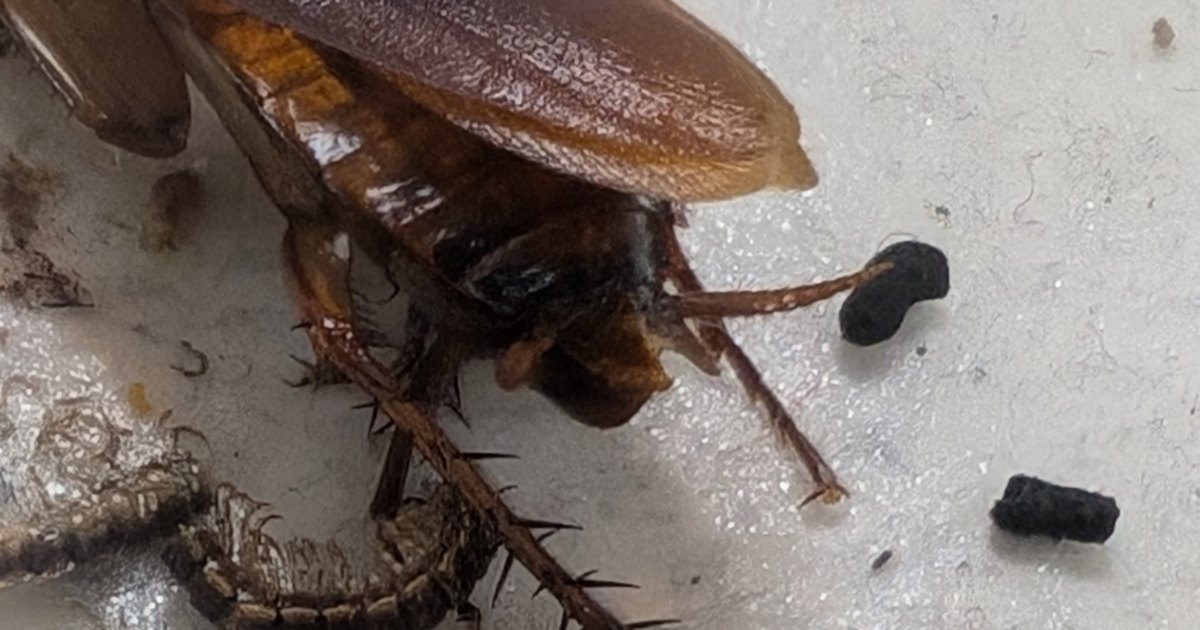
Signs and droppings
Mouse Droppings vs Cockroach Droppings: How to Tell Them Apart
Small dark droppings in a kitchen drawer could be from a mouse or from cockroaches, and the two overlap in size. Shape settles it: under a magnifying glass, cockroach droppings show ridges along their length and squared-off ends, while mouse droppings are smooth and usually pointed. Small cockroaches often leave pepper-like specks or smears rather than pellets at all. Here is how to tell them apart, where each turns up, and why the cleanup is different.
Before you clean anything: do not sweep or vacuum until you know which one you have. For rodent droppings, CDC says to air the room out for 30 minutes, then wet the droppings with disinfectant before wiping them up, because sweeping and vacuuming put particles into the air. That wet method is also a safe choice for cockroach droppings, so if you are unsure, use it. The full procedure is in how to clean mouse droppings.
The short answer
Size alone will not settle it. The Internet Center for Wildlife Damage Management (ICWDM) says house mouse droppings average about 1/4 inch long, and cockroach droppings are usually 1/8 to 1/4 inch long. They overlap. The difference is in the shape and surface: ICWDM says cockroach droppings, under a magnifying glass, show distinct ridges along their length and squared-off ends.
| Mouse | Cockroach | |
|---|---|---|
| Size | About 1/4 inch on average (ICWDM), roughly the size of a grain of rice (Penn State Extension) | Usually 1/8 to 1/4 inch when they form pellets (ICWDM); small species often leave specks smaller than that |
| Shape | Small pellet, usually pointed at the ends | Ridges along the length and squared-off ends under a magnifying glass (ICWDM); also pepper-like specks (University of Kentucky) or dark spots and smears (UC IPM) |
| Pattern | Scattered along runways, in feeding areas and near shelter (ICWDM) | Clusters of tiny brown to black dots in tight, hidden spots near food (NC State Extension) |
| Typical places | Along walls and baseboards, in drawers and cabinets, wherever the mouse travels | Under kitchen counters, behind drawers, at the back of cabinets (UC IPM); under sinks, around the refrigerator and dishwasher (NC State Extension) |
| Other signs with it | Gnaw marks, urine smell, nests of shredded material | Shed skins, egg cases, live or dead cockroaches, an odor in heavy infestations (NC State Extension, UC IPM) |
| Cleanup | No sweeping or vacuuming; ventilate, wet with disinfectant, wipe up (CDC) | Vacuuming with a HEPA or triple-filter vacuum (UC IPM); scraping with a mask and gloves (NC State Extension) |
If you are comparing mouse droppings with rat droppings instead, the size difference is much larger. See mouse droppings vs rat droppings, which also shows droppings at actual size.
What cockroach droppings look like
Cockroach droppings come in two forms, and which one you see depends mostly on how big the cockroaches are.
- Specks and smears. The German cockroach, the common indoor species in kitchens, is only about 1/2 inch long as an adult (University of Kentucky, Mississippi State University Extension). Its droppings are tiny. The University of Kentucky describes them as pepper-like specks; NC State Extension describes clusters of tiny dots, brown to black, in tight hidden areas around where food is stored and prepared. UC IPM calls the same evidence dark spots or smears. These specks are not pellets you can pick up one by one, and that alone rules out mice.
- Small pellets. When cockroach droppings are large enough to look like pellets, they are the ones that get confused with mouse droppings. That is where the ICWDM test applies: look for the ridges running along the length and the ends that look cut off rather than pointed.
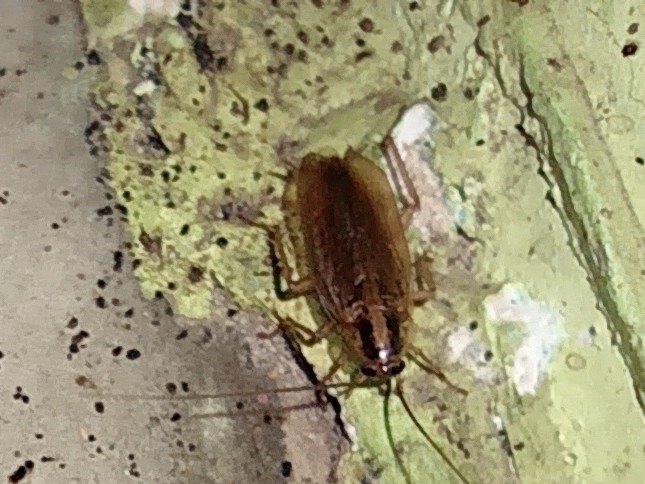
Two habits help as well. The University of Kentucky notes that cockroaches gather in particular spots, drawn by odors in their own droppings, so their droppings tend to pile up in a few places rather than being spread along a route. NC State Extension adds that these droppings stay on surfaces for a long time, so a patch of specks does not tell you the cockroaches are still there.
What mouse droppings look like
House mouse droppings average about 1/4 inch (ICWDM), and Penn State Extension compares them to a grain of rice. They are smooth, and usually pointed at one or both ends. ICWDM says they are found along runways, in feeding areas and near where the mouse shelters. In practice that means a scattered trail along a wall, the back of a drawer or the floor of a cabinet, rather than one dense patch.
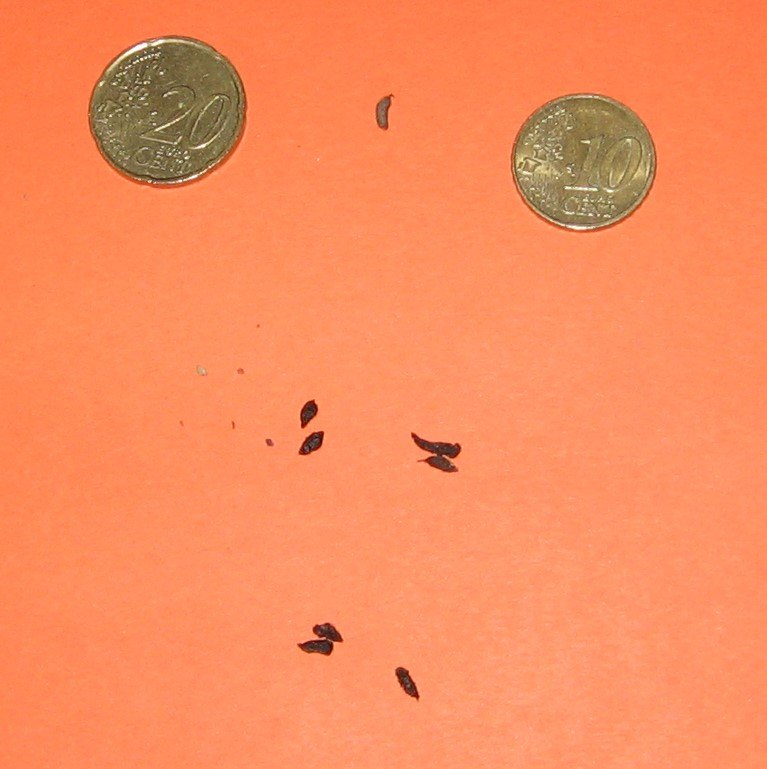
Mouse droppings change with age, which can help you judge whether the mice are still around. Fresh vs old mouse droppings explains what to look for and the cleaning test that tells you more than appearance alone.
How to check what you have
- Look closely, without touching. Use a magnifying glass or your phone’s camera zoomed in. Ridges along the length and squared-off ends point to cockroaches (ICWDM). Smooth pellets with pointed ends point to a mouse.
- Look at the pattern. Dense clusters of specks or smears in a crack, a hinge or the corner of a cabinet point to cockroaches. Separate pellets scattered along an edge point to a mouse.
- Look for the other signs. For cockroaches: shed skins, egg cases, live or dead cockroaches (UC IPM, NC State Extension). The egg cases are small capsules: the German cockroach’s is light beige and about 1/4 inch long, and the female carries it until shortly before it hatches; the American cockroach’s is about 3/8 inch, brown when laid and black a day or two later (UC IPM). For mice: gnaw marks, a urine smell, and nests of shredded paper or fabric.
- Check at night with a flashlight. UC IPM suggests inspecting cracks, under counters, around water heaters and other dark places with a flashlight. The UCSF California Childcare Health Program warns that seeing cockroaches during the day usually means a large infestation.
- Put down a sticky trap. UC IPM calls cockroach sticky traps the best way to detect and monitor cockroaches. Place them on the floor along walls, in cupboards and under appliances, near where you found the droppings. If cockroaches are the source, the trap usually tells you within a few days. Keep sticky traps where children and pets cannot reach them; they are a monitoring tool for insects, not a way to catch mice.
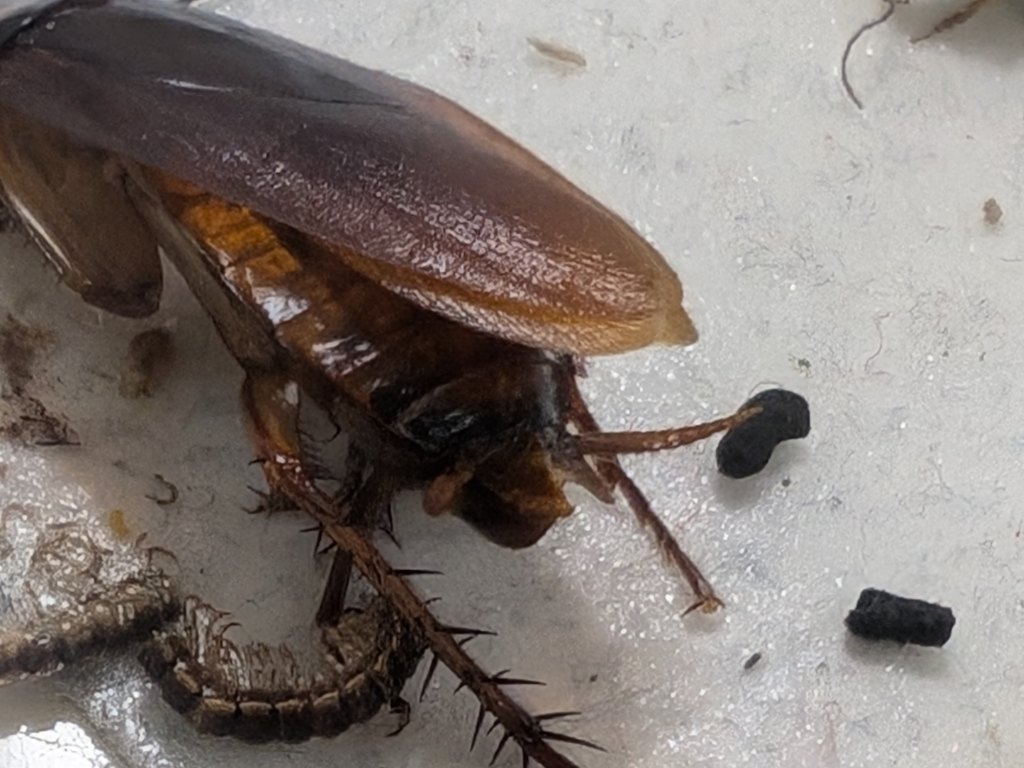
Finding both is possible. Mississippi State University Extension, describing a kitchen cleanout for cockroaches, mentions vacuuming up “roach or mouse droppings” in the same step. Kitchens offer food and water to both. Treat each set of signs on its own evidence.
Why the cleanup is different
For rodent droppings, CDC’s instruction is specific: do not sweep or vacuum. Open the windows and leave the room for 30 minutes, wear gloves, soak the droppings with a disinfectant or a bleach solution, then wipe them up with paper towels and bag them. The concern is diseases carried by rodents, including hantavirus, which spread when dried urine and droppings are stirred into the air. Are mouse droppings dangerous explains the risks.
For cockroach droppings, the extension advice is different. UC IPM recommends vacuuming to remove cockroaches, shed skins and egg cases, with a HEPA or triple-filter vacuum, because inhaled bits of shed skins and droppings can cause allergies. NC State Extension says droppings can be removed by thorough cleaning and scraping, with a mask and gloves. The concern here is allergens: NC State Extension says German cockroach droppings, shed skins and saliva contain allergens and that German cockroaches are one of the leading causes of asthma in young children.
So if you are not sure what you have, use the CDC wet method. It works for both, and it is the only one of the two that is safe for rodent droppings.
What to do next
If it is mice, the droppings tell you where to start. Trap where the droppings are thickest, find and seal the gaps the mice use, and keep checking until no new droppings appear. The full plan is in how to get rid of mice, and one mouse or an infestation helps you judge the size of the problem.
If it is cockroaches, the droppings also show where to act. UC IPM says baits can be placed next to cockroach droppings, and that baits work best when other food is removed. NC State Extension recommends small, pea-sized placements of gel bait in many places close to where cockroaches hide, and says not to spray insecticide where baits are used, because sprays can make cockroaches avoid the bait. UC IPM warns that foggers (“bug bombs”) are often ineffective because they do not reach the cracks where cockroaches live. RodentVerify covers rodents, so for anything beyond this, follow the UC IPM cockroach Pest Note or a pest control professional.
Common questions
Do cockroach droppings look like black pepper or coffee grounds?
Droppings from small cockroaches often do. The University of Kentucky describes them as pepper-like specks, and NC State Extension as clusters of tiny brown to black dots. Mouse droppings are larger, separate pellets.
Are cockroach droppings dangerous?
The main concern is allergy and asthma. UC IPM says indoor cockroach infestations are important sources of allergens and a risk factor for asthma in children. The University of Kentucky lists congestion, sneezing and watery eyes, and in some people asthma. If someone in the home has asthma, tell their doctor about the infestation.
Could it be bed bugs instead?
Bed bug spotting can look like cockroach specks. The University of Kentucky says the location usually tells them apart: cockroaches seldom gather on beds the way bed bugs do. Specks on a mattress seam point to bed bugs; specks in the back of a kitchen cabinet point to cockroaches.
Could it be bat droppings?
Bat droppings are also similar in size, but ICWDM says they contain insect fragments and crumble easily. They usually turn up below where bats roost, such as in an attic. Mouse droppings vs rat droppings covers this look-alike as well. So does bat droppings vs mouse droppings.
Does the number of droppings show how many there are?
Only roughly. NC State Extension says the amount of cockroach droppings can indicate the size of the population but is not the most reliable measure, partly because droppings stay on surfaces for a long time. For mice, new droppings after a thorough cleaning are more useful than the total amount.
Summing up
Mouse droppings and cockroach droppings can be the same length, so look at the shape. Smooth pellets with pointed ends, scattered along a route, are from a mouse. Ridges and squared-off ends, or clusters of pepper-like specks and smears in tight spots near food, are from cockroaches. Look for the other signs, put down a sticky trap if you are unsure, and clean with the CDC wet method until you know, because rodent droppings should not be swept or vacuumed.
Sources and verification
- ICWDM — House Mice (Internet Center for Wildlife Damage Management)Mouse dropping length; cockroach dropping length, longitudinal ridges and squared-off ends; where mouse droppings are found; bat droppings with insect fragments.
- Penn State Extension — Is There a Mouse in the House?Mouse droppings compared to a grain of rice.
- UC IPM — Pest Notes: Cockroaches (UC ANR Publication 7467; Sutherland, Choe and Rust)Dark spots or smears; where to look for droppings; egg case sizes and colors; flashlight inspection; sticky traps for detection; HEPA or triple-filter vacuuming; allergens and asthma; baits next to droppings; foggers often ineffective.
- NC State Extension — German Cockroach Surveillance and Management (Alder and Hayes, January 2025)Clusters of tiny brown to black dots near food; droppings persist on surfaces; amount as a rough population indicator; cleaning and scraping with masks and gloves; shed skins, egg cases and odor; allergens and childhood asthma; hiding places; gel bait placement and no sprays near baits.
- University of Kentucky — Cockroach Elimination in Homes and Apartments (Potter)Pepper-like specks; similarity to bed bug spotting and the difference in location; aggregation around droppings; allergy symptoms; German cockroach size.
- Mississippi State University Extension — Control Cockroaches in and Around Your Home (Publication 3346, 2026)German cockroach size; cabinet cleanout that includes roach or mouse droppings; HEPA vacuums for cockroach allergens.
- UCSF California Childcare Health Program — Integrated Pest Management: CockroachesCockroaches seen during the day as a sign of a large infestation.
- CDC — How to Clean Up After RodentsNo sweeping or vacuuming; 30 minutes of ventilation; gloves; soaking with disinfectant before wiping up.