
Traps and materials
How to Get Rid of Mice in Your House: A Step-by-Step Plan
There is no single trick that gets rid of mice. What CDC and university extension guides describe is a combination: find how the mice get in and close those openings, trap the mice that are already inside, take away their food and shelter, clean up safely, and keep watching until new signs stop. This page puts those steps in order, explains why the order matters, and links to the detailed guide for each one.
Short answer: confirm it is mice, find where they are and how they get in, seal the openings while you trap the mice already inside with snap traps set against the wall, remove food and shelter, clean up without sweeping or vacuuming, and keep traps working until a week passes with no catches and no new signs. Poison is not the next step for most homes; see why.
This is the overview. Each step below is short on purpose; the linked guides carry the detail, the photos and the full source notes.
| Step | What it involves | In detail |
|---|---|---|
| 1. Confirm it is mice | Droppings, gnaw marks, nests, smell, night noises; house mouse or deer mouse | Do I have mice or rats? |
| 2. Find them | Nests and activity within about 30 feet of food; entry points | Mouse nest signs |
| 3. Seal the way in | Openings from about 1/4 inch; steel wool, hardware cloth, metal, cement | How to seal mouse entry points |
| 4. Trap the mice inside | Snap traps against walls, close together, checked daily, for at least 15 days | Best mouse traps |
| 5. Remove food and shelter | Sealed containers, no bowls left out overnight, clutter and woodpiles away from the house | Mouse droppings in kitchen cabinets |
| 6. Clean up safely | Ventilate, gloves, soak with disinfectant; no sweeping or vacuuming | How to clean mouse droppings |
| 7. Confirm they are gone | Clean baseline, then watch for new signs; a clear week ends trapping | How to know if mice are gone |
Step 1: Confirm it is mice — and which mice
Before you buy anything, make sure you are dealing with mice. Droppings, gnaw marks, shredded nesting material, a musky smell and scratching at night are the usual signs, but rats, squirrels and other animals leave some of the same evidence, and rats need different traps. Start with how to tell mice from rats by the signs, or compare the droppings directly in mouse droppings vs rat droppings.
It also matters which mouse it is. CDC says the most common hantavirus that causes hantavirus pulmonary syndrome in the United States is spread by the deer mouse, which is why cleanup rules matter so much. Deer mouse vs house mouse shows how to tell them apart. Whatever the species, CDC’s safe cleanup method applies to any rodent droppings or nests.
How big is the problem? One mouse or an infestation covers what the evidence can and cannot tell you, and fresh vs old mouse droppings explains how to check whether mice are still active.
Step 2: Find where they live and how they get in
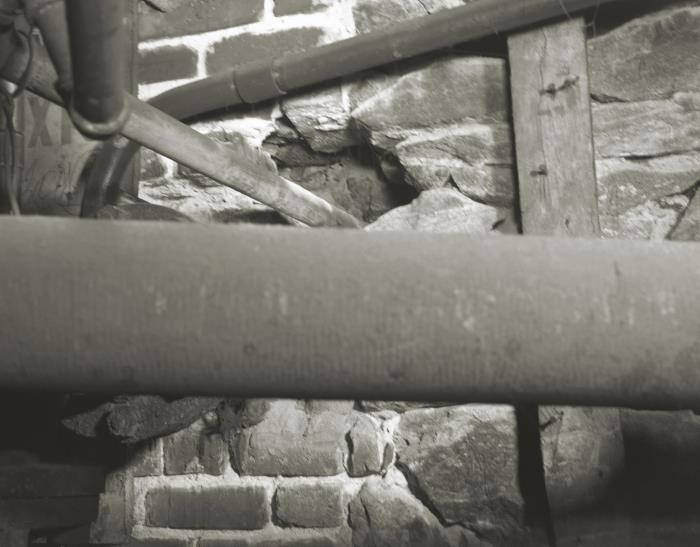
House mice stay close to home. UC IPM says they seldom go more than about 30 feet from their nest and their food, so the nest is usually near where you find droppings. To work out which opening they are using, see how mice get in and how to find their way in. Check enclosed, quiet spaces: behind and under appliances, inside cabinets and drawers, wall voids, insulation, stored boxes.
The room changes what you look for:
- Mouse in the kitchen — behind the stove and refrigerator, under the sink, in the pantry.
- Mice or rats in the walls — scratching, droppings at the base of walls, gaps around pipes.
- Basement, garage, attic and car each have their own guide.
Noises at night can come from more than one animal; scratching in walls at night helps narrow it down. Mouse nest signs shows what a nest looks like and how to remove it safely.
Step 3: Seal the way in — while you trap the mice inside
CDC’s trapping guidance begins with entry points: if you see signs of rodents, first check inside and outside the house to see how they got in. Closing those openings stops new mice. It does nothing about the mice already inside, so the trapping in Step 4 runs at the same time. UC IPM makes the same point: when there is an infestation, reducing the population is almost always needed alongside exclusion.
How small is small enough to matter? CDC says a mouse can fit through a hole the width of a pencil, about 1/4 inch (6 mm). UC IPM describes the shape as well: house mice squeeze under gaps 1/4 inch tall and through openings 3/8 inch wide. Treat anything around 1/4 inch as a possible way in.
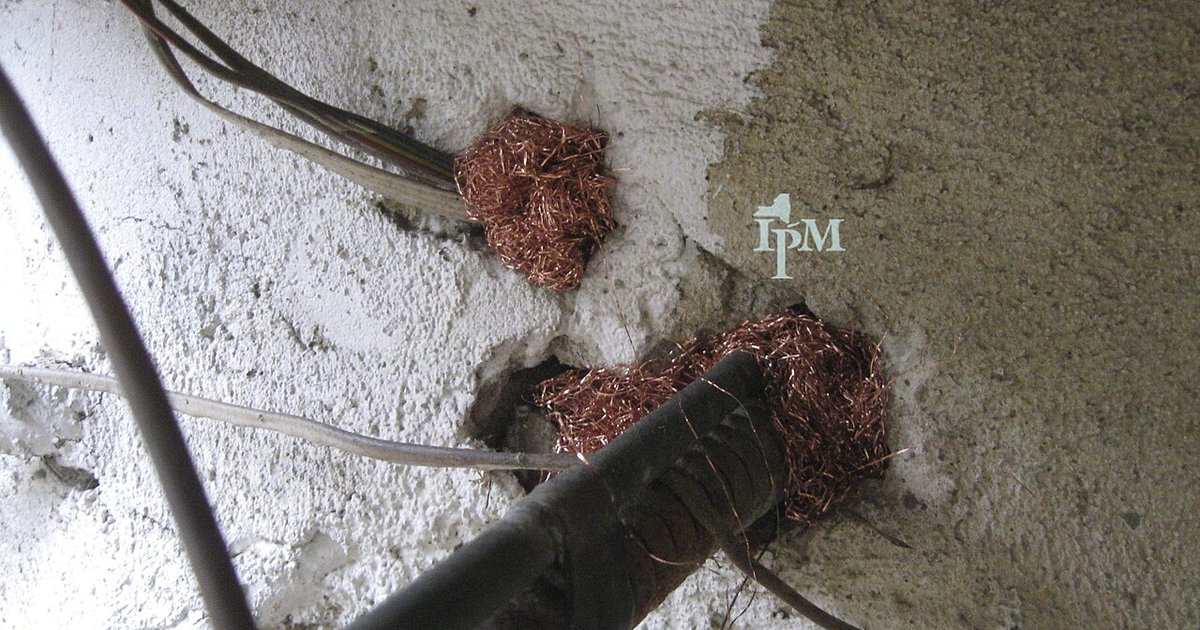
Materials, per CDC: fill small holes with steel wool held in place with caulk or spray foam; fix larger ones with lath screen or metal, cement, hardware cloth or metal sheeting. ICWDM adds that expanding foam on its own will not keep rodents out. The full room-by-room method, including dryer vents and weep holes you should not block, is in how to seal mouse entry points.
If the mice are in the walls: sealing every hole at once can leave mice shut inside a wall void. None of the official sources we checked sets a waiting period or a fixed order for this case. Our working approach, explained in mice in walls, is to trap first, check which holes are still in use with paper or flour, and then seal. This is RodentVerify’s reasoning, not an official rule.
Step 4: Trap the mice already inside
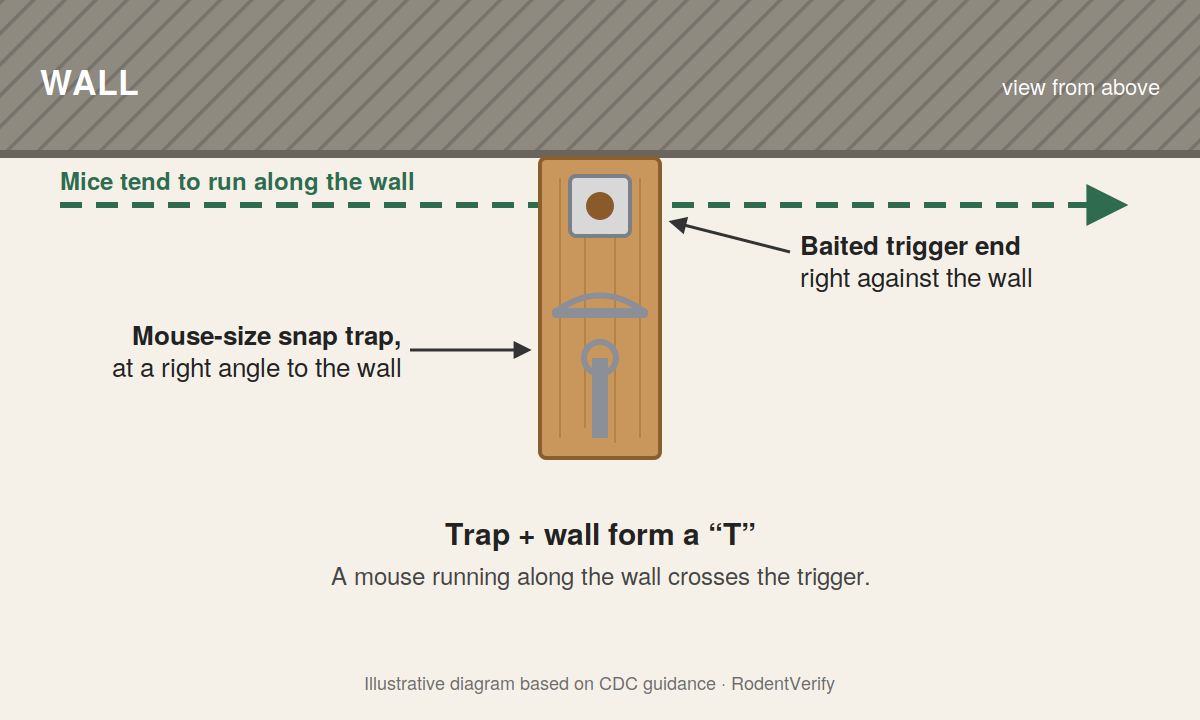
CDC recommends traditional snap traps. Put each one on the floor against the wall, with the baited end touching the wall so the trap forms a “T”. Mice tend to travel along walls, so this puts the trigger in their path.
- Use enough traps, close together. UC IPM says no more than about 10 feet apart where mice are active; ICWDM says no more than 6 feet. Neither gives a number per house. In a small, busy area, the closer spacing is the safer choice. UC IPM also suggests pairs of traps 1 to 2 inches apart for mice that jump over obstacles.
- Bait lightly. A small amount works better than a large one. What to use, and how to keep mice from stealing it, is in best bait for mouse traps.
- Check every day, keep going for at least 15 days. CDC says to check traps daily, dispose of any catches right away, check the bait weekly, and keep traps out for at least 15 days.
- Keep traps away from children and pets. CDC and EPA both say so.
Skip glue traps and live traps. CDC advises against both: a frightened rodent may urinate, which raises your chance of getting sick. ICWDM adds that glue boards catch fewer mice than other traps and should not be the main tool. Releasing live mice has its own problems: EPA notes that released rodents may find their way back unless the entry points are sealed, and state rules on moving wildlife vary (California, for example, does not allow relocating live house mice off the property without a permit). The details, trap by trap, are in best mouse traps.
What about poison?
For most homes, poison is not the next step after traps fail on day two. CDC puts snap traps first and bait stations only for infestations that persist. UC IPM explains the main drawback indoors: mice that eat rodenticide often die inside the building, in places you cannot reach, and the smell follows. If that happens, see what to do with a dead mouse, including one inside a wall.
If you do use bait, EPA’s rules for products sold to consumers are narrow. They must be ready-to-use bait stations holding a block or paste bait; loose pellets and second-generation anticoagulants are not allowed in consumer products. Place stations only where children and pets cannot get to them, follow the label, and remove dead rodents promptly so pets and wildlife do not eat them. If you have a dog or cat, read our guide to mouse poison and pet safety before buying bait.
If someone may have swallowed rodent bait: call 911 if the person is unconscious, having trouble breathing or having convulsions. Otherwise call Poison Control at 1-800-222-1222. For product information, the National Pesticide Information Center is at 1-800-858-7378. For a pet, call your veterinarian or the ASPCA Animal Poison Control Center at (888) 426-4435, which is open around the clock; a consultation fee may apply. Keep the package so the product can be identified.
What does not work, or is not proven
- Ultrasonic repellers. UC IPM and ICWDM both say there is little evidence they drive established mice out. Our own experience and the research are in do ultrasonic pest repellers work.
- Peppermint oil. ICWDM notes how little is known about mint oil against mice. What the research does show is in does peppermint oil repel mice.
- Mothballs. The National Pesticide Information Center says mothballs are not meant to be used as animal repellents, and a pesticide may be used only as its label allows. The fumes are a risk to people and pets.
- Ammonia and dryer sheets. We found no official source that recommends either for mice, so we do not.
- A cat. Some cats and dogs catch mice, but UC IPM says they rarely control a population. ICWDM adds that a cat may help prevent mice from moving back in, though not remove the ones already there.
Step 5: Take away food and shelter
Mice need very little. UC IPM says a house mouse eats up to 20% of its body weight a day in many small meals, and it does not need to drink water if its food has enough moisture. Crumbs and pet food are enough to keep a colony going.
- Inside: CDC says to keep food in thick plastic, metal or glass containers with tight lids, clean up spills, put pet food away, and not leave food or water bowls out overnight. Use trash cans with tight lids. If mice have already been in the cupboards, mouse droppings in kitchen cabinets covers which food to throw away.
- Outside: CDC’s distances are generous. Keep compost bins at least 100 feet from the house, move woodpiles 100 feet or more away and raise the wood at least a foot off the ground, move abandoned vehicles more than 100 feet away, and keep grass and shrubs within 100 feet of the house trimmed. Bird feeders go away from the house; CDC gives no distance for those.
Food and shelter control is necessary, but it is not enough once mice are inside. ICWDM’s wording is blunt: even the best sanitation will not eliminate mice. That is why this step runs alongside sealing and trapping, not instead of them. What draws mice in, and what to change room by room, is in what attracts mice.

Step 6: Clean up safely
Mouse urine, droppings and nests can carry disease, and the most common mistake is reaching for a broom or a vacuum. CDC’s method, in short:
- Open doors and windows for 30 minutes before you start, and leave the area while it airs out.
- Wear rubber or plastic gloves.
- Do not sweep or vacuum droppings, urine or nesting material.
- Spray until soaked with a disinfectant or a fresh bleach solution (CDC: 1½ cups of household bleach in 1 gallon of water), and let it sit for 5 minutes or as long as the label says.
- Wipe up with paper towels, bag the waste, and put dead mice and used traps in a double plastic bag in a covered trash can.
Heavy infestations in closed spaces need more protection, including a respirator with HEPA filters. The full method is in how to clean mouse droppings safely; see also are mouse droppings dangerous and mouse urine smell.
Step 7: Make sure they are gone
An empty trap or a quiet night does not prove the house is clear. Clean up the old evidence first so you have a clean starting point, keep the traps working, and look for anything new: droppings, gnawing, tracks, catches.
CDC’s trapping guide uses a week with no captures and no new signs as the point to stop trapping. Its sentence actually says “the rats are gone,” so treat that week as a stopping point for trapping, not proof that the house is mouse-free. If new droppings, urine spots or gnawing keep appearing after a week, CDC suggests you may be dealing with rats. The full checklist is in how to know if mice are gone.
Why mice come back
Most returns come down to timing and numbers. UC IPM says house mice living outdoors often move into homes in autumn, as night temperatures fall, and indoors they can breed all year. A female may have 5 to 10 litters a year of about 5 or 6 young each, and the young can breed at 5 to 6 weeks old. A few mice that are missed can start the problem again.
That is why sealing and food storage are not one-off jobs. Recheck the repairs every autumn, and look again wherever you once found droppings.
When to call a professional
EPA’s advice is simple: if you have an infestation and are not comfortable dealing with it yourself, hire a professional. CDC also points to professional help when trapping does not solve the problem, when rodents have got into places you cannot reach to clean, and when they are in heating or cooling ducts.
When you choose a company, EPA suggests asking to see its license and checking with your state’s pesticide regulatory agency if you have concerns. What to expect and when DIY is still reasonable is in when to call an exterminator for mice or rats.
Questions people ask
How long does it take to get rid of mice?
No official source gives a standard timeline for a whole house. CDC’s minimum for trapping is at least 15 days, with traps checked daily, and it uses a week with no catches and no new signs as the point to stop.
What is the fastest way to get rid of mice?
Do the steps at the same time rather than one after another: set enough snap traps close together where you see activity, seal the openings you find, and remove food. No method we found works overnight.
Can I catch mice and release them outside?
CDC advises against live traps because of the infection risk from a frightened mouse. EPA notes that released rodents can find their way back if the entry points are still open, and some states restrict moving wildlife.
Will a cat get rid of mice?
Not reliably. UC IPM says pets rarely control a population, though ICWDM notes a cat may help keep new mice from settling in.
Does peppermint oil or an ultrasonic repeller keep mice away?
The official sources we checked do not support either as a way to get rid of mice. See our guides on peppermint oil and ultrasonic repellers.
The bottom line
Getting rid of mice is a sequence, not a product. Confirm it is mice, find where they live, close the openings while snap traps set against the walls catch the mice inside, take away their food, clean up wet rather than dry, and keep traps working for at least 15 days and until a week passes with nothing new. Leave poison for infestations that persist, keep traps and bait away from children and pets, and check your repairs again every autumn.
Sources and verification
- CDC — How to Trap Up to Remove Rodents (April 2024)Check how rodents got inside first; snap traps recommended; no glue or live traps and why; T-placement against the wall; daily checks, bait weekly, at least 15 days; the one-week stopping point and its wording about rats; persisting signs may point to rats; children and pets; bait stations or professional help if trapping does not resolve it.
- CDC — How to Seal Up to Prevent Rodents (April 2024)The pencil-width 1/4-inch hole; steel wool with caulk or spray foam; lath screen, metal, cement, hardware cloth or metal sheeting for larger holes; food containers and pet bowls; outdoor distances for compost, woodpiles, vehicles and vegetation; bird feeders away from the house; pest control specialist for unreachable areas.
- CDC — How to Clean Up After Rodents (April 2024)30 minutes of ventilation; gloves; no sweeping or vacuuming; bleach solution; 5-minute soak or label time; double-bagging dead rodents and traps; heavy-infestation protection with HEPA respirators; professionals for ducts.
- CDC — About HantavirusThe most common U.S. hantavirus that causes hantavirus pulmonary syndrome is spread by the deer mouse.
- UC IPM — Pest Notes: House Mouse (July 2025)30-foot range; food and water needs; trap spacing of about 10 feet and paired traps; gaps 1/4 inch tall and 3/8 inch wide; population reduction alongside exclusion; autumn entry; litters and maturity; rodenticide and mice dying indoors; ultrasonic devices; predators; relocation rule in California.
- ICWDM — House Mouse Damage Prevention and Control MethodsSanitation alone does not eliminate mice; traps no more than 6 feet apart; 1/4-inch openings and mesh; expanding foam alone does not stop rodents; glueboards; ultrasonic devices; mint and balsam fir oils; cats.
- EPA — Options for Dealing With Rodent Infestations (September 2026)Prevention first; snap and live traps; released rodents returning unless entry points are sealed; bait only in tamper-resistant stations; children and pets.
- EPA — Restrictions on Rodenticide Products (September 2026)Consumer products limited to ready-to-use bait stations with block or paste bait; no pellets; no second-generation anticoagulants.
- EPA — Safely Use Rodent Bait Products (September 2026)Placing bait where children and pets cannot reach it; removing carcasses to prevent secondary poisoning.
- EPA — In Case of Pesticide Emergency (July 2026)When to call 911; Poison Control and NPIC numbers.
- EPA — Tips for Hiring a Rodent Control Professional (January 2026)When to hire a professional; asking to see the license; state pesticide regulatory agency.
- NPIC — Can I use mothballs to repel insects or animals? (September 2025)Mothballs not meant as animal repellents; use only as the label allows; health effects of the fumes.
- ASPCA — Animal Poison Control(888) 426-4435, open 24 hours; consultation fee may apply; keep the product packaging.