
Rooms and places
Mice in Basement: Signs, Entry Points, Traps & How to Keep Them Out
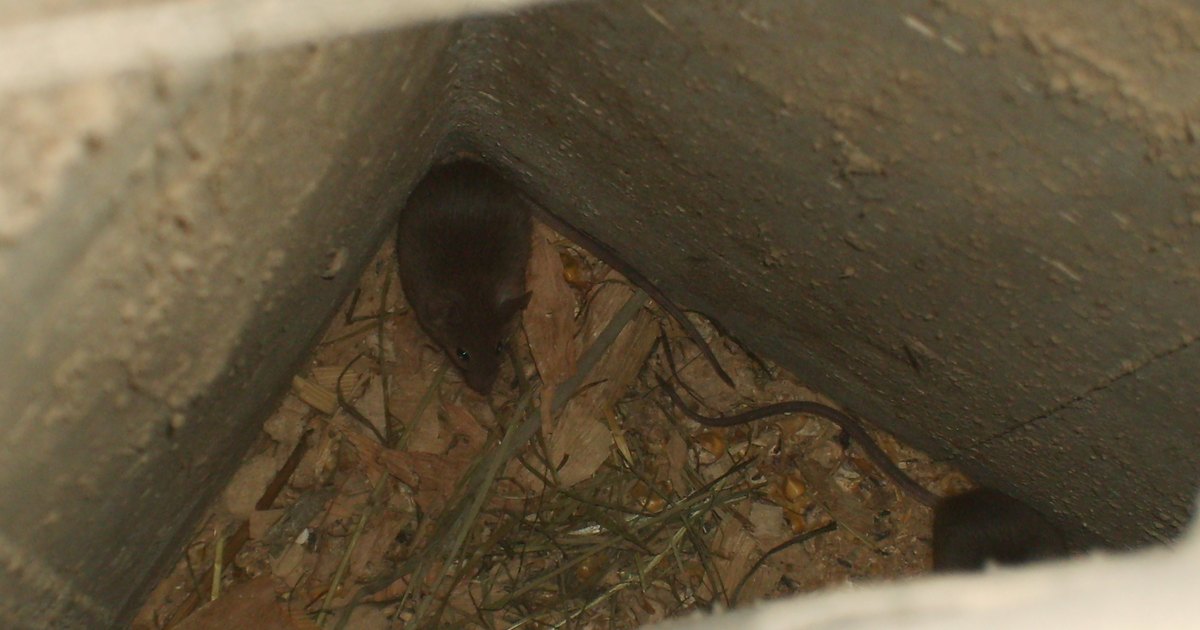
Finding a mouse — or mouse-like signs — in a basement tells you where to investigate, not yet how the animal got in or whether the problem stops at the basement. Verify the signs, inspect the building envelope, trap where activity is occurring, and close the routes that let new rodents inside.
Before you move boxes or clear a corner: do not sweep or vacuum droppings, urine or nesting material. CDC warns that this can put tiny virus-containing droplets into the air. Wet it first, then clean — the full cleanup procedure is here.
Quick answer: what to do if you find mice in a basement
Work through it as one process, not a list of separate fixes:
- Verify the signs. Droppings, gnaw marks, tracks, nesting material, or the animal itself.
- Confirm mouse, not rat. A basement is a normal place to find either, and the trap size is different.
- Inspect the entry routes inside and outside: foundation, pipe and cable penetrations, the top of the foundation wall, doors, windows, vents.
- Trap where the activity is, with mouse-size snap traps against the walls.
- Seal the routes at the same time, with materials mice cannot chew through.
- Clean safely — wet, never dry.
- Monitor the same spots for new signs before you call it finished.
What actually confirms mice in a basement?
Physical evidence verifies rodent activity; several matching signs are stronger evidence that the animal is a mouse. UC IPM lists droppings, fresh gnaw marks and tracks as the signs that show where house mice are active, plus nests of finely shredded paper or other fibrous material behind boxes and in sheltered spots, and a musky odour that tends to come with larger or longer-term infestations.
In a basement, look first where mice travel and shelter: along the base of walls, behind and under stored boxes, around the water heater and furnace, near floor drains, and along the top of the foundation wall where the wood framing sits on it.
Sounds from the ceiling or walls tell you something is moving, but not what. Treat noise as a reason to look for one of the signs above.
Seeing a mouse in daylight is not proof of a severe infestation either. UC IPM notes house mice are mostly active at night but can be seen during the day, when food is available.
Mouse or rat? Don’t decide from one clue
This check matters especially in a basement because Norway rats are a realistic alternative. According to UC IPM, Norway rats burrow and, indoors, usually stay in basements and on ground floors — so the basement is exactly where a rat is a realistic alternative. And UC IPM also notes that mice and small juvenile rats often won’t trigger a rat-size trap, while CDC says to choose the right snap trap for the rodent you actually have.
Start with dropping size or a clear look at the animal, then confirm with a second sign. The full method is on how to tell mice from rats by the signs, and if what you found is droppings, compare them by size and shape.
In rural and semi-rural homes there is one more possibility: a mouse-like rodent with a sharply white underside and a furred, two-tone tail may be a deer mouse, not a house mouse — a difference that changes the health risk of the droppings.
How mice get into basements
Through small gaps you have probably walked past. CDC puts the size at a hole the width of a pencil — 1/4 inch (6 mm). UC IPM adds that where there are mice outdoors, they frequently move into homes in autumn as nights get colder.
CDC’s inspection list includes several places that are basement-specific. Inside, check:
- around the pipes leading to the water heater and furnace;
- around every electrical, water, gas and sewer line where it comes through a wall or floor;
- around floor drains;
- between the floor and the wall, along the whole perimeter;
- around floor air and dryer vents, windows and doors.
Outside, CDC points to the junction between the foundation and the ground, windows and doors (especially without weather stripping), crawl space vents, and holes where electrical, plumbing, cable and gas lines enter.
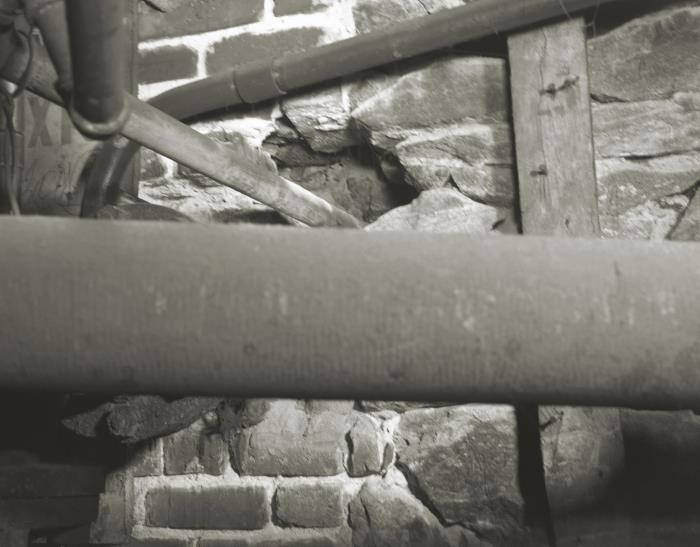
The top of the foundation wall. Where the wooden sill plate and rim joist sit on the foundation is a joint between two different materials, and it is often hidden behind insulation. Building America guidance for builders notes that air-sealing sill plates at exterior walls minimizes the entry of insects and rodents. From inside the basement, look along that joint for droppings, gnawing, and daylight or drafts.
Why they stay there
Shelter and food, more than moisture. UC IPM puts it plainly: good sanitation will seldom completely control house mice, but poor sanitation attracts them and lets them thrive in greater numbers. If they have few places to hide, rest and nest, they can’t survive in large numbers. A basement full of cardboard boxes, stored fabric and undisturbed corners is exactly that kind of place.
Food matters too. CDC advises keeping food sealed in thick plastic, metal or glass containers with tight lids, putting pet food away after use, and not leaving food or water bowls out overnight — which applies directly if pet food, bulk dry goods or birdseed is stored downstairs.
A damp basement is not, by itself, the reason. The popular claim that mice come for the water doesn’t fit what UC IPM says: house mice do not need to drink water to survive and get moisture from their food, seeking liquids only when food doesn’t provide enough or conditions are hot or dry. Fixing a leak is worth doing, but it is not what keeps mice out. Access, shelter and food are. What does draw mice in is covered in what attracts mice.
Where to place mouse traps in a basement
Against the walls, where the signs are, with the trigger end touching the wall. CDC’s instruction is to place the trap on the floor against the wall with the baited end next to it, forming a “T” with the wall, because rodents prefer to run along walls. CDC specifically lists basements among the places to put traps, alongside anywhere you’ve seen droppings, urine, nesting material, gnawing or the animals themselves.
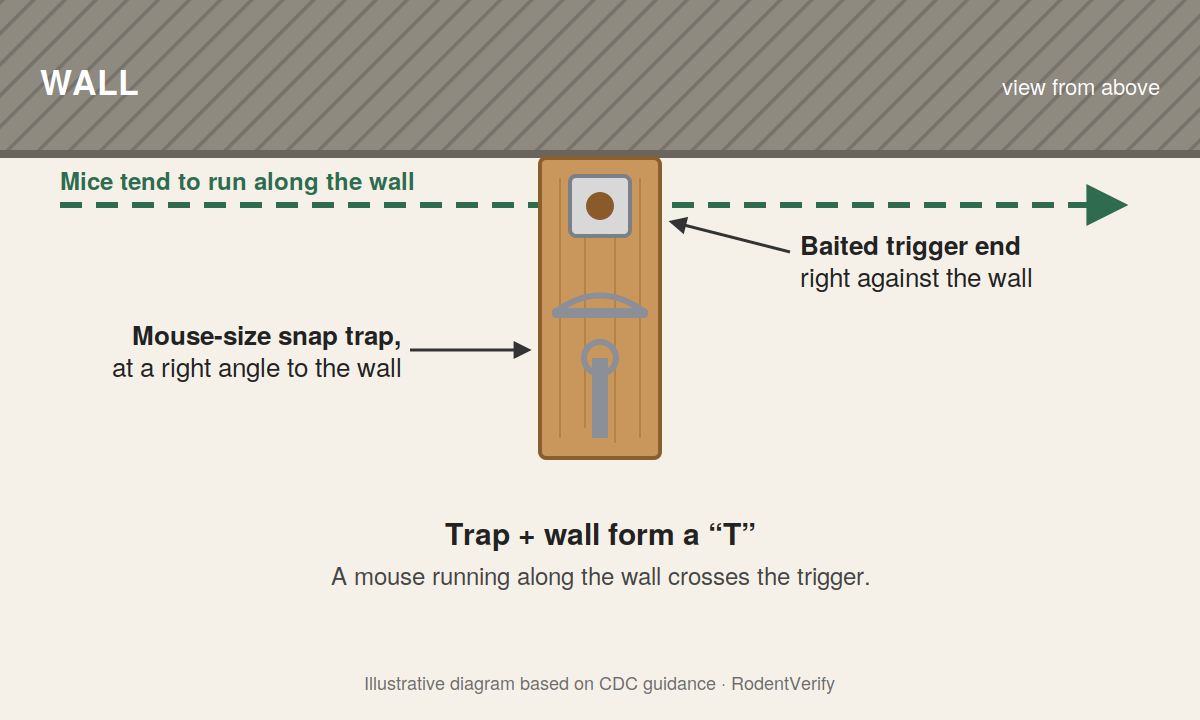
- Use mouse-size snap traps. CDC recommends traditional snap traps and advises against glue traps and live traps, because a trapped rodent that is scared may urinate and raise your exposure. Choosing a mouse trap compares the other types.
- Use enough of them. UC IPM suggests spacing traps no more than about 10 feet apart where mice are active, since house mice seldom go more than about 30 feet from their nest and food. It also notes that pairs of traps set 1 to 2 inches apart can catch mice that jump over obstacles.
- Put them behind objects and in dark corners as well as along open walls — UC IPM’s list includes ledges and the tops of stored materials.
- Bait lightly. CDC suggests a small amount of chunky peanut butter. UC IPM notes peanut butter can be an allergy risk for some people, and that a small piece of cotton wool or dental floss can work as bait too.
- Keep traps out of reach of children and pets. Both CDC and UC IPM say so. In a basement used as a playroom or where a pet goes, that rules out some spots.
- Set traps elsewhere in the house too if there are signs there. CDC’s guidance is to set traps throughout the home to catch any rodents that may still be inside — a basement find doesn’t mean the problem is confined to it.
How long to keep trapping. CDC says to continue trapping until rodent activity has stopped; its trapping guidance uses a week with no captures and no new signs as a stopping criterion. If new droppings, urine spots or gnawing continue after a week, CDC suggests you may be dealing with rats rather than mice — which sends you back to the species check.
Poison is not the first step. CDC reserves bait stations for infestations that persist. UC IPM adds the basement-relevant reason: house mice stay close to their nest, so rodenticide often means they die inside the structure, with the odour and cleanup that follows.
Seal entry points while controlling the mice inside
Inspect, seal and trap together — not one after the other. CDC’s own order is that when you see evidence of rodents, you first check inside and outside to see how they got in and seal the gaps, and set traps to catch any rodents still inside. If you only trap, new mice keep arriving. If you only seal, the ones already inside stay, which is why the traps stay set.
Use materials mice can’t chew through. The sources agree on the principle and differ slightly in detail:
- Small holes: CDC says to fill them with steel wool, held in place with caulk or spray foam. UC IPM notes steel wool makes a good temporary plug but may rust over time.
- Larger holes: CDC lists lath screen or metal, cement, hardware cloth or metal sheeting, cut to fit around pipes.
- Foundation cracks and utility openings: UC IPM recommends metal or concrete for cracks in foundations and around openings for water pipes, vents and utility cables. EPA lists knitted copper mesh, steel wool and cement among the best materials for openings of 1/4 inch or larger, noting that rodents can gnaw through softer substances.
For an active mouse entry hole, expanding foam alone is not a gnaw-resistant barrier. UC IPM lists expanding foam among materials that are ineffective for plugging holes used by house mice. Where CDC mentions spray foam, it is used to hold steel wool in place.
Inspect the whole perimeter, not one hole. Closing the one gap you found and calling the job done is the most common failure. Work around the entire basement inside, then around the foundation outside, and assume there is more than one route until the monitoring says otherwise. The full sealing guide goes through each type of opening and the materials that hold.
Droppings and contaminated areas: clean safely
CDC’s procedure in brief: put on rubber or plastic gloves, spray the urine and droppings with a bleach solution or an EPA-registered disinfectant until very wet, let it soak for 5 minutes or as the label directs, wipe up with paper towels, put them in a covered garbage can, then mop or sponge the area with disinfectant. Never sweep or vacuum first.
CDC also calls for additional precautions in buildings with heavy infestation. A basement with droppings across stored belongings may be that situation. The complete step-by-step cleanup guide covers bleach dilution, nests, stored items and when the heavier protocol applies.
Basement ceiling or insulation activity
Activity overhead is possible, and it can be harder to inspect and control. House mice are excellent climbers that can run up any rough vertical surface, according to UC IPM, so the space between basement ceiling joists, a drop ceiling, or the insulation along the rim joist are all places they can travel and nest.
If you hear movement above a finished or drop ceiling but can’t see into it, the noise alone won’t tell you whether it’s mice, rats or something else — what scratching in walls and ceilings can and can’t tell you covers how to narrow it down without opening anything up. Set traps along the walls below the activity, and look for droppings on top of ceiling tiles or along beams where you can reach safely.
Do not pull apart insulation with droppings or nesting in it dry-handed. CDC’s cleanup rules still apply, and CDC points to a pest control specialist when rodents have got into areas that can’t be reached to clean.
How to verify the activity has stopped
Check the same places you cleaned. Once a spot has been cleaned, anything that appears there afterwards is new, which makes it the most reliable way to tell whether mice are still active. Appearance alone won’t tell you whether droppings are fresh or old, but a cleaned surface does.
- Keep the traps set and checked, and note captures by location.
- Recheck the cleaned spots for new droppings, gnawing or nesting material.
- Recheck the seals for fresh gnawing or displaced material.
- Use CDC’s trapping end point, described in the trapping section above, before treating the problem as over.
New signs in a new place mean activity is still present. Recheck both entry routes and trap placement before treating the problem as resolved.
When professional help makes sense
Reasonable triggers: activity inside a finished ceiling, wall or insulation you can’t safely reach; signs that continue despite trapping and sealing; an entry route you can’t locate, or can’t reach without working at height or in a tight crawl space; heavy contamination across stored belongings; gnawing on wiring; or evidence that points to rats. When DIY stops being the right call goes through each of these. CDC suggests contacting your local or state health department if you’re concerned about an infestation, and a pest control specialist when rodents have got into areas that can’t be reached to clean.
The bottom line
A mouse in the basement is a starting point, not a diagnosis. Confirm it with physical signs, check that it’s a mouse and not a rat, find the routes in, and then trap and seal at the same time with materials that hold. Clean wet, never dry, and judge the result by what appears in the places you’ve already cleaned.
Sources and verification
- CDC — How to Seal Up to Prevent RodentsThe 1/4-inch (6 mm) mouse opening; inside and outside inspection points including basements, water heater and furnace lines, floor drains, the floor-wall junction and the foundation-ground junction; sealing materials; food and pet-food storage; when to contact a health department or pest control specialist.
- CDC — How to Trap Up to Remove RodentsChecking entry routes and sealing when rodents are found while trapping those inside; snap traps over glue and live traps; the right trap for the rodent; T-placement against the wall; basements as trap locations; the one-week trapping end point; keeping traps away from children and pets.
- CDC — How to Clean Up After RodentsNo sweeping or vacuuming; the wet-cleanup steps and soak time; additional precautions for heavy infestations.
- UC IPM — Pest Notes: House MouseSigns of activity; night and daytime activity; not needing drinking water; autumn entry; climbing; sanitation and shelter; exclusion materials and why foam, wood, rubber and vinyl are ineffective; trap placement, 10-foot spacing and paired traps; bait options; rodenticide and mice dying inside structures; the house mouse vs deer mouse distinction.
- UC IPM — Pest Notes: RatsNorway rats indoors in basements and on ground floors; mice and small juvenile rats not triggering rat traps.
- EPA — Pest Control: Resources for Housing ManagersKnitted copper mesh, steel wool and cement as the best materials for openings of 1/4 inch or larger; rodents gnawing through softer substances.
- Building America Solution Center — Air Sealing Sill PlatesAir-sealing sill plates at exterior walls to minimize insect and rodent entry.