
Cleanup and safety
Mouse Droppings in Kitchen Cabinets: What Food to Throw Away and How to Clean Up
Finding mouse droppings beside food is unsettling. The first decisions are practical: which packages were exposed, what can be saved, and how to clean the cabinet without stirring up dust. Use the food-package rules from the FDA and the wet-cleanup procedure from the CDC. Do not try to judge safety by smelling or tasting food.
Do not sweep or vacuum mouse droppings. Wet them with disinfectant before wiping them up. If food in paper or plastic packaging was exposed to rodent filth, discard it. The CDC cleanup guidance and FDA food guidance cover these as separate steps.
The short answer
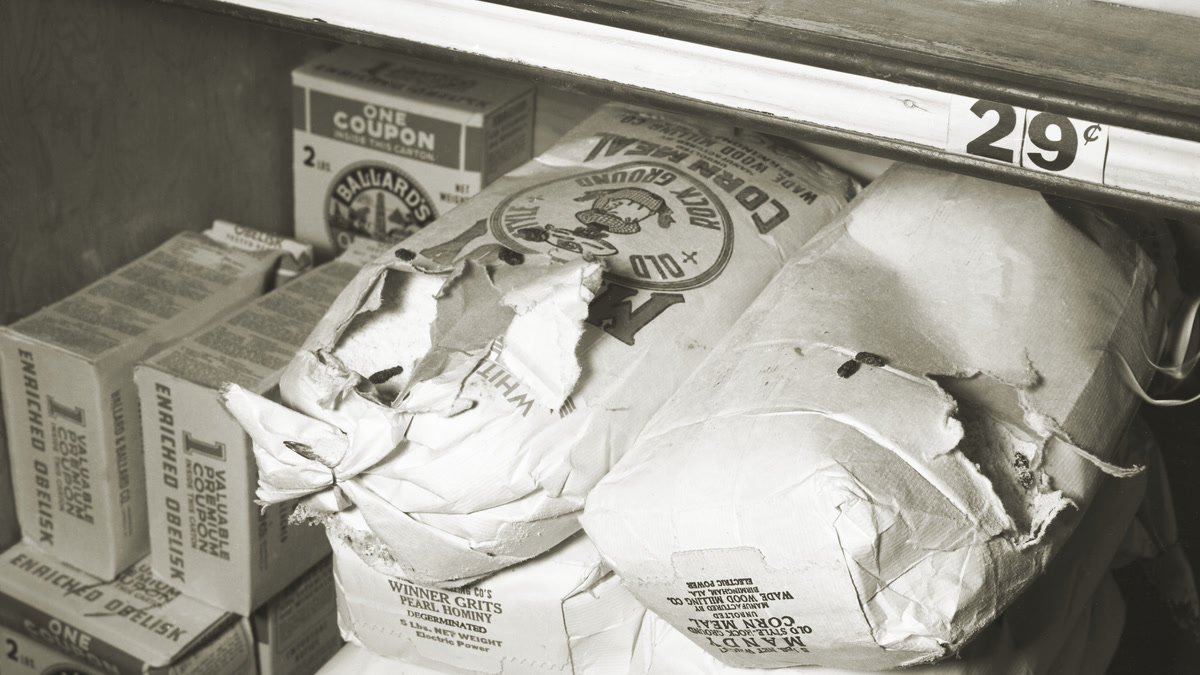
If food in paper or plastic packaging has been exposed to mouse droppings, urine, or other rodent filth, throw it away. Inspect cans and glass jars; discard any that are damaged or unsealed. The FDA gives a way to salvage undamaged all-metal cans and hermetically sealed jars of commercially prepared food, but they must be washed and sanitized first. Do not donate exposed food. For the cabinet itself, do not sweep or vacuum droppings. Wet them with disinfectant, wait the required contact time, wipe them up, and disinfect the hard surfaces. See the FDA food guidance and CDC cleanup guidance.
These disposal rules concern food exposed to filth. A dropping elsewhere in a cupboard does not prove that every package was touched. Inspect the shelf, the packages, and any gnawing or urine marks before deciding what was exposed. If you cannot establish that a vulnerable paper or plastic package stayed clear of contamination, the safer choice is to discard it. This last point is a cautious household decision, not a separate FDA test.
What food should you throw away?
| What you found | What to do if exposed to rodent filth |
|---|---|
| Food in cardboard, paper bags, paperboard boxes, plastic bags, pouches, or plastic containers | Throw away. The FDA says to discard exposed food in paper or plastic containers; it does not provide an exception for a box with an unopened inner plastic bag. |
| Open food, loose produce, or food in a chewed or punctured package | Throw away. Do not taste or sniff it to check. |
| Pet food, bird seed, or fish food in paper or plastic packaging | Throw away if exposed. FDA’s guidance covers animal food as well as human food. |
| All-metal can with no damage | May be saved only after following FDA’s washing and sanitizing steps below. |
| Commercially prepared food in an intact, hermetically sealed glass jar | May be saved only after following FDA’s washing and sanitizing steps below. |
| Can or jar that is dented, crushed, swollen, bulging, deeply rusted, cracked, punctured, holed, or has a broken seal | Throw away. |
The FDA’s salvage instructions do not extend to home-canned jars. Do not treat a home-canned jar as automatically safe under the commercial-jar procedure. If it was exposed and you cannot get product-specific food-safety advice, discard it.
Put discarded food in a securely covered trash can where people and animals cannot retrieve it. Do not give it away or donate it. Wash your hands after handling the discarded items. Source: FDA.
How to save an undamaged can or commercially sealed jar
This is for exposed food in undamaged all-metal cans or hermetically sealed jars of commercially prepared food and drink. Check each container first. If the seal or container is damaged in any of the ways listed above, discard it.
- Photograph the label or write down the product name and expiration date. Remove the label, which can hold dirt or bacteria.
- Wipe off visible filth. Wash the can or jar thoroughly with soap and water, using hot water if available. Rinse with water safe for drinking until no dirt or soap remains.
- Choose one FDA sanitizing method: bring a pot of water to a boil with the containers immersed and keep it boiling for 2 minutes; or immerse the containers for 15 minutes in a solution of 1 cup of unscented household bleach at 5.25% concentration in 5 gallons of water. Do not substitute a different bleach concentration into this formula.
- Clean and disinfect the sink and work area used for this job. Wash your hands again before handling the sanitized containers.
- Air-dry cans and jars for at least one hour. Write the contents and expiration date on each container. Use the sanitized food as soon as practical.
Those are the FDA’s food-container salvage steps. The bleach solution in step 3 is not the same as the CDC solution for cleaning droppings and cabinet surfaces. Never mix bleach with other cleaners or disinfectants; keep the area ventilated when using it. See CDC bleach safety guidance.
How to clean the cabinet safely
If you are cleaning a room or home with rodent signs, the CDC says to open doors and windows for 30 minutes before cleaning and leave the area while it airs out. Put on rubber or plastic gloves when you return. Keep children and pets away from the work area. Source: CDC.
- Do not sweep, vacuum, or dry-wipe droppings or nesting material. These methods can stir contaminated particles into the air. Avoid moving packages through the contaminated area before the droppings are wetted and removed.
- Spray droppings and urine until very wet with an EPA-registered disinfectant or the CDC’s fresh bleach solution for rodent cleanup: 1.5 cups household bleach in 1 gallon of water. Follow the disinfectant label where applicable.
- Leave the material wet for 5 minutes, or for the contact time on the disinfectant label. Wipe it up with paper towels and put the towels in a covered garbage can that is emptied regularly.
- Inspect the food packages without putting potentially contaminated items on a clean food-preparation surface. Sort exposed food using the table above. Bag what must be discarded and place it in a securely covered trash can.
- Disinfect the cabinet’s hard surfaces, including shelves and drawer interiors, along with nearby counters and floors where you found signs. Follow the product label for surfaces that will touch food, including any required rinse after disinfection.
- Wash your gloved hands, remove the gloves, then wash your bare hands with soap and warm water.
The wet-cleanup steps and cabinet-surface guidance come from the CDC. Make a bleach solution fresh before use. The FDA can-and-jar immersion formula above serves a different purpose and must not be substituted for this cleanup solution. If the contamination is heavy or extends beyond a routine cabinet cleanup, CDC calls for additional precautions; consider professional help rather than treating it as an ordinary wipe-down.
Contaminated cardboard storage boxes should be discarded. Plastic, glass, and metal non-food containers can be cleaned and disinfected. If droppings have reached carpet, upholstery, insulation, or other porous materials, use the full surface-specific cleanup guide instead of applying the hard-surface steps to everything. Source: CDC.
Check why mice reached the cabinet
Cleaning removes the immediate contamination; it does not tell you whether mice are still getting in. Look for fresh gnawing on packages and gaps inside, under, and behind kitchen cabinets, especially around pipes beneath the sink and behind appliances. These are locations the CDC specifically recommends checking. See CDC entry-point guidance and EPA signs of infestation.
Store replacement food in thick plastic, glass, or metal containers with tight-fitting lids. Seal the entry points you find, and use appropriately placed traps if there are continuing signs of mice. The entry-point guide covers materials and locations; how to know if mice are gone explains what to monitor after cleanup. If you are unsure whether the droppings came from a mouse or a rat, compare them by size and other signs before choosing traps. See also CDC trapping guidance.
Common questions
Can I keep an unopened box of cereal or a sealed bag of rice?
If the package was exposed to rodent filth, throw it away. The FDA’s disposal rule covers food in paper and plastic containers, including unopened packages.
Can I keep canned food if a mouse ran over it?
An undamaged all-metal can may be saved, but only after the FDA inspection, washing, sanitizing, drying, and relabeling steps. Discard a damaged can.
Can I vacuum droppings from the back of a cabinet?
No. Wet them with disinfectant and wipe them up with paper towels as the CDC directs.
Which bleach ratio should I use?
For rodent droppings and cabinet surfaces, CDC gives 1.5 cups per gallon of water. For immersing eligible cans and jars, FDA gives 1 cup of 5.25% unscented bleach per 5 gallons of water for 15 minutes. They are different procedures. An EPA-registered disinfectant used according to its label is another option for the droppings and hard surfaces.
The bottom line
Discard exposed food in paper or plastic packaging. An undamaged all-metal can or hermetically sealed jar of commercially prepared food may be saved only by following the FDA’s washing and sanitizing procedure. For the cabinet, follow the CDC’s wet-cleanup steps before moving contaminated items around, then disinfect the hard surfaces. If signs return, look for entry points and continued mouse activity.
Sources & verification
- FDA — How to Handle Food Products that Have Been Exposed to FilthFood disposal, can and jar eligibility, and the washing and sanitizing steps.
- CDC — How to Clean Up After RodentsVentilation, gloves, wet cleanup, hard surfaces, cardboard, and heavy-infestation precautions.
- CDC — Cleaning and Disinfecting with BleachBleach handling and the warning against mixing chemicals.
- CDC — How to Seal Up to Prevent RodentsKitchen entry points and food storage.
- CDC — How to Trap Up to Remove RodentsTrapping after confirmed signs.
- EPA — Identify and Prevent Rodent InfestationsSigns of infestation and prevention.