
Signs and droppings
Bat Droppings vs Mouse Droppings: How to Tell Them Apart Without Stirring Up the Dust
Small dark pellets in the attic or by a vent can come from mice or from bats, and the difference changes everything you do next: who you call, when you can seal the holes, and how you clean. Here is how to tell bat droppings from mouse droppings by shape, by where they pile up and by the signs around them, why bat guano needs a different cleanup, and why you should not seal a hole until you know which animal uses it.
Short answer
- Bat droppings crumble; mouse droppings do not. The Internet Center for Wildlife Damage Management (ICWDM) says bat droppings are segmented, elongated and friable, and turn powdery with shiny bits of insects when crushed. Mouse and rat droppings taper, are harder and stay intact unless they are very old.
- Bats pile, mice scatter. Bat droppings collect under a roost or below an exit hole, including outside on walls and windows. Mouse droppings are spread along the routes mice travel.
- Look for the other signs: greasy, yellow-brown rub marks at a gap high on the house and bats leaving at dusk point to bats; gnawing and shredded nests point to mice.
- Do not sweep, vacuum or crush either kind bare-handed. Bat guano can carry the fungus that causes histoplasmosis; mouse droppings can carry hantavirus. CDC says large amounts of bat droppings should be cleaned up by professionals.
Bat droppings vs mouse droppings at a glance
| Sign | Bats | Mice |
|---|---|---|
| Shape | Segmented, elongated, irregular | Smooth, about 1/4 inch, pointed at the ends |
| Texture | Dry and friable; crumbles to powder | Harder; does not turn to powder unless very old |
| Inside | Shiny bits of undigested insects | More fibrous, no shiny bits |
| Where | In piles under a roost, on attic floors, in wall recesses, and outside under vents and gaps | Scattered along walls, in drawers and cupboards, near food |
| Outside the house | Spotting and stains on siding, windows and objects below entry holes | Rarely on walls or windows |
| Other signs | Glossy yellow-brown to black rub marks at the entry; urine stains and crystals on beams; musty, acrid smell from a large colony; bats leaving at dusk | Gnaw marks, nests of shredded material |
Sources for the table: ICWDM bat and house mouse pages, CDC and UC IPM. Sounds alone cannot tell you which animal it is; see scratching in walls at night.
Shape and texture: the crumble test, done safely
The bats that roost in houses eat insects (ICWDM calls them insectivorous), and that is what makes their droppings easy to tell apart. ICWDM says bat droppings are segmented, elongated and friable, and that when crushed they become powdery and show shiny bits of undigested insects. Mouse and rat droppings, in contrast, taper, are not segmented, are harder and more fibrous, and do not become powdery when crushed unless they are extremely old.
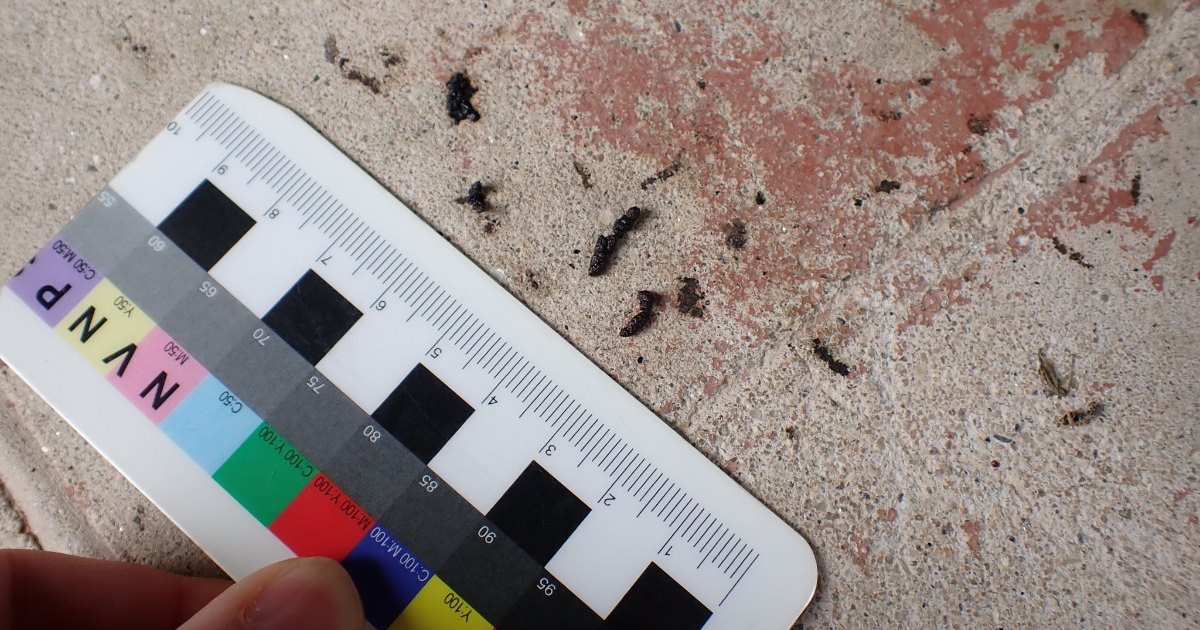
The safe way to check is our suggestion, not a source’s: do it with a single pellet, not a pile, and never with bare fingers. Wear disposable gloves and a well-fitting N95 mask, put one pellet in a zip-top bag, seal it, and press it through the plastic. A pellet that breaks into dull fibers or holds its shape is a rodent’s; one that turns to a glittery powder is a bat’s. Then put the bag in the trash and wash your hands. Do not do this over a large deposit, and do not do it if you are pregnant or have a weakened immune system.
Fine white chalky material mixed in points to birds, not bats. ICWDM says bat droppings never contain it.
Where you find them
Mice leave droppings as they travel, so you find them along walls, behind appliances, in drawers and in food. More on the mouse pattern and how it differs from rats is in mouse droppings vs rat droppings.
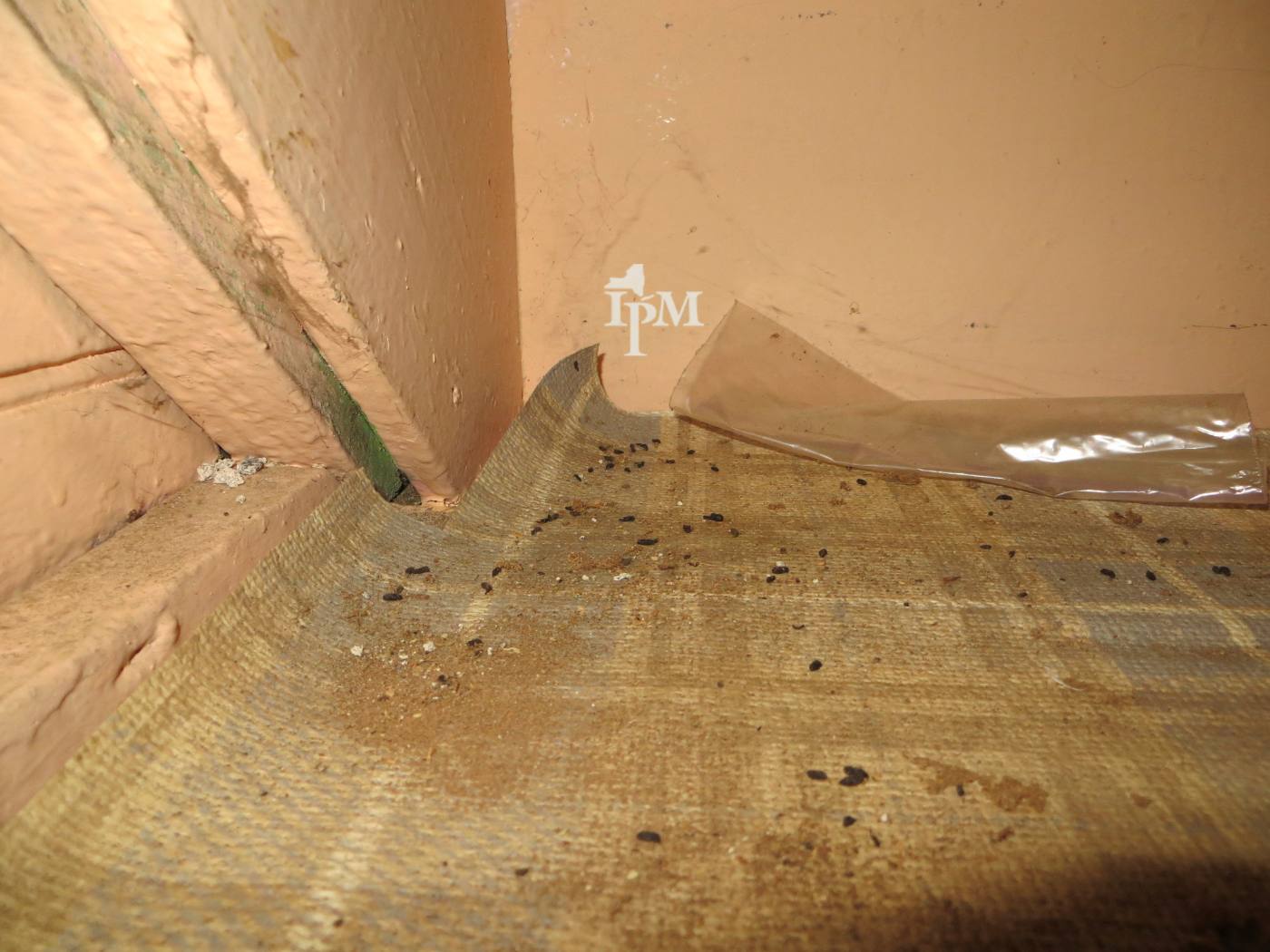
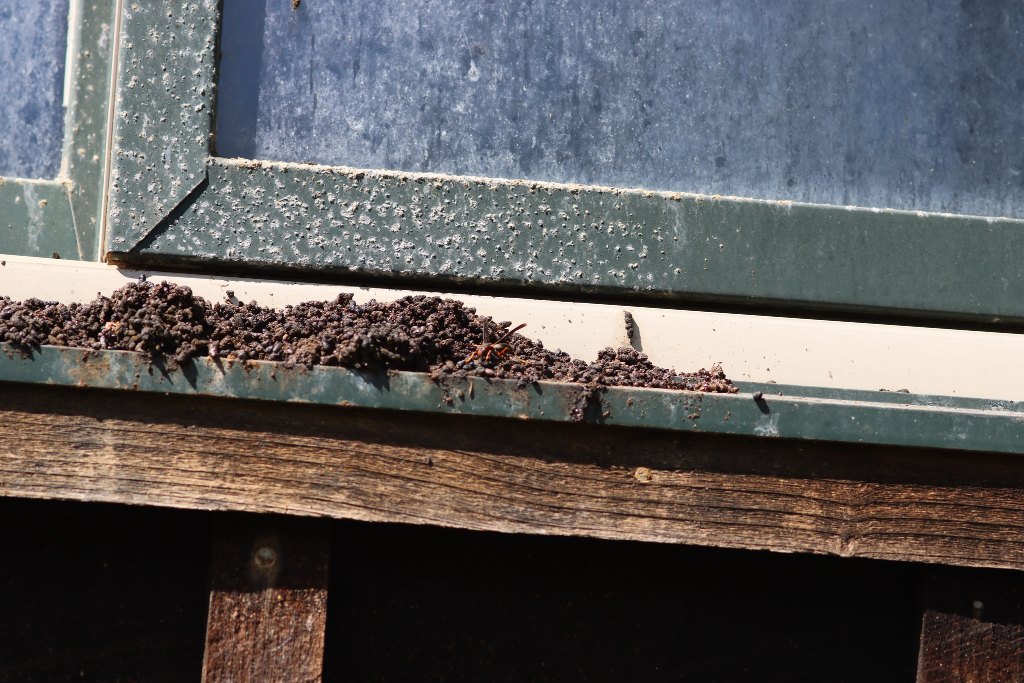
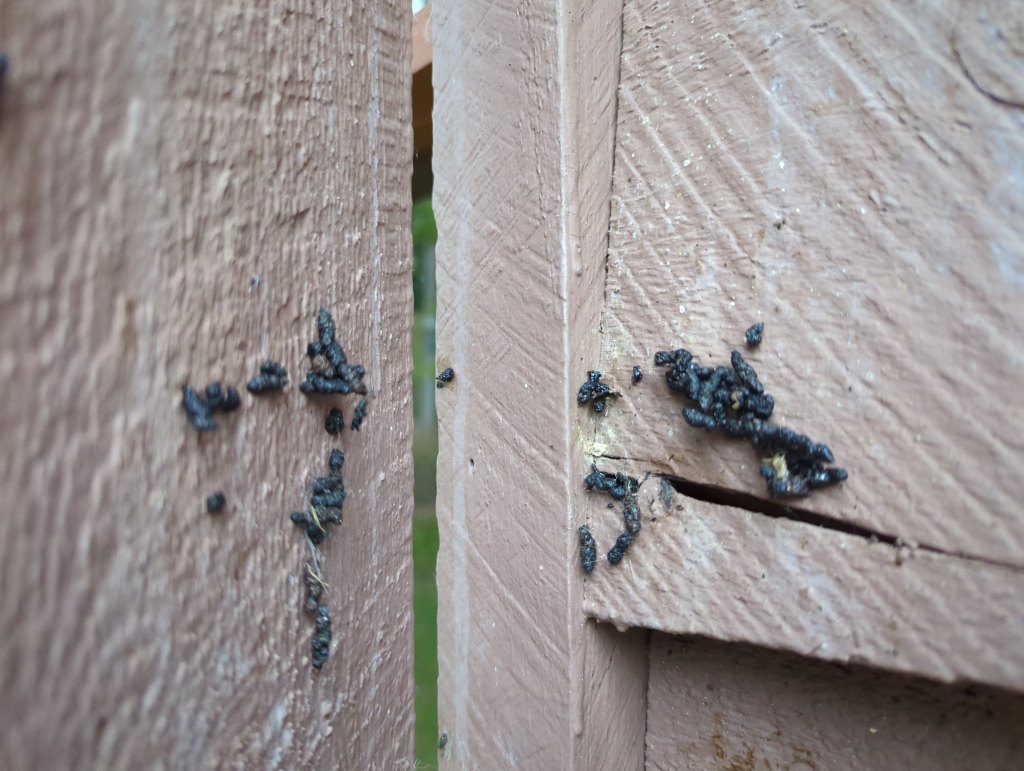
Bats leave droppings where they hang and where they leave. ICWDM says bat droppings turn up on attic floors, in wall recesses and outside the house, and that bats urinate and defecate as they exit a roost, spotting and staining siding, windows, patio furniture, cars and anything else below entry holes. Penn State Extension adds that bat droppings pile up under the places where bats roost, while mouse droppings are scattered in small amounts across an attic, and that bats do not gnaw.
So a heap of pellets on the attic floor under the ridge, or a streak of droppings stuck to the wall below a gable vent, is a bat sign. Pellets in a kitchen drawer are almost certainly not.
Other signs that point to bats
- Rub marks. ICWDM describes smooth, polished, slightly sticky stains, yellow-brown to blackish brown, sometimes with a few hairs, around gaps bats use again and again.
- Entry points high on the house. Bats commonly enter at the roof edge, eaves, gable peaks, chimneys, attic and roof vents, dormers and siding (ICWDM). CDC says bats can fit through openings as small as 1/4 inch.
- Urine stains and crystals on beams and boards, and a musty, acrid smell from a large or long-term colony that may be noticeable outside the house (ICWDM).
- Bats at dusk. CDC suggests watching where bats exit at dusk to find out how they get in, and counting them.
Are bat droppings more dangerous than mouse droppings?
They carry different risks, and neither should be swept up dry.
- Bat droppings and histoplasmosis. CDC says histoplasmosis is a lung infection caused by breathing in spores of the fungus Histoplasma, which lives in soil and spreads in bird and bat droppings that mix in soil. In the U.S. it is found mainly in the central and eastern states. Most people who breathe in the spores do not get sick, but it can cause pneumonia, and symptoms usually appear 3 to 17 days after exposure. ICWDM notes that guano can be a growth medium for the fungus.
- Rabies comes from bats, not from their droppings. NIOSH says contact with the blood, urine or droppings of a rabid animal is not a risk factor for rabies. The bats themselves are another matter: CDC says bats are the most reported rabid animals in the U.S., that bat bites can be too small to notice, and that you should not touch a bat.
- Mouse droppings and hantavirus. Deer mice carry the most common U.S. hantavirus, and house mice can carry lymphocytic choriomeningitis virus. Both are why CDC says to wet droppings with disinfectant before you clean. Details are in are mouse droppings dangerous?
If a bat is in your living space or you may have touched one, CDC says to contact animal control or your health department, and not to release the bat until you have talked to a public health expert, because it may need to be tested for rabies.
Cleaning up: not the same job
Mouse droppings
Use CDC’s wet method: air out the space, wear gloves, spray droppings with disinfectant or a bleach solution until soaked, wait, then pick them up with paper towels. Never sweep or vacuum. Step by step in how to clean mouse droppings.
Bat droppings
- A large deposit is a job for professionals. CDC says large amounts of bird or bat droppings should be cleaned up by companies that specialize in hazardous waste removal.
- Clean only after the bats are gone. ICWDM says to clean an active roost only after the bats have been excluded or have left for hibernation, and to follow state and local rules.
- Keep the dust down. NIOSH says carefully wetting droppings with a water spray reduces the dust raised, recommends a NIOSH-approved respirator and disposable protective clothing, and says to collect wetted material in double heavy-duty plastic bags. For enclosed areas such as attics, its minimum is a powered air-purifying respirator with a full facepiece, which is another reason to hire a professional for anything more than a few pellets.
- Do not disturb guano unnecessarily (ICWDM). Leave a pile alone until you have a plan.
What to do next
If it is bats
- Do not seal the holes yet. Sealing with bats inside can force them into the living space. CDC’s method is to watch where bats leave at dusk, hang plastic sheeting or netting loosely over the exit so bats can get out but not back in, and seal only when you are sure they have all left.
- Mind the season. CDC says fall and winter, when most bats leave, are the best times to bat-proof, and to be careful not to trap young bats between May and August. ICWDM advises against eviction and exclusion between May 15 and August 15, when flightless young are in the roost.
- Check local rules. CDC says some bats are endangered and local laws may govern removal. A wildlife control professional or your state wildlife agency can help.
- Skip repellents and sound devices. NIOSH says ultrasonic devices and chemical repellents are ineffective for getting bats out of a roost.
If it is mice
Clean the droppings with the wet method, set snap traps where you found them, and seal gaps of 1/4 inch and larger; see how to seal mouse entry points. For droppings in an attic, start with rats or mice in the attic.
Other look-alikes
- Rat droppings are larger than mouse droppings; see mouse droppings vs rat droppings.
- Cockroach droppings have ridges and squared-off ends; see mouse droppings vs cockroach droppings.
- Squirrel droppings are rounder and turn up where squirrels nest; see squirrel poop vs rat poop.
- Bird droppings include white chalky material; bat droppings never do (ICWDM).
Questions people ask
Can you get rabies from bat droppings?
No. NIOSH says contact with the urine or droppings of a rabid animal is not a risk factor for rabies. The risk is from bites and scratches, and bat bites can be tiny, so talk to your health department after any contact with a bat (CDC).
Are bat droppings on my windows a sign of bats in the house?
Often. ICWDM says bats spot and stain windows, siding and objects below the holes they use. Look above the stains for a gap with rub marks, and watch it at dusk.
What does a bat colony smell like?
ICWDM describes a pungent, musty, acrid odor from decomposing droppings that can sometimes be noticed from outside a building with a large or long-term colony, and says the smell of urine from a colony gets stronger in damp weather.
I found a few droppings but no bats. Now what?
Check them safely, then look for the other signs: rub marks and gaps high on the house, droppings under vents outside, and activity at dusk. If you see none and the droppings are along walls or near food, treat it as mice.
Can I vacuum bat guano?
Not with a household vacuum. NIOSH mentions only high-efficiency industrial vacuums as an option for professionals. For a homeowner, the rule for both bat and mouse droppings is no dry sweeping or vacuuming.
In short
Bat droppings crumble into a glittery powder of insect parts and pile up under roosts and below exits, often with rub marks and stains outside. Mouse droppings are harder, tapered and scattered along routes, with gnawing and nests nearby. Check a single pellet only with gloves, a mask and a sealed bag. Leave large deposits of bat guano to professionals, clean only after the bats have left, never seal a bat hole with bats inside, and avoid the May to August pup season.
Sources and verification
- ICWDM — Bat Damage IdentificationBat droppings segmented, elongated, friable, powdery with shiny insect remains when crushed; rodent droppings taper, harder, not powdery; locations; spotting below exits; no white chalky material; rub marks; urine crystals; odor; guano and histoplasmosis; do not disturb guano unnecessarily; clean roosts after exclusion or hibernation; entry points.
- ICWDM — Bat Damage Prevention and Control MethodsEviction and exclusion as the standard method; no eviction or exclusion between May 15 and August 15 because of flightless young.
- CDC — Preventing Rabies from Bats (July 2025)Bats most reported rabid animals in the U.S.; avoid touching bats; tiny bites; bat in the home; openings as small as 1/4 inch; watching exits at dusk; netting or sheeting over exits; fall and winter best for bat-proofing; young bats May to August; local rules and endangered bats.
- CDC — About Histoplasmosis and Reducing Risk for Histoplasmosis (November 2026)Lung infection from breathing Histoplasma spores; bird and bat droppings in soil; central and eastern U.S.; most exposed people do not get sick; symptoms 3 to 17 days; large amounts of droppings cleaned by hazardous waste professionals.
- NIOSH — Histoplasmosis: Protecting Workers at Risk (Publication 2005-109, revised December 2004)Wetting with a water spray; NIOSH-approved respirators, powered air-purifying respirator with full facepiece as the minimum in enclosed areas; disposable clothing; double heavy-duty bags; high-efficiency industrial vacuums; ultrasonic devices and chemical repellents ineffective against bats; contact with urine or droppings of a rabid animal not a rabies risk factor.
- Penn State Extension — BatsBat droppings pile up under roosts while mouse droppings are scattered in small amounts; bats do not gnaw.
- ICWDM — House MiceMouse dropping size and shape.
- CDC — How to Clean Up After Rodents (April 2024)Wet method for rodent droppings; no sweeping or vacuuming.