
Identify the animal
Rat Holes in the Yard: What a Rat Hole Looks Like, and How to Tell It From a Vole, Chipmunk, Gopher or Mole
A round hole in the lawn or along the foundation is not automatically a rat. Voles, chipmunks, pocket gophers, moles, ground squirrels, crayfish and armadillos all leave holes or mounds. The size of the opening, whether there is a pile of soil, where the hole is and what leads up to it usually tell you which animal it is. Here is what extension services and federal and city agencies say about each, how to check whether a rat burrow is in use, and what to do about it.
Short answer
- A rat hole is round, open and about 2 to 4 inches across. Active ones look worn smooth, with hard-packed soil and often fresh dirt fanned out in front (Cooperative Extension; UF/IFAS).
- Location is a strong clue. Norway rats dig along foundations, under slabs, beneath woodpiles, rubbish and sheds, and under compost piles (UC IPM; ICWDM).
- Smaller, tidier or plugged holes are usually someone else. Voles: 1½ to 2 inches with grass runways. Chipmunks: about 2 inches with no soil around. Gophers and moles: mounds with the hole plugged (UC IPM; Penn State).
- Test before you act. Loosely plug or collapse the hole and look the next day; reopened holes are in use (University of Kentucky).
- Rats first, then the hole. Trap near the burrows, use only outdoor-rated bait stations if you bait, and fill burrows once activity stops (UC IPM; EPA; NYC Health).
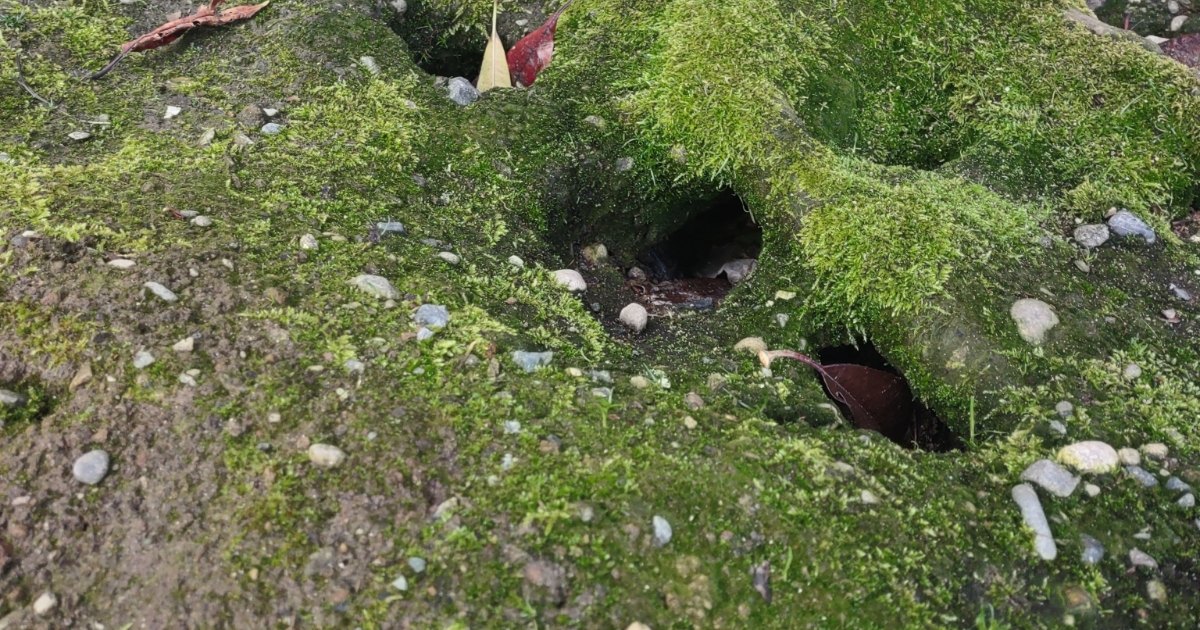
What a rat hole in the yard looks like
The rat that digs is the Norway rat, a large, stocky rat of about 7 to 18 ounces (UC IPM). Roof rats usually nest above ground but sometimes burrow too, UC IPM says, so a rat hole in the ground is most often a Norway rat. From the surface, the sources describe:
- Size. About 2 to 4 inches across for the main opening (Pests in the Home, a national Cooperative Extension site); about 3 inches (UF/IFAS Extension).
- Entrance. Smooth walls and hard-packed dirt (Pests in the Home); smooth, compacted and free of dust and cobwebs (University of Kentucky).
- Soil. Freshly dug dirt scattered in front of an open hole (UF/IFAS). It is not capped by a mound the way a gopher or mole hole is.
- Paths. Runways leading to the openings; slick, hard-packed runways mean an old, established colony (UF/IFAS).
- More than one hole. A main entrance and two or more bolt holes (University of Kentucky), one of them often lightly covered with dirt (UC IPM).
What the burrow looks like underground, how deep it goes and what the nest is made of are in rat nest.
Where rats dig around a house
UC IPM names building foundations, rubbish and woodpiles, gardens, and the ground under compost, especially compost with meat, fish or eggs in it. ICWDM adds the ground under buildings and concrete slabs. University of Missouri Extension lists garbage cans, sheds, doghouses and garden plants. NYC Health says rats need only about 6 to 8 inches of soil to dig, and prefer spots near a reliable food source and under clutter or dense plants.
A hole at the edge of a patio slab, beside the garage or next to the chicken run is a classic rat site; see rats in the garage and rats in the chicken coop. Why rats picked that spot is in what attracts rats.
Whose hole is it? The comparison
Each row is based on the source named. Sizes are the diameter of the opening or tunnel as each source gives it.
| Animal | Opening | Soil at the hole | Typical place | Other clues |
|---|---|---|---|---|
| Norway rat | About 2 to 4 in (Pests in the Home); about 3 in (UF/IFAS) | Open; fresh dirt scattered in front when active (UF/IFAS) | Foundations, slabs, woodpiles, rubbish, compost, sheds (UC IPM; ICWDM) | Smooth, packed entrance; runways leading in; several holes (Kentucky) |
| Vole | About 1½ to 2 in (UC IPM) | Open, unlike closed gopher mounds (UC IPM) | Dense grass and ground cover (UC IPM) | Runways hidden under grass, clipped grass, greenish droppings (UC IPM) |
| Chipmunk | About 2 in (Penn State; ICWDM) | Usually none; soil carried off in cheek pouches (Penn State) | Woodpiles, stumps, garages; under patios, stairs, retaining walls, foundations (Penn State) | Well hidden; animal active by day (Penn State) |
| Pocket gopher | Tunnel about 2½ to 3½ in (UC IPM) | Crescent or horseshoe mound, hole plugged off to one side (UC IPM) | Lawns, gardens, open ground (UC IPM) | Fresh mounds dark and moist; feed holes ringed by clipped plants (UC IPM) |
| Mole | Tunnel about 2 in (UC IPM) | Round, volcano-shaped mound, plug in the middle (UC IPM) | Lawns and beds (UC IPM) | Raised surface ridges; mounds in a line (UC IPM) |
| Ground squirrel | About 4 in, older ones larger (UC IPM) | No mound, left unplugged (UC IPM) | Open grass, around trees, under buildings (UC IPM) | Seen by day; hibernates in winter (UC IPM) |
Quick notes on the other diggers
- Voles are compact, short-legged rodents 5 to 8 inches long including the tail (UC IPM). Pull back the grass between holes and you find their worn paths. Fresh green clippings and greenish droppings, which turn brown or gray with age, mean they are active now. See vole vs mole.
- Chipmunks are 5 to 6 inches long and about 3 ounces (Penn State). Their main tunnel often runs 20 to 30 feet (ICWDM), and many chipmunks under a patio, steps or retaining wall can cause structural damage (Penn State). Because they share foundations and woodpiles with rats, droppings help: chipmunk droppings vs mouse droppings.
- Pocket gophers seal their openings because, UC IPM says, they do not like open burrows. One gopher can push up several mounds a day. In Florida, UF/IFAS Sarasota County describes a lopsided mound and a covered or sunken hole about 3 inches wide.
- Moles are insect eaters, not rodents. We found no extension source describing moles leaving open holes; the guides describe mounds and ridges. See gopher vs mole.
- Ground squirrels are out by day, unlike rats, which UC IPM says are mostly active at night. UC IPM’s guide covers the California ground squirrel; check your state extension service for local species.
Two shortcuts follow. A hole capped or plugged under a fan of loose soil is almost never a rat. A small, very tidy hole with no soil at all beside a patio or step points to a chipmunk.
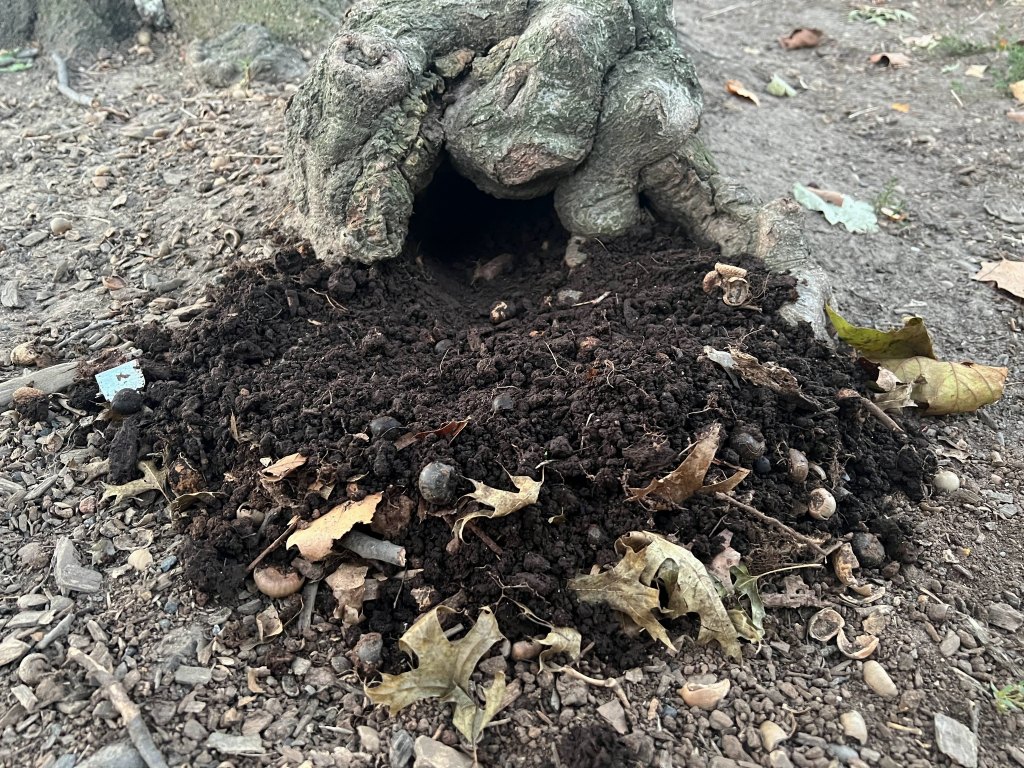
When it is not rats at all
- Snakes. UF/IFAS Sarasota County says snakes use holes dug by other animals, and only a few species burrow. A snake in a hole does not tell you who dug it.
- Crayfish. Clemson’s Home and Garden Information Center describes chimneys of stacked mud pellets over a hole in saturated ground, typically in spring. University of Arkansas Extension says they appear in low-lying yards, near ditches and in slow-draining clay.
- Armadillos. UF/IFAS Sarasota County describes round burrows about 7 to 8 inches wide, often near structures or fences, plus shallow patches of turned soil. That is far bigger than a rat hole.
- Protected animals. UC IPM says old ground squirrel burrows may hold kit foxes or burrowing owls, so check before treating any burrow. In Florida, UF/IFAS says the gopher tortoise digs a domed burrow with a sand apron, and land within 25 feet of one must be left undisturbed.
A 2 to 4 inch hole with no other clues is the hardest to call. Look for droppings, gnawing and rub marks nearby (signs of rats), and see rats in the yard for rats around fences, sheds and gardens.
How to check if a rat burrow is active
A hole can be old. Before trapping, baiting or filling, find out which holes are in use:
- Plug or collapse it. The University of Kentucky pest control training manual says to stuff wads of paper into the opening or collapse it with soil, then check the next day. ICWDM uses paper plugs the same way. Reopened holes are active; doing every hole shows how many there are.
- Read the entrance. Smooth, packed sides and fresh dirt mean use; for ground squirrel holes, UC IPM treats leaves, old straw or cobwebs across the entrance as signs of an old hole.
- Lay a tracking patch. The University of Kentucky suggests a thin patch of flour or talc, and UF/IFAS suggests talcum powder along runways to show footprints and tail marks. Put it down in the evening and look in the morning with a flashlight held low.
For a suspected mole, UC IPM’s version is to tamp down short sections of ridge and check daily for the ones that rise again.
What to do about an active rat burrow
Remove the rats, then close the holes, then take away what drew them. Filling an active burrow mostly sends the rats to dig another.
- Trap near the burrows. UC IPM says to set traps where signs such as burrows are found, in pairs along walls, and outdoors to put them inside boxes or behind a barrier so children, pets and birds cannot reach them. Missouri Extension and UC IPM advise leaving traps baited but unset at first. See best rat traps.
- Bait stations only if rated for outdoors. EPA says only Tier 1 stations, resistant to children, dogs and weather, may be used outdoors, and only within 50 feet of buildings. UC IPM says rats may take days to weeks to use a new station.
- No bait down the hole. EPA limits outdoor burrow baiting to professional products, and NYC Health says not to apply chemicals yourself unless licensed. UC IPM warns that pets and wildlife can be poisoned by eating poisoned rats (mouse poison around pets).
- No gas or smoke. UC IPM does not recommend smoke or gas cartridges around homes because of toxic gas and fire risk, and says carbon monoxide devices may not be used within 65 feet of a structure. ICWDM says burrow fumigants are for licensed operators only.
- Fill or collapse the burrow afterward. Pests in the Home says to fill burrows only once the rats are gone, closing the main entrance and every exit with sand or concrete or packing in steel wool or hardware mesh. NYC Health suggests collapsing burrows or filling them with landscaping pebbles, and says to pour nothing but water into one. Recheck for a few days.
- Make the spot less inviting. ICWDM says a band of heavy gravel, at least 1 inch in size, 2 feet wide and 6 inches deep, along a foundation reduces burrowing.
The full plan, including sealing the house, is in how to get rid of rats.
Questions people ask
How big is a rat hole in the yard?
About 2 to 4 inches across (Pests in the Home); UF/IFAS gives about 3 inches. A hole under 2 inches with runways in the grass is more likely a vole (UC IPM).
Do rat holes have a mound of dirt?
Not a capped mound. UF/IFAS describes loose, fresh dirt in front of an open hole. A crescent or volcano-shaped mound with the hole plugged is a gopher or mole (UC IPM).
Will filling rat holes get rid of the rats?
Not on its own. Pests in the Home says to fill burrows after the rats are gone. Collapsing them earlier is useful as a test, since reopened holes show where rats still are (University of Kentucky).
Can I pour water or bleach down a rat hole?
NYC Health says to pour only water, not other liquids, into a burrow. We found no university or federal source that recommends flooding as a way to get rid of rats.
In short
A rat hole is open, round and about 2 to 4 inches across, with smooth packed sides, fresh dirt in front and a runway leading in, usually along a foundation, under a slab or beneath a woodpile, compost or shed. Smaller holes with grass runways are voles; tidy 2-inch holes with no soil are chipmunks; plugged holes under mounds are gophers or moles; 4-inch holes in open ground are ground squirrels. Plug the hole to see if it reopens, trap nearby, and fill it once the rats are gone.
Sources and verification
- UC IPM — Pest Notes: RatsNorway rat weight; burrow sites; escape hole; trap and bait station placement; trap boxes outdoors; secondary poisoning; smoke, gas and carbon monoxide devices.
- Pests in the Home (Cooperative Extension) — How can I get rid of rat burrows around my house?2 to 4 inch opening, smooth and hard-packed; filling burrows after the rats are gone.
- UF/IFAS Extension — Rat and Mouse Control (ENY-224)3-inch openings, fresh dirt and runways; old colonies; talc along runways.
- University of Kentucky — Pesticide Applicator Training: Rodent ControlBolt holes; active entrances; plug or collapse test; flour or talc patches.
- ICWDM — Norway Rat Biology and Damage Prevention and Control MethodsBurrows under buildings and slabs; paper plugs; gravel strip; fumigants for licensed operators.
- University of Missouri Extension — Controlling Rats (G9446)Burrows near garbage cans, sheds, doghouses and gardens; unset traps at first.
- UC IPM — Voles, Pocket Gophers, Moles and Ground SquirrelHole sizes, mounds, plugs, runways and ridges for each animal; activity tests; kit foxes and burrowing owls.
- Penn State Extension — Chipmunks and ICWDM — Chipmunk BiologyChipmunk size; 2-inch entrance with no mound; tunnel length; burrow sites.
- UF/IFAS Extension Sarasota County — Wildlife Disturbances in Your YardSoutheastern pocket gopher; armadillo; gopher tortoise; snakes using other animals’ holes.
- Clemson HGIC — Crawfish Chimneys and University of Arkansas Extension — Crayfish Chimneys in Your YardMud chimneys in wet, low ground in spring.
- EPA — Choosing a Bait Station Product for Household Use and Restrictions on Rodenticide ProductsTier 1 stations outdoors within 50 feet of buildings; burrow baiting limited to professionals.
- NYC Health — Preventing Rats in Tree Beds6 to 8 inches of soil; collapsing or filling burrows; only water; no chemicals unless licensed.