
Signs and droppings
Signs of Rats in the House and Yard: What to Look For and How to Tell If They Are There Now
Most people never see the rats. They find droppings by the dog bowl, a hollow orange on the tree or a dark smear along a beam, and wonder whether rats are living there right now. This guide lists the signs university and city pest programs look for, inside and outside the house, which of them mean current activity, and three simple checks that tell you within a few nights.
Short answer
- The signs that mean rats are there now are the fresh ones. New York City’s rat inspectors count fresh tracks, fresh droppings, active burrows, active runways and rub marks, fresh gnawing and live rats as active signs.
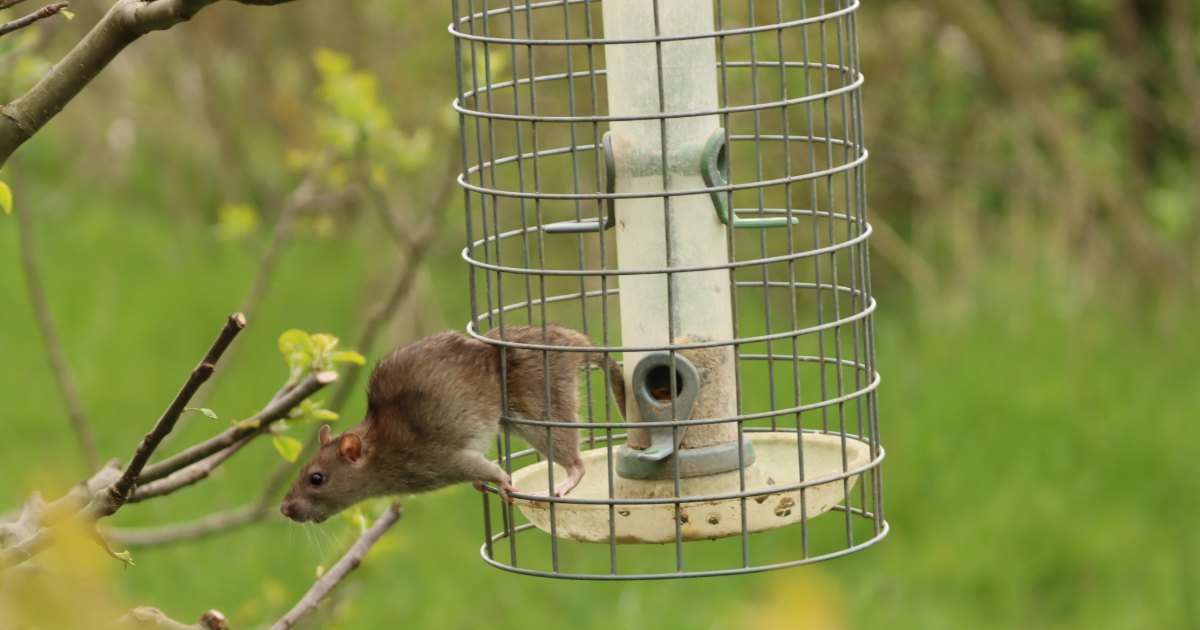
- Look outside as well as inside. Many of the signs UC IPM lists are in the yard: burrows under the compost or garbage cans, chewed fruit on the trees, rats running along fences or wires at dusk.
- Confirm before you treat. Clean up the droppings, lay a thin patch of flour on a path or loosely block a burrow, and look again over the next night or two.
- Not seeing rats proves little. ICWDM says rats are normally nocturnal and wary, so there are usually many more than you see. Rats out in daylight point to a large population.
- If you are not sure it is rats rather than mice, start with do I have mice or rats?, which compares the two sign by sign.
The signs at a glance
| Sign | What it tells you | Does it mean rats are there now? | More detail |
|---|---|---|---|
| Droppings | Rats have been feeding or traveling here. Rat droppings are much larger than mouse droppings. | Only if they are fresh, or new ones appear after you clean up. | Droppings by size, fresh or old |
| Gnaw marks and shavings | Rats are chewing to get in or to reach food. | Fresh shavings mean an active infestation (ICWDM). | Gnaw marks |
| Burrows | Norway rats are nesting in the ground nearby. | Yes, if the hole is reopened after you block it. | Rat nests and burrows |
| Rub (smudge) marks | A route used again and again; fur oil and dirt build up along it. | Old marks stay for a long time; pair them with another fresh sign. | Below |
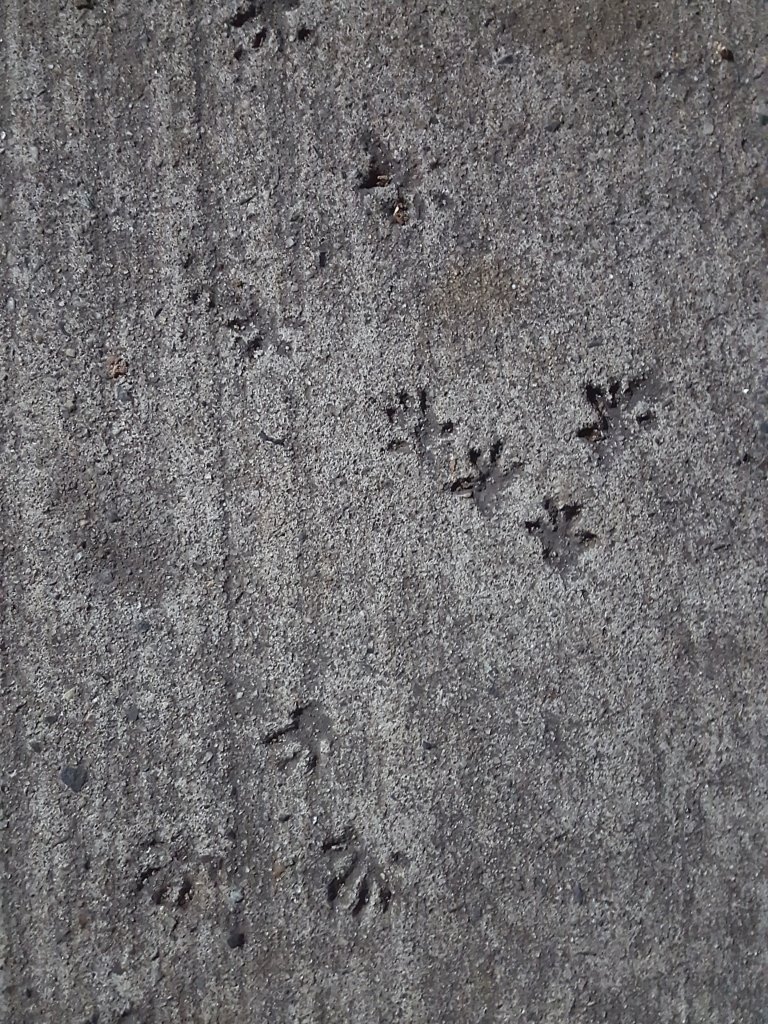
| Runways and tracks | The paths rats use between shelter and food. | Fresh tracks in dust or a flour patch do. | Below |
| Noises at night | Rats in the attic, walls or ceiling. | Yes, while you are hearing them. | Scratching in walls, rats in the attic |
| Chewed fruit, nuts, vegetables | Rats are feeding in the yard. | If the damage is new. | What rats eat |
| A rat seen, or a dead one | Rats are present. Seeing them by day suggests many. | Yes. | Below |
Signs of rats inside the house
UC IPM’s checklist for spotting a rat infestation includes several signs that turn up indoors or in the garage:
- Droppings around pet food. Rat droppings around the dog or cat dishes or the pet food storage containers. Droppings in recycling bins are on the same list.
- Noises from the attic or a drop ceiling. ICWDM says sounds in the attic are often the first sign of roof rats in a home, heard when the house is quiet. For Norway rats it lists gnawing, climbing in walls, clawing, squeaks and fighting noises.
- Nests in storage. UC IPM mentions nests behind boxes or in drawers in the garage. Indoors, a nest is a loose pile of shredded paper, cloth or insulation; see what a rat nest looks like.
- Smudge marks. Dark, greasy marks on beams, rafters, pipes and walls where rats rub their fur as they travel (UC IPM, ICWDM). Where roof rats live overhead, ICWDM says you see fewer droppings and tracks on the floor, and in food-storage buildings the smudge marks may be the most obvious sign.
- Gnawing. Chewed doors, ledges, corners, wall trim, food containers and wiring (UC IPM). ICWDM gives the size of the entrance holes Norway rats gnaw as 2 to 3 inches across.
- Torn insulation. UC IPM and ICWDM both mention rats shredding insulation in walls and attics for nesting.
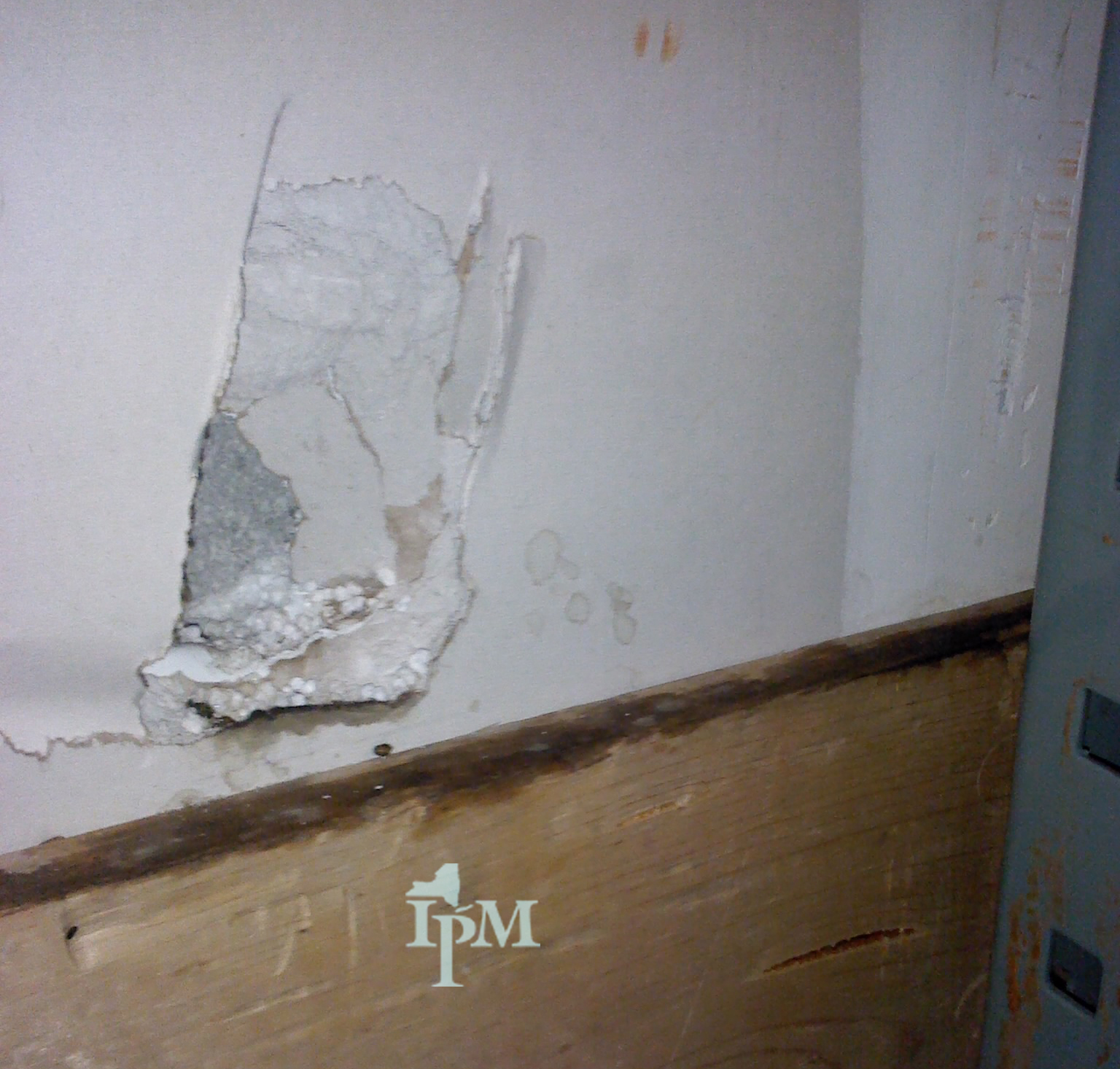
Where you find the signs is a clue to which rat you have. UC IPM says Norway rats indoors usually stay in basements and on ground floors, while roof rats nest high, in attics, wall voids, ceiling voids and cabinets. The full comparison is in roof rat vs Norway rat.
Signs of rats in the yard
UC IPM says that once rats have moved into a garden or landscaping, it is only a matter of time before they show up indoors unless the house is truly rodent-proof. Its outdoor signs:
- Burrows among plants, beneath the compost pile or garbage cans, and something digging under a shed or doghouse. Norway rat burrows are usually along foundations, under rubbish or woodpiles and around gardens (UC IPM).
- Nests in the firewood stack.
- Fruit and nuts eaten on the tree or on the ground. UC IPM and ICWDM describe roof rats hollowing out oranges on the tree and leaving the empty rind, or eating the rind of lemons and leaving the fruit.
- Damaged vegetables in the garden.
- Rats running along utility lines or the tops of fences at dusk or soon after.
- Dead rats that your cat or dog has found, or a drowned rat in the pool or hot tub.
If you keep chickens, rats also go for the feed, the eggs and the chicks; see rats in the chicken coop. Rats and their routes up to the roof are covered in can rats climb walls?
Are the rats still there? Three checks
Old droppings and old rub marks can stay for months after the rats are gone. These checks show what is happening now. Do them over one to three nights before you set traps, and use them again later to see whether your traps worked.
- Clean up, then look again. Remove the droppings with CDC’s wet method (spray with disinfectant or a bleach solution, let it soak, wipe up with paper towels; never sweep or vacuum them). New droppings in the same place over the next few days mean rats are still using it. This is the same before-and-after check we describe for mice in fresh vs old droppings.
- Lay a tracking patch. ICWDM says a patch of flour placed in a pathway overnight shows whether rodents are present. A thin, even layer along a wall, behind an appliance or across a path outdoors is enough; footprints or tail marks in it the next morning mean rats came through.
- Block the burrow. The National Park Service rat manual says to plug burrow openings loosely; holes that are reopened by the following week are active. ICWDM adds that active burrow entrances are free of debris, with rat hairs around the entrance. See is the burrow still in use?
Fresh gnawing helps too: ICWDM says fresh accumulations of wood shavings, insulation and other material indicate an active infestation.
One rat or many?
No sign gives you a count. ICWDM says signs and sightings have limited value for estimating numbers, but gives these rough rules for Norway rats:
- No signs probably means no rats or only a few, perhaps ones that have just moved in.
- Old droppings and gnawing, one or more rats seen at night, or none seen by day suggests moderate numbers.
- Fresh droppings, tracks and gnawing, three or more rats seen at night, or rats seen during the day suggests large numbers.
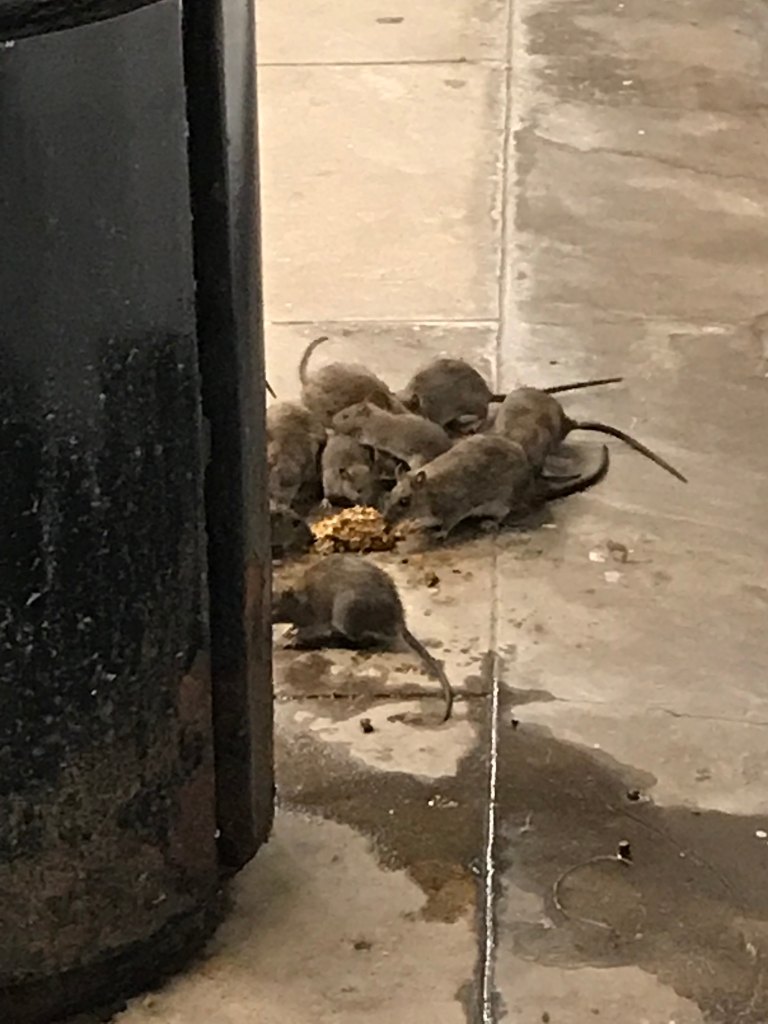
ICWDM’s biology notes say Norway rats become active around dusk, and some are active by day when numbers are high. A rat in the yard at midday is worth taking seriously.
Signs that are not rats
- Small droppings and fine gnaw marks usually point to mice; see do I have mice or rats?
- Raised ridges and volcano-shaped mounds in the lawn are moles; narrow surface paths with small open holes are voles. See vole vs mole and vole vs mouse.
- Noise overhead in daylight is more likely squirrels; their droppings are shorter and rounder. See squirrel poop vs rat poop.
- A large gray animal at the trash or the pet food at night may be an opossum, especially a young one; see opossum vs rat.
What to do once you know
- Start early. UC IPM says less time and effort are needed when numbers are low, and fewer traps are needed if control starts early.
- Follow a plan: work out which rat, seal the way in, trap where the signs are, and take away food and cover. The steps are in how to get rid of rats; trap types and placement are in best rat traps.
- Clean up safely. Wet the droppings and nesting material with disinfectant first; see how to clean mouse droppings (the CDC method is the same for rats).
- Know when to call for help: rats in places you cannot reach, chewed wiring, or signs that keep coming back. See when to call an exterminator.
Questions people ask
Can you have rats and never see them?
Yes. UC IPM says people don’t often see rats except in seriously infested areas, though the signs are easy to find. ICWDM says roof rats outdoors can be present in low to moderate numbers with little sign at all.
What is usually the first sign of rats?
It depends on the rat. ICWDM says sounds in the attic at night are often the first sign of roof rats in a home. For Norway rats, the signs the sources list most often are droppings, gnawing and burrows along the foundation.
Do rats come out during the day?
Sometimes. They usually become active around dusk, but ICWDM says some are active during the day when numbers are high or to avoid people at night, and treats daytime sightings as a sign of a large population.
What does a rat smell like?
We found no agency description of a smell that identifies rats on its own. A musky smell that builds over weeks is usually urine; see mouse urine smell. A rotten smell is more likely a dead animal; see dead rat smell. What rat urine smells like, and how to clean it, is in rat urine smell.
In short
Look for droppings, gnawing, smudge marks, burrows and noises indoors, and for burrows, chewed fruit and rats on fences or wires outside. Fresh signs are what count. Clean up, lay a flour patch or block a burrow, and look again over the next night or two. New signs mean rats are there now, and the sooner you act, the fewer there are to deal with.
Sources and verification
- UC IPM — Pest Notes: Rats (June 2025)People seldom see rats outside seriously infested areas, but signs are easy to find; checklist “How to Spot a Rat Infestation” (droppings at pet dishes and in recycling bins, attic and drop-ceiling noises, nests in firewood and in the garage, carcasses brought in by pets, eaten fruit and nuts, burrows in the garden, under compost and garbage cans, rats on utility lines and fences at dusk, smudge marks, drowned rats, digging under sheds and doghouses); early control needs less time and fewer traps; once in the landscaping, rats get indoors unless the house is rodent-proof; Norway rats in basements and ground floors, roof rats in attics, wall and ceiling voids and cabinets; roof rats hollowing oranges and eating lemon rinds; gnawing damage and shredded insulation.
- ICWDM — Norway Rat Damage IdentificationWhere to search; no signs probably mean no or few rats; rats are nocturnal and wary, so more are present than are seen; rules for estimating moderate and large numbers from old and fresh signs and from night and day sightings; gnawing, climbing, clawing, squeaks and fighting noises.
- ICWDM — Norway Rats and Norway Rat BiologyTracks and tail marks on dusty surfaces or mud; a flour tracking patch placed in pathways overnight; fresh accumulations of shavings indicate active infestations; entrance holes 2 to 3 inches across; smudge marks on beams, rafters, pipes and walls; active around dusk, some active by day when populations are high.
- ICWDM — Roof Rat Damage IdentificationRoof rats outdoors can be present with little sign; few droppings or tracks on floors when rats live overhead; smudge marks as the most prominent sign in some buildings; sounds in the attic as often the first indication in a home; oranges hollowed and lemon rinds eaten on the tree.
- NYC Health — Rat Inspections: Terms and PracticesActive rat signs: fresh tracks, fresh droppings, active burrows, active runways and rub marks, fresh gnawing marks, live rats.
- National Park Service — Integrated Pest Management Manual: Rats (archived copy, May 2010; as cited in our rat nest guide)Plug burrow openings loosely; burrows reopened the following week are active.
- CDC — How to Clean Up After Rodents (April 2024)Wet droppings with disinfectant or bleach solution and let them soak before wiping up; do not sweep or vacuum.