
How mice and rats live
What Do Mice Eat? In the Wild, in Your House, and What It Means for Getting Rid of Them
Mice eat seeds and grain first, and almost anything else when they have to. What a house mouse, a deer mouse or a white-footed mouse eats outdoors, what it will eat or chew once it is inside, how to tell what it has been eating, and how to use that to trap it and starve it out.
Short answer
- Seeds and grain first. ICWDM says house mice eat many kinds of food but prefer seeds and grain. UC IPM says people and house mice are closely linked because we store their preferred foods, cereals and grains.
- Almost anything else when available. UC IPM calls house mice omnivores that eat whatever food is available, including cereals, grasses, roots, seeds and insect larvae.
- Rich foods tempt them. ICWDM says foods high in fat, protein or sugar, such as bacon, chocolate, butter and nuts, may be preferred even when grain and seeds are present.
- Field mice are mostly seed eaters. ICWDM says deer mice and white-footed mice eat mainly seeds, nuts and acorns, plus fruit, insects, insect larvae and fungi, and they store food near the nest in fall.
- Use it against them: bait traps with what they are already eating (UC IPM), and seal away seed, grain, pet food and birdseed.
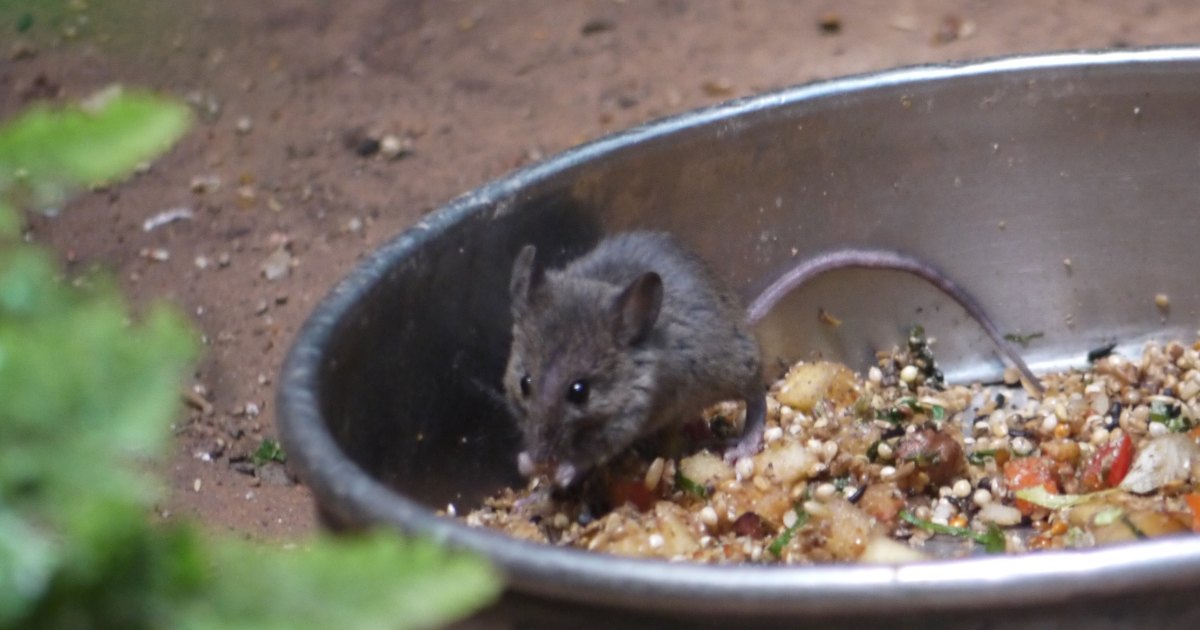
What mice eat in the wild
“Mouse” covers more than one animal, and what it eats depends on which one you have.
- House mouse. The Animal Diversity Web account from the University of Michigan says that in the wild, house mice eat many kinds of plant matter, such as seeds, fleshy roots, leaves and stems, and take insects such as beetle larvae, caterpillars and cockroaches, and carrion, when available. ICWDM adds that outdoors they feed on newly planted grain and gnaw the bark of young trees.
- Deer mouse. ADW describes deer mice as omnivores that eat insects and other invertebrates, seeds, fruits, flowers and nuts, depending on what is available, and notes that in cooler climates they cache food in fall.
- White-footed mouse. ADW says their diet changes with the season and the region and may include seeds, berries, nuts, insects, grains, fruits and fungi. They do not hibernate, so in fall they store seeds and nuts for winter.
When people say “field mice,” they usually mean deer mice or white-footed mice, and sometimes voles. Voles are a different animal; see vole vs mouse. How to tell a deer mouse from a house mouse, and why it matters for hantavirus, is in deer mouse vs house mouse.
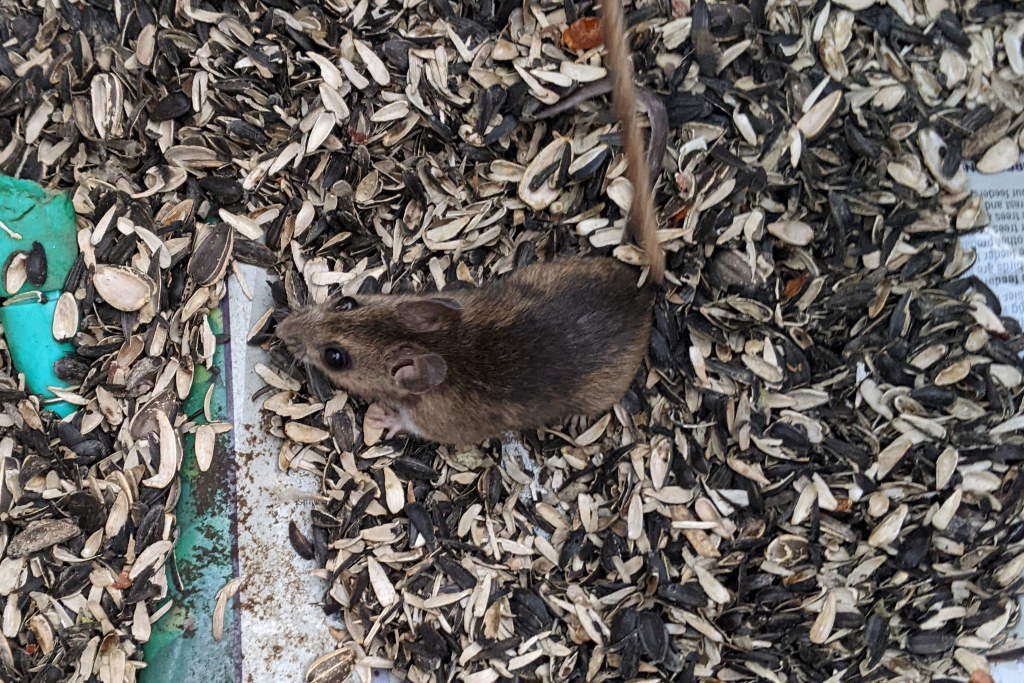
What mice eat in your house
Indoors, a house mouse eats what it can reach. ICWDM says mice in homes feed on stored food and pet food. In practice the list from the guides looks like this:
| Food | Why it matters | Source |
|---|---|---|
| Cereal, flour, rice, oats, crackers | Cereals and grains are the preferred food of house mice | UC IPM, ICWDM |
| Birdseed, grass seed, animal feed | Seed is what mice prefer; CDC says to keep grains and animal feed in sealed containers | ICWDM; CDC |
| Pet food | Named directly as a food mice take in homes | ICWDM, UC IPM |
| Nuts, chocolate, butter, bacon | High fat, protein or sugar; may be preferred even over grain | ICWDM |
| Crumbs and spills | Mice eat many small meals, so very little food is enough | UC IPM |
| Insects | Wild house mice eat insect larvae and cockroaches | UC IPM, ADW |
| Glue, soap and other household materials | ADW lists these among what house mice eat in buildings | ADW |
How much food that adds up to, and the full room-by-room list of what draws mice in, is in what attracts mice. Rats eat differently; see what do rats eat.
How mice eat
- Little and often. UC IPM says a house mouse eats in about 200 small meals a night, which is why it is called a nibbler.
- Here or somewhere safer. UC IPM says mice eat at the food source or carry food away to eat in a more secluded spot. That is why you can find seed husks or bits of dog food in a drawer, a boot or behind the stove, far from the bag.
- Close to home. UC IPM says house mice seldom go more than 30 feet from their nest and food. ICWDM says mice seldom travel far for food or water.
- Curious about new food. ICWDM says mice sample new foods, while it describes rats as wary of new foods. That curiosity is one reason a new bait can work on mice quickly.
- Water from food. ICWDM and UC IPM both say house mice can get the water they need from their food, though they drink when water is there.
- Stores, sometimes. ICWDM says deer mice and white-footed mice cache food much more than house mice do. A stash of acorns or seeds in a cabin, shed or drawer points to them.
Eating vs chewing: plastic, paper, wires
Much of what mice damage, they do not eat. UC IPM says mice can chew through storage containers meant to protect food. ICWDM says deer mice and white-footed mice tear up upholstery, mattresses, clothing and paper to build nests. Gnawed wires, cardboard and plastic are usually signs of mice reaching food or collecting nesting material rather than eating. How to read the marks they leave is in rodent gnaw marks.
How to tell what mice have been eating
- Droppings in or next to the food. UC IPM names droppings and fresh gnaw marks as the main signs of where mice are active, and says mice leave feces in food.
- Chewed packaging. UC IPM says mice chew into containers meant to protect food.
- Husks, shells and crumbs in odd places. Food carried off and eaten somewhere hidden, as UC IPM describes.
Mice contaminate far more food than they eat, through urine and droppings (ICWDM). What to throw away after mice have been in your cupboards, and how to clean, is in mouse droppings in kitchen cabinets.
Using what mice eat against them
- Bait with their own menu. UC IPM says the best bait is often the food the mice are already eating. If they are in the birdseed, a little birdseed on the trap is a good start. Peanut butter is popular and very attractive to house mice, UC IPM says, but keep allergies in mind. More in best bait for mouse traps.
- Take the food away. ICWDM notes that good sanitation makes traps and bait work better by reducing competing food. Keep grain, seed, flour and pet food in metal, glass or thick plastic containers with tight lids (CDC), and feed pets only what they will eat at one feeding (UC IPM).
- Trap close to the food. Because house mice stay within about 30 feet of their nest and food, UC IPM says to set traps no more than about 10 feet apart where mice are active.
- Close the way in. Food control alone will not solve it; see how to get rid of mice.
Questions people ask
Do mice really eat cheese?
They can, but none of the official guides we checked lists cheese as a preferred food or recommended bait. ICWDM’s list of favorites is seeds and grain, plus rich foods like bacon, chocolate, butter and nuts. The evidence on cheese as bait is in best bait for mouse traps.
Do mice eat insects or other mice?
Insects, yes: UC IPM lists insect larvae, and ADW lists beetle larvae, caterpillars and cockroaches. ADW also says wild house mice may take carrion when it is available.
What do mice eat in winter?
House mice inside a building keep eating whatever is stored there. Deer mice and white-footed mice rely on the seeds and nuts they stored in fall (ICWDM, ADW). More in mice in winter.
Can mice live without food or water for long?
They need food often; UC IPM says they eat about 200 small meals a night. They need less water, because house mice can get moisture from food (UC IPM, ICWDM). That is one reason sealing food away is the first step.
What should I feed a pet mouse?
This page is about wild mice. For a pet mouse, ask a veterinarian who treats small mammals.
In short
Mice eat seeds and grain first, rich foods like nuts, butter and chocolate when they can, and almost anything else when they have to, including insects and, indoors, things like soap and glue. Deer mice and white-footed mice are mostly seed eaters that store food for winter. Inside your house, the stored grain, pet food and birdseed are what keep mice there, so seal those away, bait traps with what the mice are already eating, and set the traps close to where they feed.
Sources and verification
- UC IPM — Pest Notes: House Mouse (July 2025)Omnivores that eat whatever food is available, including cereals, grasses, roots, seeds and insect larvae; preferred foods cereals and grains; about 200 small meals a night; eat at the source or carry food away; do not need to drink water; chew storage containers and leave feces in food; seldom more than 30 feet from nest and food, traps about 10 feet apart; the best bait is often what they are already eating; peanut butter and allergies; feed pets only what they eat at one feeding.
- ICWDM — House Mouse Biology, Damage Identification and Prevention and Control MethodsPrefer seeds and grain; nibblers that sample new foods; fat, protein or sugar (bacon, chocolate, butter, nuts) may be preferred; contaminate far more than they eat; water from food; seldom travel far; stored food and pet food in homes; newly planted grain and tree bark outdoors; sanitation makes traps and bait more effective.
- ICWDM — Deer and White-footed Mouse Biology and Damage IdentificationPrimarily seed eaters (seeds, nuts, acorns), also fruit, insects, larvae and fungi; store food near the nest in fall; cache food more than house mice; nest materials from upholstery, mattresses, clothing and paper; dig up planted seed.
- Animal Diversity Web, University of Michigan — Mus musculus (Ballenger 1999), Peromyscus maniculatus (Bunker 2001), Peromyscus leucopus (Aguilar 2011)Wild house mice: seeds, fleshy roots, leaves, stems, beetle larvae, caterpillars, cockroaches, carrion; in buildings, any accessible human food plus glue, soap and other household materials. Deer mice: insects, invertebrates, seeds, fruits, flowers, nuts; fall caches. White-footed mice: seasonal diet of seeds, berries, nuts, insects, grains, fruits, fungi; store food for winter.
- CDC — How to Seal Up to Prevent RodentsStore food, grains and animal feed in thick plastic, metal or glass containers with tight lids.