
Evidence and signs
Mouse vs Rat: How to Tell the Difference
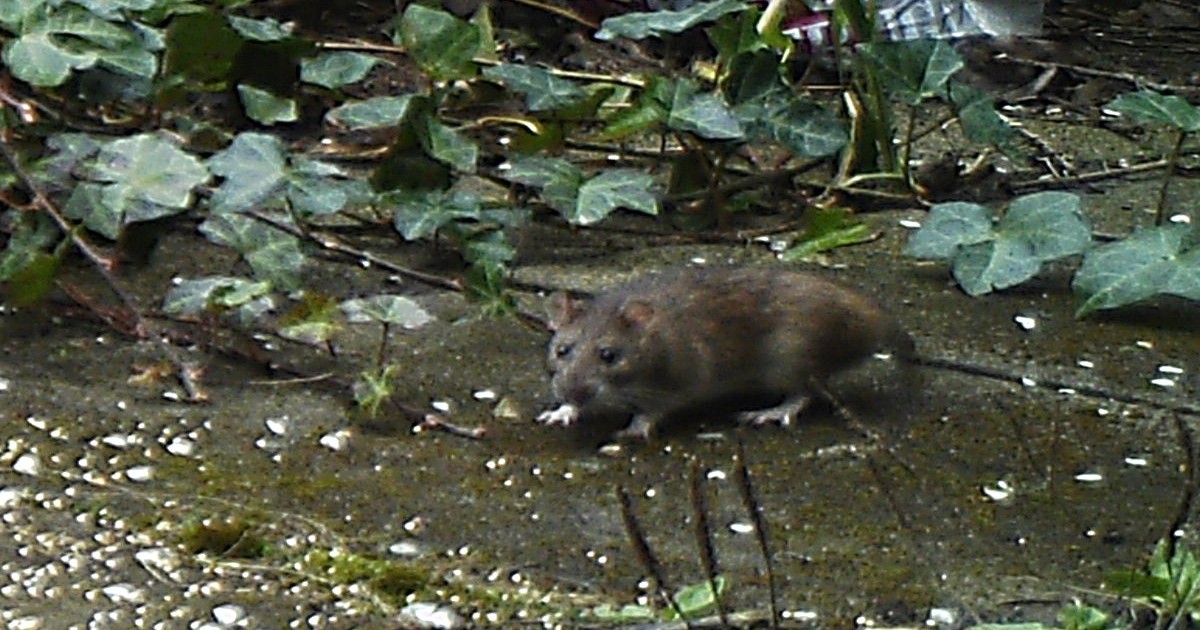
A full-grown rat is hard to mistake for a mouse. The mistake people actually make is with a young rat, which can be close to mouse-sized. This guide covers the features that separate them when size does not, how to tell the two U.S. rat species apart, and what each clue can and cannot prove.
The short answer
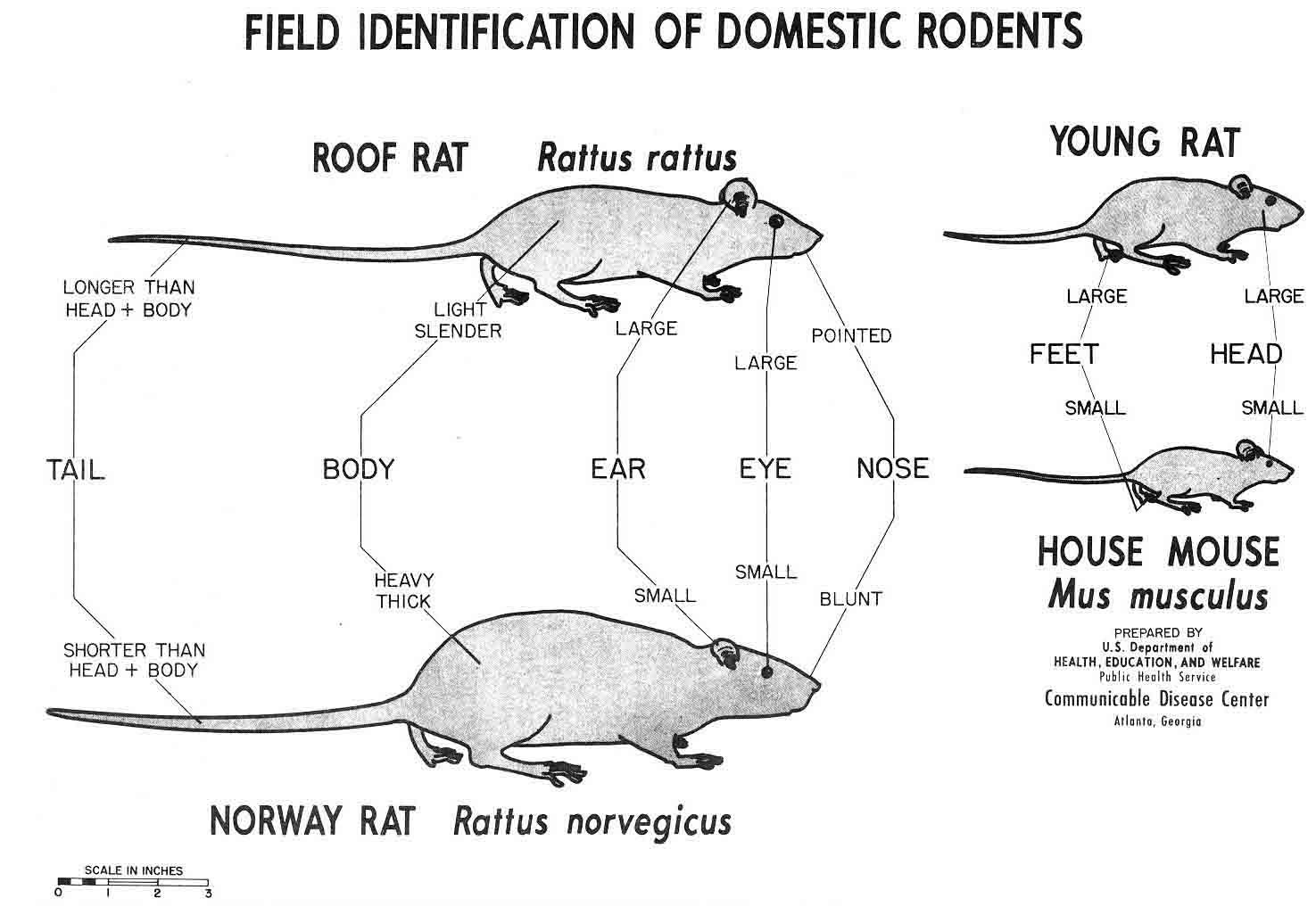
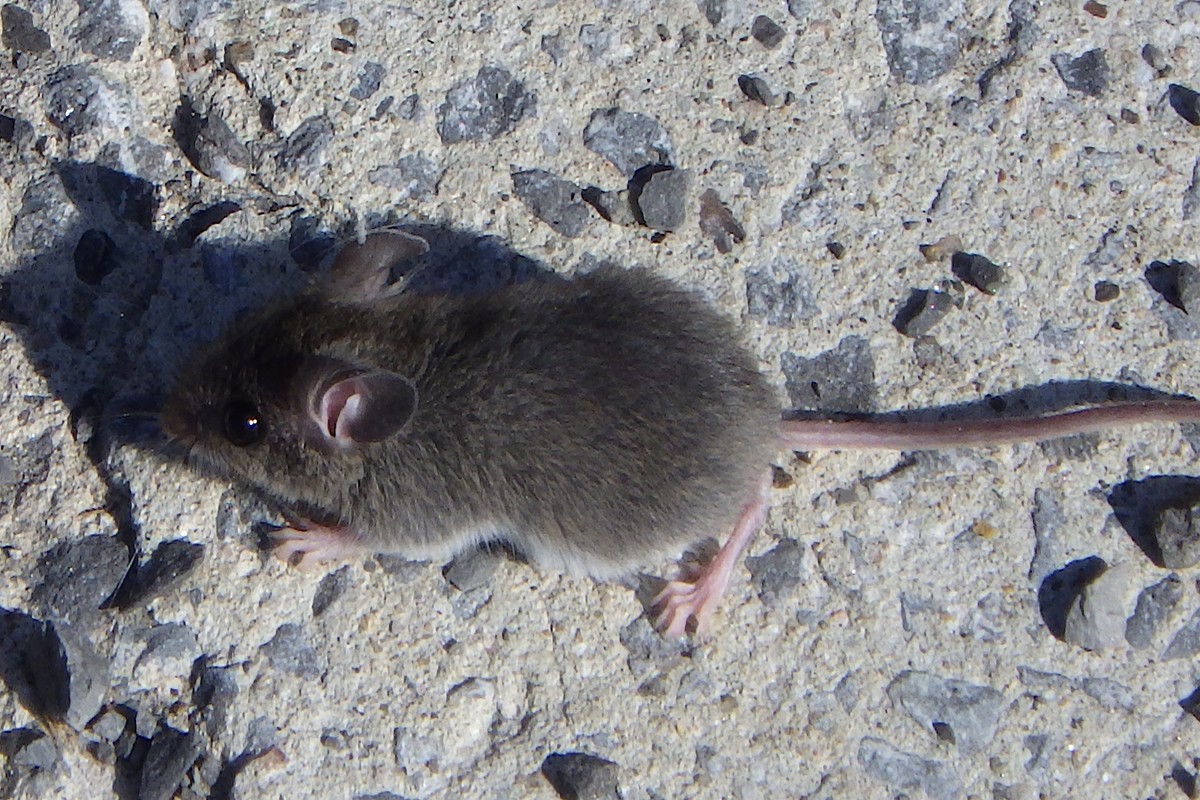
Look at proportions before size. UC IPM warns that a young rat can be confused with a mouse, and gives the rule for telling them apart: very young rats have heads and feet that are large for their bodies, while an adult mouse’s head and feet are proportionately much smaller. Cornell IPM adds that, compared with a juvenile rat, an adult house mouse has larger ears and eyes and a pointier nose.
Once the animal is clearly adult, size does most of the work: an adult house mouse weighs about half an ounce, an adult rat several ounces. The table puts the four animals you are most likely to be choosing between side by side.
| Feature | Adult house mouse | Young rat | Adult Norway rat | Adult roof rat |
|---|---|---|---|---|
| Size | About 5–7 in including a 3–4 in tail; about ½ oz | Can overlap an adult mouse, so size does not separate them | Up to about 11 in, tail slightly shorter; 7–18 oz | Smaller and lighter than a Norway rat; 5–10 oz |
| Head and feet | Small in proportion to the body | Large in proportion to the body | Large, robust build | Sleek, slender build |
| Muzzle | Pointed | Less pointed than an adult mouse’s | Blunt | Pointed |
| Ears and eyes | Large and prominent for the head | Look smaller than an adult mouse’s | Small; ears do not reach the eyes when folded over | Large; ears reach the eyes when folded over |
| Tail | Semi-naked, about as long as the body | No separate figure in the sources | Shorter than head and body | Longer than head and body |
Mouse figures are from UC IPM and Cornell IPM; the Norway rat length is Cornell’s; rat weights, muzzle, ear and tail comparisons are from UC IPM’s table of adult rat characteristics. None of these sources gives measurements for a young rat, which is why that column describes proportions only.
Young rat or adult mouse?
This is the comparison that goes wrong. A rat grows through mouse-sized stages, so a small animal seen for a few seconds is not automatically a mouse. Work through the clues in this order:
- Head and feet against the body. A head and feet that look oversized for the body point to a young rat. A small head and small feet on a proportionate body point to an adult mouse. This is the clue UC IPM leads with.
- Ears and eyes. An adult house mouse’s ears and eyes look large for its head. On a juvenile rat they look smaller by comparison.
- The nose. An adult mouse has the pointier face. A young rat’s muzzle is blunter.
- Only then, overall size. Size supports a conclusion the proportions already suggest. On its own it cannot rule a young rat out.
RodentVerify’s working rule: rely on two clues that agree, not one strong impression. If the proportions say one thing and the face says another, or the sighting was too brief to judge either, treat the identification as open and look for other evidence rather than guessing.
Which clues deserve the most weight
Not every difference you read about is equally useful. Some are reliable when you can see them clearly; others only shift the odds.
| Clue | How much it tells you | What it cannot prove |
|---|---|---|
| Head and feet proportions | The best single clue for young rat vs adult mouse | Hard to judge from a blurry photo or a moving animal |
| Muzzle shape | Strong: mouse and roof rat pointed, Norway rat blunt | Does not separate a mouse from a roof rat by itself |
| Ears and eyes | Strong as a proportion against the head | Absolute ear size means little without the head beside it |
| Tail against body | Strong for adult roof rat vs Norway rat | Needs a clear view of the whole animal |
| Overall size and build | Decisive once the animal is clearly adult | Fails for young rats, which is the case that matters |
| Fur color | Useful mainly for a sharply white-bellied mouse (see deer mouse below) | Does not reliably separate the two rats |
| Where you saw it | Supporting only | Both rat species turn up outside their usual zones |
| Sounds and time of day | Very little for species | Cannot identify which animal made them |
Norway rat vs roof rat
Two introduced rat species live around U.S. homes, and UC IPM notes that knowing which one you have matters for choosing effective control. Adults differ in a consistent set of ways (the full comparison, including where each one lives in the U.S., is in roof rat vs Norway rat):
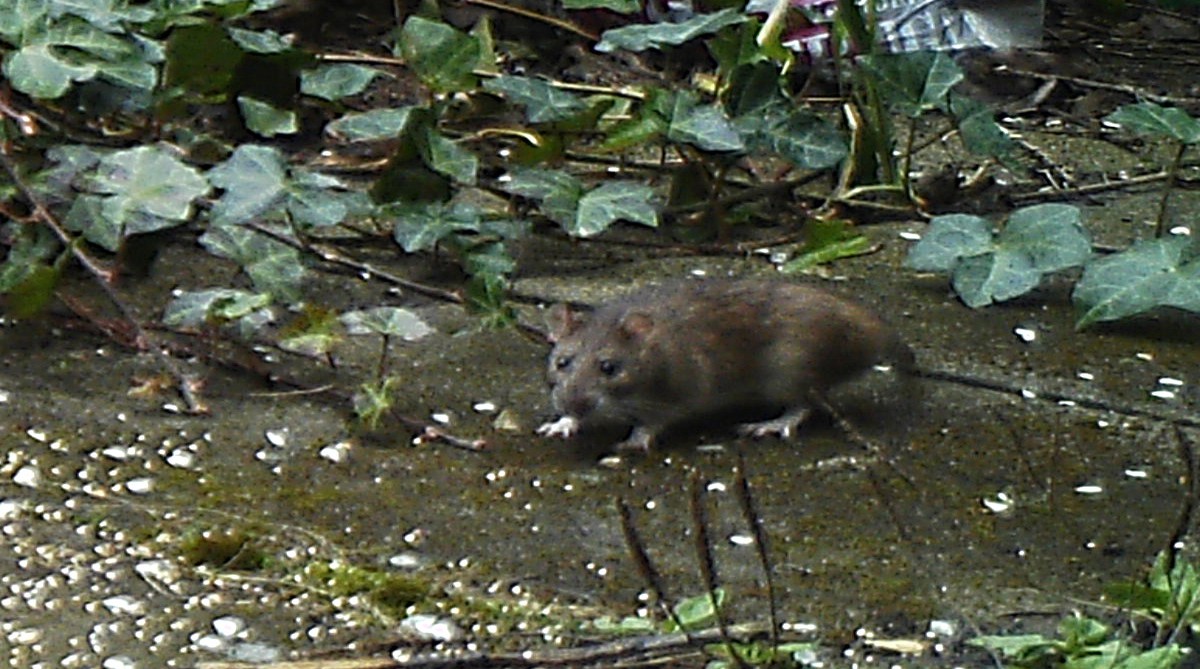
- Norway rat (brown rat): large and robust, with a blunt muzzle, small ears that do not reach the eyes when folded over, and a tail shorter than the head and body.
- Roof rat (also called the black rat or ship rat): smaller and sleeker, with a pointed muzzle, ears long enough to reach the eyes when folded over, and a tail longer than the head and body.
The tail is the clearest single difference. UC IPM recommends it as the check for a trapped rat: laid over the back toward the head, a roof rat’s tail reaches at least to the snout, while a Norway rat’s reaches about the middle of the skull. Wear disposable gloves; UC IPM advises never touching rodents with bare hands. Handling and disposing of a trapped rodent covers the rest.
Two color shortcuts do not hold up. The name “black rat” does not mean black fur: the adult roof rat in UC IPM’s own reference photo is light brown. And the sources do not agree on which rat is more two-toned — UC IPM’s table lists a gray-to-white belly for roof rats and a mostly gray one for Norway rats, while Cornell describes Norway rats as tending to have two-tone fur. Rely on build, muzzle, ears and tail instead.

Where in the U.S. each one lives
Geography changes the odds; it does not identify the animal in front of you. UC IPM says Norway rats live throughout the 48 contiguous states. Roof rats are more regional: University of Arizona Cooperative Extension describes them as established in most coastal and southern states, in Hawaii, and in small populations in Alaska, and UC IPM notes that their documented range is expanding. At the other end, Cornell IPM says roof rats are generally not found in New York. So a rat in a Gulf Coast attic is a realistic roof-rat candidate; a rat in upstate New York is far more likely to be a Norway rat.
What location and behavior can tell you — and what they can’t
Behavior clues are real tendencies, but every one of them has exceptions documented by the same sources.
- Which floor. When both rats share a building, UC IPM says Norway rats typically occupy the basement and ground floor and roof rats the upper floors. But UC IPM also notes that Norway rat infestations in ceiling voids are not uncommon, and that roof rats sometimes burrow into soil or live in sewers. A rat upstairs is not proof of a roof rat.
- Climbing. Roof rats are the more agile climbers of the two and are often seen at night running along utility lines or fence tops; Norway rats are the stronger swimmers. Treat a climbing rat as supporting evidence, not a verdict.
- Caution around traps. UC IPM describes rats as quick to detect and avoid new objects and foods, often for days after a trap is placed, and thinks this is more pronounced in roof rats. An untouched trap tells you about rat behavior, not which animal you have.
- Sounds. Noise in a wall or ceiling does not identify the species, and “heavy” versus “light” scratching is not a reliable test. What scratching in the walls can and cannot tell you goes through this.
- Time of day. Rats are mostly active at night. Seeing an animal in daylight tells you when you saw it, not which animal it was.
Could it be a deer mouse?
If the mouse you saw had a sharply white belly, it may not be a house mouse at all — see deer mouse vs house mouse. UC IPM separates the two this way: the deer mouse has larger eyes, a white underside with a clear line where the darker back meets it, and a tail that is furred, dark on top and light underneath. The house mouse has an overall gray-brown coat and a tail with almost no fur on it.
The distinction matters because the two are linked to different diseases. CDC identifies the deer mouse as the carrier of the most common hantavirus that causes hantavirus pulmonary syndrome in the United States. CDC links lymphocytic choriomeningitis (LCM) to the common house mouse, Mus musculus. Neither risk can be judged by looking at an animal, and neither changes how droppings and nesting material should be cleaned up. What the health risks actually are and the cleanup procedure cover both.
If you never saw the animal
This guide assumes you saw the animal or have a usable photo. If what you actually have is droppings, noises, damage or a smell, start from the evidence instead: Do I have mice or rats? works through each sign in the house, and Mouse droppings vs rat droppings compares droppings at actual size.
Why the ID changes what you do
The practical reason to get this right is trapping. UC IPM points out that mice, and small juvenile rats, often will not set off a rat-size snap trap, so the identification decides what size of trap you need.
For rats, species changes placement as well. UC IPM advises setting traps for Norway rats close to walls, behind objects, in dark corners and where you have found droppings or other signs. For roof rats, traps often need to go both on the ground and above it — on ledges, shelves, pipes or overhead beams. Wherever traps go, keep them out of reach of children and pets. For mice, choosing and placing mouse traps covers trap type and layout.
The bottom line
Size only settles the question for an adult. For a small animal, check the head and feet against the body first, then the ears, eyes and nose, and look for two clues that agree. For a rat, the tail against the head and body is the clearest way to separate a roof rat from a Norway rat, and U.S. geography tells you which is more likely where you live. Location, sounds and time of day can support an identification but cannot make one. Once you know it is a rat, the steps are in how to get rid of rats.
Sources & verification
- UC IPM — Rats (Pest Notes, updated 06/2025)Young rat vs mouse proportions; the table of adult roof rat and Norway rat characteristics, including weights, muzzle, ears and the tail test; building zones and their exceptions; distribution of Norway rats; trap size and placement by species.
- UC IPM — House MouseAdult house mouse length and weight; house mouse vs deer mouse features.
- Cornell IPM — Mouse and Rat Biology and BehaviorAdult house mouse vs juvenile rat (ears, eyes, nose); house mouse tail; Norway rat length and features; roof rats generally absent from New York.
- University of Arizona Cooperative Extension — Roof Rats: Identification, Ecology, and SignsWhere roof rats are established in the U.S.
- CDC — About HantavirusDeer mouse as the carrier of the most common U.S. hantavirus causing HPS.
- CDC — About Lymphocytic ChoriomeningitisLCM spread by the common house mouse, Mus musculus.