
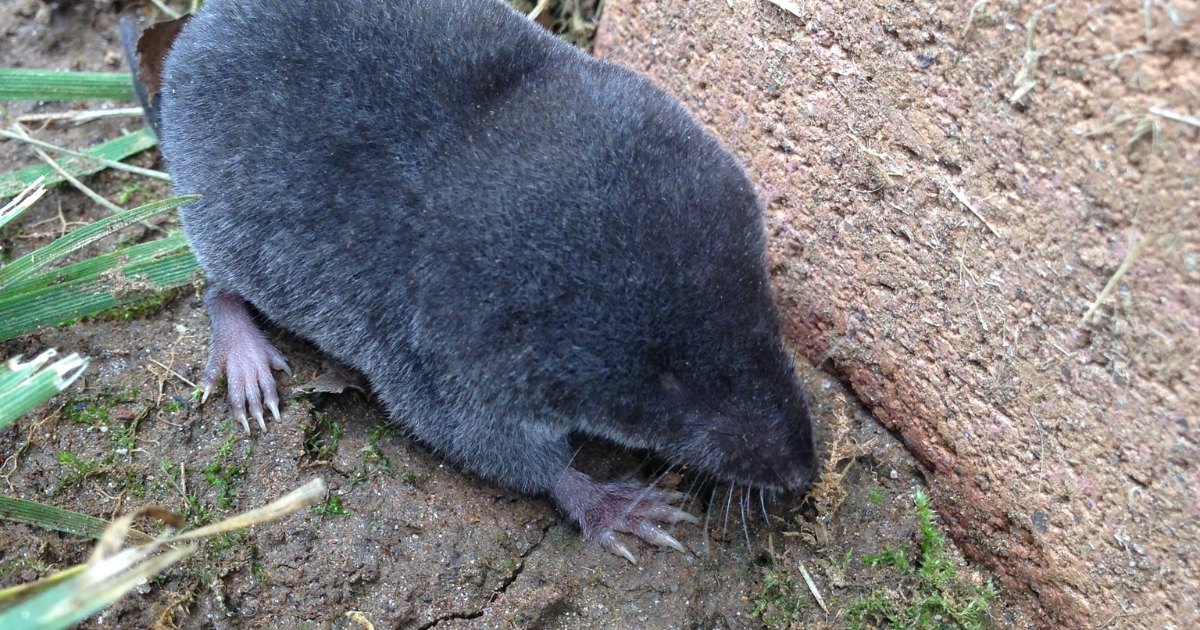
Identify the animal
Shrew vs Mouse: How to Tell Them Apart and Whether It Changes What You Do
If the small gray animal your cat brought in, or the one in the window well, has a long pointed nose and almost invisible eyes, it is probably a shrew, not a mouse. Shrews look like mice but are not rodents at all; they belong with moles and eat mostly insects. That changes a few things: what they damage, what works against them, and how much of a problem one really is. Here is how to tell them apart from the guides that describe both.
Shrew and house mouse side by side
| Feature | Shrew | House mouse |
|---|---|---|
| What it is | An insectivore, related to moles | A rodent |
| Nose | Long, pointed snout | No long snout |
| Eyes | Small, “tiny” in UC IPM’s words | Larger |
| Fur | Dense, one color all over | Two-toned (bicolored) |
| Front feet | Five clawed toes | Four toes |
| Teeth | Small, sharp, often dark-tipped; they do not keep growing | Rodent incisors for gnawing |
| Droppings | Often corkscrew-shaped; some shrews use the same spot repeatedly | About 1/4 inch, pointed at the ends |
| Food | Mostly insects, spiders, snails, earthworms and slugs; sometimes small birds or mice; seeds in some species | Prefers seeds and grain; eats almost anything |
| How much it eats | As often as every 3 to 4 hours; some eat three times their body weight in a day | About 1/10 of its body weight a day (ICWDM); up to 20% (UC IPM) |
| Breeding | 1 to 3 litters a year of 2 to 10 young | 5 to 10 litters a year of about 5 or 6 |
| Life span | Usually no more than 1 to 2 years | Usually 9 to 12 months, rarely up to 3 years |
The quick check: nose, eyes, feet, fur
The handbook chapter on shrews puts the difference in one sentence: mice have four toes on their front feet, larger eyes and two-toned fur, and they lack the shrew’s elongated snout. UC IPM’s house mouse guide makes the same point about shrews’ pointed snouts and tiny eyes. If you have the animal in front of you, look at the face first. A shrew’s nose runs well past its mouth and the eyes are pinpoints; a house mouse lacks that long snout and has noticeable eyes and relatively large ears (UC IPM).
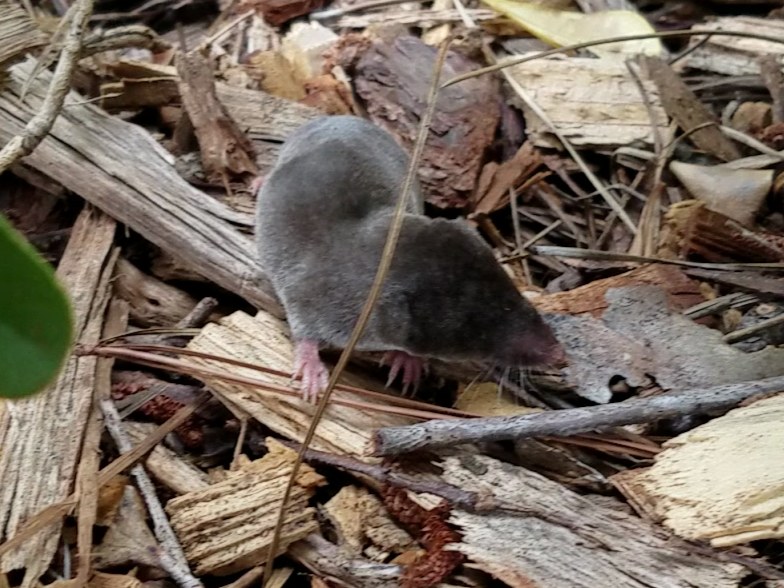
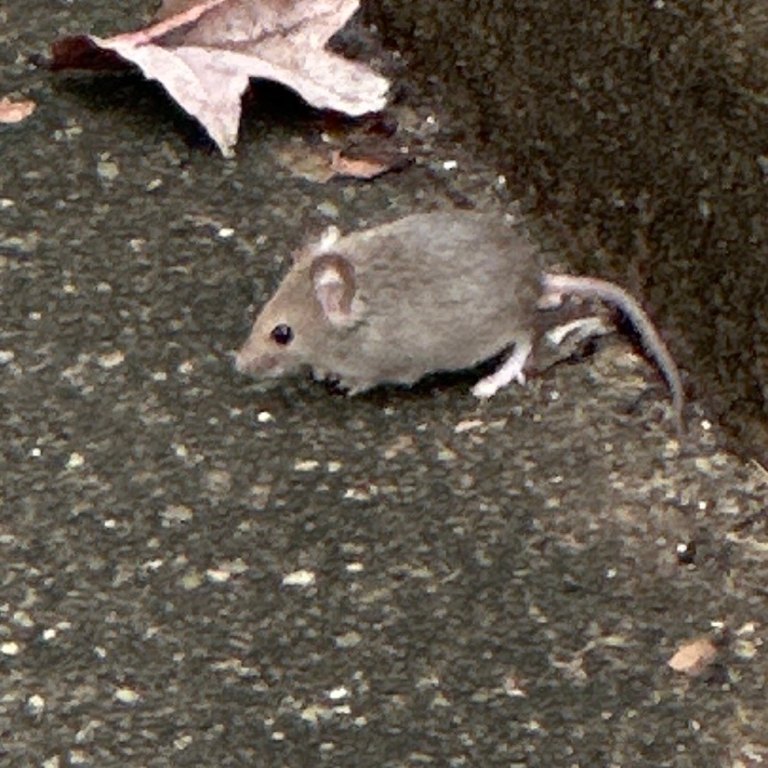
The tail is less reliable. A house mouse’s tail is long and almost hairless (UC IPM), but shrew tails vary by species; the short-tailed shrews shown here have very short ones. With more than 30 species in the United States and Canada, the handbook warns that telling shrews apart from each other can be difficult; telling a shrew from a mouse is the easy part.
If it has a short tail and a blunt face instead, it may be a vole (vole vs mouse). A larger animal with huge, spade-like front feet is a mole; the handbook notes moles are usually bigger than shrews and have enlarged front feet. If what you see is raised ridges and mounds in the lawn, vole vs mole explains which animal makes which.
Why the difference matters
Because a shrew is not a rodent, most of what you know about mice does not apply.
- It is usually not a pest. The handbook says most shrew species have no significant negative impact and are not abundant enough to be considered pests. Because they eat insects, ICWDM calls them generally beneficial.
- It breeds far more slowly. One to three litters a year against five to ten for a house mouse. One shrew does not imply a hidden population the way one mouse can (one mouse or an infestation).
- Poison and repellents are not an option. The handbook and ICWDM both say no toxicants are registered for use on shrews, and the handbook says no repellents are either. Mouse bait is the wrong tool even before the risks to pets (mouse poison around pets).
- It can still be a nuisance near a house. The handbook describes shrews that fall into window wells, go after birds or chipmunks at feeders, attack pets, feed on stored food and contaminate it with droppings and urine, and bite people who handle them carelessly.
A shrew in the house or garage
The handbook says rodent-proofing a building keeps shrews out too. It suggests 1/4-inch hardware cloth over openings, coarse steel wool in small holes, and a finer mesh for the tiny pygmy shrew, which can weigh as little as 0.1 ounce. Regular mowing around the building, it adds, reduces the cover and food shrews like. How to seal mouse entry points covers where to look and what to use.
If one is already inside, the handbook says ordinary mouse snap traps catch shrews: set them along walls or across runways, at a right angle with the trigger over the path, baited with peanut butter mixed with rolled oats. Best mouse traps covers placement. Since stored food is one of the things the handbook says shrews eat and soil, keep dry food in sealed containers.
Some shrews are mostly active at night and others day and night, the handbook says, and they often travel in vole and mole tunnels. So a shrew seen in daylight is not necessarily unusual.
When the cat brings one in
This is how many people first meet a shrew. The handbook says domestic cats are very good at killing shrews but seldom eat them, presumably because of their unpleasant smell; shrews have scent glands on their hindquarters with a pungent odor. Finding a dead, uneaten shrew on the doormat is common. ICWDM does not recommend using cats to control shrews because of the harm free-ranging cats do to other wildlife. Whether a cat helps against mice is covered in do cats keep mice away?
To dispose of a dead shrew, the handbook describes putting a plastic bag over your hand, picking the animal up, turning the bag inside out around it, sealing it and putting it in the garbage, which it says reduces the chance of fleas, ticks, parasites or disease. Gloves add protection; what to do with a dead mouse has CDC’s full steps for rodents, which work for a shrew too.
Can a shrew bite?
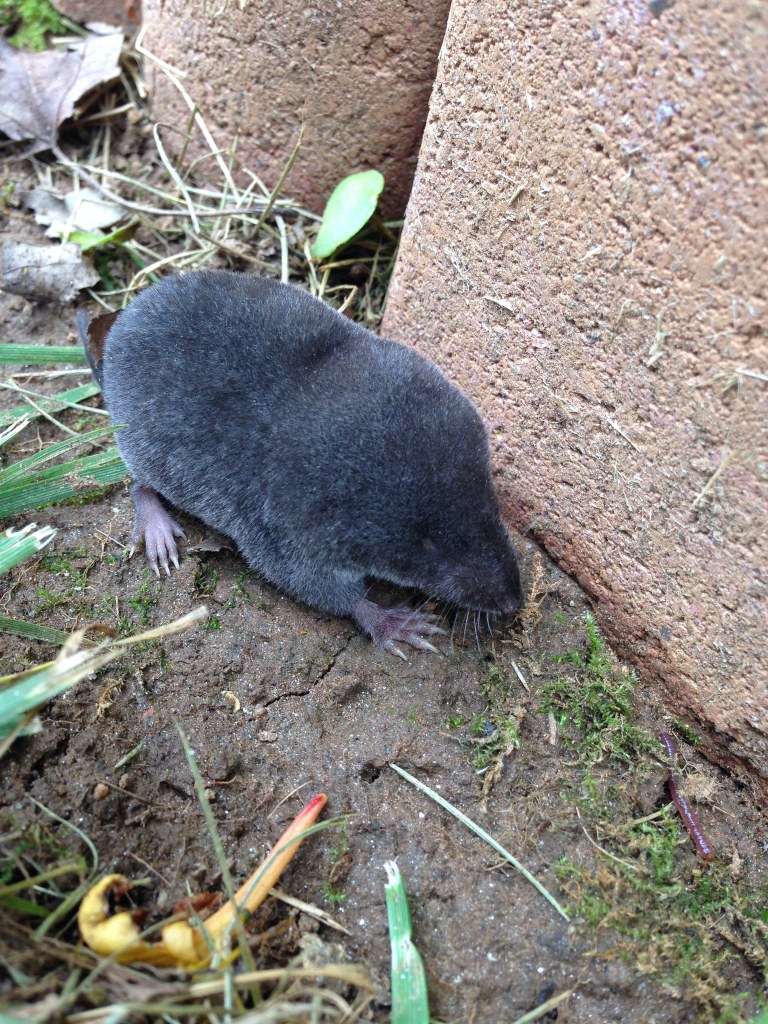
Yes, if you pick one up. The handbook lists biting people “when improperly handled” among shrew problems, and it says northern and southern short-tailed shrews have a toxic venom in their saliva that may help them subdue small prey. That is a reason not to handle one with bare hands, live or dead. The handbook calls disease and parasite transmission by shrews possible but poorly documented. Mice bite for the same reason, when they are picked up or trapped; see do mice bite?
Are shrews protected?
The handbook says shrews are not protected by federal law, with one exception (a southeastern shrew population in the Great Dismal Swamp), but that some states have their own rules on nongame mammals. If you plan to do more than trap one in the house, check with your state wildlife agency or Cooperative Extension office.
Shrew questions people ask
Is a shrew a type of mouse?
No. Shrews are insectivores, in the same group as moles; mice are rodents. The old name “shrew-mouse” and their size are what cause the confusion.
Do shrews chew through things like mice do?
We found no source describing shrews gnawing through wiring, wood or packaging the way rodents do. The handbook notes that their teeth are small and sharp and, unlike rodent incisors, do not keep growing. The damage it does describe is mostly eating: stored food, tree seeds, ginseng roots, bee brood in hives and fish eggs at hatcheries.
Will a mouse trap catch a shrew?
Yes. The handbook says the same snap traps and placement work for shrews and mice, and suggests checking what you caught against the features above.
Are shrews blind?
Not blind, but the handbook says vision plays a relatively minor role. They rely on touch, hearing and smell, and some species use high-pitched squeaks to find their way, a little like bats.
How long do shrews live?
Usually no more than 1 to 2 years, according to the handbook. How that compares with mice is in how long do mice live.
The short version
A shrew has a long pointed nose, tiny eyes, one-colored fur and five toes on its front feet; a house mouse has a shorter face, bigger eyes and ears, two-toned fur and four front toes. Shrews are insect-eaters, not rodents, breed slowly and are rarely pests. If one gets in, seal the gaps as you would for mice and use a snap trap; there is no registered poison or repellent for shrews. Do not handle one bare-handed. And if the evidence in your house is droppings and gnawing rather than a body on the doormat, look at do I have mice or rats?
Sources and verification
- Schmidt, R. H. — Shrews, Prevention and Control of Wildlife Damage handbook (University of Nebraska–Lincoln, 1994)Identification (elongated snout, uniform dense fur, small eyes, five clawed toes; dark-tipped teeth that do not keep growing; corkscrew-shaped feces); differences from mice and moles; insectivores vs rodents; over 30 species in the US and Canada; diet; feeding every 3 to 4 hours and up to three times body weight a day; pygmy shrew weight; 1 to 3 litters of 2 to 10 and a life of 1 to 2 years; senses and echolocation; scent glands; venom of short-tailed shrews; activity and use of vole and mole tunnels; most species not pests; nuisance problems near dwellings; disease risk poorly documented; legal status; exclusion with 1/4-inch hardware cloth and steel wool; mowing; no registered repellents or toxicants; snap-trap placement and bait; cats and disposal of dead shrews.
- ICWDM — Shrew Damage ManagementNo registered toxicants; 1/4-inch hardware cloth; cats not recommended for control because of their impact on other species.
- UC IPM — Pest Notes: House Mouse (July 2025)Shrews’ pointed snouts and tiny eyes; house mouse ears, long nearly hairless tail, food up to 20% of body weight, 5 to 10 litters of about 5 or 6, life span.
- ICWDM — House Mouse BiologyMice prefer seeds and grain; about 1/10 of body weight eaten a day.