
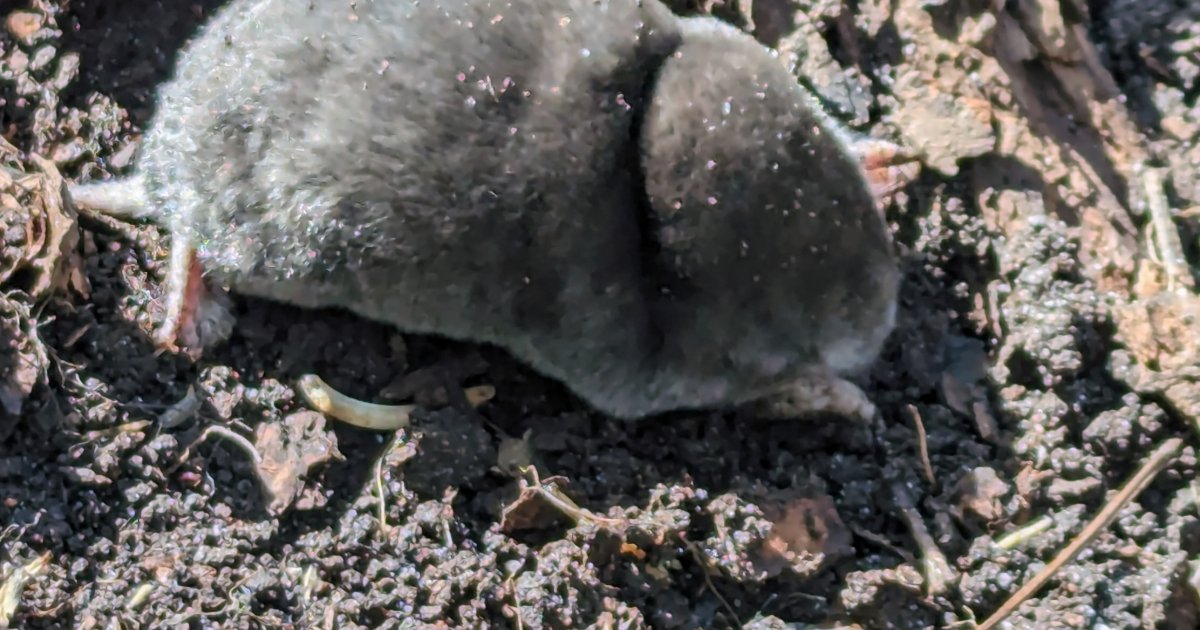
Identify the animal
Vole vs Mole: Mounds, Ridges and Runways in Your Yard, and What to Do About Each
Moles and voles both tear up lawns, and they often live in the same yard, but they are very different animals. A mole is an insect-eater that lives underground and pushes up mounds and raised ridges of soil. A vole is a small rodent that runs along paths on the surface of the grass and eats plants. The damage you see tells you which one you have, and that matters, because the two are controlled in different ways. Here is how to read the signs, according to UC IPM and the wildlife-damage handbook that ICWDM’s guides are based on.
Vole vs mole at a glance
| Feature | Mole | Vole |
|---|---|---|
| What it is | An insectivore, related to shrews and bats; not a rodent | A rodent (also called meadow mouse or field mouse) |
| Looks | Cylinder-shaped body, hairless pointed snout, eyes and ear openings hidden in velvety fur, huge spade-like front feet | Stocky, short legs, short tail, small eyes, ears partly hidden |
| Eats | Mainly earthworms, grubs and other insects | Mainly plants: grasses, bulbs, tubers, bark and roots |
| What you see | Mounds of pushed-up soil and raised ridges in the lawn | Paths on the surface of the grass with open holes along them |
| The damage | Tunneling that lifts plants and dries out their roots; unsightly lawns | Plants eaten; bark gnawed off near the ground |
| Breeding | One litter a year of 3 to 5 (ICWDM); 3 to 4 (UC IPM) | Several litters a year of about 3 to 6 |
| Life span | May live 3 to 5 years (ICWDM) | About 2 to 16 months (handbook); seldom more than 12 months (UC IPM) |
| Comes indoors | We found no source that describes it | Rarely |
| What works | Trapping in the tunnels | Removing cover, fencing, tree guards, snap traps in the runways |
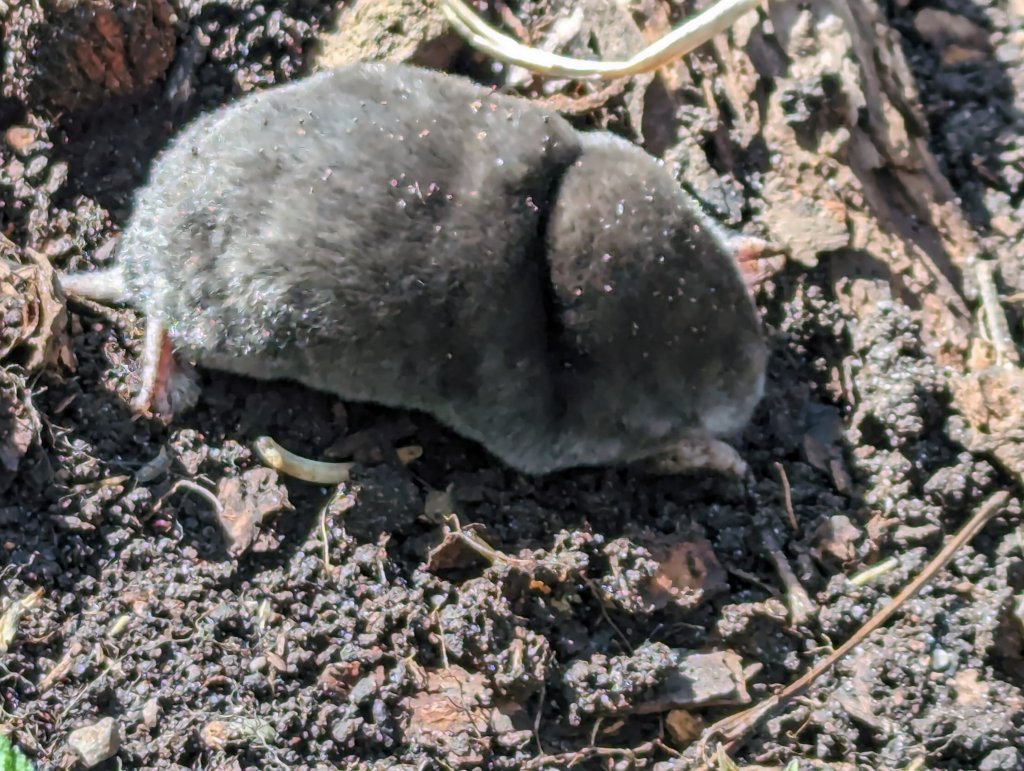
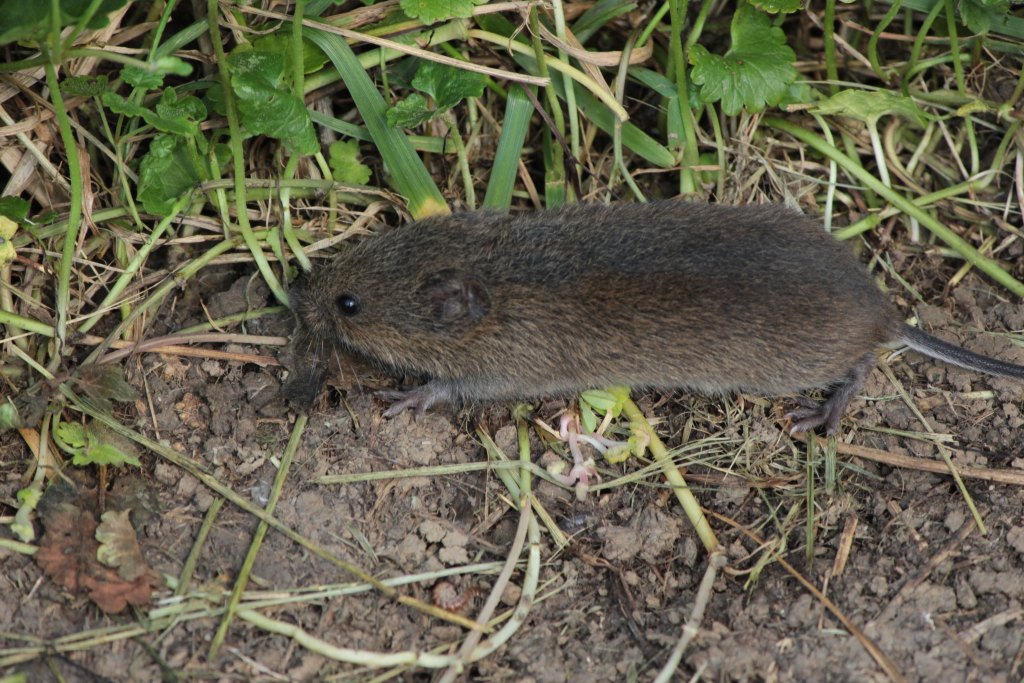
You will rarely see either animal. UC IPM says moles live almost entirely underground, and voles, though they come out more, spend most of their time in their burrows. So the yard itself is the evidence. How to tell a vole from a house mouse is covered in vole vs mouse.
Reading the damage: mounds, ridges, runways and holes
| What you see | Usually | Source |
|---|---|---|
| A round, volcano-shaped mound of soil, often in clods, several in a line | Mole | UC IPM; ICWDM; handbook |
| A raised ridge across the lawn that sinks when you step on it | Mole (a surface tunnel) | UC IPM; ICWDM |
| A crescent- or kidney-shaped mound of finely sifted soil, usually bigger, with the hole closed | Pocket gopher | UC IPM; ICWDM |
| Paths about 1 to 2 inches wide on the soil surface, under the grass, with clipped grass and droppings in them | Vole | UC IPM; handbook |
| Open holes about 1½ to 2 inches across, linked by those paths | Vole | UC IPM |
| Trails through matted grass after the snow melts | Vole (they burrow in and through snow) | UC IPM |
| Bark gnawed off the base of a young tree or shrub | Vole (or a gopher if below ground, a rabbit if the cuts are larger and cleaner) | UC IPM; handbook |
Mole mounds and ridges
A molehill is soil the mole has pushed up from its deeper tunnels. UC IPM says mole mounds tend to be circular, the soil may be in small chunks, and the mounds often appear in a line over the tunnel that connects them. ICWDM calls them volcano-shaped and gives a height of 2 to 12 inches; the 1994 handbook chapter says 2 to 24 inches. Both say the number of mounds does not tell you how many moles there are.
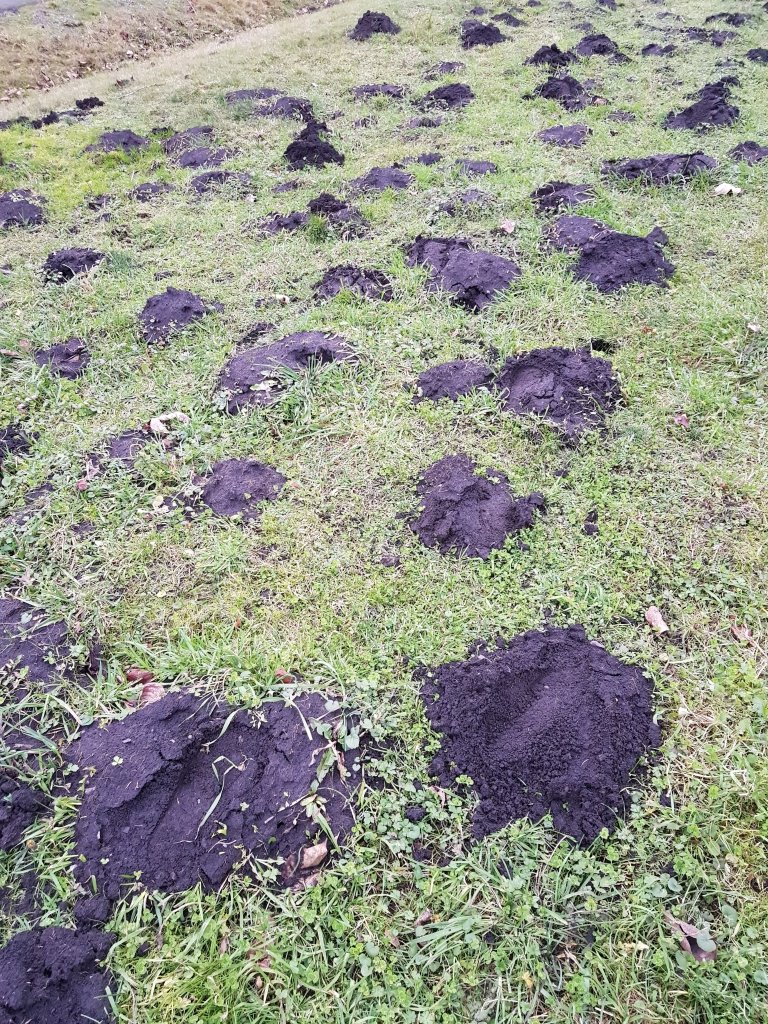
The ridges are feeding tunnels just under the surface. ICWDM says they wind around aimlessly, while longer, straight surface runs connect the feeding areas with deep burrows, and that surface tunnels collapse easily when stepped on. UC IPM says some surface tunnels are used only once; the more permanent tunnels are deeper, usually about 2 inches across and 8 to 12 inches below the surface. Mole activity is greatest after rain or watering, when digging is easiest (UC IPM).
Vole runways and holes
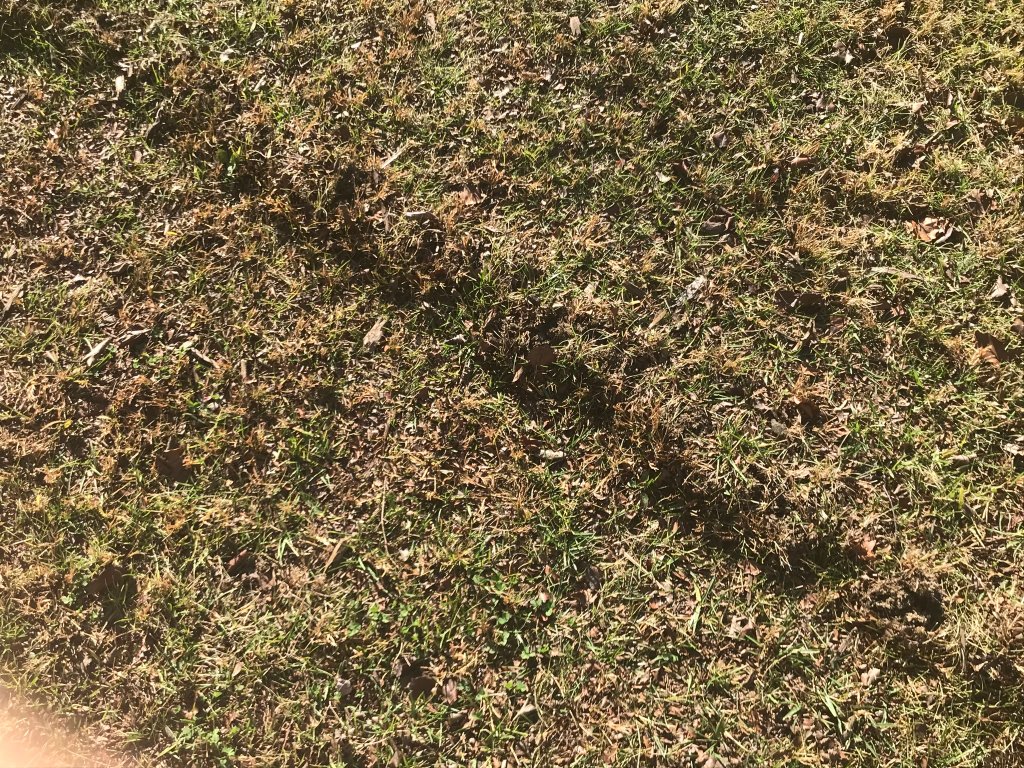
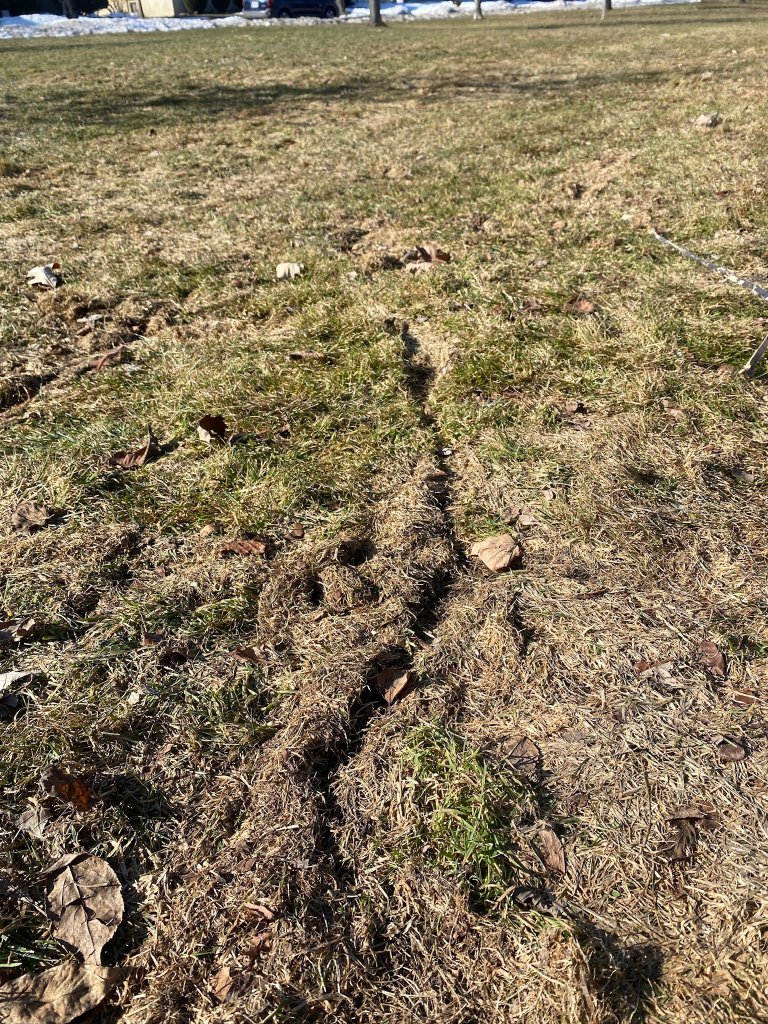
Voles leave their mark on the surface. The handbook calls an extensive surface runway system with numerous burrow openings the most easily identified sign of voles, with runways 1 to 2 inches wide, grass clipped close beside them, and droppings and bits of plants in them. UC IPM says the runways are usually hidden under grass or ground cover, so pull it back to look, and gives burrow openings of about 1½ to 2 inches across and greenish droppings about 3/16 inch long. Where it snows, voles burrow in and through the snow, so their trails can show up once it melts, as in the photo below.
One exception: the handbook says the pine (woodland) vole of the eastern United States does not use surface runways and builds an extensive system of underground tunnels instead, so its damage is less obvious. The full list of vole signs, including gnaw marks on bark, is in vole vs mouse. A bigger hole of 2 to 4 inches along a foundation or under a woodpile may be a rat burrow; see what a rat nest looks like. How to tell a rat hole from a vole, chipmunk, gopher or mole hole is in rat holes in the yard.
When you have both: voles in mole tunnels
Moles are often blamed for damage that voles do, and the sources agree on why. The handbook says voles, white-footed mice and house mice live in and move through mole runways, eating grains, seeds and tubers, and that the mole often gets the blame. ICWDM says the majority of direct damage to garden plants is caused by rodents using mole tunnels to reach them. UC IPM says moles may occasionally eat roots, bulbs and other plant material, but that rodents such as pocket gophers, meadow voles and deer mice are almost always the cause of that chewing damage.
So if bulbs vanish or roots are chewed along a mole tunnel, suspect a vole. ICWDM points out that methods for controlling the two differ, so it is worth knowing which you are dealing with before you start. If you find a small animal with a long pointed nose and tiny eyes that is neither, it may be a shrew, which the handbook notes also travels in vole and mole tunnels (shrew vs mouse).
Why moles come to your lawn
Moles go where the food is. ICWDM says they favor loose, moist soil and cannot survive in hard, compact, semi-arid soils; they nest on high, dry ground but hunt in shaded, cool, moist soil full of worms, grubs and insects, which is why lawns and parks often have plenty of them. In dry seasons they move to irrigated areas. A mole eats 70% to 100% of its body weight each day, according to ICWDM.
There are usually fewer moles than the damage suggests. UC IPM says moles are territorial, so you will find only one mole per tunnel outside the breeding season in late winter and early spring. ICWDM puts a male eastern mole’s home range at about 2.7 acres and calls 3 to 5 moles per acre an average to high density.
Moles are not all bad. The handbook says they eat lawn pests such as white grubs (nearly two-thirds of the moles in one study had eaten them) and that their tunneling aerates the soil, and it advises making sure a mole is truly out of place before trying to control it. ICWDM says no diseases are known to be transmitted from moles to humans, and that damage to structures is limited to things like brick patios and pools, where digging can undermine them.
Getting rid of moles: what works
All three sources agree that trapping is the most dependable way to deal with moles. Their advice, summarized:
- Find a tunnel that is in use. UC IPM says to tamp down short sections of surface tunnels and mounds, check them daily, and note which ones are raised again. Moles reuse the deeper tunnels almost permanently, so those are better trap sites than temporary surface runs; you can find them by probing next to fresh mounds with a pointed stick or rod until the soil gives way.
- Pick the spot. Set traps at least 18 inches from a mound (UC IPM). The handbook and ICWDM say to choose a straight run with fresh activity, avoid the twisting ridges, and never set a trap on top of a mound.
- Use a mole trap, not a gopher trap. UC IPM says the best mole traps differ from those for pocket gophers, and very few work for both. The common designs are harpoon (spike), scissor-jaw and choker or pincer traps. Follow the maker’s instructions; a mole that meets something odd in its tunnel tends to plug it off and dig around it, so the trap has to straddle, encircle or sit above the tunnel (UC IPM). If the mounds are crescent-shaped with the hole plugged off to one side, you may have a pocket gopher instead: see gopher vs mole.
- Be patient, then move it. UC IPM says it can take several days for a mole to visit a trap, and more traps speed things up. ICWDM says to move a trap to fresh activity if it has caught nothing after 2 or 3 days, or if the mole has dug around it.
- Set and check safely. ICWDM suggests marking traps with a flag so no one runs over them with a mower, covering a harpoon trap with a 5-gallon bucket, springing traps before you pull them, and wearing eye protection. Keep children and pets away from traps.
Moles can be trapped at any time of year (UC IPM). ICWDM says other moles often move into areas that have just been cleared, so expect to watch for new mounds; UC IPM advises setting up a way to monitor for reinfestation once damage is under control.
Barriers for small areas. Fencing a whole yard is not practical, but a small, valuable bed can be protected. UC IPM describes hardware cloth or 1/4-inch wire mesh buried in a trench at least 2 feet deep with a 6-inch lip bent outward and about 6 inches above ground, and notes that persistent moles may still find a way around. Wire-mesh baskets keep moles from heaving bulbs out of the ground, and wire mesh under a raised bed keeps them out completely (UC IPM).
Baits. Because moles eat worms and insects, UC IPM and ICWDM say ordinary grain-based baits rarely work. Both mention worm-shaped and gel baits made for moles, with limited evidence that they work better. If you use any bait, the label is the law (ICWDM), and if you have pets, read mouse poison around pets first. We do not recommend specific products.
What does not work on moles
- Home remedies. UC IPM lists broken glass, razor blades, thorny rose branches, bleach, mothballs, lye and human hair in the tunnel and says none has proved successful in stopping mole damage or driving moles away. ICWDM adds chewing gum, used cat litter, gasoline and ammonia, says they have been proven ineffective, and warns some may be environmentally hazardous.
- Vibrating, sonic and similar devices. UC IPM says research does not support electrical devices that vibrate the soil or make sound. ICWDM says no frightening device has been proven effective, including vibrational, magnetic, electronic, sonic and pinwheel types. More on these devices is in do ultrasonic pest repellers work?
- The “mole plant.” UC IPM and ICWDM both mention gopher purge (Euphorbia lathyris), promoted as a mole repellent; ICWDM calls its effectiveness questionable, notes it is poisonous to humans and can become a weed, and does not recommend it.
- Castor oil repellents, mostly. ICWDM says castor oil products have shown minor effectiveness and must be watered in thoroughly; UC IPM says research shows some effect on eastern moles but none has been published for western species, and that repelled moles simply move to the neighbor’s lawn.
- Killing the grubs. UC IPM says reducing white grubs may make turf less attractive to moles, but research has not confirmed it. ICWDM goes further: cutting soil insects may make moles dig more in search of food, and a lawn can be free of grubs and still have moles, because they also eat worms and ants.
- Flooding the tunnels. Not recommended by UC IPM: it rarely works and wastes a lot of water.
- The family cat or dog. UC IPM says cats and dogs may occasionally catch moles but are of limited value for control.
Getting rid of voles: what works
Voles are a different job, and most of it is about cover. UC IPM’s main points:
- Take away cover. Weeds, heavy mulch and dense ground cover protect voles. Mow regularly and keep a 4-foot circle free of vegetation around young trees and vines, because voles prefer not to feed in the open. The handbook says to clear mulch 3 feet or more from the base of trees.
- Fence and guard. Wire mesh or flashing with 1/4-inch or smaller openings, at least 12 inches high, buried 6 to 10 inches, keeps voles out of a garden. Hardware cloth, sheet metal or heavy plastic cylinders around young trunks, buried 4 to 6 inches, prevent girdling.
- Trap in the runways. Ordinary mouse snap traps, set at right angles to the runway with the trigger end in it. Bait is often unnecessary; peanut butter mixed with oats or apple slices works if you use it, but cover baited traps so birds are not caught. A dozen traps is about the minimum for a small garden. Wear rubber gloves to handle dead voles.
UC IPM says gas cartridges do not work on voles because their burrows are shallow with many open holes, and that electromagnetic and ultrasonic devices and flooding are ineffective. The details, with photos, are in vole vs mouse.
Will a mole or vole come into the house?
Voles rarely do. UC IPM says they are poor climbers and usually do not enter homes, and the handbook says that if one does get in, it can be trapped like a house mouse. We found no source that describes moles coming indoors; their damage to structures, according to ICWDM, is limited to undermining things like brick patios and pools.
So a small animal in the kitchen, droppings in a cabinet or scratching in a wall almost certainly means mice or rats, not the animal digging up your lawn. Start with do I have mice or rats? and how mice get into your house.
Mole and vole questions people ask
Are moles rodents?
No. UC IPM says moles are not part of the rodent family; the handbook and ICWDM call them insectivores related to shrews and bats. Voles are rodents.
Do moles eat plant roots and bulbs?
Rarely. UC IPM says they may occasionally, but rodents are almost always responsible for chewing damage. Moles harm plants by tunneling, which dislodges them and dries out their roots.
How many moles are in my yard?
Probably fewer than you think. UC IPM says you will find only one mole per tunnel outside the breeding season, and ICWDM and the handbook both say the number of mounds is not a measure of the number of moles.
When are moles most active?
All year, since they do not hibernate (ICWDM). UC IPM says surface activity slows in extreme cold, heat or drought and is greatest after rain or watering; ICWDM names rainy periods in late spring and early summer.
Do voles use mole tunnels?
Yes. The handbook says voles, white-footed mice and house mice live in and travel through mole runways and eat plants along the way.
Can moles make my pets sick?
ICWDM says moles pose no threat to animals beyond the tripping hazard of their tunnels and mounds, and that no diseases are known to pass from moles to humans. Voles are a different matter: the handbook says they can carry disease organisms, so wear gloves to handle them.
How to tell, in short
Round mounds of loose soil and raised ridges that sink underfoot mean a mole: an insect-eater working underground, usually one per tunnel system, best handled with mole traps set in an active straight tunnel. Narrow paths on the surface of the grass, open holes about 1½ to 2 inches across and gnawed bark mean voles: plant-eating rodents, handled by removing cover, fencing, tree guards and snap traps in the runways. Chewed bulbs along a mole tunnel are usually voles using it. Skip the home remedies, sonic devices and grub killers, and if the trouble is inside the house, look for mice or rats instead.
Sources and verification
- UC IPM — Pest Notes: Moles (November 2024)Moles are insect-eaters, not rodents; appearance; one litter of 3 to 4; one mole per tunnel outside the breeding season; diet and the rodents usually behind chewing damage; damage from burrowing; circular mounds in a line compared with crescent-shaped gopher mounds; surface ridges; permanent tunnels about 2 inches across and 8 to 12 inches deep; activity after rain or watering; trapping as the most dependable method; finding active tunnels; traps at least 18 inches from a mound; mole traps differ from gopher traps; several days for a mole to visit a trap; underground barriers and wire baskets; home remedies and devices not effective; castor oil repellents; grain baits rarely effective; flooding, pets and grub control.
- ICWDM — Moles, Mole Biology, Mole Damage Identification and Prevention and Control MethodsMoles related to shrews and bats and often confused with voles, shrews and gophers; identification; feeding tunnels, runs and deep tunnels; surface tunnels collapse underfoot; 3 to 5 young a year and a life of 3 to 5 years; habitat and soil; 70% to 100% of body weight eaten a day; home range and density; volcano-shaped hills 2 to 12 inches tall and not a count of moles; gopher mounds; damage to patios and pools; most garden damage by rodents in mole tunnels; no known diseases to humans; moles and voles confused and controlled differently; insecticides and grubs; frightening devices; castor oil; gopher purge; baits and the label; trapping, placement, moving traps and safety; home remedies.
- Henderson, F. R. — Moles, Prevention and Control of Wildlife Damage handbook (University of Nebraska–Lincoln, 1994)Insectivore, not a rodent; voles, white-footed mice and house mice living in mole runways and the mole blamed for their damage; mole hills 2 to 24 inches tall; trapping as the most successful method; trap placement; moles’ role in eating white grubs and aerating soil; making sure a mole is out of place before control.
- UC IPM — Pest Notes: Voles (Meadow Mice) (April 2023)Runways connecting burrow openings 1½ to 2 inches across; greenish droppings about 3/16 inch; burrowing through snow; diet; litters and life span; poor climbers that usually do not enter homes; vegetation removal and 4-foot clear circles; fencing and tree guards; snap-trap placement, bait and gloves; gas cartridges, electromagnetic and ultrasonic devices and flooding ineffective.
- O’Brien, J. M. — Voles, Prevention and Control of Wildlife Damage handbook (1994)Voles as rodents, also called meadow or field mice; surface runways 1 to 2 inches wide with burrow openings, clipped vegetation and droppings; pine voles without surface runways; 1 to 5 litters of about 3 to 6; life span of 2 to 16 months; clearing mulch 3 feet from trees; voles rarely invading houses and trapped like house mice; disease organisms and protective clothing.