
How mice and rats live
Baby Mice: What They Look Like by Age, How Many Babies Mice Have, and What to Do If You Find Them
A house mouse is born pink, hairless and blind, has fur at about ten days, opens its eyes at about two weeks and leaves the nest at about three weeks. A few weeks later it can breed. Here is what university and federal sources say about how baby mice grow, how fast mice breed, and what to do, safely, if you find babies in your house.
Short answer
- Newborns are pink, hairless and blind. ICWDM and Animal Diversity Web say house mice are born naked with their eyes closed. They are fully furred at about 10 days and their eyes open at about 14 days.
- About 5 or 6 babies per litter. UC IPM, ICWDM and Animal Diversity Web all give 5 or 6 as the usual litter, with a range of about 3 to 12.
- 5 to 10 litters a year. Gestation is about 19 to 21 days (UC IPM), and Animal Diversity Web says a female can mate again within a day of giving birth. Indoors, mice can breed all year.
- Young mice breed fast. They are weaned at about 3 weeks and can reproduce at about 6 to 10 weeks old (UC IPM; ICWDM).
- Babies mean a breeding female is nesting close by. Do not handle them bare-handed. Use gloves and follow CDC’s cleanup steps, then deal with the adults and the way they get in.
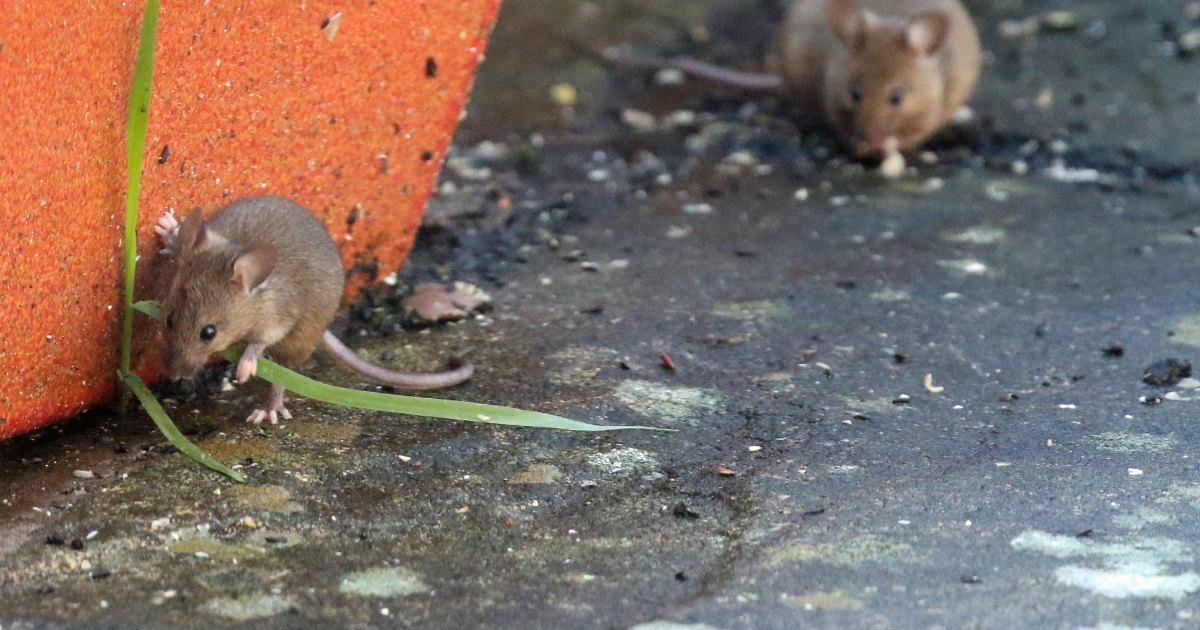
What baby mice look like, week by week
The figures are for the house mouse. The sources agree closely, though they round differently.
| Age | What the young look like and do | Source |
|---|---|---|
| Birth | Hairless, pink and blind, with ears closed. NC State Extension puts the weight at 0.5 to 1.5 grams, and says the pups are deaf and find their way with their whiskers. They stay in the nest and live on their mother’s milk. | ICWDM; Animal Diversity Web; NC State |
| About 10 days | Fully covered in fur. Animal Diversity Web and NC State both give 10 days; ICWDM says covered with hair by about 2 weeks. | Animal Diversity Web; NC State; ICWDM |
| About 2 weeks | Eyes and ears open. NC State adds that the front teeth are visible by 14 days. | ICWDM; Animal Diversity Web; NC State |
| About 3 weeks | Starting to eat solid food and weaned soon after. NC State gives a weaning weight of about 10 to 12 grams. Animal Diversity Web says the young stay in the mother’s nest until about day 21, and most then leave her territory. | ICWDM; Animal Diversity Web; NC State |
| About 5 to 10 weeks | Able to breed. Animal Diversity Web gives 5 to 7 weeks, UC IPM and ICWDM 6 to 10 weeks, NC State and Utah State 6 to 8 weeks. | UC IPM; ICWDM; Animal Diversity Web; NC State; Utah State |
So pink, bare pups are less than about ten days old; furred pups with closed eyes are ten days to two weeks; furred young with open eyes are two to three weeks and close to leaving the nest.
What baby mice eat
For the first three weeks, milk. Animal Diversity Web says the mother provides food and protection until the young are weaned, and ICWDM says the young start eating solid food at about 3 weeks. After weaning they eat what the adults eat. More in what do mice eat?
We found no university, extension or federal source that gives feeding or hand-rearing instructions for wild baby mice, so this page does not give any.
How many babies do mice have, and how often?
| Question | What the sources say |
|---|---|
| Babies per litter | About 5 or 6 (UC IPM; ICWDM). Animal Diversity Web gives a range of 3 to 12, usually 5 or 6; Utah State Extension gives 3 to 10. NC State Extension gives a higher average of 10 to 12 pups, and says litter size varies with the mother’s age, food and the season. |
| Litters per year | 5 to 10 per female (UC IPM; ICWDM; Animal Diversity Web). Animal Diversity Web says as many as 14 have been reported; Utah State says as many as 13. |
| Pregnancy length | 19 to 21 days (UC IPM; ICWDM; Animal Diversity Web). ICWDM and Animal Diversity Web say it can run a few days longer if the female is still nursing a previous litter. |
| Next pregnancy | Animal Diversity Web says a female comes into heat 12 to 18 hours after giving birth, so she can be pregnant again while nursing. |
| Age at first breeding | About 6 to 10 weeks (UC IPM; ICWDM); 5 to 7 weeks (Animal Diversity Web). |
| Season | Year-round indoors where food and shelter are steady (UC IPM). ICWDM says mice living outdoors breed mostly in spring and fall. |
Multiplying the common figures, 5 to 6 young in each of 5 to 10 litters, gives roughly 25 to 60 young per female in a year. That is our arithmetic, not a figure any of the sources states. UC IPM says a house mouse usually lives only 9 to 12 months. More in how long do mice live?
When do mice have babies?
Inside a heated house, any month. UC IPM says house mice with a stable supply of food and shelter can reproduce year-round. ICWDM says mice living outdoors breed mostly in spring and fall, and Animal Diversity Web notes that wild populations may breed only from April to September.
So a nest of babies in a wall, a drawer or the back of a cupboard in November or January is not unusual: inside a warm building, the cold season does not stop breeding. Whether mice hibernate, and what they do in the cold months, is covered in mice in winter.
How fast do mice breed?
Fast, because every step in the cycle is short:
- About 3 weeks from mating to birth (UC IPM; ICWDM).
- Less than a day from birth to the mother’s next chance to conceive (Animal Diversity Web).
- About 3 weeks from birth to weaning (ICWDM; Animal Diversity Web).
- About 6 to 10 weeks from birth to breeding age (UC IPM; ICWDM).
Put together, a mouse born in a house can be pregnant herself about a month and a half to two and a half months later. ICWDM says house mouse populations can grow rapidly under good conditions, and Utah State Extension calls house mice extremely prolific.
There is a brake. ICWDM says survival and breeding of the young decline markedly when numbers get high. We found no university or federal source that gives a reliable figure for how many mice one pair produces in a year in a real house.
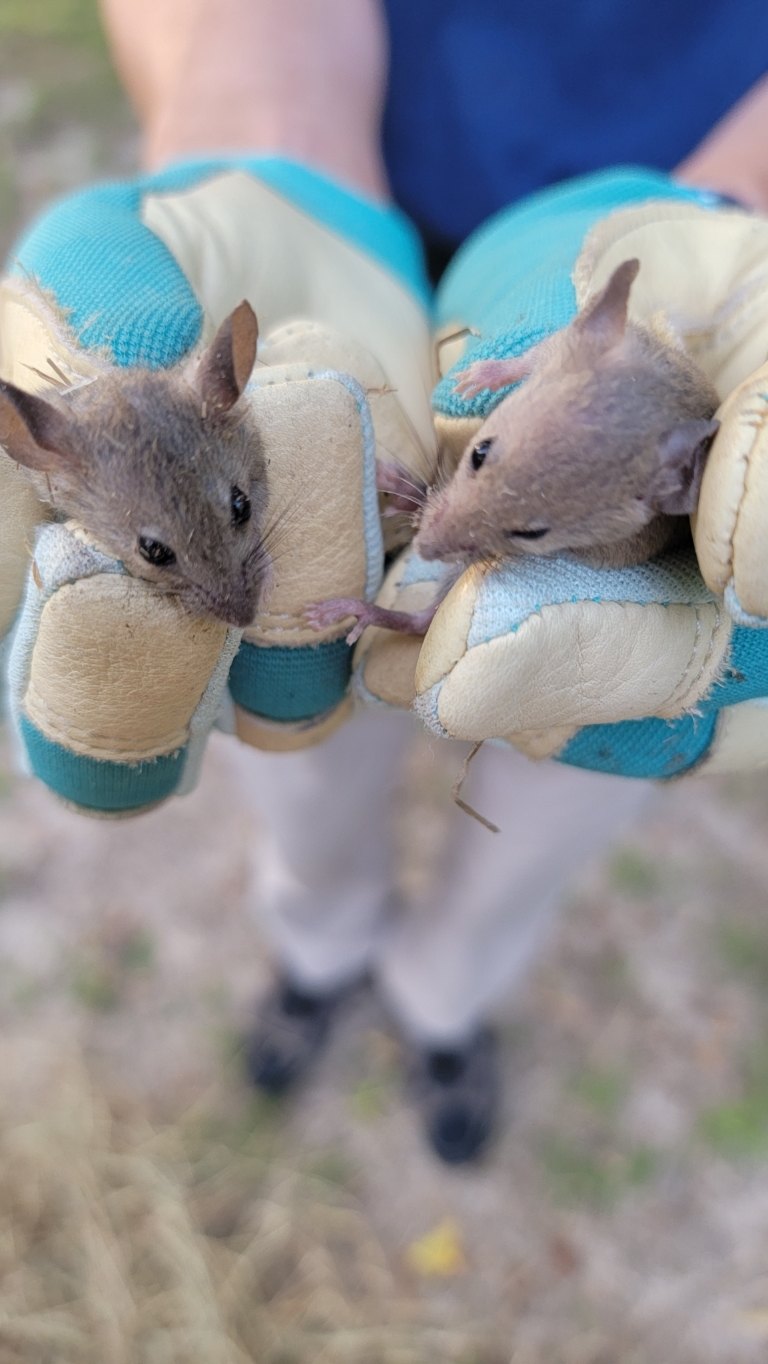
What to do if you find baby mice in your house
What the nest itself looks like, and where mice build one, is covered in mouse nest signs. This section covers what to do once you have found young.
Protect yourself first
- Do not pick them up with bare hands. CDC says to wear rubber or plastic gloves when cleaning up after rodents, including nests and dead rodents. UC IPM notes that house mice can transmit pathogens that cause diseases such as salmonellosis.
- Do not sweep or vacuum the nest. CDC says sweeping or vacuuming urine, droppings or nesting material can put virus particles into the air.
- Air the space first. CDC advises opening doors and windows for 30 minutes before cleaning and leaving the area while it airs out.
- Keep children and pets away from the nest and from anything that touched it.
Cleaning up a nest, live or dead young
CDC’s steps for nests and dead rodents: wearing gloves, soak the nest and the area around it with an EPA-registered disinfectant, or 1 part household bleach to 9 parts water mixed fresh, and let it sit for 5 minutes or as the label directs. Put the nesting material, and any dead mice or used traps, in a plastic bag, knot it, put that in a second bag and knot it too, and put it in a covered trash can. Disinfect or wash your gloved hands, take the gloves off, then wash your hands with soap and warm water. The full routine for droppings is in how to clean mouse droppings, and for a dead adult in what to do with a dead mouse.
If the babies are alive
We found no university, extension or federal source that gives instructions for caring for, relocating or humanely dealing with nestling house mice found in a home. What we did find:
- Young mice depend on their mother until about three weeks old. Animal Diversity Web and ICWDM say they nurse until then. Pink or barely furred pups cannot feed themselves.
- Wildlife agencies say to call a rehabilitator before you intervene. Washington State University’s College of Veterinary Medicine advises calling a wildlife rehabilitator before intervening with a baby wild animal, and the Minnesota Department of Natural Resources says to contact a permitted rehabilitator before handling or moving one, wear gloves, and disinfect anything the animal touched. Neither page mentions house mice, and Minnesota DNR notes that rehabilitators are not required to accept animals.
- Furred young with open eyes are close to independence. From here on the same control steps apply as for adults.
Whatever you decide about the young, the adults that made the nest are still there, and the mother can produce another litter within about three weeks.
What finding baby mice means for your infestation
A litter means there is at least one breeding female, she has found enough food and shelter to raise young, and the nest is close to where the mice feed. ICWDM says a house mouse usually covers an area only about 10 to 30 feet across in its daily activity, and UC IPM says mice seldom go far from their shelter and food supply.
It also tells you about timing. If the young are furred and moving, mice have been in the space for at least a few weeks, counting the 19 to 21 days of pregnancy. And because young mice can breed at 6 to 10 weeks, an older nest may mean a second generation is already on its way. How to judge whether you are dealing with one mouse or many is in one mouse or an infestation?
The response is the same as for any mouse problem: remove food and clutter, trap the adults where they run, and seal the gaps they use. The full plan is in how to get rid of mice, and sealing is covered in how to seal mouse entry points.
Baby mice or baby rats?
A young rat can look a lot like an adult mouse. UC IPM says very young rats have large heads and feet in proportion to their bodies, which is one way to tell them apart.
| House mouse | Norway rat | |
|---|---|---|
| Weight at birth | 0.5 to 1.5 grams (NC State) | About 5 grams (Animal Diversity Web) |
| Babies per litter | Usually 5 or 6 (UC IPM; ICWDM) | About 8, with a range of 2 to 14 (Animal Diversity Web) |
| Pregnancy | 19 to 21 days | 22 to 24 days (Animal Diversity Web) |
| Eyes open | About 14 days | About 14 to 17 days (Animal Diversity Web) |
| Weaned | About 3 weeks | 3 to 4 weeks (Animal Diversity Web) |
| Breeding age | About 6 to 10 weeks | About 3 months for males, 4 for females (Animal Diversity Web) |
| Litters per year | 5 to 10 | UC IPM: 4 to 6 for Norway rats, 3 to 5 for roof rats |
A small animal with a big head and big feet may be a young rat. More in mouse vs rat.
Baby deer mice and hantavirus
In rural areas, cabins, sheds and garages, a nest may belong to a deer mouse rather than a house mouse. UC IPM describes deer mice as having white undersides and feet, a brown back, a tail that is dark on top and white below, and larger eyes and ears than a house mouse. Their young develop a little more slowly: Animal Diversity Web says they are born pink and hairless with closed eyes, open their eyes at about day 15 and are weaned between days 25 and 35. UC IPM gives a typical litter of three to six and says females can breed as early as six weeks old. UC IPM says deer mice usually do not breed in winter.
The reason to know the difference is hantavirus. UC IPM says the deer mouse is the main carrier of Sin Nombre virus, which causes hantavirus pulmonary syndrome, and that the house mouse has not been found to carry hantavirus. CDC lists the deer mouse, white-footed mouse, rice rat and cotton rat as North American rodents that can spread the hantaviruses behind HPS, and warns that you cannot tell whether a rodent is infected by looking at it. CDC says people are infected mainly by breathing in air contaminated when urine, droppings or nesting material are stirred up. That is what happens when a nest is disturbed, so treat every nest with the steps above; UC IPM advises letting the disinfectant soak for 10 minutes. How to tell the two mice apart is in deer mouse vs house mouse.
Questions people ask
How often do mice have babies?
A female can have 5 to 10 litters a year (UC IPM; ICWDM). Pregnancy lasts about three weeks, and Animal Diversity Web says she can conceive again within a day of giving birth, so in a warm house with food a new litter can follow roughly every three weeks.
Can baby mice survive without their mother?
Not while they are still nursing. Both ICWDM and Animal Diversity Web say the young depend on milk until about three weeks old. We found no university or federal source with instructions for hand-rearing orphaned wild mice. Wildlife agencies advise calling a permitted wildlife rehabilitator before handling any baby wild animal.
If I find baby mice, is the mother still around?
Almost certainly, unless she has been trapped. ICWDM says house mice stay within a small area and may go back to the nest many times a day. Treat a nest of babies as a sign of an active, breeding infestation.
Do baby mice bite?
Newborns cannot; their front teeth are not visible until about 14 days, according to NC State. Older young and adults can bite when handled, which is another reason to use gloves. More in do mice bite?
In short
Baby house mice are born pink, hairless and blind, are furred at about 10 days, open their eyes at about 2 weeks and are weaned at about 3 weeks. A female has about 5 or 6 young per litter and 5 to 10 litters a year, can conceive again within a day of giving birth, and her daughters can breed at about 6 to 10 weeks. If you find babies, do not touch them bare-handed; air the space, wet the nest with disinfectant and double-bag it as CDC describes, then deal with the adults and seal their way in.
Sources and verification
- UC IPM — Pest Notes: House Mouse5 to 10 litters of about 5 or 6 young; birth 19 to 21 days after conception; maturity at 6 to 10 weeks; year-round breeding with stable food and shelter; lifespan of 9 to 12 months; food preferences; mice stay close to shelter and food; house mice not found to carry hantavirus; salmonellosis; sanitation alone seldom controls mice.
- ICWDM — House Mouse BiologyNewborns hairless with eyes closed; hair, eyes and ears by about 2 weeks; solid food at about 3 weeks and weaning soon after; maturity at 6 to 10 weeks; 5 to 10 litters a year; outdoor breeding mostly in spring and fall; rapid growth and decline at high density; home range of 10 to 30 feet; many trips to the nest each day.
- Animal Diversity Web — Mus musculus (house mouse)Born naked and blind; fully furred at 10 days; eyes open at 14 days; weaned at 3 weeks; maturity at 5 to 7 weeks; litters of 3 to 12, usually 5 or 6; 5 to 10 litters a year, up to 14; heat 12 to 18 hours after birth; mother’s care until weaning; wild breeding April to September.
- NC State Extension — Biology and Behavior of Common Structure-Invading MiceBirth weight of 0.5 to 1.5 grams; pups blind and deaf; furred at 10 days; eyes, ears and incisors by 14 days; weaning weight of 10 to 12 grams; average litter of 10 to 12; maturity at 6 to 8 weeks.
- Utah State University Extension — Commensal RodentsLitters of 3 to 10; up to 13 litters a year; maturity at 6 to 8 weeks; house mice extremely prolific; large populations in buildings if left uncontrolled.
- CDC — How to Clean Up After RodentsGloves; airing for 30 minutes; no sweeping or vacuuming; disinfectant or 1:9 bleach solution for 5 minutes; double-bagging nests and dead rodents; hand washing; repellent against fleas.
- CDC — Hantavirus Prevention and CDC — You Can Prevent Hantavirus (brochure)Infection mainly by breathing air contaminated by stirred-up urine, droppings or nesting material; deer mouse, white-footed mouse, rice rat and cotton rat as carriers; an infected rodent cannot be identified by looking at it.
- UC IPM — Pest Notes: Deer MouseDeer mouse appearance; litters of three to six; breeding from six weeks; little winter breeding; main carrier of Sin Nombre virus; cleanup cautions and a 10-minute disinfectant soak.
- Animal Diversity Web — Peromyscus maniculatus (deer mouse) and Rattus norvegicus (Norway rat)Deer mouse young born pink and hairless, eyes open at day 15, weaned at 25 to 35 days; Norway rat birth weight, litter size, gestation, eyes opening, weaning and maturity.
- UC IPM — Pest Notes: RatsYoung rats have large heads and feet for their size and can be confused with mice; litters per year for Norway rats and roof rats.
- Washington State University College of Veterinary Medicine — Call First Before Rescuing Wildlife and Minnesota DNR — Sick, Injured or Orphaned WildlifeCall a wildlife rehabilitator before handling or moving a baby wild animal; wear gloves and disinfect; rehabilitators are not required to accept animals. Neither page addresses house mice specifically.