
Evidence and signs
Scratching in Walls at Night: Mice, Rats, Squirrels, or Bats?
Scratching in a wall after dark is consistent with mice or rats, but nighttime activity can also fit flying squirrels and bats. The sound alone cannot tell you which animal is inside. Here is what timing and location can honestly narrow down, and what you have to find before you act on it.
If a bat gets into a living space, stop and read this first. Do not touch it with bare hands. CDC notes that bat bites can be tiny and you may not know you were bitten, so if you think you have had contact with a bat, talk to your health department, and if a bat is in your home, contact animal control or the health department to capture it for rabies testing rather than releasing it. That call comes before any pest-control decision on this page.
The short answer
Scratching in a wall at night is consistent with mice or rats. The Internet Center for Wildlife Damage Management lists rats, mice and birds among the possible sources of scratching in a wall or attic, while other evidence may point to bats or flying squirrels.
That is a shortlist, not an identification. The same page opens with a warning worth reading twice: noises are not a very accurate way to determine the species causing a problem. They tell you something is wrong, rarely what is wrong.
So treat the sound as the thing that starts the investigation. Droppings, gnaw marks, nesting material, an entry hole, staining around a gap, or an animal seen leaving at dusk — those are what settle it.
Why the sound itself cannot name the animal
ICWDM gives four reasons the same animal sounds different to different people: hearing ability varies, activity schedules vary, the thickness of insulation and the building materials change what reaches you, and you only hear what happens while you are standing in the right part of the house. A mouse behind plaster and a mouse behind thin drywall are not the same sound.
This is why RodentVerify will not tell you that light scratching means a mouse and loud scratching means a rat. No primary source supports that split, and the structure between you and the animal distorts loudness before you ever hear it.
The rule this guide runs on: one clue suggests, several matching clues verify. Timing and location narrow the list. Physical evidence closes it.
What the time of day can and cannot tell you
Time of day is the most useful of the weak clues, as long as you know where it breaks down.
- Night activity fits rodents. UC IPM says house mice are active mostly at night, and that rats are mostly active at night too. It does not separate them from each other.
- Daytime activity does not rule rodents out. The same UC IPM page adds that house mice can be seen during daylight hours, because they are active when food is available. Daytime noise is not proof of a severe infestation, and anyone who tells you it is has gone beyond the source. What a single sign can and cannot say about scale.
- Daylight running overhead is more consistent with a squirrel. ICWDM puts running in an attic with squirrels, and the Pennsylvania Game Commission describes squirrels as most active in early mornings and late afternoons — with one exception, below.
- Night does not exclude squirrels. Penn State Extension states that flying squirrels are the only squirrels active at night, and that because of their size they readily nest in attics; the same fact sheet notes cabins with flying squirrels living in closets and between walls.
- Dusk and dawn near a roofline raise the bat question. ICWDM records bats becoming noisy before leaving the roost at dusk and on returning at dawn.
What the noise narrows down — and what it does not
Read this table as a comparison of plausible possibilities, not as a diagnosis. Every row has a limitation column for a reason.
| What you are hearing | More consistent with | What it cannot tell you |
|---|---|---|
| Scratching or scurrying inside a wall at night | Mouse or rat | Which of the two. Both are night-active and both travel inside walls |
| Repeated activity high in a wall, a ceiling void or the attic | Mouse, roof rat, flying squirrel or bat | Height narrows the list, it does not identify. Norway rats use ceiling voids as well |
| Running overhead in daylight | Tree squirrel | Nothing about the night noise, which may be a different animal entirely |
| Activity near the roofline around dusk or dawn | Bats are possible | Confirmation. That needs a dusk exit watch, droppings below a roost, or staining at a gap |
| Gnawing or chewing, at any hour | Rodents rather than bats | Species. Penn State notes bats do not gnaw or chew their way in, but mice and rats both gnaw |
| Consistent, repetitive noise at a fixed interval | A mechanical or building cause | Rule this out before you open anything — see below |
What mice in a wall can sound like
House mice are excellent climbers that can run up any rough vertical surface, which is exactly why a wall cavity suits them, and UC IPM notes they can get through openings as small as 1/4 inch. ICWDM lists the sounds that are common where mice are present: gnawing, climbing in walls, running across the upper surface of ceilings, and squeaks. It adds that their movement, especially on drop ceilings, can be loud — another reason not to read volume as species.
None of that is diagnostic on its own. What confirms mice is the physical set UC IPM lists for detecting an infestation: droppings, fresh gnaw marks, tracks, nests of finely shredded paper or similar fibrous material, and a musky odour that tends to come with large or long-established infestations.
Rats, and why they overlap with mice so heavily
UC IPM lists noises coming from the attic or drop ceilings among the signs of a rat infestation, alongside droppings, gnaw marks and smudge marks where rats rub against beams and walls.
Where the animal is heard is a genuine clue, because the two rat species divide a building differently. Roof rats are agile climbers that nest in enclosed elevated spaces — attics, wall voids, ceiling voids and cabinets. Norway rats burrow, and indoors they usually stay in basements and on ground floors.
But UC IPM immediately blocks the shortcut most articles take: infestations in ceiling voids are not uncommon for Norway rats either. So repeated activity high in the structure is more consistent with the places roof rats occupy, and that is all it is. Height is not an identification.
Gnaw marks are more useful than noise here. Measured across the pair of front-tooth grooves, Cornell IPM gives about 1–2 mm (up to about 1/12 in) for an adult mouse and about 3.5–4 mm (about 1/6 in) for an adult rat; UC IPM describes the mouse marks as the scratchier of the two. How to read gnaw marks covers measuring them and what they can and can’t prove.
When a squirrel fits better
The popular rule — daytime means squirrels, night means rodents — is half right, and the wrong half causes real mistakes.
Running overhead during daylight does fit an ordinary tree squirrel, and Penn State notes squirrels get in through loose siding or ventilation screens and then damage walls, insulation and wiring. But night activity does not clear them, because flying squirrels are nocturnal and use attics, closets and wall spaces. If the noise is nightly, overhead, and you live where flying squirrels occur, they belong on the list next to rodents.
There is also an entry-point difference worth checking outside: squirrels chew siding and the area under eaves to make an opening, which leaves visible damage at roof level.
When bats fit better
ICWDM documents bat noise as vocalisations, grooming, scratching, crawling or climbing — in attics, under eaves, behind walls and between floors — and notes they get noisier on hot days, before leaving at dusk and on returning at dawn.
The problem is that this overlaps with rodents almost exactly. Penn State puts it bluntly: squirrels and mice in an attic make scurrying and squeaking noises that sound like bats, and chimney swifts look like bats flying out at night.
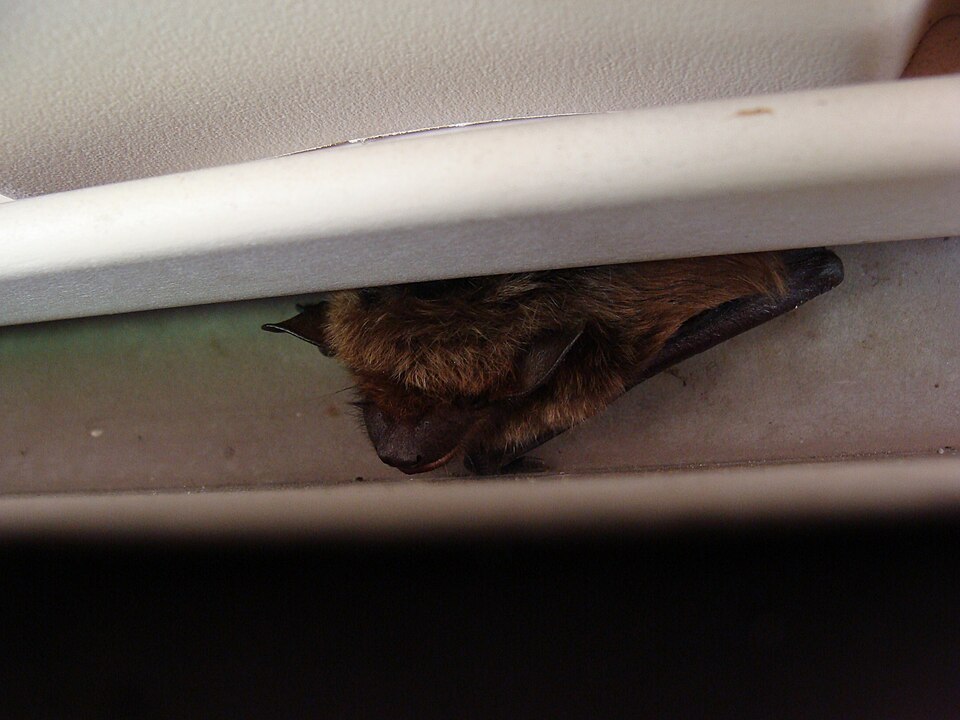
So bats are confirmed by things you can see, not by what you hear:
- A dusk exit watch. CDC’s own batproofing procedure starts with watching where bats exit at dusk, which shows how they are getting in. Penn State describes the same method — a person on each side of the building at dusk, watching until the exits are pinpointed.
- Droppings below a roost. Penn State describes bat droppings as dry, black, about the size of a grain of rice, accumulating in piles beneath the roost — while mouse droppings look similar but lie scattered in small amounts across the attic rather than piled.
- Rub marks and staining. ICWDM records smooth, polished rub marks along walls and around entryways, plus spotting and staining on the outside of the building near entry and exit holes.
Could it be something other than an animal?
Often, yes — and this check costs you nothing. ICWDM’s first question is whether the sound is consistent and repetitive. If it is, the noise is likely mechanical. Its other two prompts: does the sound only happen when the wind is blowing, or only at certain times of day, such as late in the day when vinyl siding is at its hottest?
Before you assume an animal, work through the list:
- Does it coincide with the heating or cooling system running?
- Does it only appear on windy days?
- Does it repeat mechanically, at the same interval, rather than in irregular bursts?
- Is it loudest in hot afternoon sun on a sun-facing wall?
- Is it actually coming from the wall, or travelling along a duct or pipe from somewhere else?
ICWDM says a consistent, repetitive sound is more likely to have a mechanical cause. Also check whether it appears only with wind, HVAC operation, or at times when exterior materials are heating or cooling.
How to identify what is in the wall without opening it
This is the part that actually resolves the question. None of it requires cutting drywall.
- Write down the timing. When you first heard it, how long each episode lasts, and whether it happens at the same time each night or at random. Note specifically whether it is daytime, dusk, the middle of the night, or around dawn. This filters the list; it does not identify anything by itself.
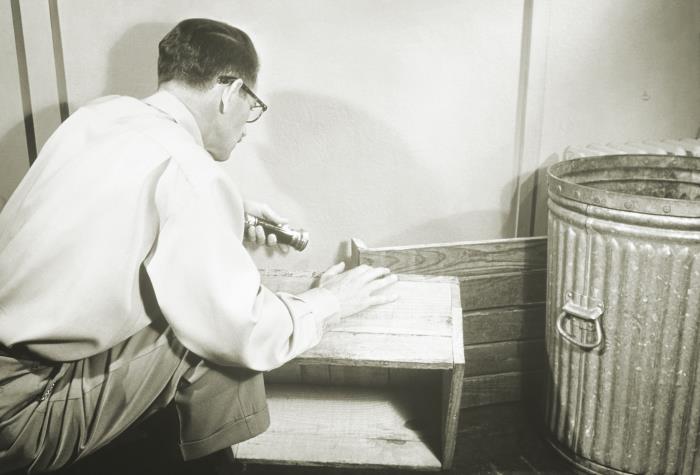
- Pinpoint the location. Low in a wall, behind a kitchen cabinet, in the ceiling, high on an exterior wall, in the attic or eaves, or around a chimney or vent. Location plus timing is far more informative than either alone.
- Look for physical evidence at that spot. Droppings, gnaw marks, shredded nesting material, greasy rub marks, and gaps where something could get in. If you find droppings, compare them by size and shape before you conclude anything, and use the wider signs checklist to compare the physical signs of mice and rats.
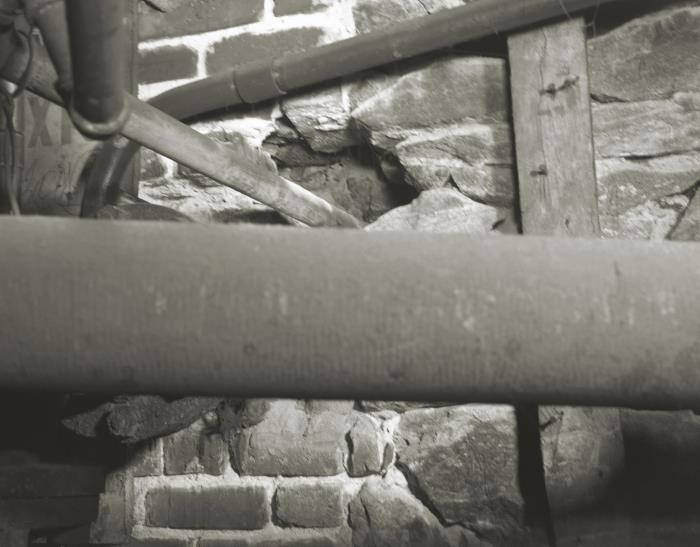
- Check the outside, especially at roof level. Damaged soffits, loose or torn vent screening, gaps where flashing has pulled away, and openings where wiring or plumbing passes through the wall. Penn State notes bats commonly enter where joined materials have warped or pulled apart — loose louvered vent screening, the roof peak, lifted flashing.
- Confirm before you choose a method. Identification changes the action. CDC says to choose the right kind of snap trap for the rodent, because traps for mice and rats are different, and UC IPM warns that mice and small juvenile rats often will not trigger a rat trap at all. A squirrel or a bat needs a completely different approach, and in the case of bats, a timing-sensitive approach that may also be subject to state or local wildlife rules.
Found droppings? Do not sweep or vacuum them. Follow the cleanup procedure, and if you want the reasoning behind the precautions, the risks are covered here. Cleaning also date-stamps the site: anything that appears afterwards was left after you cleaned. Appearance alone will not tell you whether the droppings are fresh or old.
If the evidence points to mice or rats
Then you are on familiar ground, and the sequence is the one CDC and the university IPM programmes both use. The full walkthrough, from finding where they leave the wall to sealing it without shutting them in, is in mice or rats in the walls.
- Trap first. CDC recommends traditional snap traps and advises against glue and live traps, because a frightened rodent urinates and that raises your exposure. UC IPM calls trapping the preferred method in homes and garages where only a few mice are present.
- Use the right size and place it right. Traps go against the wall, with the trigger end nearly touching it, where droppings or gnaw marks are. For roof rats, UC IPM adds off-the-ground placements: ledges, shelves, beams. Which mouse trap to use and where to put it.
- Do not throw poison into a wall cavity. UC IPM points out that house mice tend to stay within about 30 feet of their nest, so rodenticide often means the animal dies inside the structure — and where that is a problem, trapping is the better approach. CDC’s position is the same order: snap traps first, bait stations only for infestations that persist.
- Then close the way in. UC IPM’s threshold for excluding both rats and mice is to seal anything larger than 1/4 inch, with metal, wire screen or coarse steel wool rather than plastic, foam or wood, which rodents chew through. How to seal mouse entry points covers finding the openings and choosing materials.
What not to do
- Do not cut open the drywall because you heard a noise. Sound is the weakest evidence you will collect. Find the physical signs and the entry point first.
- Do not rely on an ultrasonic device. UC IPM is direct about this: high frequency electronic devices are not effective. Ultrasound is directional, does not penetrate behind objects, loses intensity quickly with distance, and rodents habituate to repeated sounds. The same page finds little evidence that sound, magnetic or vibration devices of any kind will drive established mice or rats out of a building.
- Do not seal an opening you have not watched. Penn State’s instruction for squirrels is to close openings but make sure not to lock the animal inside, and to set traps indoors as a precaution afterwards. Sealing an active opening can trap an animal inside the structure, creating an animal-welfare problem and potentially leading to odour or further damage.
- Do not seal a suspected bat entrance during the wrong months. CDC advises care between May and August so that flightless young are not trapped inside. Penn State is stricter and more specific for its region: bat-proofing should never be completed from late May through mid-July, and a one-way door should only be used after mid-July when the pups can fly. Where the two differ, follow the stricter one and check your own state’s rules — some bat species are protected.
- Do not treat for mice while the evidence points at a bat or a squirrel. Different animal, different legal and practical route.
When to call someone
Reasonable triggers: you cannot identify the animal after working through the steps above; the noise is in a cavity you cannot inspect; there is any sign of bats; there is gnawing near wiring; activity is spread across several parts of the house; or the noise continues after you have trapped and sealed. For bats specifically, CDC directs any contact to the health department, and an animal control or wildlife conservation agency can do the batproofing itself. For mice and rats, see when to call an exterminator and when DIY is reasonable.
Questions people ask
Why do I only hear it at night?
Because mice and rats are mostly night-active, per UC IPM — and because the house is quiet then. Hearing it only at night is consistent with rodents, and also with flying squirrels and bats. It does not single out any of them.
Is loud scratching a rat and quiet scratching a mouse?
No source we trust supports that. ICWDM specifically warns that insulation, construction materials and where you are standing change what you hear. Use gnaw marks and droppings instead.
Could it be a squirrel even at night?
Yes. Penn State states that flying squirrels are the only squirrels active at night, and they nest in attics, closets and between walls.
Can bats scratch inside a wall?
Yes. ICWDM lists scratching, crawling and climbing behind walls and between floors among bat sounds. Confirm with a dusk exit watch, droppings piled beneath a roost, or staining and rub marks at a gap — never with the noise alone.
Will ultrasonic sound drive mice out of a wall?
Do not count on it. UC IPM says high frequency electronic devices are not effective, and notes that ultrasound does not penetrate behind objects — which is exactly where the animal is. More in do ultrasonic pest repellers work?
Should I cut open the wall to look?
Not as a first step. Work the exterior and the evidence first: an entry point outside tells you more than an open cavity does, and it is what you will have to close anyway.
The bottom line
Night scratching in a wall is consistent with mice or rats, and is worth acting on. Timing and location narrow the field; they do not name the animal. Find droppings, gnaw marks, an entry point or an animal leaving at dusk, and then choose the method that matches what you actually found.
Sources and verification
- ICWDM — Identifying Noises Caused by Wildlife in StructuresThe warning that noises are not an accurate way to determine species; the scratching-in-wall and running-in-attic entries; the mechanical, wind and hot-vinyl-siding checks.
- ICWDM — House MiceThe sounds common where mice are present — gnawing, climbing in walls, running across the upper surface of ceilings, squeaks — and the note that their movement can be loud.
- ICWDM — Bat Damage IdentificationBat sounds behind walls and between floors; noisier at dusk, dawn and on hot days; rub marks and staining at entry points.
- UC IPM — Pest Notes: House MouseMice active mostly at night but sometimes in daylight; detection signs; 1/4-inch openings; the 30-foot range behind the rodenticide warning; high frequency devices not effective.
- UC IPM — Pest Notes: RatsRats mostly active at night; roof rats in attics, wall and ceiling voids; Norway rats low but ceiling voids not uncommon; attic noise as a sign; mouse gnaw marks as scratchier than rat marks; mouse-size animals not triggering rat traps; trap placement.
- Cornell IPM — Mouse and Rat Biology and BehaviorGnaw-mark width across the pair of incisor grooves: about 1–2 mm for an adult mouse, 3.5–4 mm for an adult rat.
- Penn State Extension — Tree SquirrelsFlying squirrels as the only night-active squirrels; nesting in attics, closets and between walls; entry via loose siding and vent screening; not locking squirrels inside when sealing.
- Penn State Extension — BatsSquirrel and mouse noises mistaken for bats; the dusk bat watch; bat droppings piled beneath a roost versus scattered mouse droppings; bats do not gnaw new holes; bat-proofing timing from late May through mid-July.
- CDC — Preventing Rabies from BatsBites can be tiny; contact the health department; do not release a bat found indoors before speaking to a public health expert; the dusk exit watch and May-to-August caution.
- CDC — How to Trap Up to Remove RodentsChoosing the right snap trap for the rodent; snap traps first and bait stations only for persistent infestations; glue and live traps advised against.
- Pennsylvania Game Commission — SquirrelsSquirrels most active in early mornings and late afternoons, with flying squirrels the nocturnal exception.