
Rooms and places
Mice in Your Car: Signs, Nests, Chewed Wires and Safe Cleanup
A car that sits unused is shelter for mice and rats: nests under the hood, in the air intake or the trunk, droppings in the cabin and, sometimes, chewed wiring. Air the car out before you look, clean nests and droppings wet rather than vacuuming them, have damaged wiring checked, and then deal with the garage or parking spot they came from.
Before you open the hood: do not vacuum, sweep or pressure-wash droppings, urine or nesting material until they have been disinfected. CDC warns that disturbing them can put virus-containing particles into the air, and deer mice carry hantavirus. Air the car out first, and disconnect the battery before you reach into the engine compartment.
What to do if you find signs of mice in your car
- Move the car outdoors or to a well-ventilated space and open the hood, doors and trunk for 20 minutes.
- Check before you start the engine: the air intakes and filters, the cabin and the trunk.
- Disconnect the battery before you inspect or clean the engine compartment.
- Soak nests and droppings with disinfectant, then remove them with paper towels.
- Replace a contaminated air filter and have damaged wiring or a fouled ventilation system checked by a mechanic.
- Find where they are coming from: the garage, the yard, or food left in the car.
- Keep checking the car for new signs over the following weeks.
Signs of mice or rats in a car
CDC and Public Health – Seattle & King County describe the same evidence to look for:
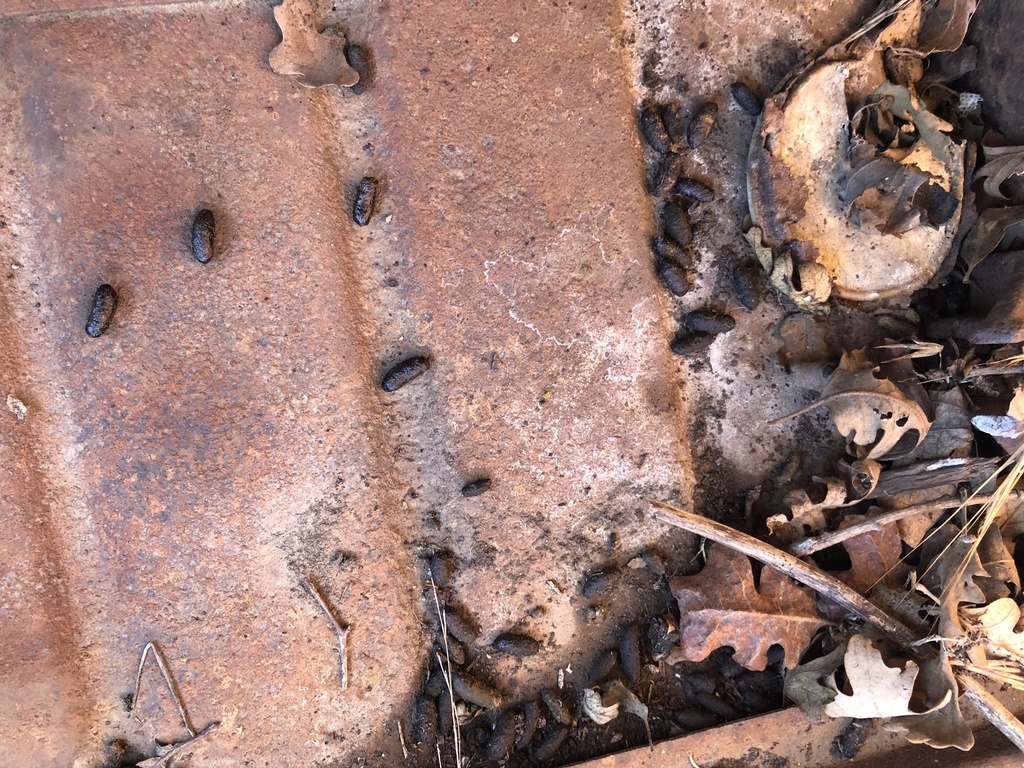
- Droppings and urine in the cabin, the trunk or the engine compartment. Compare mouse and rat droppings at actual size.
- Nesting material: shredded paper, fabric, insulation or plant fiber packed into a sheltered space. What a mouse nest looks like.
- Dead rodents. How to handle and dispose of a dead mouse.
- A smell in the cabin. King County notes that cabin odors can come from nesting material in the air intake.
- Engine trouble: poor performance, starting problems or rough running, which King County says can come from chewed wires or cables.
- Gnawing on wires, hoses or insulation. How to read gnaw marks.
CDC says rodents nest in cars, trucks, campers and other vehicles, especially ones used infrequently.
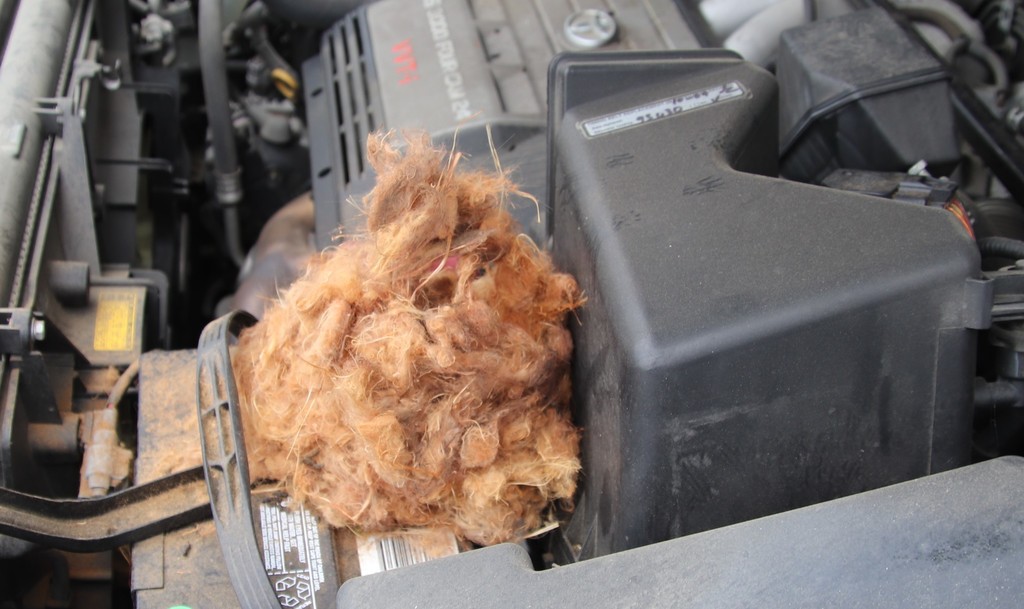
Where rodents nest in a car
King County lists the places rodents nest in vehicles:
- The engine compartment, including its insulation.
- The air intake and filtration parts. King County notes nests on accordion-style air filters and in the hoses that lead into the cabin.
- Heating and air-conditioning ducting.
- The trunk and the spare-tire well.
- The cabin: the headliner, the glovebox and the seats.
- Tool compartments and the areas around the headlights and taillights.
CDC names the routes into the passenger compartment: ducting, rusted areas and cable conduit.
Mice, rats or deer mice?
Both mice and rats damage cars. UC IPM says house mice damage structures and vehicles by gnawing on electrical wires and gas lines, and that rats commonly gnaw the insulation on engine wires in cars, with similar damage to trucks, tractors and farm equipment.
Deer mice matter most for your health. UC IPM calls deer mice a particular concern because they spread hantavirus. They have larger eyes than house mice and a white underside, and UC IPM notes they often enter vacated homes, cabins and other structures. Wyoming’s Department of Health lists old vehicles alongside cabins, sheds and garages as places to watch for hantavirus risk. If you live in a rural area or the car has been stored near fields or woods, treat the droppings as if they could be from deer mice. How dangerous mouse droppings are covers the risk in detail.
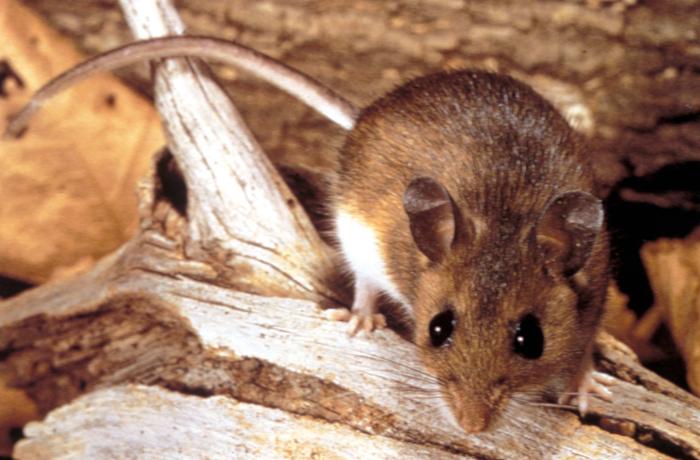
Droppings are the quickest way to tell mice from rats. The full mouse-or-rat checklist adds gnaw marks, rub marks and other signs.
Chewed wiring
UC IPM says rats gnawing engine-wire insulation can lead to significant malfunctions and expensive mechanical repairs. No official source we checked puts a dollar figure on the repair.
RodentVerify’s editorial view: if you find a nest under the hood together with warning lights, starting trouble or rough running, have the wiring checked by a mechanic before you rely on the car. Tell the mechanic rodents were in it, as King County advises, so they can protect themselves.
How to inspect a car safely
These steps are CDC’s vehicle procedure, which King County repeats:
- Air it out. With the car in a well-ventilated space, open the hood, doors and trunk and let the interior and engine compartment air out for 20 minutes.
- Do not start a car that has been idle until you have aired it out and inspected the air intakes and filters.
- Wear plastic gloves and a long-sleeved shirt.
- Remove the battery cables before you inspect the engine compartment, to avoid shock.
- Look for dead rodents, nesting material, droppings and urine in the engine compartment, the cabin and the trunk.
CDC’s vehicle procedure does not call for a respirator. Other sources go further: Wyoming’s Department of Health suggests a well-fitting N95 respirator if possible when cleaning places such as old vehicles, and UC IPM says only an approved respirator with HEPA filters gives full protection when cleaning up after deer mice. For heavy infestation, CDC lists coveralls, rubber boots or shoe covers, gloves, goggles and a half-mask respirator with HEPA filters.
How to clean droppings and nests out of a car
- Do not vacuum or use a high-pressure sprayer on droppings, urine or contaminated surfaces until they have been disinfected.
- Soak the material. Spray it with a disinfectant until fully soaked, or with a fresh bleach solution of 1.5 cups of household bleach in 1 gallon of water (1 part bleach to 9 parts water). Let it sit for 5 minutes, or as the label directs.
- Pick it up with paper towels and put it in the garbage.
- Disinfect the rest of the area once the droppings and nesting material are gone.
- Air filter: if there is nesting material in the air intake, remove the nesting material and the filter, discard both and install a new filter.
- Reconnect the battery when the area is dry.
- Wash your gloved hands with soap and water or disinfectant, remove the gloves, then wash your hands with soap and warm water.
Seats and carpets. CDC’s advice for carpets and upholstered furniture, written for homes, is to shampoo them with a commercial disinfectant or clean them with a commercial-grade steam cleaner or shampoo, after droppings and urine have been disinfected and removed. CDC does not address car upholstery specifically. The complete cleanup guide covers other surfaces.
When the ventilation system needs a mechanic
A nest in the air filter can be handled with the steps above. Nests deeper in the system are harder to reach. King County advises that if the infestation is extensive, a qualified mechanic should inspect and clean the system, and that hoses, ducts, filters or fans may need to be replaced. CDC also says to consult a qualified mechanic or automotive professional for help.
Traps and poison
CDC says snap traps and poison baits are effective at stopping rodents from getting into vehicles. Where to put them is the practical question.
Traps belong where the rodents travel. CDC’s trapping guidance is to set snap traps on the floor against the wall, with the baited end touching the wall in a “T”, to place traps in outbuildings too, and to check them daily. For a car kept in a garage, that means along the garage walls near the car. Trapping in a garage and choosing a mouse trap go into detail.
Poison is a different matter. Any rodenticide may be used only as its label allows. EPA’s guide to household bait stations sorts them into tiers: Tier 1 stations may be used indoors and outdoors within 50 feet of buildings; Tier 2 only indoors; Tier 3 indoors where pets have no access; Tier 4 indoors where young children and pets have no access. The EPA guide does not mention vehicles. Do not put bait inside the car or engine compartment unless the product label permits it.
Repellents and ultrasonic devices
- Ultrasonic devices: UC IPM says high-frequency electronic devices aren’t effective against house mice and calls ultrasonic devices ineffective against rats. What the research and the FTC say about ultrasonic repellers.
- Odor repellents: UC IPM notes that rats may avoid some odors and tastes at first, but no repellent has solved a rat problem for more than a very short time.
- Mothballs: the National Pesticide Information Center says mothballs are not wildlife repellents. They are meant for closed, airtight containers.
- Peppermint oil, dryer sheets, capsaicin tape: we found no evaluation of these in CDC, EPA, state health department or university extension sources. Laboratory studies found only short-term avoidance: does peppermint oil repel mice?
How to keep mice out of your car
- No food in the car. CDC: do not leave any kind of food anywhere in the vehicle.
- Inspect it regularly, inside and out, even when it is parked or stored, as King County advises.
- Seal the garage. CDC says mice can fit through a hole the width of a pencil, 1/4 inch, and to seal garages and outbuildings as well as the house. How to seal mouse entry points.
- A weighted car cover can keep rodents away from the engine, but UC IPM says it must touch the ground, forming a seal all the way around the vehicle. UC IPM adds that managing rodents around the yard and neighborhood will likely be needed for a longer-term fix.
- Clear the yard. CDC recommends moving woodpiles 100 feet or more from the home and raising the wood at least one foot off the ground, keeping compost bins at least 100 feet away, and moving abandoned vehicles more than 100 feet from the home or disposing of them.
A car in a garage with mice has a garage problem first. Mice in the garage covers how to deal with it.
How to tell whether they are gone
CDC’s test is written for homes, but it works as a guide: if no rodents are captured for a week and there are no new signs, they are gone. For a car, that means no new droppings in the cabin or trunk, no fresh nesting material under the hood and no new gnawing when you check after a week. How to know if mice are gone has the full checklist.
When to call a professional
Reasonable triggers: chewed wiring or engine trouble; nests deep in the ducts or heating and air-conditioning system; heavy contamination of the cabin; signs that come back after cleaning; or a garage or yard you cannot get under control. A mechanic handles the car; a pest professional handles where the rodents are living. When to call an exterminator goes through how to decide.
The bottom line
Mice and rats move into cars that sit unused. Air the car out before you look, check the air intake and filters before you start it, disconnect the battery before you reach into the engine compartment, and clean wet instead of vacuuming. Replace a soiled air filter, have chewed wiring or a fouled ventilation system checked by a mechanic, keep food out of the car, and seal and trap the garage it is parked in.
Sources and verification
- CDC — How to Clean Up After Rodents (April 2024)Rodents nesting in cars, trucks and campers used infrequently; the vehicle procedure: 20-minute airing, inspecting air intakes and filters before starting, battery cables, gloves and long sleeves, no vacuum or high-pressure sprayer, disinfectant and 5-minute soak, replacing the air filter, reconnecting the battery; routes into the cabin; no food in the car; snap traps and poison baits; consulting a mechanic; bleach solution; carpets and upholstery; PPE for heavy infestation.
- Public Health – Seattle & King County — Cleaning rodent-infested vehiclesWhere rodents nest in vehicles; cabin odors and engine trouble as signs; nests on air filters and in hoses; mechanic for extensive infestation and telling them about the hantavirus risk; replacing hoses, ducts, filters or fans; regular inspection of parked vehicles.
- UC IPM — Pest Notes: House Mouse (July 2025)House mice damaging vehicles by gnawing wires and gas lines; high-frequency devices not effective.
- UC IPM — Pest Notes: Rats (June 2025)Rats gnawing engine-wire insulation; malfunctions and expensive repairs; trucks, tractors and farm equipment; weighted car cover; ultrasonic devices; odor and taste repellents.
- UC IPM — Pest Notes: Deer MouseDeer mice and hantavirus; how to tell them from house mice; entering vacated structures; HEPA respirator.
- Wyoming Department of Health — Prevent Hantavirus During Spring Cleaning (April 2025)Old vehicles among places of hantavirus risk; N95 respirator if possible.
- CDC — How to Trap Up to Remove RodentsSnap-trap placement in a “T” against the wall; traps in outbuildings; daily checks; the one-week test.
- CDC — How to Seal Up to Prevent RodentsThe 1/4-inch hole; sealing garages and outbuildings; woodpiles, compost bins and abandoned vehicles 100 feet from the home.
- EPA — Choosing a Bait Station Product for Household Use (updated September 2026)Bait station tiers and where each may be used.
- National Pesticide Information Center — Mothballs (July 2025)Mothballs are not wildlife repellents; use in closed, airtight containers.