
How mice and rats live
What Do Rats Eat? Norway Rats, Roof Rats and the Food That Brings Them to Your Home
Rats eat almost anything, but they are not random about it. Norway rats prefer grains, meat, fish and nuts; roof rats prefer fruit, nuts, berries, snails and slugs. Around a house, the food that keeps them coming back is usually garbage, pet food, fallen fruit, bird seed and compost. Here is what each rat eats according to university and government sources, how much it needs, how it feeds, and which of those foods you can take away.
What Norway rats and roof rats eat
Both rats are omnivores and will eat nearly any food when they have to. When they have a choice, their preferences differ, and that difference shows up in where you find damage.
| Norway rat | Roof rat | |
|---|---|---|
| Preferred foods | Cereal grains, meat, fish, nuts and some fruits (UC IPM); ICWDM adds insects such as cockroaches | Fruits, tree nuts, berries, slugs, snails, young birds and bird eggs (UC IPM) |
| In a yard | Whatever is abundant and easy to reach, such as food waste around untidy properties or dumpsters (UC IPM) | Ornamentals, vegetables, fruits and nuts; avocados and citrus on the tree (UC IPM, ICWDM) |
| How it eats | Often eats where it finds the food (UC IPM) | Often carries food away to eat somewhere else, and may hoard it (UC IPM, ICWDM) |
| Water | ½ to 1 ounce a day on dry food, less on moist food (ICWDM) | Usually daily, unless its food is high in water (ICWDM) |
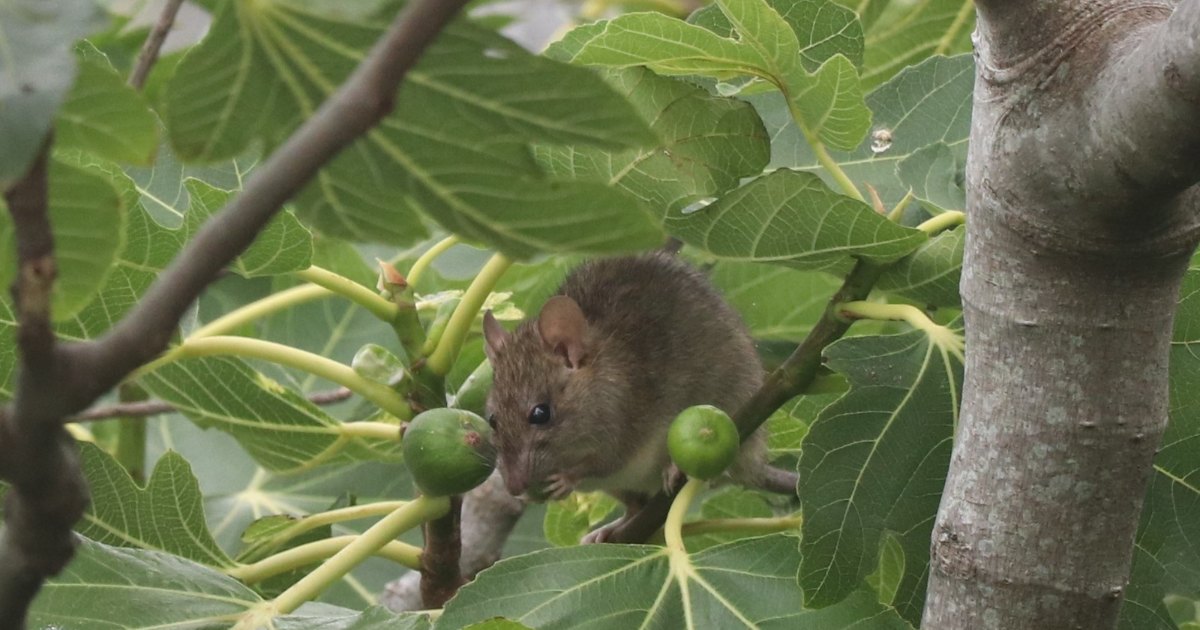
To tell the two species apart by their bodies and habits, see roof rat vs Norway rat. The short version for food: hollowed-out fruit in a tree points to roof rats, and burrows next to garbage cans or compost point to Norway rats.
What rats eat away from people
Animal Diversity Web describes the Norway rat as an excellent forager with an unusually broad diet. Its list includes seeds, grains and nuts, fruit, leaves, roots, insects, worms, snails, eggs, carrion, fish and small animals. It notes that Norway rats living near the sea have been seen catching fish with their paws, and that they prey on chicks, mice, birds and small lizards. One stomach examined in Germany held 4,000 items, mostly plants, although studies show Norway rats prefer meat when they can get it.
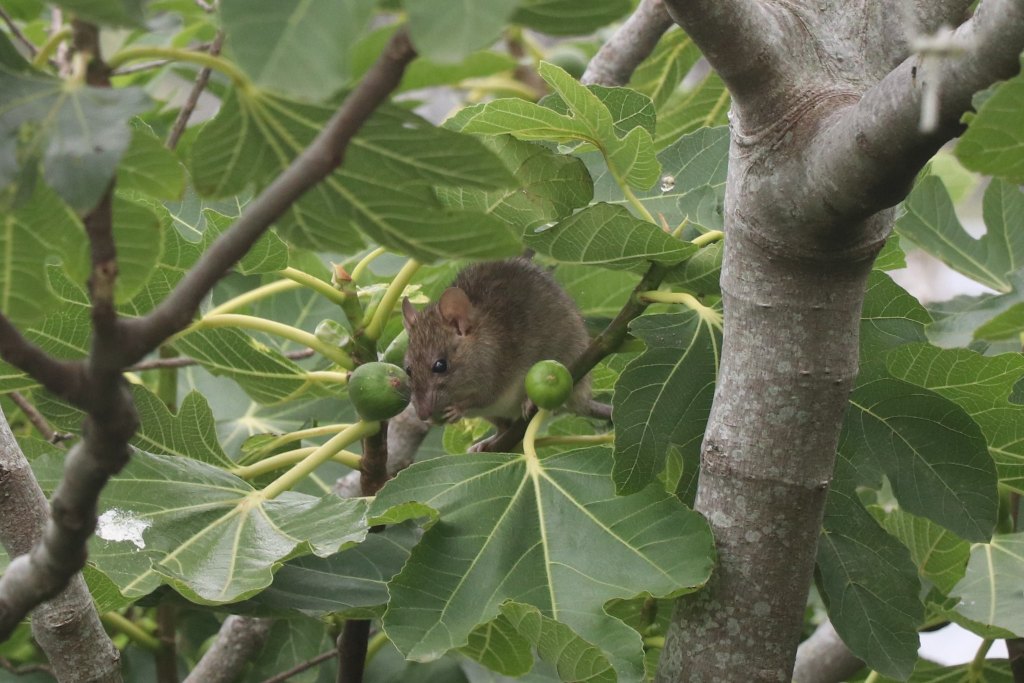
The roof rat leans more toward plants. Animal Diversity Web says it generally feeds on fruit, grain, cereals and other vegetation and will eat insects and other invertebrates if necessary. The 1994 University of Nebraska handbook Prevention and Control of Wildlife Damage compares roof rats outdoors to tree squirrels, because both prefer a wide variety of fruit and nuts. In farming areas the same chapter lists citrus, avocados, walnuts, almonds and sugarcane among the crops roof rats damage.
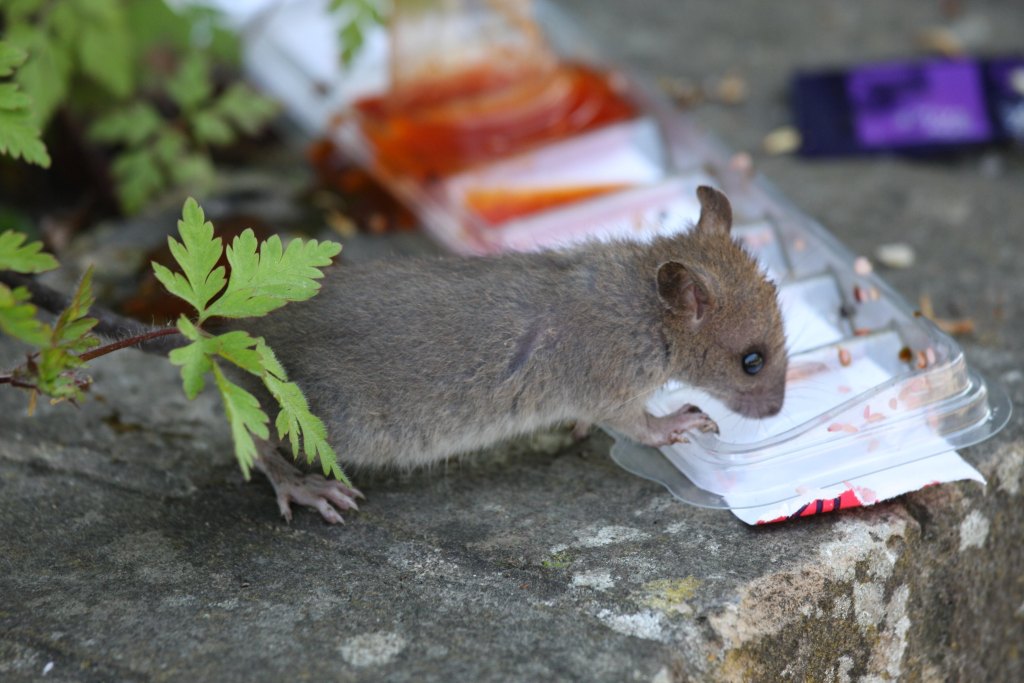
In towns, the picture is simpler. Animal Diversity Web says Norway rats in cities live mainly on discarded human food, and the handbook says household garbage gives them a fairly balanced diet and most of the moisture they need.
How much does a rat eat?
Less than most people expect, which is why a little spilled food is enough:
- Per day: about ½ ounce (15 grams) of food. ICWDM and the handbook use this figure to estimate how many rats are present, adding that some rats eat more. Animal Diversity Web gives about 15 grams of food and 15 milliliters of water a day for the roof rat. New York City’s health department rounds it up: rats only need one ounce of food a day.
- In energy: ICWDM says a single Norway rat needs about 110 calories a day.
- Per year: ICWDM estimates that one rat eats 20 to 40 pounds of feed and probably spoils about ten times that amount with urine and droppings.
What feeds rats around a house
These are the food sources the sources name for homes and yards. Each one is something you can change.
| Food source | What the sources say | What to change |
|---|---|---|
| Garbage | A fairly balanced diet with moisture (handbook); garbage left on the curb too long attracts rats (NYC Health) | Thick plastic or metal cans with tight lids, no holes, cleaned often (CDC, UC IPM); put garbage out close to pickup time (NYC Health) |
| Pet food | Often a source of food for rats around homes (handbook, ICWDM); UC IPM warns that dogs kept and fed outdoors can lead to rat trouble | Feed only what the pet eats at one meal, put bowls away and do not leave them out overnight, store food in sealed containers (UC IPM, CDC) |
| Pet and animal droppings | Rats will eat feces (UC IPM) | Clean up after dogs and cats, with gloves (UC IPM) |
| Fallen fruit and nuts | Roof rats feed on fruit trees, sometimes in a neighbor’s yard (UC IPM) | Pick up dropped fruit and nuts; strip unwanted fruit after harvest (UC IPM, ICWDM) |
| Vegetable gardens | Rats eat ripening vegetables, fruits and flowers (UC IPM) | Clean up garden debris and fallen fruit (UC IPM) |
| Compost | Rats may burrow under compost, especially with meat, fish, eggs or eggshells in it (UC IPM) | Rigid bins with tight lids, at least 100 feet from the house (UC IPM, CDC); leave those foods out |
| Bird feeders and handouts | Rodents use feeders (CDC); food left out for stray cats, pigeons or squirrels feeds rats (NYC Health) | Keep feeders away from the house and use squirrel guards (CDC); do not leave food out for stray cats, pigeons or squirrels (NYC Health) |
| Chickens and animal feed | Roof rats do very well on chicken, livestock and pet feed (handbook); Norway rats sometimes prey on chickens, ducks, pigeons and eggs (ICWDM) | Store feed in thick plastic or metal containers with tight lids (CDC); see rats in the chicken coop |
| Snails | A favorite roof rat food, but do not expect roof rats to solve a snail problem (handbook) | Thin dense plantings and climbing ivy, which UC IPM says help roof rats forage |
| Lawn seed | Grass going to seed is a potential food source (ICWDM) | Keep grass mowed (ICWDM) |
Indoors, CDC’s list is short: store food in sturdy lidded containers of thick plastic, metal or glass, wipe up spills at once, and give indoor garbage a lidded can too. ICWDM notes that roof rats living in an attic often feed outdoors, but they sometimes come down into the kitchen for stored food.
How rats find and eat food
Rats eat mostly at night. ICWDM says Norway rats become active around dusk to look for food and water, and roof rats usually start searching shortly after sunset. They find food largely by smell, and their sense of taste is sharp: ICWDM says Norway rats can detect some contaminants in food at levels as low as 0.5 parts per million.
They are also cautious. UC IPM says rats quickly notice and tend to avoid new objects and new foods, and ICWDM says they may eat only small amounts of a new food at first. This is why a new trap or bait is often ignored for days; best rat traps explains how to work around it.
Roof rats often carry food away. The handbook says that if food is out in the open and too big to eat quickly, a rat will usually carry it to a hiding place, and many rats cache large amounts of food to eat later, in a woodpile, an attic or behind boxes in a garage. A stash of nuts, seeds or pet food in a place no person put it is worth reading as a sign of rats. Other feeding signs include oranges hollowed out on the tree with the rind left hanging, and lemons with the rind eaten and the flesh left (UC IPM, ICWDM).
What this means if you have rats
Food is the part you control most directly. The handbook says rat numbers in an area are set mainly by how much palatable food and nearby cover there is, and UC IPM says populations can grow quickly when food, water and shelter are available. On its own it is not the whole job, though: UC IPM calls limiting food, water, shelter and access the most permanent form of control, but says direct population control is often needed as well.
The full plan, from finding entry points to trapping and cleanup, is in how to get rid of rats. Which foods to use as trap bait, and how to attach them, is covered in best bait for mouse traps, which has a section on rats. How long a rat can last without food or water is in how long do rats live. What draws rats to a house and yard in the first place, food, water and shelter, is in what attracts rats?
More questions about what rats eat
Do rats eat meat?
Yes. UC IPM lists meat and fish among the Norway rat’s preferred foods, and Animal Diversity Web says studies show Norway rats prefer meat when given the option. Roof rats lean toward plant foods, but UC IPM includes young birds and bird eggs among their preferred foods.
Do rats eat mice?
Norway rats can. Animal Diversity Web lists mice among the animals Norway rats prey on, along with chicks, birds and small lizards. What mice themselves eat is in what do mice eat?
Do rats eat cheese?
None of the sources we checked names cheese as a preferred rat food or as a recommended bait. The baits UC IPM and ICWDM name for rats are nuts, dried fruit, bacon, peanut butter and dry pet food; see best bait for mouse traps.
Do rats eat cockroaches and other insects?
ICWDM lists insects such as cockroaches among Norway rat foods, and Animal Diversity Web says roof rats will eat insects if necessary.
Do rats eat dog poop?
Yes. UC IPM says rats will eat feces and advises cleaning up after dogs, cats and other animals, wearing gloves, because feces can carry disease.
What do pet rats eat?
This guide is about wild rats around homes. For a pet rat’s diet, ask a veterinarian.
In short
Norway rats prefer grains, meat, fish and nuts; roof rats prefer fruit, nuts, berries, snails and slugs; both will eat almost anything when they must. A rat needs only about half an ounce of food a day, so garbage, pet food, fallen fruit, compost, bird seed and animal feed are enough to keep rats around a house. Close those sources, then seal and trap.
Sources and verification
- UC IPM — Pest Notes: Rats (June 2025)Preferred foods of Norway and roof rats; acceptance of abundant food waste; roof rats on avocados and citrus, hollowed oranges and lemon rinds; feeding on fruit trees in other yards; carrying food versus feeding while foraging; garden and compost damage; dog food outdoors; rats eating feces; fallen fruit; garbage cans; avoidance of new foods; fast population growth with food, water and shelter; trap baits.
- ICWDM — Norway Rat Biology, Damage Identification and Prevention and ControlAbout 110 calories a day; preferred foods including insects such as cockroaches; water needs; garbage as a balanced diet; activity at dusk; taste sensitivity; caution with new foods; about ½ ounce of food a day; predation on chickens, ducks, pigeons and eggs; 20 to 40 pounds of feed a year; pet food around homes; mowing grass.
- ICWDM — Roof Rat Biology, Damage Identification and Prevention and ControlFruit and nuts, ornamentals; feeding after sunset; carrying and caching food; kitchen visits from the attic; crops damaged; snails; pet food and garbage; removing dropped fruit; baits.
- Prevention and Control of Wildlife Damage (University of Nebraska–Lincoln, 1994): Norway Rats (Timm) and Roof Rats (Marsh)Food habits of both species; garbage as a balanced diet; pet food around homes; roof rats compared to tree squirrels; livestock and pet feed; dogs fed outdoors; caching in woodpiles, attics and garages; snails; density set by food and cover.
- Animal Diversity Web — Rattus norvegicus (University of Michigan, 2004) and Rattus rattus (2004)Norway rat diet in the wild and in cities, fishing, prey including mice, the German stomach study, preference for meat; roof rat diet and about 15 grams of food and 15 milliliters of water a day.
- CDC — How to Seal Up to Prevent Rodents (April 2024)Food containers, spills, pet bowls, garbage cans, compost at least 100 feet from the house, bird feeders with guards, animal feed storage.
- NYC Health — Rats: Information for Tenants and Property OwnersRats need only one ounce of food a day; garbage timing; no food left out for stray cats, pigeons or squirrels.