
Cleanup and safety
Do Mice Bite? When Mice Bite People, What a Bite Looks Like and What to Do
Mice in the house rarely bite anyone. The bites that do happen almost always come from a mouse being picked up, cornered or stuck in a trap. Here is when house mice and deer mice bite, what a mouse bite looks like, which diseases a bite can pass on, what to do if one breaks the skin, and what is more likely behind itchy bites in bed when you have mice.
Short answer
- Yes, but rarely. The Internet Center for Wildlife Damage Management (ICWDM) says mice may bite when handled or caught on glue boards. A mouse loose in your kitchen will run from you, not toward you.
- Most bites are avoidable: never pick up a live or dead mouse with bare hands, and use snap traps, not glue traps.
- If a bite breaks the skin, wash it right away with warm, soapy water (CDC). See a doctor if it is deep, gets red, warm or swollen, or your last tetanus shot was more than 5 years ago.
- Watch for fever over the next 3 weeks. Mice can carry rat-bite fever. Symptoms usually start 3 to 10 days after contact and can appear up to 21 days later (CDC). Rabies from a mouse is very unlikely.
When do mice bite?
House mice keep out of sight. UC IPM says they are active mostly at night, and ICWDM says they seldom travel far from the nest for food or water. Biting is a defense, and the situations where it happens are predictable:
- Picking one up. ICWDM says mice may bite when handled, and says to always wear gloves when handling wildlife.
- A mouse caught alive, in a live trap, a bucket, a bin or on a glue board. ICWDM names glue boards specifically. A trapped mouse is frightened and cannot run.
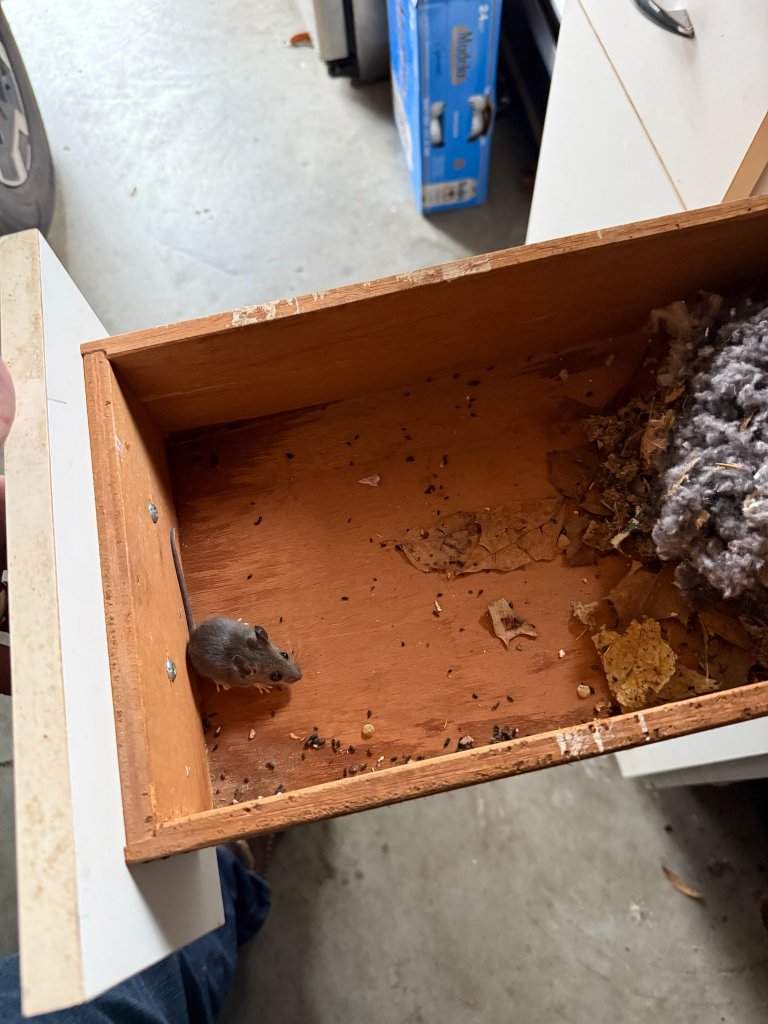
- Cornering or surprising it, for example reaching into a drawer, box or cupboard where a mouse is nesting. CDC says a surprised small animal may bite out of fear.
- Pet mice, especially when held close to the face or picked up without warning (CDC).
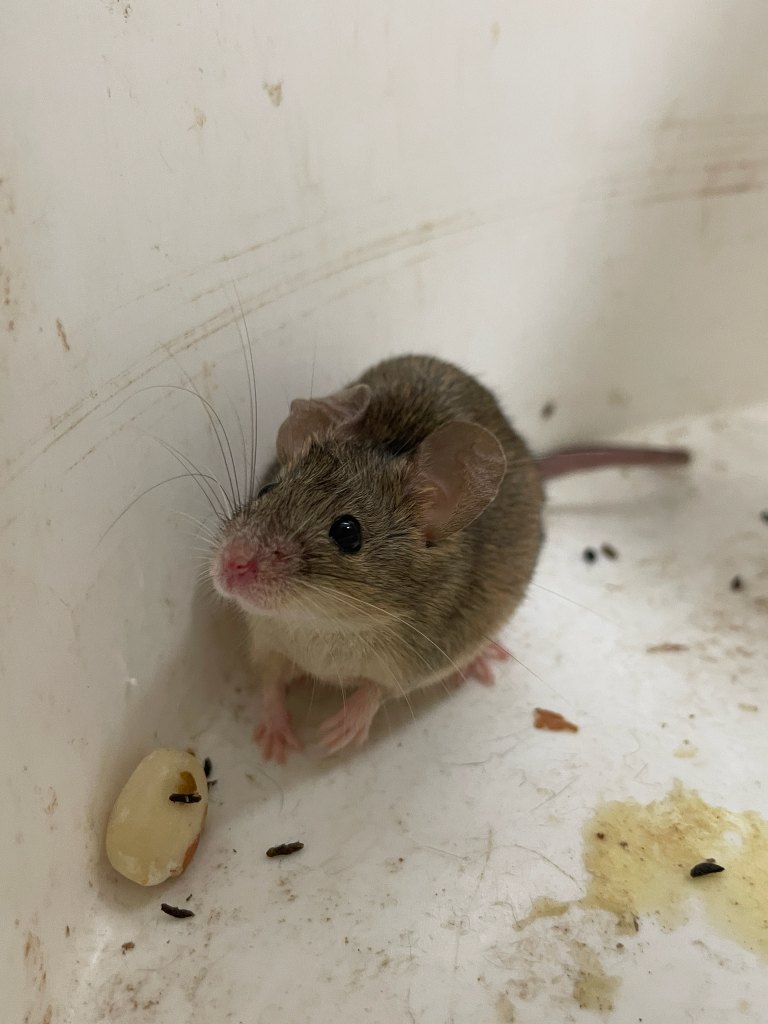
Do house mice bite? And deer mice?
Both can, in the same situations. The species matters more for what a bite or any contact can pass on than for how likely the bite is. Deer mice carry the hantavirus that causes hantavirus pulmonary syndrome in the United States (CDC), so a deer mouse caught in a cabin, shed or camper deserves extra care. How to tell them apart is in deer mouse vs house mouse.
What does a mouse bite look like?
No health agency we checked describes one, so this part is our description, not a source’s. A house mouse is only a few inches long and its front teeth are tiny, so a bite usually leaves one or two small punctures or a short scratch-like cut that may bleed a little. Rat bites are larger; see rat bites.
What CDC does point out is that the wound is not a good guide. Bites can spread germs even when the wound does not look serious, and by the time rat-bite fever symptoms appear, the bite or scratch has often healed.
Itchy bites in bed? Probably not the mouse
We found no agency that reports mice biting sleeping people as a common problem. If you have mice and wake up with itchy bites, look at the mice’s parasites. University of Kentucky entomologists say bird and rodent mites that live in nests often move through a building looking for a new host when the mice die or leave, and that their bites cause moderate to intense itching. Rodent mites, the guide adds, often become a nuisance after the mice or rats have been eliminated, so bites that start right after a round of successful trapping fit that pattern.
- Find and remove the nest as well as the mice. The Kentucky guide says removing the hosts and their nesting sites comes first. Wear gloves, and wet the nest with disinfectant before you pick it up, as CDC advises for any rodent nest (mouse nest signs, how to clean mouse droppings).
- Mites can carry disease. ICWDM lists rickettsialpox among the diseases that mice and their parasites pass to people. If the bites come with fever or a rash, see a doctor and mention the mice.
- Other causes of itchy bites, such as bed bugs or fleas, can look similar. Our suggestion: catch a specimen on clear tape and have a pest professional or your county extension office identify it.
What to do if a mouse bites you
- Wash the wound right away with warm, soapy water if the bite broke the skin (CDC, small mammals).
- Get medical care if the wound is deep or will not stop bleeding, if it becomes red, painful, warm or swollen, or if it has been more than 5 years since your last tetanus shot. CDC lists all of these. Children under 5, adults 65 and older, pregnant women and people with weakened immune systems are more at risk from infected wounds.
- Tell the doctor it was a rodent and whether it was a wild mouse or a pet. Rat-bite fever needs antibiotics, and CDC says it must be treated quickly.
- Watch for symptoms for 3 weeks: fever, vomiting, headache, muscle or joint pain, or a rash on the hands and feet. CDC says symptoms usually begin 3 to 10 days after contact and can appear up to 21 days after. If they do, see a healthcare provider right away.
The full first-aid steps, the symptoms of rat-bite fever and when to go to urgent care are in what to do after a rat bite; they are the same for a mouse bite.
What can a mouse bite pass on?
| Disease | Linked to | Through a bite? | What the source says |
|---|---|---|---|
| Rat-bite fever | Rats, mice, gerbils, guinea pigs, squirrels | Yes, also scratches and other contact | Rare in the U.S. but must be treated quickly (CDC) |
| Hantavirus | Deer mouse (in the U.S.) | Rarely | Mostly from urine, droppings and saliva; a bite or scratch is a rare route (CDC) |
| Lymphocytic choriomeningitis (LCM) | House mouse | Contact with saliva | Exposure to fresh urine, droppings, saliva or nesting material; serious in pregnancy and for people with weak immune systems (CDC) |
| Rabies | — | Almost never | Small rodents, including mice, are rarely infected and are not known to have passed rabies to people (Wisconsin DHS) |
Rat-bite fever. Despite the name, CDC lists mice among the rodents that carry it. The bacteria are part of the animals’ normal germs, and a mouse carrying them looks healthy. Early symptoms can feel like the flu.
LCM. CDC links it to the common house mouse and says healthy people usually recover, but it can cause miscarriage or birth defects. If you are pregnant, do not handle mice, wild or pet. More on mouse-borne diseases is in are mouse droppings dangerous?
Rabies. The Wisconsin Department of Health Services says rabies shots are almost never needed after contact with small rodents, except in unusual circumstances, such as an animal acting strangely or obviously sick, and that the health department should be consulted first. Ask your doctor or local health department rather than deciding on your own.
How to avoid being bitten
- Gloves, always. UC IPM says not to touch mice with bare hands and to wash your hands after handling traps, and ICWDM says the same for any wildlife.
- Snap traps, not glue traps or live traps. CDC recommends snap traps and advises against glue traps and live traps, and a mouse on a glue board is exactly the one likely to bite. See best mouse traps.
- Do not reach blindly into boxes, drawers or storage where you have seen droppings or nests. Look first, and use a flashlight.
- Dead mice: spray the mouse and trap with disinfectant, then pick them up with gloves or a bag (CDC). Step by step in what to do with a dead mouse.
- Pet mice: let the mouse see your hand before you pick it up, and do not hold it close to your face (CDC).
Questions people ask
Do mice bite you in your sleep?
We found no health agency that reports this as a common event; the bites ICWDM and CDC describe come from mice being handled, trapped or surprised. Itchy bites in bed in a house with mice are more often rodent mites, especially after the mice are gone (University of Kentucky). Keep food out of the bedroom and deal with the mice; start with how to get rid of mice.
Will a mouse attack you?
No. A wild mouse bites to escape when it is held, trapped or cornered (ICWDM, CDC). It does not chase people.
Do mice carry rabies?
Almost never. The Wisconsin Department of Health Services says small rodents, including mice and rats, are rarely found to be infected and are not known to have passed rabies to people. If a mouse that bit you was acting strangely or seemed sick, call your doctor or health department.
Do I need a tetanus shot after a mouse bite?
CDC lists more than 5 years since your last tetanus shot as one of the reasons to get medical care after a bite from a small mammal. Your doctor will decide.
Can a mouse bite make you sick?
It can. Rat-bite fever is the main risk from the bite itself. Most bites heal without trouble, which is why CDC stresses watching for fever and other symptoms for up to 3 weeks rather than judging by the wound.
In short
Mice rarely bite, and almost only when they are held, trapped or cornered. Wear gloves, use snap traps rather than glue boards, and never reach blindly into a nest. If a bite breaks the skin, wash it with warm, soapy water, get it checked if it is deep, infected or your tetanus shot is out of date, and see a doctor if you get a fever or rash in the next 3 weeks. Rabies from a mouse is very unlikely. Itchy bites in bed are more likely rodent mites than mice.
Sources and verification
- ICWDM — House Mouse Damage IdentificationMice may bite when handled or trapped on glue boards; gloves when handling wildlife; mice and their parasites transmit salmonellosis, rickettsialpox and LCM; mice may carry rat-bite fever.
- CDC — Small Mammals (Healthy Pets, Healthy People) (May 2026)Small mammals may bite out of fear when surprised; not holding them close to the face; bites spread germs even if the wound does not look serious; washing with warm soapy water; when to seek care, including tetanus more than 5 years ago; signs of infection; groups at higher risk; pregnant women and pet rodents.
- CDC — About Rat Bite Fever (July 2024)Rodents that carry it, including mice; carriers look healthy; rare in the U.S.; must be treated quickly; symptoms 3 to 10 days after contact, up to 21; wound often healed by then; symptoms and rash.
- CDC — About Hantavirus (May 2024)Spread mainly through urine, droppings and saliva; a bite or scratch is a rare route; the deer mouse spreads the most common U.S. hantavirus.
- CDC — About Lymphocytic Choriomeningitis (January 2025)Spread by the common house mouse; exposure to fresh urine, droppings, saliva or nesting material; usually mild in healthy people; risks in pregnancy and for immunocompromised people; pet mice and hamsters.
- Wisconsin Department of Health Services — Rabies: Small Rodents (revised November 2025)Small rodents, including mice and rats, rarely infected and not known to transmit rabies to people; prophylaxis almost never necessary except in unusual circumstances; consult the health department.
- University of Kentucky Entomology — Parasitic Mites of Humans (ENTFACT-637) (Michael F. Potter, 1996)Bird and rodent mites biting people after their hosts die or leave the nest; moderate to intense itching; removing hosts and nests first; gloves and care with nest material.
- UC IPM — Pest Notes: House Mouse (July 2025)Mice active mostly at night; no touching mice with bare hands; washing hands after handling traps; LCM.
- CDC — How to Trap Up to Remove Rodents (April 2024) and How to Clean Up After Rodents (April 2024)Snap traps recommended; glue and live traps not recommended; spraying dead rodents, traps and nests with disinfectant before handling; gloves.