
Signs and droppings
Chipmunk Droppings vs Mouse Droppings: Why the Droppings Are Usually From Mice, and How to Check
Chipmunks are on the porch, in the garage and under the deck all day, so when small dark droppings turn up, they get the blame. Usually the droppings are from mice. Chipmunks are tidy about their droppings, and mice are not. Here is what the sources say about each animal’s habits, a simple day-and-night test that tells you which one is leaving them, where each one gets in, and how to clean up either kind safely.
Short answer
- Droppings in the open are usually mice. An Ask Extension expert answering a homeowner in 2024 said chipmunks are discreet about their droppings and typically bury them in their burrows; mice do not.
- Chipmunks work by day, mice by night. ICWDM says chipmunks are active during daylight hours; UC IPM says house mice are active mostly at night. That gives you a simple test (below).
- Look at the hole, not just the droppings. A chipmunk burrow is a clean hole about 2 inches across with no pile of dirt around it (ICWDM). Mice nest in sheltered spots indoors and in clutter.
- Clean either kind the same way: wet it with disinfectant first, never sweep or vacuum (CDC).
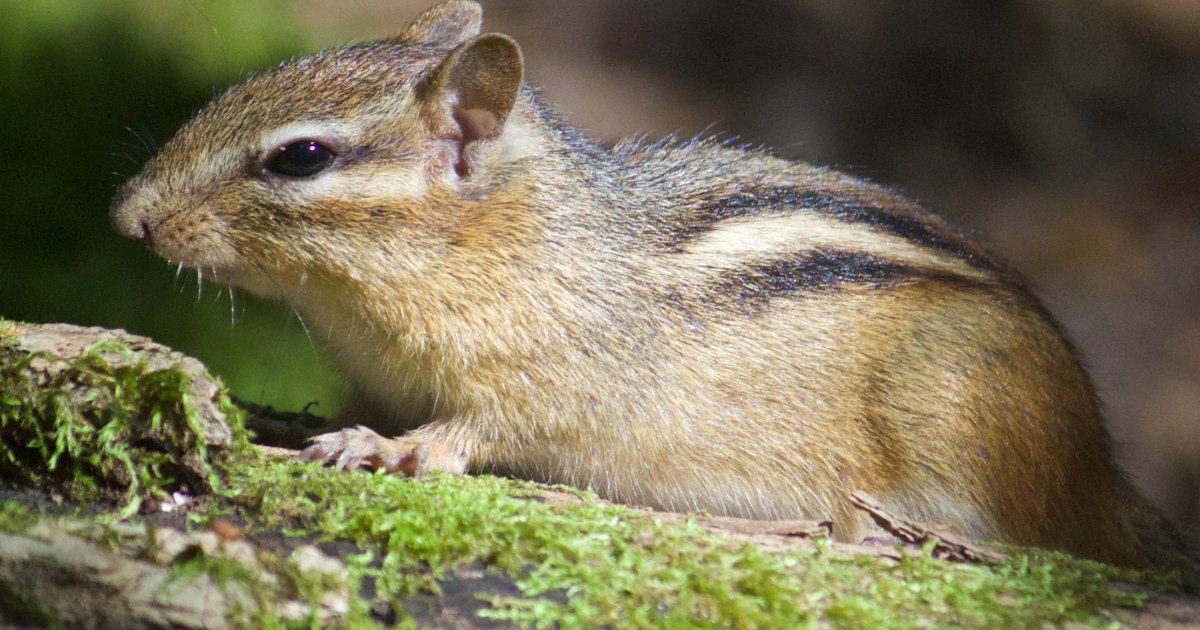
Why you rarely see chipmunk droppings
We found no university or agency page that measures or describes chipmunk droppings in detail, and most pages that do describe them cite no one. What the sources do describe is behavior, and that is more useful.
The clearest statement comes from Ask Extension, the U.S. Cooperative Extension question service. Answering a Minnesota homeowner who found droppings on her porch in 2024, the expert said the droppings were most likely from mice, because chipmunks are discreet about their droppings and typically bury them in their burrows, while mice do not.
ICWDM’s description of the chipmunk burrow fits that picture: a burrow system with a nest chamber, food storage chambers, side pockets and escape tunnels, with an entrance about 2 inches across and no mound of soil, because chipmunks carry the dirt away in their cheek pouches and scatter it. How to tell a chipmunk hole from a rat hole is in rat holes in the yard. A chipmunk keeps its home and its business underground.
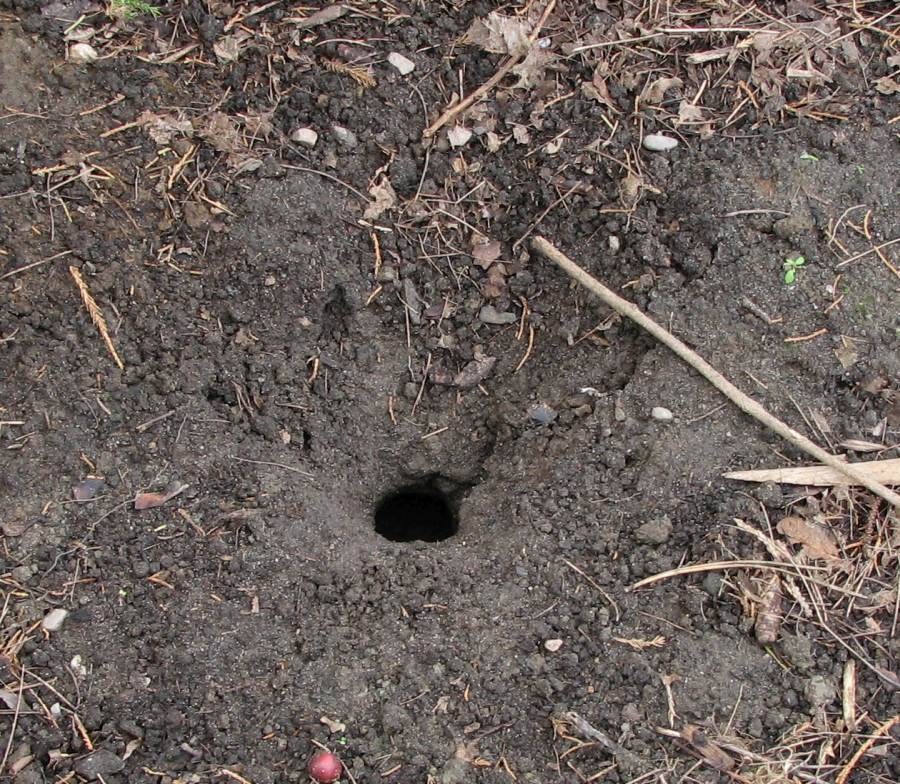
Mice do the opposite. They leave droppings as they travel, along walls, in drawers, on shelves and near food, which is why droppings are one of the first signs of mice that UC IPM tells you to look for. What mouse droppings look like, and how they differ from rat droppings, is in mouse droppings vs rat droppings.
The day-and-night test
The Ask Extension expert suggested a simple check based on when each animal is active, and we lay it out step by step:
- Early in the morning, clean the spot where you found droppings, using the wet method below.
- Check again by late afternoon. If no new droppings have appeared during the day, the expert said, chipmunks are probably not the cause.
- Check again the next morning. New droppings overnight point to mice, which UC IPM describes as active mostly at night.
Repeat it for a couple of days. A clean surface that stays clean tells you the droppings were old; see fresh vs old mouse droppings. A snap trap set along the wall near the spot, checked in the morning, is the other quick way to find out; see best mouse traps.
Chipmunk vs mouse: what else to look at
| Sign | Chipmunk | House mouse |
|---|---|---|
| When active | Daylight hours (ICWDM) | Mostly at night (UC IPM) |
| Droppings | Usually kept in the burrow (Ask Extension) | Left along routes, in drawers, on shelves, near food (UC IPM) |
| Home | Burrow outdoors, often hidden near stumps, woodpiles, brush piles, basements and garages; entrance about 2 in, no mound (ICWDM) | Nests of shredded paper or fabric in sheltered spots, often indoors (UC IPM) |
| Looks | Stripes on the back and face; eastern chipmunk 5 to 6 in long, about 3 oz (ICWDM) | Plain gray-brown, nearly hairless tail, much smaller |
| How it gets in | Along the sill plate, through dryer vents, at the roofline and under siding (ICWDM) | Openings about 1/4 inch high or 3/8 inch wide (UC IPM) |
| Typical complaint | Eaten bulbs, seeds and bird seed; burrows under stairs, patios and foundations (ICWDM) | Droppings, gnawing and contaminated food indoors |
Droppings in the garage, shed or porch
These are the places where the question usually comes up, because both animals can be there. ICWDM says chipmunk burrows are often hidden near basements and garages, and that chipmunks eat bird seed, grass seed and pet food that is not stored in rodent-proof containers. Mice use the same food and the same clutter.
- Store seed and pet food in metal or heavy plastic bins with tight lids. That takes away the reason both animals are there.
- Use feeders that catch spilled seed, and do not stack firewood against the house; ICWDM recommends both against chipmunks.
- Close the gaps mice and chipmunks use. ICWDM suggests 1/4-inch hardware cloth or copper mesh for chipmunk entry points and professionally made screens for exhaust vents, with extra care at dryer vents because of fire risk. For mice, see how to seal entry points and mice in the garage.
Cleaning up droppings safely
Whichever animal left them, CDC’s method for rodent droppings applies: air out an enclosed space, wear gloves, spray the droppings with disinfectant or a bleach solution until soaked, wait, then pick them up with paper towels and put them in the trash. Do not sweep or vacuum, which can put particles in the air. Step by step in how to clean mouse droppings, and the health risks are in are mouse droppings dangerous?
ICWDM says chipmunks are not significant carriers of diseases harmful to people. Mice are another matter, which is one more reason to assume mice until you know otherwise.
Other look-alikes
- Rats: larger droppings; see mouse droppings vs rat droppings.
- Cockroaches: ridges and squared-off ends; see mouse droppings vs cockroach droppings.
- Voles: greenish droppings in runways on the lawn; see vole vs mouse.
Questions people ask
What does chipmunk poop look like?
We could not find a university or government source that describes it in measured detail, so we will not give you sizes. The more reliable point is that chipmunks usually keep their droppings in the burrow (Ask Extension), so droppings you find in the open are more likely from mice.
Do chipmunks come into houses?
Sometimes. ICWDM says they typically get in along the sill plate, through dryer vents, at the roofline and under siding, and it recommends closing those openings with 1/4-inch hardware cloth or copper mesh.
Are chipmunk droppings dangerous?
ICWDM says chipmunks are not significant carriers of diseases harmful to people, but any rodent droppings should be cleaned the wet way, without sweeping or vacuuming (CDC).
Can a mouse trap catch a chipmunk?
Chipmunks are larger than mice. ICWDM lists rat-sized snap traps and cage traps for chipmunks, and some states, such as Georgia and Arkansas, require a permit to kill non-game animals, so check local rules first.
In short
Chipmunks are easy to see and usually keep their droppings out of sight, buried in their burrows. Mice are hard to see and leave droppings everywhere they go. If you find droppings on a porch, in a garage or in a cupboard, assume mice, clean them up the wet way, and use the day-and-night check or a snap trap to confirm. Store seed and pet food in sealed bins and close the gaps either animal can use.
Sources and verification
- Ask Extension — Wildlife (rodent) question #871297, Anoka County, Minnesota (June 3, 2024)Expert answer: droppings likely from mice; chipmunks are discreet about droppings and typically bury them in their burrows, mice do not; mice forage mostly at night, chipmunks by day; clear the droppings early in the morning, check by late afternoon and again the next morning; trapping, not relocation, for mice.
- ICWDM — Chipmunks, Chipmunk Biology, Damage Identification and Prevention and Control MethodsAppearance and size; active in daylight; burrows near woodpiles, basements and garages, 2-inch entrance without a soil mound, chambers and escape tunnels; entry along sill plates, dryer vents, rooflines and siding; food including bird seed and pet food; not significant disease carriers; feeders, firewood, 1/4-inch hardware cloth and copper mesh, vent screens; rat-sized snap traps and cage traps; state permits (Georgia, Arkansas).
- UC IPM — Pest Notes: House Mouse (July 2025)Active mostly at night; droppings as a sign of where mice are active; nests of shredded material; openings 1/4 inch high and 3/8 inch wide.
- CDC — How to Clean Up After Rodents (April 2024)Wet cleanup with disinfectant or bleach solution; no sweeping or vacuuming.