
How mice and rats live
How Do Rats Get in Your House? The Ways In, How to Find Theirs, and What Keeps Them Out
Rats get into houses through gaps around pipes and wires, under doors, through vents, along the roofline and, now and then, up from the sewer. Which way yours use depends mostly on which rat you have. This guide goes through the ways in that university and federal pest guides describe, how to find the one your rats are using, and what to seal it with so they can’t chew back through.
Short answer
- A small gap is enough. UC IPM says rats, especially young ones, can squeeze under a door with only a 1/2-inch gap, and that a rat may gnaw a wooden door to make the gap bigger.
- Norway rats come in low: foundation cracks, gaps around pipes and wires, crawl space vents, garage doors, and burrows under slabs. Roof rats come in high: the roofline, attic vents, eaves, and along wires, fences and tree limbs.
- Rats get in by gnawing, climbing, jumping and swimming, according to ICWDM, so sealing has to cover all four.
- Find the way in before you seal. ICWDM suggests plugging holes with paper first to see which ones the rats reopen.
- Seal with metal or concrete, not foam alone or chicken wire. UC IPM says to seal holes larger than 1/4 inch to keep out both rats and mice; ICWDM’s figure for rats alone is 1/2 inch.
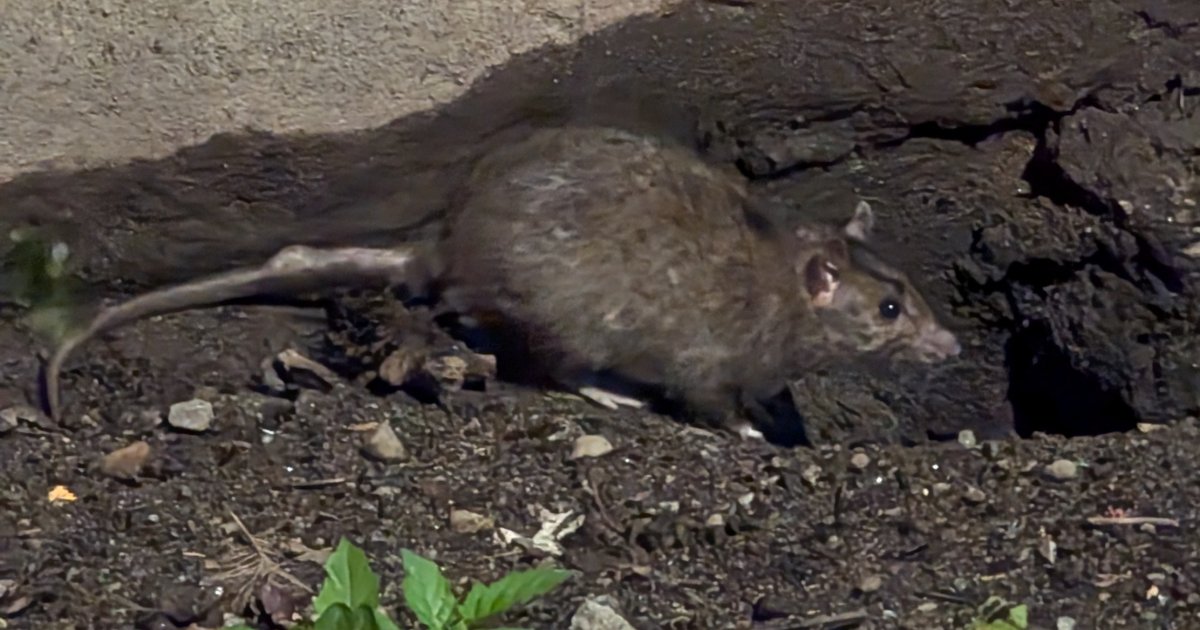
Which rat you have decides where to look
The two pest rats in the United States use a house differently. UC IPM says Norway rats burrow along foundations and, indoors, usually stay in basements and on ground floors, while roof rats nest high, in attics, wall voids, ceiling voids and cabinets. UC IPM and ICWDM both say that rodent-proofing against roof rats usually takes more time, because their climbing ability gives them more ways in. If you are not sure which rat you have, see roof rat vs Norway rat, and for the signs in general, signs of rats.
The ways rats get in
| Way in | Which rat | What the sources say |
|---|---|---|
| Gaps around pipes, wires and cables | Both | UC IPM and CDC both list openings for water pipes, electric wires, sewer pipes and gas and cable lines as places to seal. |
| Under doors, including garage doors | Both | A 1/2-inch gap is enough for a young rat (UC IPM). UC IPM says typical weatherproofing may not keep rats and mice out. |
| Foundation cracks and burrows under slabs | Mostly Norway | Norway rats burrow under buildings, beneath concrete slabs and along foundations (ICWDM, UC IPM). |
| Vents: crawl space, foundation, attic, dryer, floor | Both | UC IPM says to repair or replace damaged vent screens and gives mesh specifications for vent covers. |
| Roofline: eaves, soffits, gables, roof vents | Mostly roof | UC IPM says openings above ground level must be plugged for roof rats. CDC lists rafters, gables, eaves and soffits. |
| Wires, fences, vines and tree limbs | Mostly roof | Roof rats travel along utility lines and fence tops (UC IPM); ICWDM advises removing vines on buildings and overhanging limbs. |
| Sewer pipes and drains | Norway | ICWDM says Norway rats live in some city sewers and that the water in drain traps does not stop them. |
| Chimneys and rooftop plumbing vents | Mostly roof | UC IPM advises a spark arrester on chimneys and screens on rooftop plumbing vent pipes more than 2 inches across. |
Gaps around pipes, wires and vents
These are the openings most houses have. CDC’s checklist for the inside of the house includes the pipes under sinks and washing machines, the pipes to the water heater and furnace, floor and dryer vents, and every electrical, water, gas and sewer line. Outside, it lists the holes for electrical, plumbing, cable and gas lines and the attic and crawl space vents. Where a line goes through the wall, check the edges of the hole, not just the pipe.
Doors and the garage
UC IPM says exterior doors should fit tightly and be sealed at the threshold, double doors at the gap between them, and that ordinary weatherstripping may not be enough. Where gnawing is a problem, door edges can be covered with sheet metal. The garage is easy to overlook: CDC says to seal outbuildings and garages as well. UC IPM notes that rats commonly gnaw the wiring in car engines; see mice in your car, which applies to rats too. What rats do in a garage, and how to trap and seal it, is in rats in the garage.
Foundations and burrows
Norway rats are burrowers. ICWDM says they burrow to nest under buildings and other structures and beneath slabs of concrete, and UC IPM warns that their burrows can undermine foundations and slabs. A burrow along the foundation next to a gap, a crack or a pipe is a likely way in. How to tell whether a burrow is in use is in rat nest; what concrete and other materials stop rats is in can rats chew through concrete?
The roofline
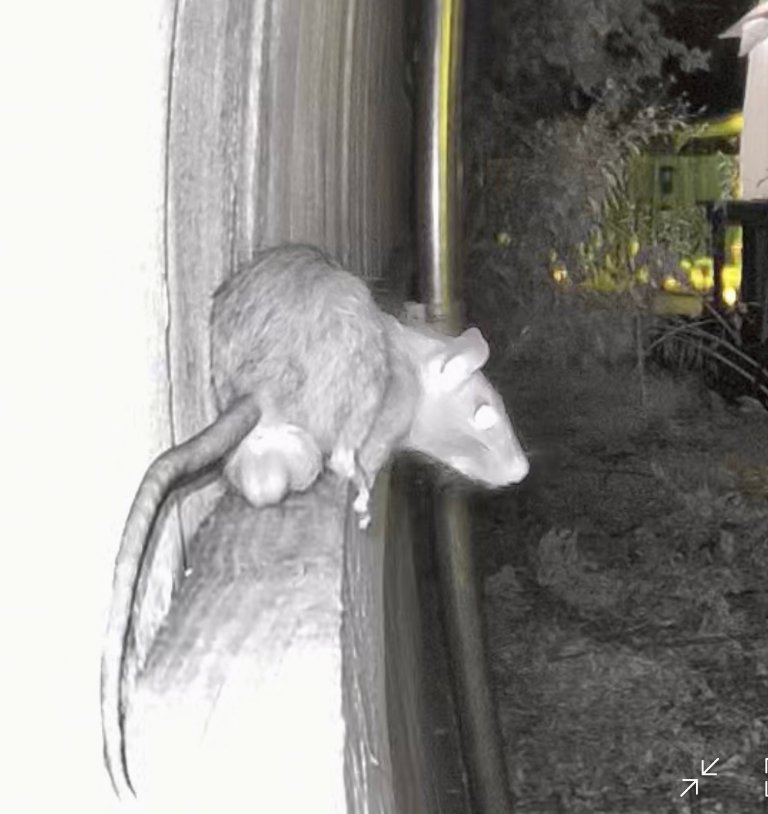
Roof rats are agile climbers. They run along overhead utility lines and fence tops, climb trees and vines, and get in at the roof. ICWDM’s advice for roof rats is to pay close attention to the roof and roofline and to remove vines growing on the house and, where you can, overhanging tree limbs. If rats travel along overhead utility wires, UC IPM says to contact a pest professional or the utility company rather than tackle the wires yourself. More on what rats can climb is in can rats climb walls?, and on the attic in rats in the attic.
Sewers, drains and toilets
ICWDM says Norway rats live in the sewers of some towns and cities, get into them through outlets, manholes, catch basins, broken pipes and drains, and are not stopped by the water in drain traps. It also calls them excellent swimmers. A rat coming up into a house this way is uncommon, but it happens; what to do if one turns up in the toilet is in can rats swim?
How to find the way your rats get in
- Start where the signs are. Fresh droppings, gnawing and dark smudge marks around an opening show a route in use. See signs of rats.
- Walk the outside of the house. Use CDC’s list: the roof among the rafters, gables, eaves and soffits; windows and doors without weatherstripping; where the foundation meets the ground; attic and crawl space vents; and every hole for a pipe or wire.
- Look up, not just down, for roof rats. Check where wires, fences, vines and branches touch or come close to the house.
- Test the suspects. ICWDM says to plug holes with paper before sealing them, so you can see which ones are active. A hole that is opened again within a few days is a way in. A light patch of flour on the ground in front of an opening, which ICWDM recommends for checking whether rodents are present, will show tracks.
- Trap at the same time. Sealing rats out while some are still inside can trap them in the walls. Trap inside first, or at the same time, as described in how to get rid of rats, and see rats in the walls for why sealing them in is a problem.
What to seal the gaps with
- Size. UC IPM says to seal all holes larger than 1/4 inch to keep out both rats and mice. ICWDM’s rule for rats alone is any opening larger than 1/2 inch. If you might also have mice, use 1/4 inch.
- Materials. ICWDM recommends heavy materials that resist gnawing: concrete mortar, 24-gauge galvanized sheet metal and 18-gauge hardware cloth. For roof rats it adds steel wool and metal flashing. CDC suggests steel wool held in place with caulk or spray foam for small holes, and lath screen, metal, cement, hardware cloth or metal sheeting for larger ones.
- Vents. UC IPM gives 18-gauge, 1/2-inch galvanized expanded metal or 16-gauge, 1/2-inch galvanized wire cloth for vent covers, and says never to use lightweight chicken wire, because rats can pass through it.
- Around the house. ICWDM says a band of coarse gravel at least 2 feet wide and 6 inches deep along the foundation can reduce burrowing. Keep stacked lumber, firewood and clutter away from the walls.
Step-by-step sealing, with photos of typical gaps, is in how to seal mouse entry points; the same methods work for rats with heavier materials.
Why rats come in
Rats come in for food and shelter. ICWDM says a Norway rat seldom travels more than 400 feet from its burrow for food or water, and UC IPM says roof rats may live in one yard and feed at another. Pet food, birdseed, garbage, compost and fallen fruit near the house keep them close, and a gap in the wall does the rest. Cutting off food outside is part of the plan in how to get rid of rats; what rats eat is in what do rats eat?
Questions people ask
How small a hole can a rat get through?
UC IPM says rats, especially young rats, can squeeze under a door with a 1/2-inch gap. Its rule for sealing is any hole larger than 1/4 inch if you want to keep out mice as well. For mice, see how do mice get in your house?
Can rats come up through the toilet?
It is uncommon, but Norway rats live in some sewers, swim well, and are not stopped by the water in drain traps (ICWDM). See can rats swim?
Can rats chew through walls?
They can chew through wood, plastic, soft metals and weak or poor-quality concrete, which is why ICWDM recommends concrete mortar, sheet metal and hardware cloth for sealing. Details are in can rats chew through concrete?
Will sealing the house get rid of the rats inside?
No. Sealing keeps new rats out; rats already inside have to be trapped. UC IPM calls exclusion the most successful and longest-lasting strategy for rat control around buildings, but it works together with trapping, not instead of it.
In short
Norway rats come in low, through foundation gaps, pipe openings, vents, garage doors and burrows; roof rats come in high, at the roofline, along wires, fences and branches. Walk the house with CDC’s checklist, plug the suspect holes with paper to see which ones the rats reopen, trap the rats inside, then seal every hole larger than 1/4 inch with metal, hardware cloth or concrete.
Sources and verification
- UC IPM — Pest Notes: Rats (June 2025)Young rats squeeze under a door with a 1/2-inch gap and may gnaw wooden doors; Norway rats burrow along foundations and stay low indoors, roof rats nest high; burrowing undermines foundations and slabs; roof rats travel on utility lines and fence tops and may feed at another residence; exclusion as the most successful and longest-lasting strategy; seal openings for pipes, wires, sewer pipes, drain spouts and vents; seal holes larger than 1/4 inch for rats and mice; tight doors and windows, sheet metal on gnawed edges; openings above ground for roof rats; mesh specifications for vents; no chicken wire; screens on rooftop plumbing vents over 2 inches; spark arresters on chimneys; thresholds and double-door gaps; contact a professional or the utility company about rats on overhead wires.
- ICWDM — Norway Rat Damage Prevention and Control MethodsSeal openings larger than 1/2 inch; plug holes with paper to find active ones before sealing; concrete mortar, 24-gauge galvanized sheet metal and 18-gauge hardware cloth; Norway rats in sewers, entering through outlets, manholes, catch basins, broken pipes and drains, not stopped by water traps, excellent swimmers; a gravel band along foundations to reduce burrowing; removing debris, lumber and firewood.
- ICWDM — Roof Rat Prevention and Control MethodsAttention to the roof and roofline; seal openings larger than 1/2 inch with concrete mortar, steel wool or metal flashing; more time needed to find roof rat entry points; remove vines and overhanging limbs; rat guards on utility wires.
- ICWDM — Norway Rat Biology and Norway RatsNorway rats enter structures by gnawing, climbing, jumping and swimming; seldom travel more than 400 feet from their burrows; burrow under buildings and beneath concrete slabs; a flour tracking patch to check for rodents.
- CDC — How to Seal Up to Prevent Rodents (April 8, 2024)Where to look inside and outside the house (pipes, vents, utility lines, attic, basement, crawl space, floor drains, rafters, gables, eaves, soffits, foundation, windows and doors); steel wool with caulk or spray foam for small holes; lath screen, metal, cement, hardware cloth or metal sheeting for larger holes; seal outbuildings and garages.