
Signs and droppings
Rat Urine Smell: What It Smells Like, What It Means, and How to Clean It Safely
A stale, musty smell in a basement, garage, attic or kitchen cupboard can be rat urine. On its own it is a clue, not proof. This guide covers how the official sources describe the smell, how to confirm that rats are behind it, why rat urine needs careful handling, and how to clean it the way CDC describes so the smell goes with the source.
Short answer
- Musty is the word the sources use. NC State Extension says a heavy rat infestation can cause a musty smell because of the urine. Texas A&M AgriLife says you can smell rats and mice, especially in a poorly ventilated room.
- Confirm it with physical signs: droppings, gnaw marks, dark rub marks along walls, and urine stains, which glow under ultraviolet light (UF/IFAS; California Department of Food and Agriculture).
- Rat urine can carry disease. CDC says leptospirosis spreads through the urine of infected animals, including rats, and that Seoul virus, a hantavirus carried by Norway rats, spreads through contact with urine and droppings.
- Clean it wet, never dry. CDC: air the space for 30 minutes, wear gloves, spray with disinfectant or 1 part bleach to 9 parts water, let it soak 5 minutes, wipe up with paper towels. Do not sweep or vacuum.
- The smell goes when the source goes. Shampoo or steam-clean carpets and upholstery, launder fabrics hot, and bag and remove soiled insulation (CDC).
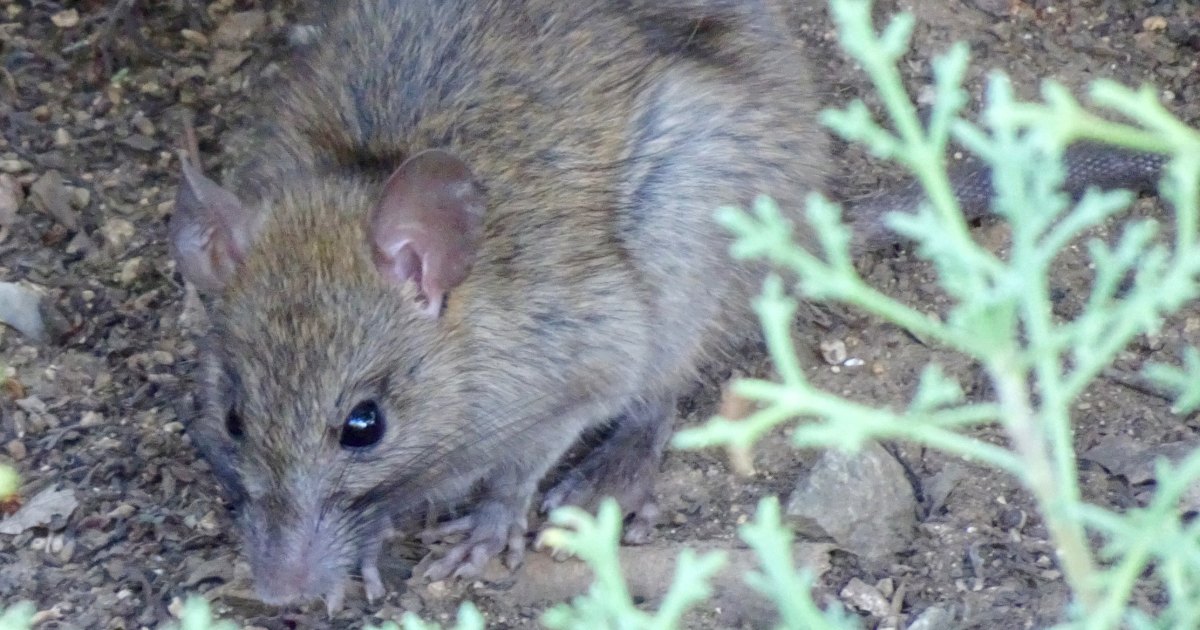
What does rat urine smell like?
Musty. NC State Extension is the one university source we found that ties the smell to rat urine: it says a heavy rat infestation can result in a musty smell due to the urine. Texas A&M AgriLife Extension says the presence of rats and mice can be smelled, especially in a poorly ventilated room. That is why people usually notice it in closed spaces: a basement, a crawl space, a garage, an attic or the cupboard under the sink.
Many websites describe rat urine as smelling of ammonia. None of the government or university sources we checked describes it that way; in those sources ammonia comes up only as a smell that does not repel rodents. An ammonia smell in a house has many other possible causes, so it is not a rat sign on its own.
Is the smell enough to know you have rats?
No. A smell tells you where to look. What confirms rats is physical evidence:
- Droppings. NC State puts rat droppings at about 1/2 to 3/4 inch long, much larger than mouse droppings. See mouse droppings vs rat droppings.
- Rub marks. NC State says rats leave dark, oily marks along walls, pipes and fences, and that these rubs show both that rats are there and roughly how many. UF/IFAS says new rub marks are soft and smudge, old ones are brittle and flake.
- Urine stains. UF/IFAS says rodents urinate while they run, leaving characteristic streaks, and that the urine glows blue-white under ultraviolet light when it is fresh. The California Department of Food and Agriculture says urine fluoresces wet or dry and that stains appear along travel routes and in feeding areas.
- Gnawing, tracks, burrows and noises at night. The full list, and how to tell whether rats are there now, is in signs of rats in the house.
A black light is useful for mapping where urine is once you have other evidence. Other materials can glow under ultraviolet light too, so a glow on its own does not prove rats.
Mouse urine or rat urine?
You cannot tell them apart by smell. UC IPM describes a musky odor with house mice, and the University of Arkansas a musty one; we found no source that compares mouse and rat urine. Dropping size and gnaw marks settle it. If the evidence points to mice, see mouse urine smell.
Could it be a dead rat instead?
A dead rat gives off a strong smell of decay rather than a musty one. UF/IFAS says a dead rat in a place you cannot reach can produce an unpleasant odor for two to four weeks. How to find it and what to do is in dead rat smell.
Is rat urine dangerous?
The urine can be. The sources describe the risk as coming from germs in urine and droppings, not from the smell itself; we found no source saying the odor alone is harmful.
| Disease | How it spreads, per CDC |
|---|---|
| Leptospirosis | Bacteria spread through the urine of infected animals, including rats and mice. People are infected through water or soil containing urine, direct contact, or contaminated food or water. Some people have no symptoms. |
| Seoul virus (a hantavirus) | Carried by Norway rats. People are infected through contact with virus shed in rat urine or droppings, including dust from contaminated bedding. A 2017 CDC investigation of an outbreak linked to pet rats found infected rats or people at 31 facilities in 11 states. |
| Hantavirus pulmonary syndrome | The U.S. carriers CDC names are the deer mouse, the white-footed mouse, the rice rat and the cotton rat. Spread by breathing air contaminated with fresh urine, droppings or nesting material from an infected rodent. |
| Rat-bite fever | Bites and scratches, and contact with a rodent’s saliva or urine, or contaminated food and drink. |
This is why CDC rules out sweeping and vacuuming: stirring up dried urine and droppings can put germs into the air. If you develop a fever or feel unwell after cleaning up after rodents, tell a doctor about the exposure. More on what rodent waste can carry is in are mouse droppings dangerous?
How to clean rat urine safely
CDC’s steps for cleaning up after rodents, in order:
- Air the space. Open doors and windows for 30 minutes before you start, and stay out while it airs.
- Wear rubber or plastic gloves.
- Do not sweep or vacuum urine, droppings or nesting material.
- Wet it. Spray with a disinfectant, or with a fresh mix of 1.5 cups of household bleach in 1 gallon of water (1 part bleach to 9 parts water), until it is thoroughly wet.
- Wait 5 minutes, or as long as the disinfectant label says.
- Wipe up with paper towels and put them in a covered garbage can.
- Mop or sponge the area with disinfectant: floors, counters, cabinets and drawers.
- Wash your gloved hands with soap and water or disinfectant before you take the gloves off, then wash your bare hands with soap and warm water.
Never mix bleach with ammonia-based products or other cleaners; CDC warns that mixing can release dangerous vapors. A step-by-step version with photos is in how to clean mouse droppings; the method is the same for rats.
How to get rid of the smell
The smell stays as long as soiled material stays. CDC’s instructions by material:
- Hard surfaces: disinfect, wipe and mop as above.
- Carpets and upholstered furniture: shampoo with a commercial disinfectant, or use a commercial-grade steam cleaner or shampoo.
- Bedding, clothes and soft toys: wash in hot water with detergent, then dry on high heat or in the sun.
- Insulation: if exposed insulation is contaminated with urine and droppings, put it in plastic bags for removal. In an attic, see rats in the attic before you touch it.
- A car: open the hood, doors and trunk for 20 minutes before cleaning, then disinfect; do not vacuum first. See mice in your car.
We found no government or university source on enzyme cleaners, odor sprays or ozone for rat urine. If a smell remains on a surface after it has been properly disinfected, an odor product can be a separate later step; follow its label. Material that cannot be cleaned, such as soaked cardboard or insulation, is best removed.
When to call a professional
CDC says to contact a professional rodent exterminating service when rodents are in the ventilation system, and it describes heavy infestations as needing different protective gear. A large attic or crawl space with soaked insulation, a smell you cannot trace, or signs that keep coming back are reasons to get help. See when to call an exterminator.
Stopping the smell from coming back
Cleaning removes the smell; it does not remove the rats. If droppings or fresh rub marks reappear, the rats are still there. Trap the ones inside, then seal the openings they use; the full plan is in how to get rid of rats.
Questions people ask
Does rat urine smell like ammonia?
Many pest-control pages say so. The government and university sources we checked describe a musty smell, and none of them describes rat urine as smelling of ammonia.
Does a stronger smell mean more rats?
NC State links the musty smell to heavy infestations, but no source gives a way to turn a smell into a number. ICWDM says signs in general have limited value for estimating how many rats there are; fresh droppings, tracks and gnawing, three or more rats seen at night, or rats seen in daylight point to a large population.
Can I vacuum dried rat urine?
No. CDC says not to vacuum or sweep rodent urine or droppings. Wet it with disinfectant first, wait, and wipe it up.
Is it safe to sleep in a room that smells of rat urine?
No source says the smell itself is harmful. The risk is from the urine and droppings: clean the source the CDC way, launder bedding hot, and air the room.
How long does rat urine smell last?
We found no source that gives a timeline. If the soiled material stays and the rats are still active, there is no reason to expect it to fade.
In short
Rat urine smells musty, and the smell is strongest in closed, still spaces. Use it to find the area, then confirm rats with droppings, rub marks and urine stains. Treat the urine as contaminated: air the space, wear gloves, soak it with disinfectant or diluted bleach, wait 5 minutes, wipe it up, and never sweep or vacuum. Remove what cannot be cleaned, and deal with the rats so the smell does not come back.
Sources and verification
- NC State Extension — Surveillance and Management of Common Structure-Invading RatsA heavy rat infestation can cause a musty smell due to urine; dark, oily rub marks as a sign of presence and infestation level.
- Texas A&M AgriLife Extension — Managing Rats and MiceRats and mice can be smelled, especially in a poorly ventilated room.
- UF/IFAS — Rat and Mouse Control (ENY-224)Urine stains as a first sign; streaks from urinating while running; urine glows blue-white under UV when fresh; new and old rub marks; a dead rat can smell for two to four weeks.
- California Department of Food and Agriculture — Vertebrate Pest Control Handbook: Norway RatUrine fluoresces under ultraviolet light wet or dry; stains along travelways and in feeding areas.
- CDC — How to Clean Up After RodentsVentilate 30 minutes; gloves; no sweeping or vacuuming; disinfectant or 1.5 cups bleach per gallon; 5-minute soak; paper towels; mop; carpets, upholstery, fabrics and insulation; vehicles; hand washing; professionals for ventilation systems.
- CDC — About Leptospirosis, CDC MMWR — Outbreak of Seoul Virus Among Rats and Rat Owners, 2017, CDC — Hantavirus Prevention and CDC — About Rat Bite FeverHow each disease spreads through urine and droppings; U.S. hantavirus carriers; why stirring up dried material is a risk.
- ICWDM — Norway Rat Damage IdentificationSigns have limited value for estimating numbers; what points to a large population.
- UC IPM — Pest Notes: House Mouse and University of Arkansas — Controlling Mice and Rats (MP546)Musky and musty odors described for house mice; ammonia does not repel rodents.