
Cleanup and safety
Are mouse droppings dangerous?
Droppings in a drawer are unsettling, and most of what is written about them is either a shrug or a scare. Here is what US public-health sources actually document: which illnesses are on the list, which rodent carries which, how often they are reported, and what that means for the mess in front of you.
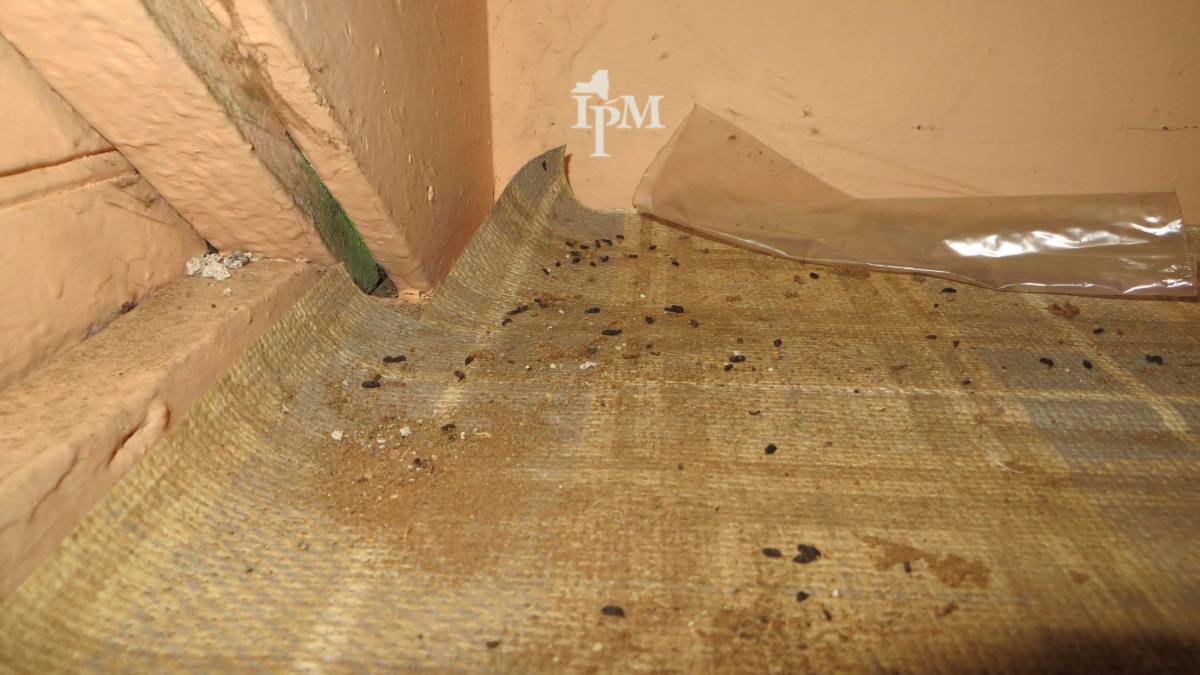
Before you touch anything: do not sweep or vacuum droppings, wet or dry. CDC’s instruction is to wear rubber or plastic gloves, spray the droppings with a disinfectant or bleach solution until very wet, let them soak for five minutes or as the product label directs, then wipe up with paper towels. Sweeping and vacuuming can put tiny contaminated droplets into the air you are breathing. The full cleanup procedure is here, including what to do if you already vacuumed.
The short answer
They can be, and the honest version of the answer depends on which animal left them. The route that matters most is inhaling contaminated air, which is why every piece of official cleanup guidance is built around wetting the material down rather than stirring it up.
Two viral risks are named specifically by CDC. The hantaviruses that cause hantavirus pulmonary syndrome (HPS) are spread in North America by the deer mouse, the white-footed mouse, the rice rat and the cotton rat, according to CDC’s hantavirus prevention booklet. Lymphocytic choriomeningitis virus (LCMV) is the one tied to the animal most people actually have indoors: CDC describes lymphocytic choriomeningitis as a disease spread by the common house mouse, Mus musculus. Separately, rodent droppings, urine and saliva can spread illness through contaminated food and contaminated air.
Serious illness from droppings in an ordinary home is uncommon. It is not zero, the precautions cost almost nothing, and they are the same whichever animal you turn out to have.
| Risk | Which rodents | How it reaches people | How often it is reported in the US |
|---|---|---|---|
| Hantavirus pulmonary syndrome | Deer mouse, white-footed mouse, rice rat, cotton rat | Mainly breathing air where fresh urine, droppings or nesting material has been stirred up | 890 laboratory-confirmed hantavirus disease cases since surveillance began in 1993; 94% west of the Mississippi |
| Lymphocytic choriomeningitis (LCMV) | Common house mouse | Contact with fresh urine, droppings, saliva, blood or nesting material | Underreported; CDC cites studies finding past infection in 2–5% of people in urban areas |
| Illness from contaminated food and surfaces | Mice and rats generally | Eating food or touching surfaces contaminated with rodent waste | RodentVerify note: we found no CDC figure specific to household rodent contamination |
| Seoul virus (HFRS) | Rats, including pet rats | Contact with infected rats and their waste | Rare, and a rat question rather than a mouse-droppings one |
It matters which mouse it was
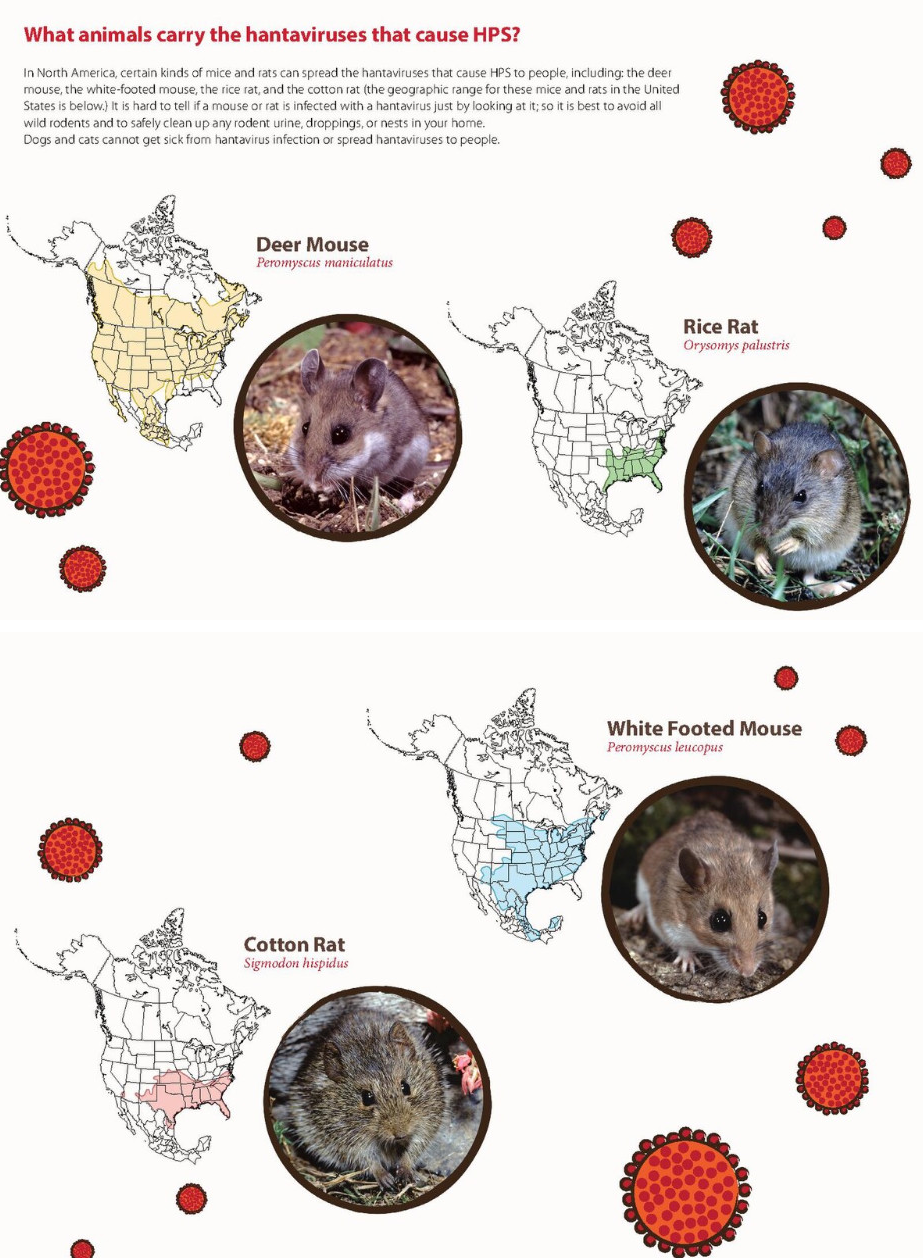
CDC’s booklet names four North American rodents as the ones that spread the hantaviruses causing HPS: the deer mouse (Peromyscus maniculatus), the white-footed mouse (Peromyscus leucopus), the rice rat (Oryzomys palustris) and the cotton rat (Sigmodon hispidus). The common house mouse is not among them.
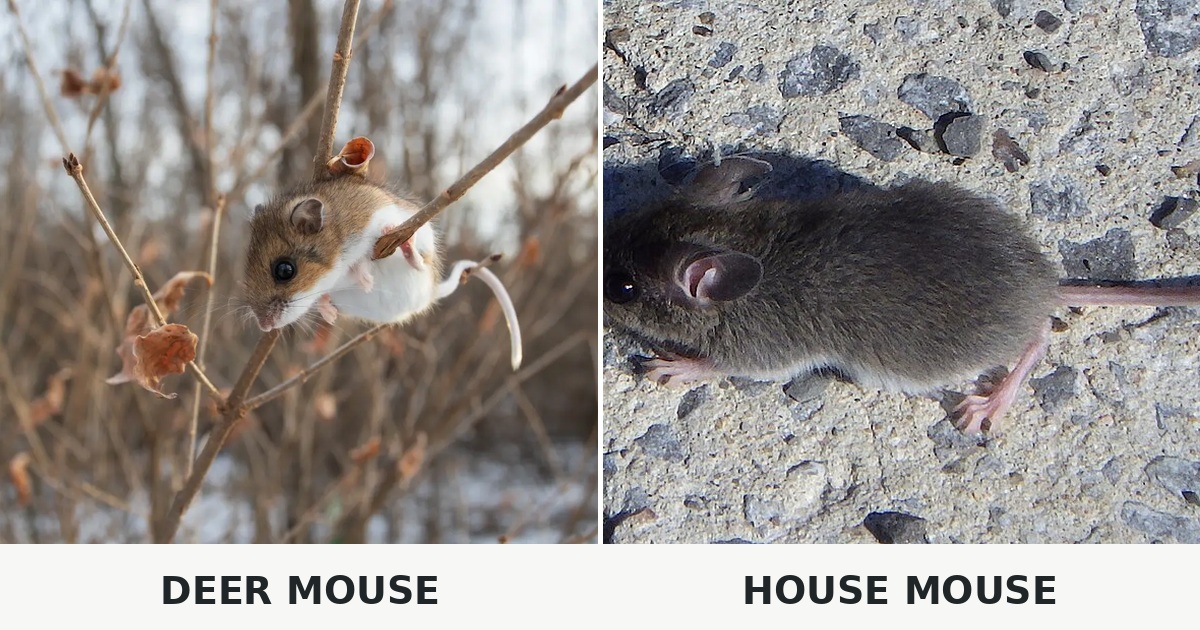
That is a narrower statement than it may look, and it is worth keeping it narrow. It does not mean a house mouse is harmless — LCMV, covered below, is specifically its virus. It also does not mean the animal in your kitchen is definitely a house mouse. Deer mice and white-footed mice do come indoors, particularly in rural and semi-rural homes, cabins, sheds and vehicles that sit unused. And CDC is blunt about the limits of looking: you cannot tell by sight whether a rodent is carrying a hantavirus, which is why the advice is to treat all wild rodent waste the same way.
If you have not worked out which animal you are dealing with, that comes first. Our identification guide walks through the signs, and the droppings comparison shows the sizes at actual scale.
Hantavirus: what the numbers say
HPS is the reason droppings are treated as a respiratory hazard rather than a housekeeping problem. It is also rare. According to CDC surveillance data, as of the end of 2023, 890 laboratory-confirmed cases of hantavirus disease had been reported in the United States since surveillance began in 1993 — a figure that covers HPS and non-pulmonary hantavirus infection together. Ninety-four percent of cases occurred west of the Mississippi River, though CDC’s booklet notes cases have been recorded in all regions of the continental US.
Rare does not mean mild. CDC states that 38% of people who develop respiratory symptoms may die of the disease. There is no specific treatment; care is supportive, and starting it early matters.
CDC lists four ways people are infected: breathing air contaminated with fresh urine, droppings or nesting material from an infected rodent; touching contaminated material and then touching the eyes, nose or mouth; being bitten or scratched; and eating contaminated food. Rodent infestation in and around the home is described as the primary risk setting — not forests or farmland in the abstract, but the house, shed, cabin or vehicle where the animals actually are. If it is your car, see how to inspect and clean a car safely.
On timing: CDC says symptoms usually begin one to eight weeks after contact. Early symptoms are fatigue, fever and muscle aches, often with headache, dizziness, chills or stomach problems, and typically without a runny nose, sore throat or rash. Four to ten days later some people recover and others develop breathing difficulty, which can become life-threatening.
What about old, dry droppings?
This is the question almost everyone asks, and current CDC guidance does not answer it with a number. The agency describes the airborne risk in terms of fresh urine, droppings and nesting material being stirred up, but it gives no age at which droppings can be declared safe. Treat old-looking or dried droppings with the same wet-down-and-wipe precautions — and note that judging whether droppings are old at all is far less reliable than it looks.
The one time-based instruction CDC does give is for objects rather than surfaces: items that cannot be cleaned with a liquid disinfectant, such as books and papers, should be left outdoors in sunlight for several hours, or in a rodent-free indoor area for a minimum of three weeks, with six weeks strongly suggested.
Background, not a rule: an archived CDC fact sheet stated that hantaviruses had been shown to remain viable for two to three days at normal room temperature, and that ultraviolet light in sunlight kills them. That is background, not a safe-age cutoff. Survival varies with temperature, humidity, sunlight and other conditions, and current CDC guidance does not offer it as a basis for deciding that a given patch of droppings is now harmless.
LCMV: the one tied to house mice
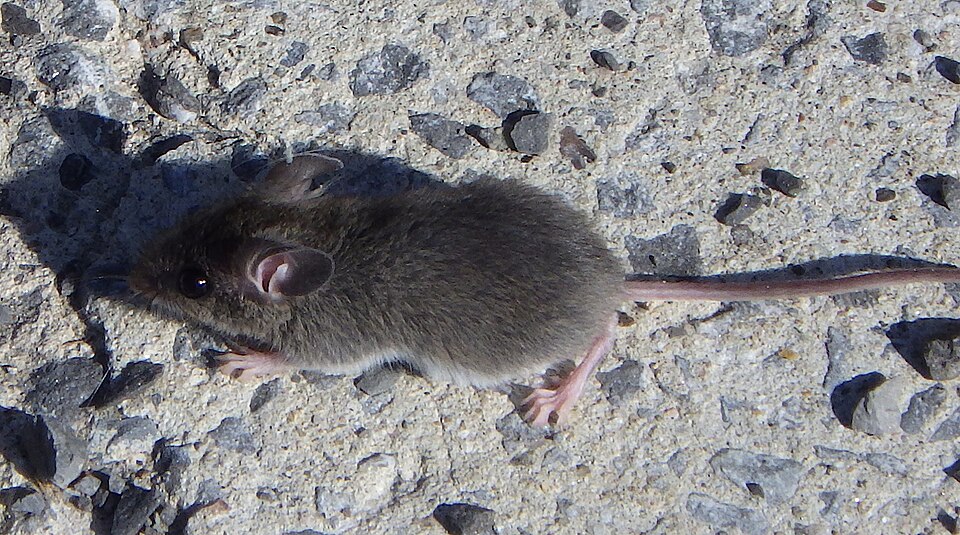
Lymphocytic choriomeningitis is caused by LCMV, and CDC describes it as spread by the common house mouse. Anyone in contact with fresh urine, droppings, saliva, blood or nesting material from wild mice is potentially at risk.
For most healthy adults this is a mild illness or no illness at all. CDC says people who do get symptoms are usually unwell for about a week, and notes that some develop deafness, arthritis or inflammation of the heart after recovering. The disease is underreported, which makes its true frequency hard to pin down; CDC points to studies finding that 2–5% of people in urban areas have had a past infection.
The serious part is who it hits hardest. CDC states that LCMV can pass to a fetus during pregnancy: infection in the first trimester may result in miscarriage, and infection in the second and third trimesters can cause serious birth defects. People with weakened immune systems, including organ transplant recipients, face a higher risk of severe, potentially fatal disease.
Who should not be the one cleaning this up
CDC’s advice for pregnancy is specific and practical: if you suspect mice in the home, have a pest control professional deal with them or have another member of the household remove them, and avoid vacuuming or sweeping the droppings. That guidance appears in an archived CDC fact sheet on LCMV and pregnancy; the underlying position — pregnant women should avoid contact with rodents and rodent droppings where possible — is unchanged on CDC’s current pages.
CDC also advises that pet rodents, including pet rats, are not recommended for households with children aged five or under, pregnant women, or people with weakened immune systems, because those groups face a greater risk of serious illness. The same logic applies to who handles a cleanup.
For heavy infestations — a vacant property, a badly infested outbuilding, large numbers of animals — CDC sets a higher standard than gloves: coveralls, rubber boots or shoe covers, protective goggles and a fitted respirator with a HEPA filter, rather than an ordinary dust mask. If that is the situation you are looking at, this is a job to hire out.
Food, surfaces and the things you cannot wipe
Beyond the two named viruses, CDC’s general position is that rodent droppings, urine and saliva spread illness both through contaminated air and through contaminated food, and that infestation in and around the home is the main reason disease passes from rodents to people.
Food packaging and storage containers need different decisions. The FDA says to discard food exposed to rodent filth in paper or plastic containers. It allows certain undamaged all-metal cans and hermetically sealed jars of commercially prepared food to be saved only after washing and sanitizing. CDC’s advice about disinfecting plastic, glass and metal storage containers should not be read as permission to keep contaminated food in plastic packaging. What food to throw away after finding mouse droppings in a kitchen cabinet explains the package-by-package decisions. Hard surfaces — countertops, cabinets and drawers — get cleaned with disinfectant, and contaminated bedding or clothing goes through a hot wash with detergent.
Seoul virus, briefly
Seoul virus is a hantavirus that causes hemorrhagic fever with renal syndrome rather than HPS, and CDC notes it is found worldwide, including in the United States. It is associated with rats, including pet rats, not with mice. If the droppings you found are larger than a grain of rice, you may be looking at the wrong species altogether — the size comparison is here.
When to get medical advice
CDC’s instruction is to seek medical attention immediately if symptoms appear after exposure to rodents or rodent waste, particularly difficulty breathing. If HPS is suspected, the advice is emergency care straight away, ideally in intensive care, without waiting for a diagnosis.
Tell the clinician about the rodent exposure and when it happened. Early hantavirus symptoms resemble influenza and several other infections closely enough that a blood test is often the only way to tell them apart, and the exposure history is what prompts the test. The same applies to any illness in the weeks after a cleanup: CDC’s own cleanup page advises talking to a healthcare provider if you think a recent illness may be linked to rodents, and mentioning the exposure.
What to do next
If there are droppings in front of you right now, the risk is mostly determined by how you remove them. Wet them down, do not sweep, do not vacuum, and bag the waste — the step-by-step procedure, including disposal and what counts as a heavy infestation, is the practical companion to this page.
After that, the question stops being about droppings and becomes about the animal still producing them. Work out which species you have, then close the openings it came in through and trap any still inside. If the droppings were in a basement, what to do about mice in a basement covers finding and sealing those openings. Cleanup without exclusion means doing the cleanup again.
Sources & verification
All sources below were opened and checked on 20 September 2026. Where a document is archived rather than current, it is labelled as such in the text above and used only as background.
- CDC — How to Clean Up After RodentsThe instruction not to sweep or vacuum, the wet-down and five-minute soak, disposal, the three- and six-week rule for items that cannot be disinfected with liquid, and the PPE standard for heavy infestations.
- CDC — You Can Prevent Hantavirus (2021 booklet)The four North American rodents that spread HPS-causing hantaviruses, the four transmission routes, the one-to-eight-week symptom window, and the point that infection cannot be judged by looking at the animal.
- CDC — About HantavirusCase fatality among people who develop respiratory symptoms, the symptom progression, and the presence of Seoul virus in the United States.
- CDC — Reported Cases of Hantavirus DiseaseThe 890 laboratory-confirmed cases since 1993 and the 94% figure for cases west of the Mississippi.
- CDC — About Lymphocytic ChoriomeningitisThe house mouse as the animal that spreads LCMV, the course of illness in healthy adults, the 2–5% urban past-infection figure, and the risks in pregnancy and immunosuppression.
- CDC — Hantavirus PreventionExposure routes, and the recommendation against pet rodents in households with children under five, pregnant women or immunocompromised people.