
Evidence and signs
Rodent Gnaw Marks: How to Identify Mouse and Rat Damage
A gnaw mark proves that something with front teeth worked on that surface. It is weaker evidence of which rodent did it, and weaker still of whether that rodent is still in the house. This guide takes those questions in order: recognize the mark, compare mouse and rat cautiously, read the material it is on, find out whether the damage is new, and choose the next safe step — including the cases where the first call is to an electrician, not a pest professional.
Found a chewed cord or wire? Treat it as an electrical problem first and a pest problem second. The U.S. Fire Administration says damaged cords should be replaced, not repaired, and electrical work should be done only by a qualified electrician. Don’t tape it and keep using it. What to do with chewed cords and wiring.
What did you find? Jump to the evidence in front of you:
What do rodent gnaw marks, bite marks, and teeth marks look like?
People search for “bite marks,” “teeth marks,” “chew marks” and “gnaw marks,” but on a surface they all describe the same thing: damage to an object made by a rodent’s front teeth. None of it refers to bites on people.
Mice and rats gnaw with their front incisors, which grow continuously and are kept sharp by gnawing, according to the National Park Service. CDC adds that they gnaw to create better access points and to keep their teeth at the proper length. That is why damage turns up on things they cannot eat.
What to look for:
- Paired grooves. The two upper or two lower incisors leave two marks side by side. Cornell IPM measures gnaw marks across that pair of grooves, and that is the measurement the size comparison below uses.
- Rough, irregular edges. NPS advises examining the loss for chew marks, irregular edges and the debris left around it.
- Debris. Wood chips or splinters, shredded paper or cardboard, crumbs from a package.
- Other signs close by. CDC notes that gnaw marks are often found in the same area as droppings.
The usual places are the ones the Maryland Department of Agriculture’s rodent-control manual lists: door corners, kitchen cabinets, floor joists, wood around pipes, electrical wires and cables, and food packaging. The rule that runs through this whole site applies here too: one clue raises suspicion; several independent clues verify.
Mouse vs. rat gnaw marks
Measure the width of the pair of grooves, not the size of the hole. The Maryland manual notes that holes gnawed by rats may be 2 inches or more across, and holes gnawed by mice are often nearly as large — so hole size does not separate them.
| Evidence | More consistent with a mouse | More consistent with a rat |
|---|---|---|
| Pair of incisor grooves | About 1–2 mm (up to about 1/12 in) | About 3.5–4 mm (about 1/6 in) |
| Overall appearance | Finer, smaller-scale, “scratchy” damage | Broader, heavier damage |
| Best confirmation | Mouse-sized droppings, tracks and location, a sighting or camera image, or other independent signs | Rat-sized droppings, tracks, burrows and location, a sighting or camera image, or other independent signs |
No single row identifies the species with certainty. Use the table to decide which way the evidence leans, then look for the second and third sign.
Mouse gnaw marks
Cornell IPM puts the pair of grooves from an adult mouse at 1 to 2 millimeters wide. UC IPM describes mouse marks as “scratchy” next to the larger marks rats leave. The Maryland manual lists holes in kitchen walls and cabinets among typical house-mouse damage, and notes that mice commonly gnaw food packaging — not always to feed, but often just to gnaw.
Rat gnaw marks
For an adult rat, Cornell gives 3.5 to 4 millimeters across the pair — roughly twice the mouse figure. The damage reads as heavier and coarser. The Maryland manual attributes damage to wooden beams and flooring to regular gnawing by Norway and roof rats, and lists rats among the causes of damaged water lines in buildings.
Why tooth-mark size is supporting evidence, not proof
- The figures describe adults. Cornell’s numbers are for adult mice and adult rats. They don’t tell you what a young, still-growing rat leaves. How to tell a mouse from a young rat.
- Marks are often partial. A single groove, a mark made at an angle, or overlapping bites can look wider or narrower than the pair really is.
- The surface changes the mark. Paper and thin plastic tear rather than hold a clean groove; firm wood or plastic holds one better.
Photograph the mark next to a ruler before you clean or repair anything. That photo is your measurement and, later, your baseline. Then compare it with the droppings: mouse droppings vs. rat droppings, and how to weigh several signs together.
Fresh vs. old gnaw marks: what can actually show current activity?
On wood, color helps a little. The Maryland manual says fresh gnawing damage in wood is light-colored, with wood splinters found below the gnawed area. The same manual adds that on other materials it can be difficult to tell.
Treat light color as a supporting clue only. No source we use dates a gnaw mark to a number of days from its color, and neither do we. What answers the question is whether new damage appears after you have recorded the old. The Maryland manual’s method is to clear away splinters and debris, seal the hole, get rid of the damaged packaging, and recheck, using digital photos as a benchmark for later inspections.
Clearing debris is not the same as cleaning droppings. Wood chips on their own can be brushed away. If droppings, urine or nesting material are mixed in, don’t sweep or vacuum — CDC’s method is to wet the material with disinfectant and wipe it up. The full cleanup procedure.
Gnaw marks on food packaging
EPA lists signs of chewing on food packaging among the signs of a rat or mouse infestation. On cardboard boxes, paper bags and thin wrappers, rodent damage usually looks like an irregular hole or a torn, chewed edge, often with crumbs or shreds nearby and, frequently, droppings on the same shelf.
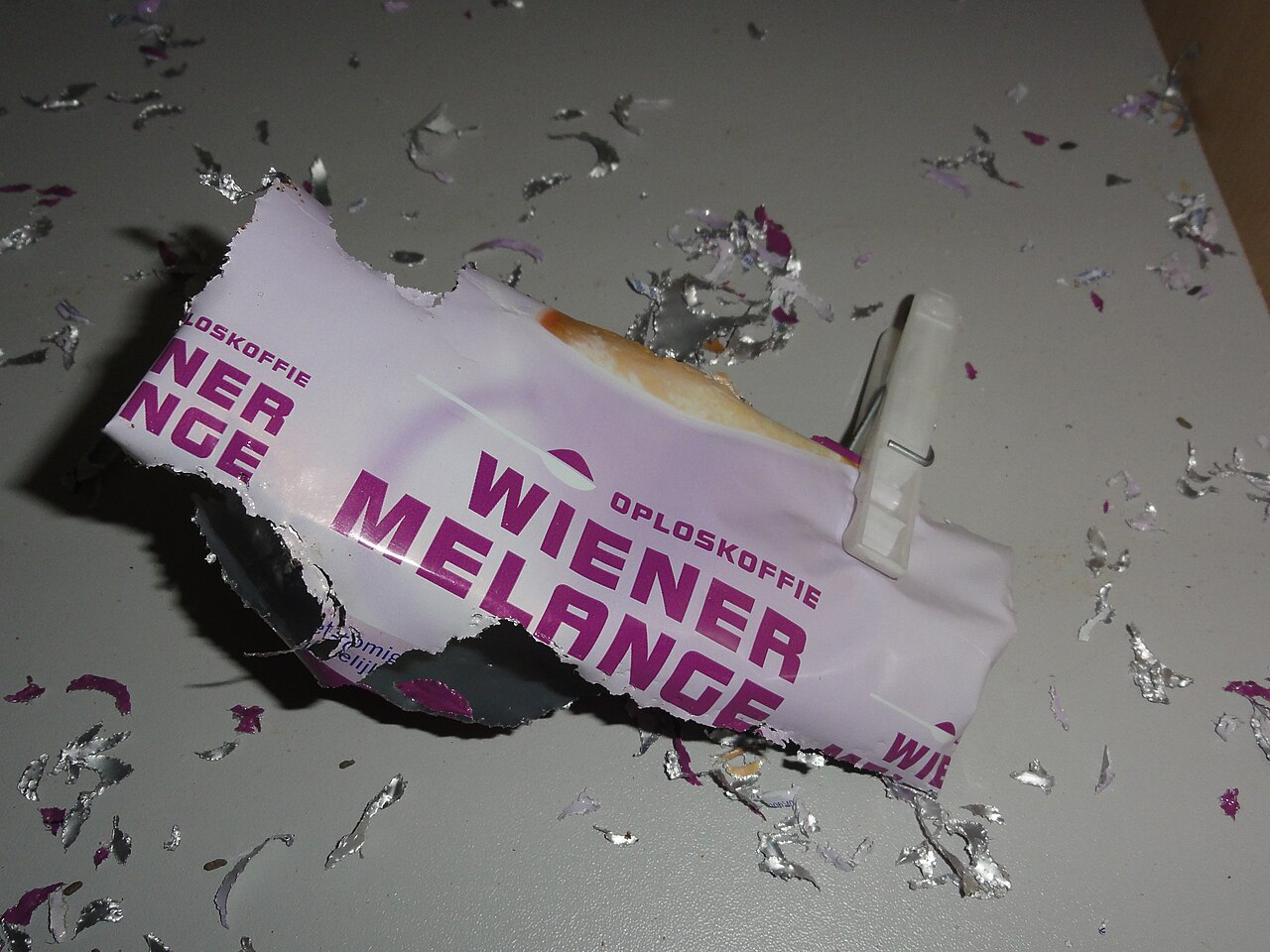
A hole in a package is damage evidence, not automatic proof of a rodent. University of Minnesota Extension notes that pantry insects can get into unopened paper, thin cardboard, and plastic, foil or cellophane-wrapped packages, either by chewing in or by crawling through folds and seams. If you find the insects themselves, larvae or webbing inside the product, you are looking at a pantry-pest problem rather than, or as well as, a rodent one.
If the evidence does point to rodents, the food is the urgent part. The Maryland manual notes that gnawing on packaging leaves saliva on it, which is why gnawed packaging is usually treated as evidence of contamination. What food to throw away, and how to clean the cabinet.
Rodent bite and chew marks on plastic
Plastic is not a barrier to a determined rodent. The Maryland manual lists lead and plastic pipes, wood and aluminum among the materials rodents can chew through. How much a plastic surface can tell you depends on how thick and firm it is.
Bags and wrappers
Thin plastic usually tears rather than holding a clean groove, so treat it like any other food packaging: a hole plus crumbs plus droppings is a rodent case; a hole on its own is not. UMN’s pantry-pest guidance applies here as well, because insects can also get into plastic- and cellophane-wrapped food.
Storage containers and trash bins
Firm plastic — a storage tub, a pet-food bin, the rim or lid of a trash can — is where paired grooves are often easiest to see and photograph, because the surface holds the shape. That makes it one of the better places to measure. The same limits apply: a partial or angled mark can mislead, and the mark still needs a second sign, such as droppings around the container, to count.
Plastic pipes and other plastic components
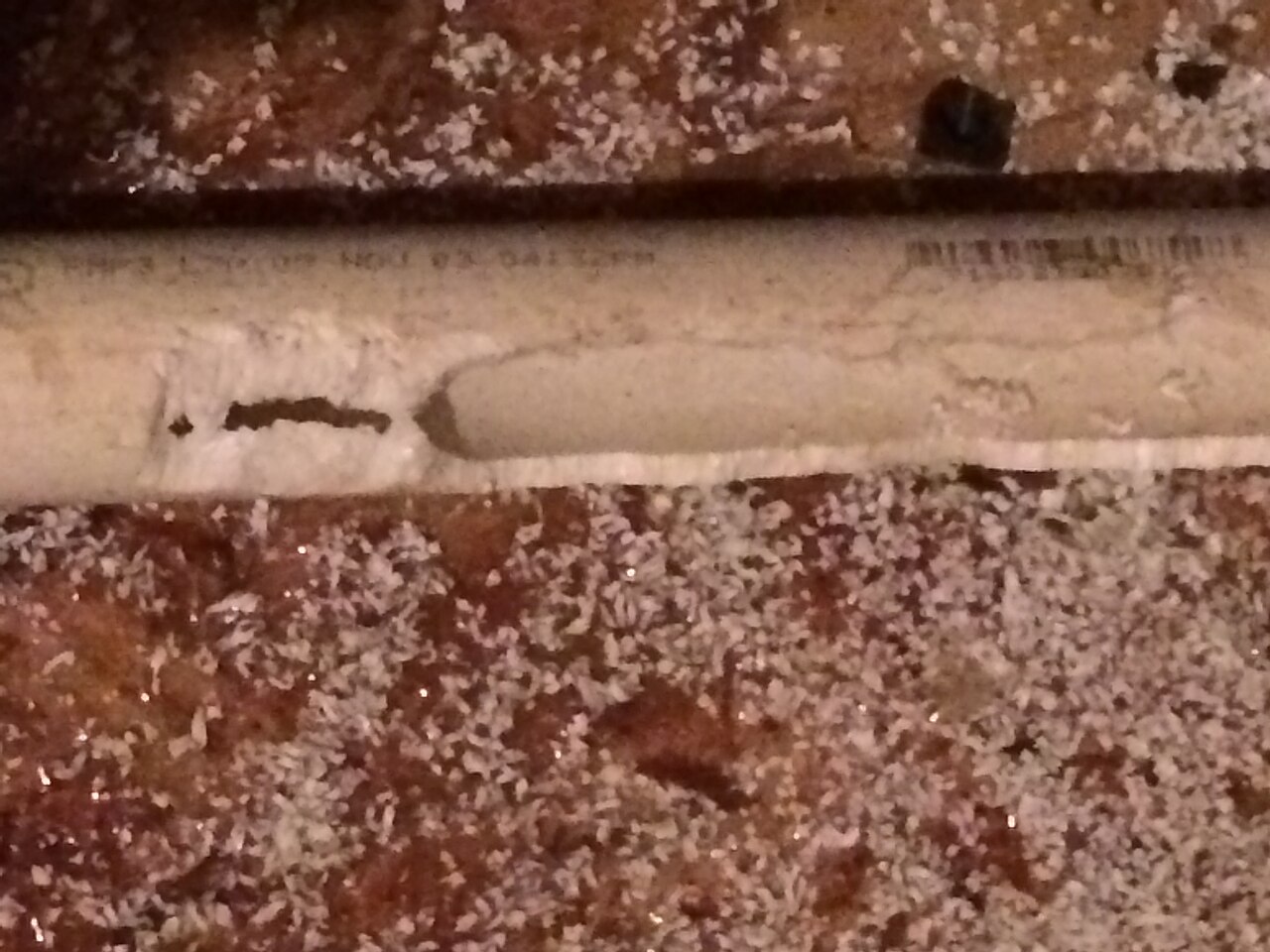
Gnawing on a plastic drain, supply line or other building component is a repair question as well as an evidence question. The Maryland manual lists damaged water lines in houses among rat gnawing damage. If a pipe or fitting has been gnawed, have it assessed whether or not it is leaking yet. Wire and cable insulation is plastic too — if that is what was chewed, go to cords and wiring.
Gnaw marks on wood, doors, and cabinets
Look for repeated paired grooves, rough edges and fresh chips, especially at door corners and door bottoms, cabinet edges and toe-kicks, and wood around pipes. The Maryland manual gives holes in the bottom of doors, chewed by either rats or mice to get in, as a common example.
It helps to separate two kinds of wood damage:
- Surface gnawing — marks on an edge or corner that don’t lead anywhere. It shows a rodent was there; measure the grooves and look for other signs.
- Gnawing that enlarges an opening — damage concentrated around an existing gap, pipe hole or door bottom. That is an access route, and it needs to be closed with a material that resists gnawing. UC IPM notes that the edges of openings can be covered with sheet metal if gnawing is a problem. How to seal entry points, and what to use.
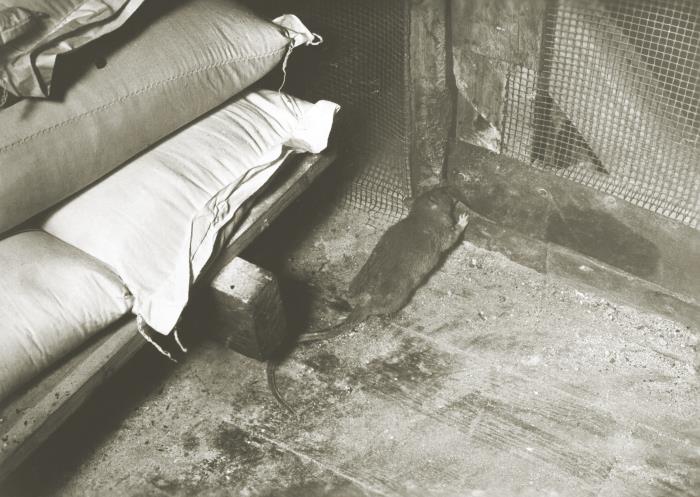
On exterior wood — soffits, siding and trim — keep squirrels in mind. The Maryland manual notes that gnawing damage there can be made by squirrels as well as rats. Mice, rats, squirrels or bats covers how to tell them apart.
Chewed electrical cords and wiring
Rodents do gnaw wiring. The Maryland manual includes severed wires in walls, attics and conduits, and building fires caused by electrical shorts among its examples of rodent gnawing damage. You don’t need a statistic to take that seriously, and we don’t use one.
What to do depends on which wire it is:
- A plug-in cord — an appliance, lamp, charger or extension cord. Stop using it. USFA’s rule is that cracked or damaged cords should be replaced, not repaired. Replace the cord or the appliance; don’t tape or splice it.
- Fixed wiring — anything in a wall, ceiling, attic or crawl space, at an outlet or switch, in a junction box or at the electrical panel. That belongs with a qualified electrician. Don’t open boxes or panels to look for damage yourself.
- A burning smell, sparks, or a breaker that keeps tripping near chewed wiring: stop using that circuit if you can do so safely and call an electrician. If there is smoke or fire, get out and call 911.
Pest control and electrical repair are separate jobs. The electrician fixes the wire; trapping and sealing deal with why it was chewed. Get the electrical risk handled first.
Does gnawing mean rodents are still active?
Not by itself. CDC says gnaw marks alone may only mean that rodents were active in the area at some point. Gnaw damage stays until someone repairs it, so an old mark can outlast the animals that made it by years.
Current activity is shown by change. New gnawing on something that was intact when you recorded your baseline is strong evidence, and it is stronger still when it comes with new droppings, tracks, rub marks, fresh nesting material, a capture, or a sighting or camera image. How to know if mice are gone sets out the baseline-and-recheck method in full.
New gnawing tells you there is activity, not how much. One mouse or an infestation? covers what the evidence can and cannot say about numbers. And if new gnawing, droppings or urine spots keep appearing after a week of trapping, CDC’s trapping guidance notes that you may be dealing with rats — a reason to recheck the species and the trap size.
What to do when you find rodent gnaw marks
- Check for electrical damage first. Any chewed cord or wire goes through the steps above before anything else.
- Photograph the damage with a ruler in the frame before you touch, clean or repair it.
- Look for a second, independent sign nearby — droppings, tracks, rub marks, nesting material. Reading the signs together.
- Deal with exposed food. What to discard and how to clean up.
- Clean safely and record a baseline. Clear the debris, follow the cleanup procedure for any droppings or nesting material, and note what the area looks like now.
- Trap and seal. Use the right trap size for the animal you have and close the route it is using. Which trap and where to put it; how to seal entry points.
- Recheck the same spots. New damage means activity is continuing; no new damage alongside no new droppings and no captures is how you build confidence that it has stopped.
When to call a pest professional — or an electrician
These are two different calls, and one does not replace the other.
Consider a pest professional when:
- new gnawing keeps appearing despite correctly placed traps and sealing work;
- the suspected nest, the entry route or the damaged area can’t be reached safely;
- the damage or contamination is extensive;
- you have monitored for a reasonable period and still can’t find or close the way in.
Finding that the animal is probably a rat is not, on its own, one of these reasons. UC IPM’s rat guidance gives homeowners a full trapping and exclusion plan for both Norway rats and roof rats; a rat changes the tools and tactics, not automatically who does the work. When to call an exterminator, and when DIY is reasonable.
Call a qualified electrician when:
- wiring in a wall, ceiling, attic, crawl space, outlet, junction box or panel has been chewed or you suspect it has;
- a conductor is exposed;
- there are sparks, a burning smell, or repeated tripping near the damage;
- you are not sure whether the damage is safe.
Questions people ask
What do mouse teeth marks look like?
Fine, small, scratchy grooves, often with a rough edge and small debris nearby. Cornell IPM gives about 1–2 mm across the pair of grooves for an adult mouse. On food packaging they usually show up as irregular holes and chewed edges rather than clean grooves.
What do rat gnaw marks look like?
Coarser, heavier grooves — about 3.5–4 mm across the pair for an adult rat, according to Cornell — with rougher, larger-scale damage to wood, plastic or packaging.
Can you tell a mouse from a rat by gnaw marks?
Gnaw marks can point one way, but they don’t settle it. The figures are for adults, marks are often partial, and the surface changes what you see. Confirm with droppings, location, tracks or a sighting.
Are fresh gnaw marks lighter than old ones?
On wood, often yes: the Maryland rodent-control manual describes fresh gnawing as light-colored with splinters below. It can’t tell you how many days old a mark is, and on other materials it is hard to judge. New damage after a recorded baseline is the reliable test.
Why do mice and rats chew wires?
Rodent incisors grow continuously and are kept in check by gnawing, and CDC notes rodents also gnaw to improve access. Cables run along the same walls, voids and openings that rodents use, so they get gnawed along with everything else. The reason matters less than the response: a chewed wire is an electrical safety issue.
Does one gnaw mark mean I have an active infestation?
No. CDC notes that gnaw marks alone may only mean rodents were there at some point. Record the mark, clean up, and watch for new damage and other new signs before drawing a conclusion.
The bottom line
A gnaw mark is good evidence that a rodent was there and modest evidence of which one. Measure the pair of grooves, not the hole; read the mark in the context of the material; and treat light-colored wood as a clue, not a date. Whether rodents are still active is answered by new damage after a recorded baseline, backed by other new signs. And when the thing that was chewed is a wire, electrical safety comes before everything else.
Sources & verification
- Cornell IPM — Mouse and Rat Biology and BehaviorGnaw-mark width across a pair of incisor grooves: 1–2 mm for an adult mouse, 3.5–4 mm for an adult rat.
- CDC — Controlling Wild Rodent InfestationsWhy rodents gnaw; gnaw marks alone may reflect past activity only; gnaw marks often found alongside droppings.
- National Park Service — Conserve O Gram 3/12: Identifying Mouse and Rat Damage in Museum CollectionsContinuously growing incisors; examining damage for chew marks, irregular edges and associated debris.
- Maryland Department of Agriculture — Rodent Control: Pesticide Applicator Training Manual, Category 7DTypical gnawing locations and damage examples, including wiring, water lines and plastic pipes; fresh wood gnawing as light-colored with splinters; hole size not separating rats from mice; squirrels as an alternative on exterior trim; the clear-seal-recheck method with photo benchmarks; gnawed packaging as contamination evidence.
- University of Minnesota Extension — Pantry Pests: Insects Found in Stored FoodPantry insects entering unopened paper, thin cardboard, plastic, foil and cellophane packaging.
- U.S. Fire Administration (FEMA) — Prevent Home Electrical FiresDamaged cords replaced, not repaired; electrical work only by a qualified electrician.