
Signs and droppings
Squirrel Poop vs Rat Poop: How to Tell the Droppings Apart
Squirrels and rats both get into attics, both run along fences and utility lines, and both leave dark droppings behind. The droppings are not the same shape, though, and the animals keep different hours. Here is what the sources say about size and shape, why color is a poor clue, why flying squirrels are the exception, which other signs settle the question, and how to clean up either kind safely.
Short answer
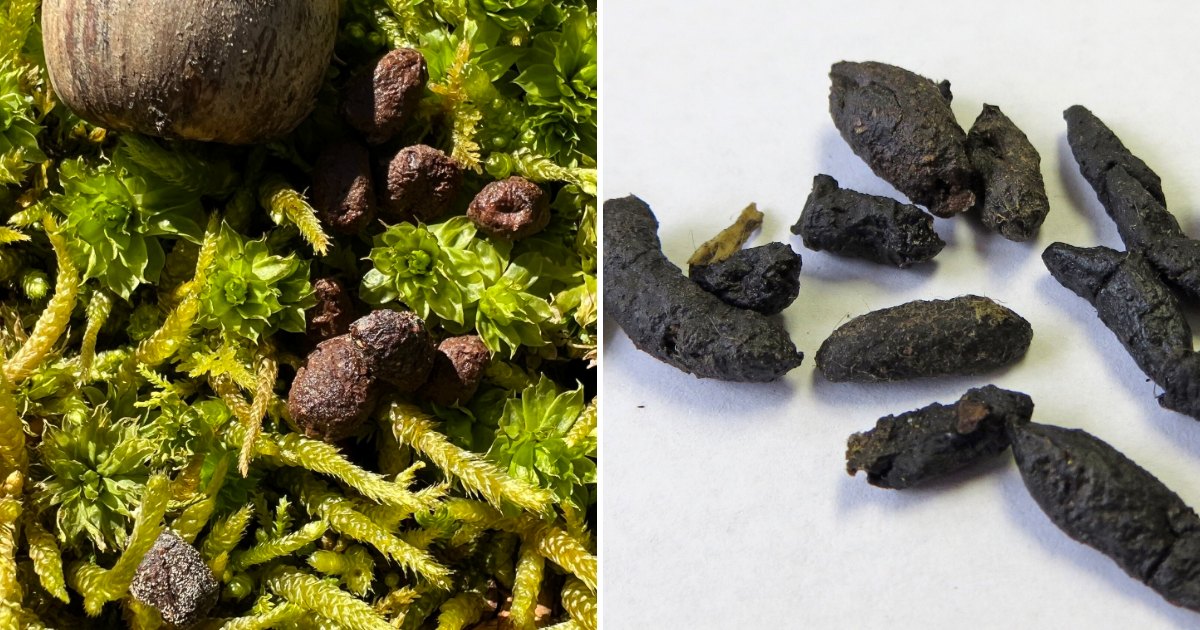
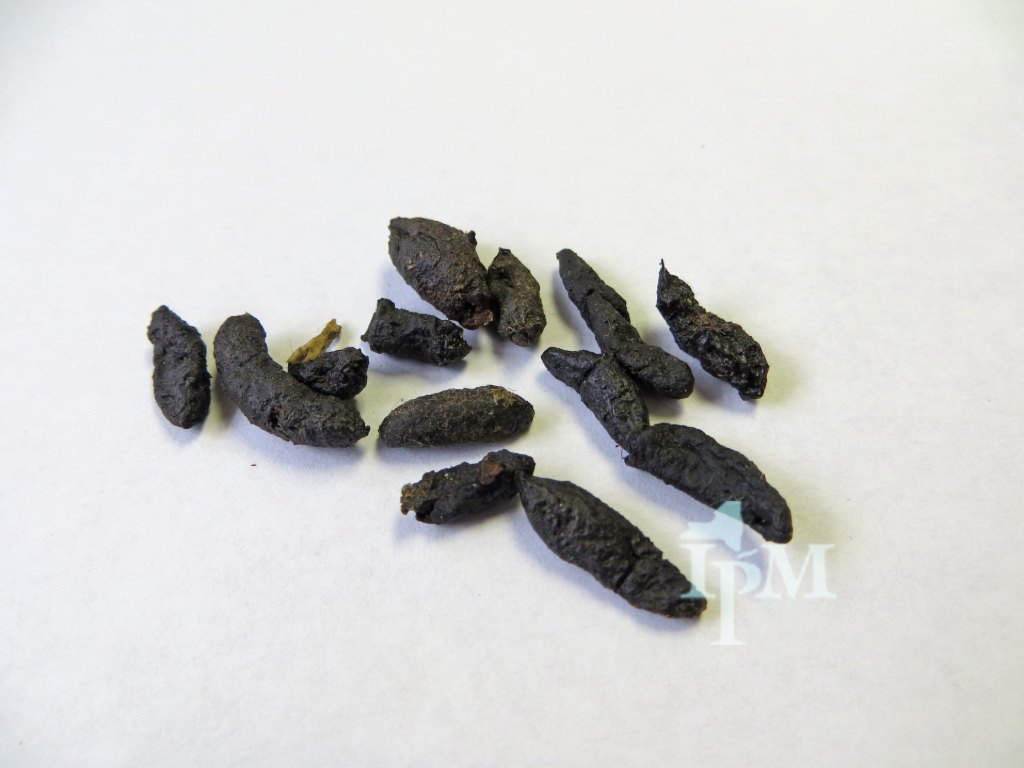
- Look at the shape, not the color. The Mammal Society describes squirrel droppings as small, round pellets about 0.5 to 0.8 cm (roughly 3/16 to 5/16 inch) long and 0.5 cm thick. Norway rat droppings are longer and thinner: up to about 3/4 inch long and 1/4 inch across with blunt ends, according to ICWDM.
- Color depends on diet. ICWDM says color rarely helps identify droppings because it changes with what the animal ate. Squirrel droppings can be just as dark as a rat’s.
- Daytime noise points to tree squirrels, night noise to rats — except for flying squirrels, which are active at night and leave moist droppings and urine stains, often right below the vent they use.
- Clean both the same way. Squirrels and rats are both rodents. CDC says not to sweep or vacuum rodent droppings; wet them with disinfectant first.
Squirrel and rat droppings side by side
We did not find a U.S. extension service or agency that gives measurements for tree squirrel droppings. The figures below for squirrels come from the Mammal Society, a British research charity, which describes the droppings of squirrels in the U.K. The gray squirrel there is the same species as the eastern gray squirrel in North America. The rat figures come from ICWDM, the Internet Center for Wildlife Damage Management, and the Mammal Society.
| Tree squirrel | Flying squirrel | Norway rat | Roof rat | |
|---|---|---|---|---|
| Size | About 0.5–0.8 cm (3/16–5/16 in) long, 0.5 cm (3/16 in) thick (Mammal Society) | Small; no measurement found in the sources we checked | Up to about 3/4 in long and 1/4 in across (ICWDM); up to 1.7 cm long and 0.6 cm wide (Mammal Society) | About 1/2 in long (ICWDM) |
| Shape | Small, round pellets (Mammal Society) | Appear moist (ICWDM) | Capsule-like with blunt ends (ICWDM); one blunt and one pointed end (Mammal Society) | Pointed ends (ICWDM) |
| Smell | Often sweet-smelling, depending on diet (Mammal Society) | Mixed with urine, which can stain (ICWDM) | Foul or rancid (Mammal Society) | — |
| Pattern | — | Droppings and urine stains directly below the attic vent the squirrels use (ICWDM) | About 40 to 50 droppings a day, usually in small clumps, along runways, in feeding areas and near shelter (ICWDM) | Fewer droppings on floors indoors, because roof rats often live overhead between floors and above ceilings (ICWDM) |
| When the animal is active | Daytime, mostly early morning and late afternoon (UC IPM) | Night (Penn State Extension) | Mostly night (UC IPM) | Mostly night (UC IPM) |
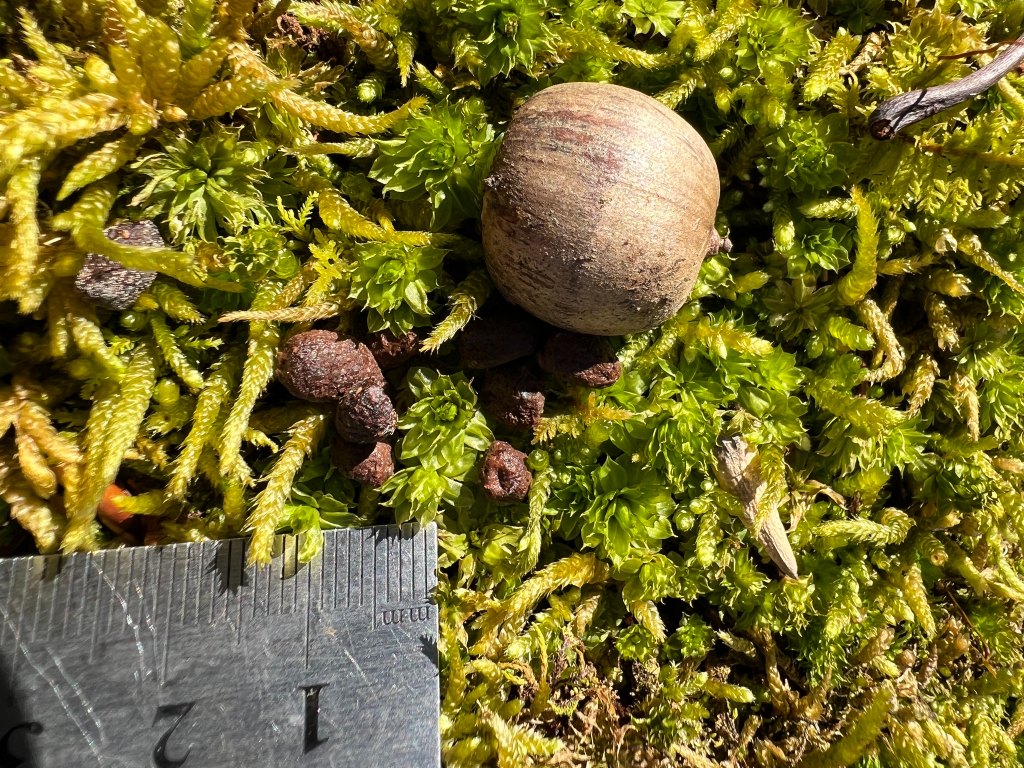
The most useful difference is proportion. Going by these figures, a squirrel pellet is not much longer than it is thick, while a Norway rat dropping can be about three times as long as it is wide. If what you found is short and plump, think squirrel; if it is long and capsule-shaped, think rat. A young rat leaves smaller droppings, so do not rely on size alone. Our guide to mouse droppings vs rat droppings shows rat and mouse droppings at actual size, and roof rat vs Norway rat explains how the two rats differ.
Why color will not settle it
Many websites say squirrel droppings are lighter brown and rat droppings are black. The sources we checked do not support that as a rule. ICWDM lists color among the questions that rarely help identify droppings, because color comes from the animal’s diet, which can easily change. The Mammal Society says squirrel droppings can be dark gray or black. Age changes how droppings look too: ICWDM notes that softer droppings are generally fresher, and that fresh rat droppings are soft. Our guide to fresh vs old droppings covers how to judge age.
ICWDM suggests a better set of questions: how long and how wide the droppings are, whether they are round pellets or tube-shaped, whether the ends are flat or pointed, whether you find one or many, whether they are piled or scattered, and whether they appear overnight or during the day.
Flying squirrels: the exception
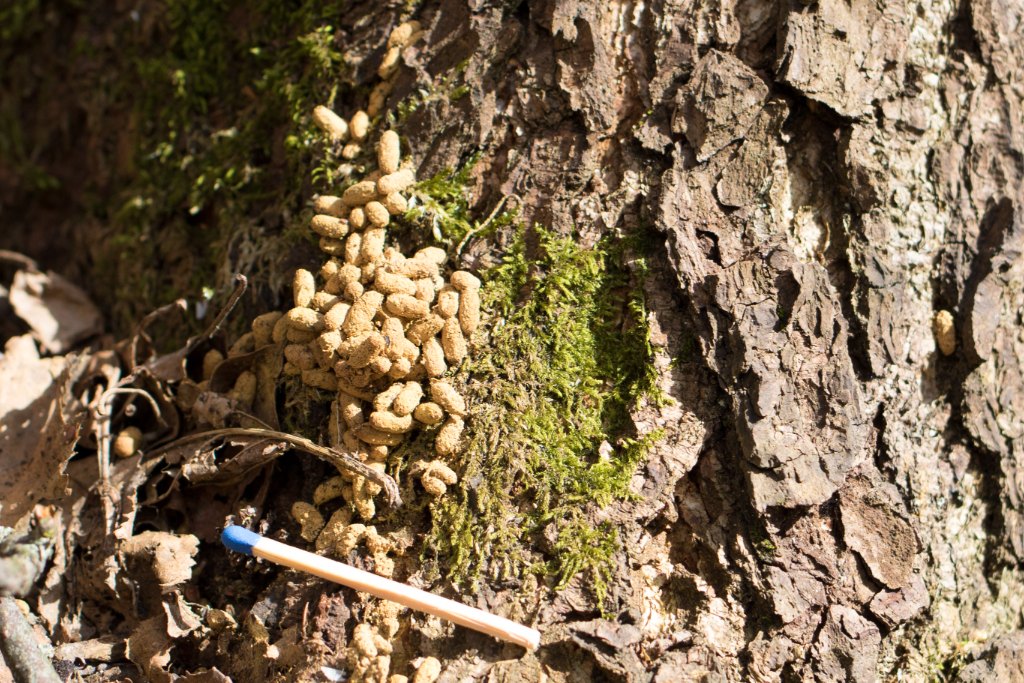
Flying squirrels break the usual day-and-night rule. Penn State Extension says they are the only squirrels active at night, and because they are small they readily nest in attics. ICWDM describes their droppings as appearing moist and says that flying squirrel feces mixed with urine can cause stains. Its photos show droppings and urine stains directly below the attic vent the squirrels used to go in and out. ICWDM rates the opening a flying squirrel uses at about the size of a quarter.
Flying squirrels also matter for health. CDC says rare cases of a form of epidemic typhus, called sylvatic typhus, occur in the United States when people are exposed to flying squirrels and their nests. A 2003 CDC report described two such cases; one patient had cleared nesting material and debris from a wall space in a cabin infested with flying squirrels. ICWDM warns not to enter an attic used by flying squirrels without proper protection.
Other signs that tell squirrels from rats
Droppings are one clue. Put them together with what else you find.
| Sign | Points to tree squirrels | Points to rats |
|---|---|---|
| When you hear it | Running overhead in daylight, especially early morning and late afternoon (UC IPM) | Activity at night (UC IPM); flying squirrels are also night-active |
| Entry hole | About baseball-size for fox and gray squirrels, golf-ball-size for red squirrels (ICWDM) | Much smaller gaps; see how to get rid of rats |
| Nest | Leaves and twigs, or shredded insulation in an attic (ICWDM, University of Nebraska–Lincoln) | Shredded paper, cloth and insulation; outdoors often in a burrow; see what a rat nest looks like |
| Food remains | Nut shells, hulls and fruit pits (University of Nebraska–Lincoln) | Whole grains or pelleted food may be carried off uneaten (ICWDM); see what do rats eat |
| Marks along routes | — | Smudge marks and runways (UC IPM) |
| Seen in the open | Easy to see in daylight in trees and on lines (UC IPM) | Roof rats on overhead lines and fence tops after dark (UC IPM) |
Noises are covered in more detail in scratching in walls at night, and attic signs in rats or mice in the attic.
How to check what you found
- Do not touch or sweep. ICWDM advises looking rather than touching, using a tool or gloved hands if you must, and staying upwind.
- Photograph a few droppings with a coin or ruler beside them. Measure length and width, not just length. Proportion is the best clue.
- Look at the ends. Blunt ends on a long dropping fit a Norway rat; pointed ends on a half-inch dropping fit a roof rat; a short, round pellet fits a squirrel.
- Note the pattern. Small clumps along a route fit rats (ICWDM). Droppings with urine stains under a vent fit flying squirrels.
- Listen and watch for a few days. Daytime activity and baseball-size holes point to tree squirrels; night activity and smudge marks point to rats.
If droppings keep appearing after you clean up, the animal is still there. How to know if mice are gone explains how to use fresh droppings as a check.
Are they dangerous, and how to clean them up
Treat both kinds with the same caution. CDC says people catch hantavirus mainly from contact with rodents, especially their urine, droppings and saliva, and that the virus can get into the air when fresh droppings or nesting material are stirred up. In the United States the main carrier of hantavirus pulmonary syndrome is the deer mouse; Seoul virus, carried by rats, is also found here. UC IPM lists typhus, leptospirosis and food-borne illness among diseases transmitted by rats. For tree squirrels, UC IPM says they carry diseases such as tularemia and ringworm and are often infested with fleas and mites. More detail is in are mouse droppings dangerous.
CDC’s cleanup steps apply to any rodent droppings:
- Do not sweep or vacuum. CDC says this can put virus particles into the air.
- Wear rubber or plastic gloves.
- Spray the droppings and urine until very wet with a disinfectant or a fresh bleach solution (1.5 cups of bleach in 1 gallon of water) and let it soak for 5 minutes, or as the label says.
- Wipe up with paper towels, throw them in a covered garbage can, then mop or sponge the area with disinfectant.
- Wash gloved hands, then bare hands with soap and warm water.
CDC also advises insect repellent on clothing when removing nests, because rodents often carry fleas. For a heavily used attic, including one used by flying squirrels, CDC calls for extra precautions, and that may be a job for a professional. The full procedure is in how to clean mouse droppings, and when to call an exterminator covers when to hand it over.
What to do next
If it is rats, start with which rat you have, because it changes where traps go: see roof rat vs Norway rat, then how to get rid of rats and best rat traps. Ordinary rat snap traps are not a squirrel solution: UC IPM says they are often not powerful enough to kill an adult squirrel.
If it is squirrels, UC IPM says it is relatively easy to keep them out of buildings. Screen or block entry points such as gaps under the eaves, overlapping roof sections and knotholes, using sheet metal or 1/4-inch hardware cloth, and cut back branches that overhang the roof; UC IPM’s rat guide says limbs within 6 feet of the roof let both rats and tree squirrels reach attics. Before you close an opening, make sure no squirrel is inside. UC IPM suggests plugging the hole loosely with newspaper: if a squirrel is still inside, it will push the plug out. Tree squirrels are game animals in many states, and some species are protected, so check local rules before trapping, as both UC IPM and ICWDM advise. How to seal entry points explains why an opening that squirrels or bats may use needs care before you seal it.
More questions about squirrel and rat droppings
What does squirrel poop look like?
The Mammal Society describes small, round pellets about 0.5 to 0.8 cm long and 0.5 cm thick, dark gray or black, usually found near trees and often sweet-smelling. Flying squirrel droppings look moist and often come with urine stains (ICWDM).
Is squirrel poop bigger than mouse poop?
Slightly, and it is fatter. ICWDM says house mouse droppings are about 1/4 inch long and pointed at one end. By the Mammal Society figures, a squirrel pellet is about as thick as it is long, while a mouse dropping is narrow. See mouse droppings vs rat droppings.
Do squirrels and rats both use attics?
Yes. UC IPM says tree squirrels may invade attics through gaps or broken vent screens, and ICWDM describes roof rats living in attics and between floors. The time of day you hear them is often the quickest clue.
Can I vacuum squirrel droppings?
No. Squirrels are rodents, and CDC says not to sweep or vacuum rodent droppings. Wet them with disinfectant and wipe them up with paper towels.
Could it be something else?
Yes. Bat droppings contain undigested insect wings and tend to pile up in the attic below where the bats roost; raccoon droppings are 2 to 3 inches long and often left in latrines (ICWDM). Bat and mouse droppings are compared in bat droppings vs mouse droppings. For tiny dark specks, see mouse droppings vs cockroach droppings.
In short
Squirrel droppings are short, round pellets; Norway rat droppings are longer capsules with blunt ends, and roof rat droppings are about half an inch long with pointed ends. Color is not a reliable clue. Activity in the day points to tree squirrels, activity at night to rats or flying squirrels, and flying squirrels leave moist droppings and urine stains under the vent they use. Whatever you find, do not sweep or vacuum it: wet it with disinfectant and wipe it up.
Sources and verification
- Mammal Society — Identify pooSquirrel droppings: small round pellets 0.5–0.8 cm long and 0.5 cm thick, dark gray or black, often sweet-smelling, usually near trees. Brown (Norway) rat: up to 1.7 cm long and 0.6 cm wide, one blunt and one pointed end, foul smell.
- ICWDM — Droppings, Scat ID and Feces Identification and Brown or Black DroppingsQuestions to ask (size, shape, ends, pile or scattered, time); color and consistency rarely help; house mouse droppings about 1/4 inch; flying squirrel droppings appear moist, with urine stains below an attic vent; protection in attics; bat and raccoon droppings.
- ICWDM — Tree Squirrel Damage IdentificationHole sizes (baseball, golf ball, quarter); nests in attics; flying squirrel feces and urine causing stains; flying squirrel droppings associated with typhus.
- ICWDM — Norway Rats and Roof RatsNorway rat droppings up to 3/4 inch long and 1/4 inch in diameter with blunt ends; 40 to 50 a day in small clumps; fresh droppings soft; roof rat droppings about 1/2 inch with pointed ends; roof rats leave fewer signs on floors.
- UC IPM — Pest Notes: Tree Squirrels (UC ANR Publication 74122)Active by day, mostly early morning and late afternoon; invading attics; tularemia and ringworm; exclusion with sheet metal or 1/4-inch hardware cloth; newspaper plug test; rat snap traps too weak; legal status.
- UC IPM — Pest Notes: Rats (updated 06/2025)Rats mostly active at night; roof rats on utility lines and fence tops at night; diseases transmitted by rats; smudge marks and runways; limbs within 6 feet of roofs.
- University of Nebraska–Lincoln — Control of Tree Squirrel Damage (NebGuide G1924, 2009)Signs of squirrels include droppings, gnawed holes, leaves, twigs, shells, hulls, pits and shredded insulation.
- Penn State Extension — Tree SquirrelsThe only squirrels active at night; readily nest in attics.
- CDC — About Epidemic Typhus (May 2024) and Flying Squirrel–associated Typhus, United States (Emerging Infectious Diseases, 2003)Rare U.S. cases of sylvatic typhus after exposure to flying squirrels and their nests; two cases in 2002.
- CDC — About Hantavirus and How to Clean Up After Rodents (April 2024)Spread through rodent urine, droppings and saliva; deer mouse; Seoul virus; no sweeping or vacuuming; bleach 1.5 cups per gallon; 5-minute soak; gloves; insect repellent when removing nests.