
Cleanup and safety
How to Clean Mouse Droppings Safely
You found mouse droppings and want to deal with them right now. Short version: don’t touch them dry. Wet them with disinfectant, then remove, clean the surface underneath, and wash your hands. Below is the procedure CDC and EPA actually give, by surface and by situation — routine cleanup is not the same job as a heavy infestation, and this guide keeps the two separate rather than blending them.
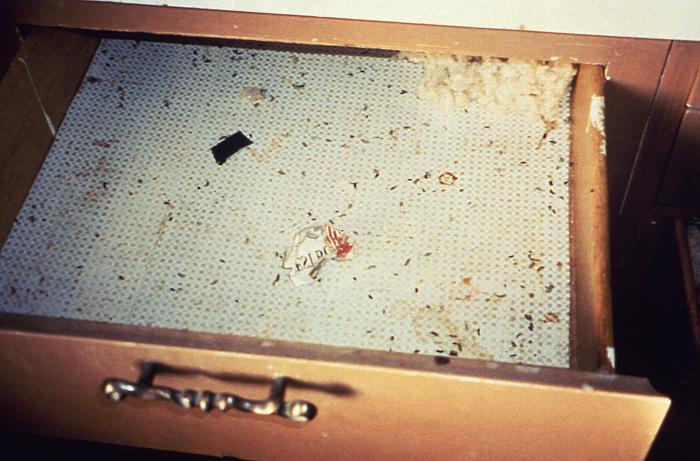
Never sweep or vacuum dry mouse droppings, urine, or nesting material. CDC’s instruction is specific: disturbing dried material can release contaminated particles into the air you’re breathing. Wet it down with disinfectant first, and only then wipe it up.
Quick answer
- Before cleaning a home or outbuilding, open doors and windows for 30 minutes and leave the area while it ventilates.
- Put on rubber or plastic gloves.
- Do not sweep or vacuum. Spray the droppings until visibly wet with an EPA-registered disinfectant or a fresh bleach solution.
- Let it sit for the contact time — about 5 minutes per current CDC guidance, or whatever the product label says if that’s different.
- Wipe everything up with paper towels and put them straight in the trash.
- Wipe or mop the whole area again with disinfectant, not just where the droppings were.
- Tie off the trash and put it in a covered outdoor bin.
- Wash your gloved hands, remove the gloves, then wash your bare hands with soap and water.
A quick note on words, since this page uses them precisely: CDC distinguishes cleaning — which “physically removes most germs, dirt, and impurities” — from disinfecting, which “kills remaining germs on surfaces.” Wiping up the droppings is the cleaning step. Treating the surface afterward with an EPA-registered product for its full contact time is the disinfecting step. Skipping the second one is skipping half the job.
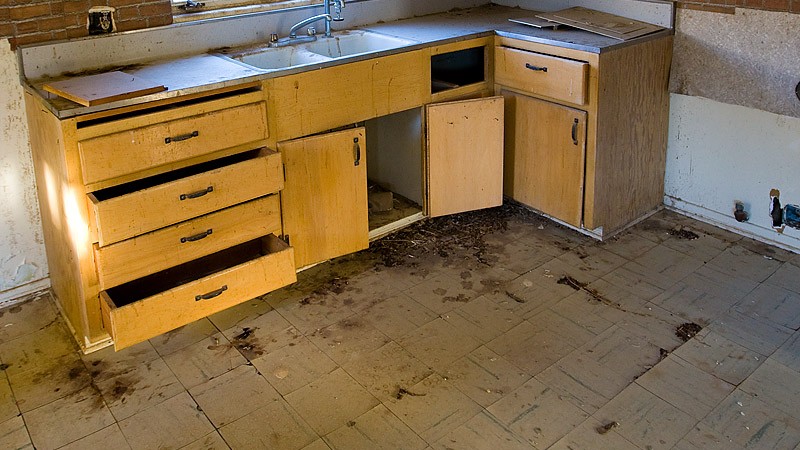
How to clean mouse droppings, step by step
The quick version above is for routine cleanup — a few droppings in a drawer or along a baseboard. Here is the same procedure with the sourcing behind each step.
1. Ventilate before cleaning. For homes and outbuildings, CDC says to open all doors and windows for 30 minutes before cleanup and leave the area while it airs out. The guidance does not limit this step to a room that has been closed for a long time.
2. Put on gloves and get your supplies together. CDC calls for rubber or plastic gloves. You’ll also need an EPA-registered disinfectant or a fresh bleach solution, paper towels, and a trash bag or a lidded bin.
If you’re mixing your own bleach solution: CDC’s figure for rodent cleanup is 1½ cups of household bleach in 1 gallon of water. Make it fresh before use. CDC also allows an EPA-registered disinfectant; follow that product’s label, including its contact time. EPA notes that the surface must remain visibly wet for the full contact time. Never mix bleach with ammonia or other cleaners.
3. Wet the droppings thoroughly. Spray the droppings, and the area immediately around them, until visibly wet. Don’t brush, flick, or wipe anything while it’s still dry.
4. Let the disinfectant sit. CDC’s current instruction is to let it soak for about 5 minutes, “or according to instructions on the disinfectant label” if that’s different. The label takes precedence — products are formulated for different contact times, and EPA’s own guidance (above) says the surface needs to stay visibly wet for that whole period.
5. Wipe it up. Once it’s soaked, wipe the droppings up with paper towels and put them directly into your trash bag or bin.
6. Disinfect the surface itself. Picking up the visible droppings is the cleaning step, not the disinfecting one. CDC’s instruction is to mop or sponge the whole affected surface — the shelf, the drawer, the floor — with the same disinfectant. This is the step people skip.
7. Dispose of the waste. Tie off the bag before you carry it out of the room and put it in a covered outdoor trash container. CDC’s instruction to double-bag and knot each bag separately applies specifically to dead rodents, nesting material, and used traps — a different scenario, covered on our dead-mouse guide and, for nests, in how to remove a mouse nest safely — not to routine dropping cleanup, where CDC’s step is to throw the used paper towels into a covered garbage can that is regularly emptied.
8. Wash your hands. CDC lists this as its own step: wash your gloved hands with soap and water before you take the gloves off, then wash your bare hands again afterward.
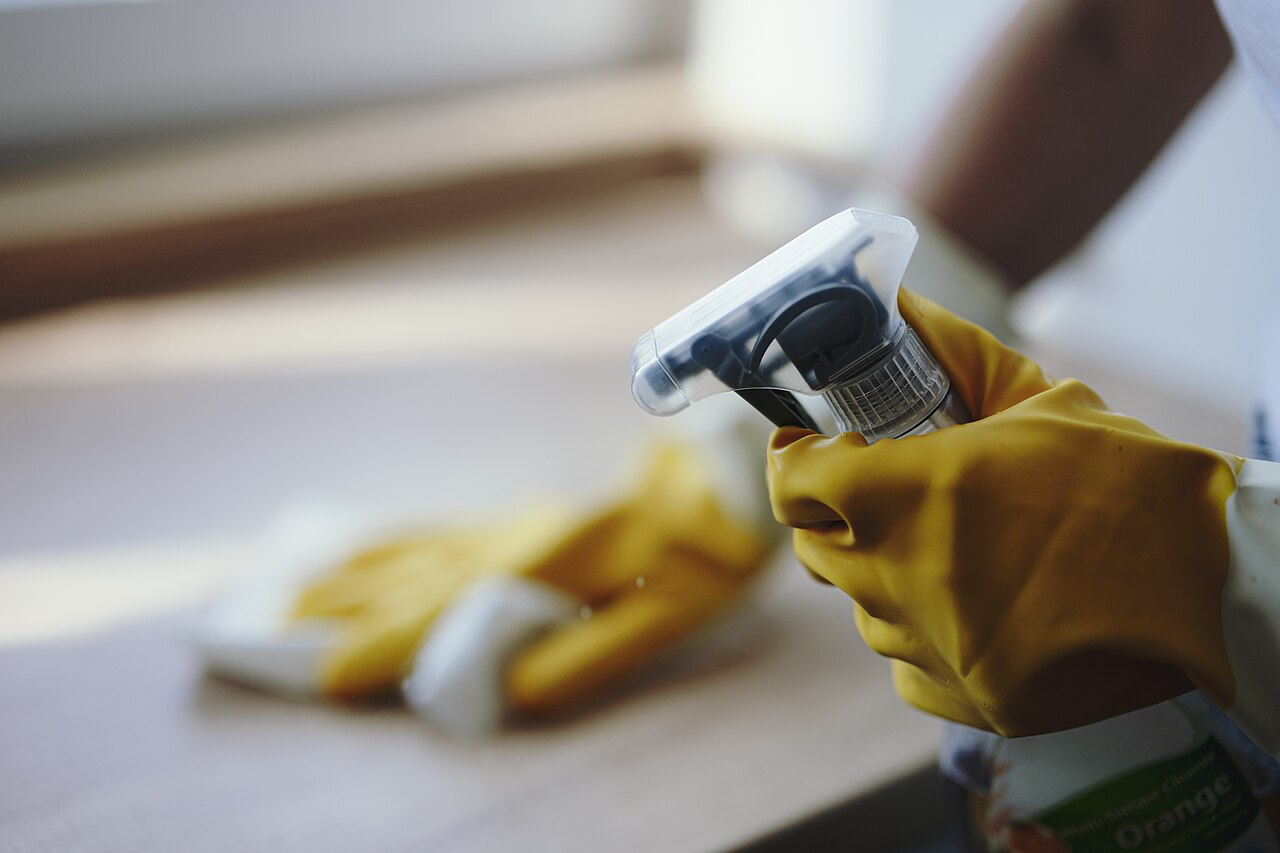
If you’re dealing with a heavy infestation
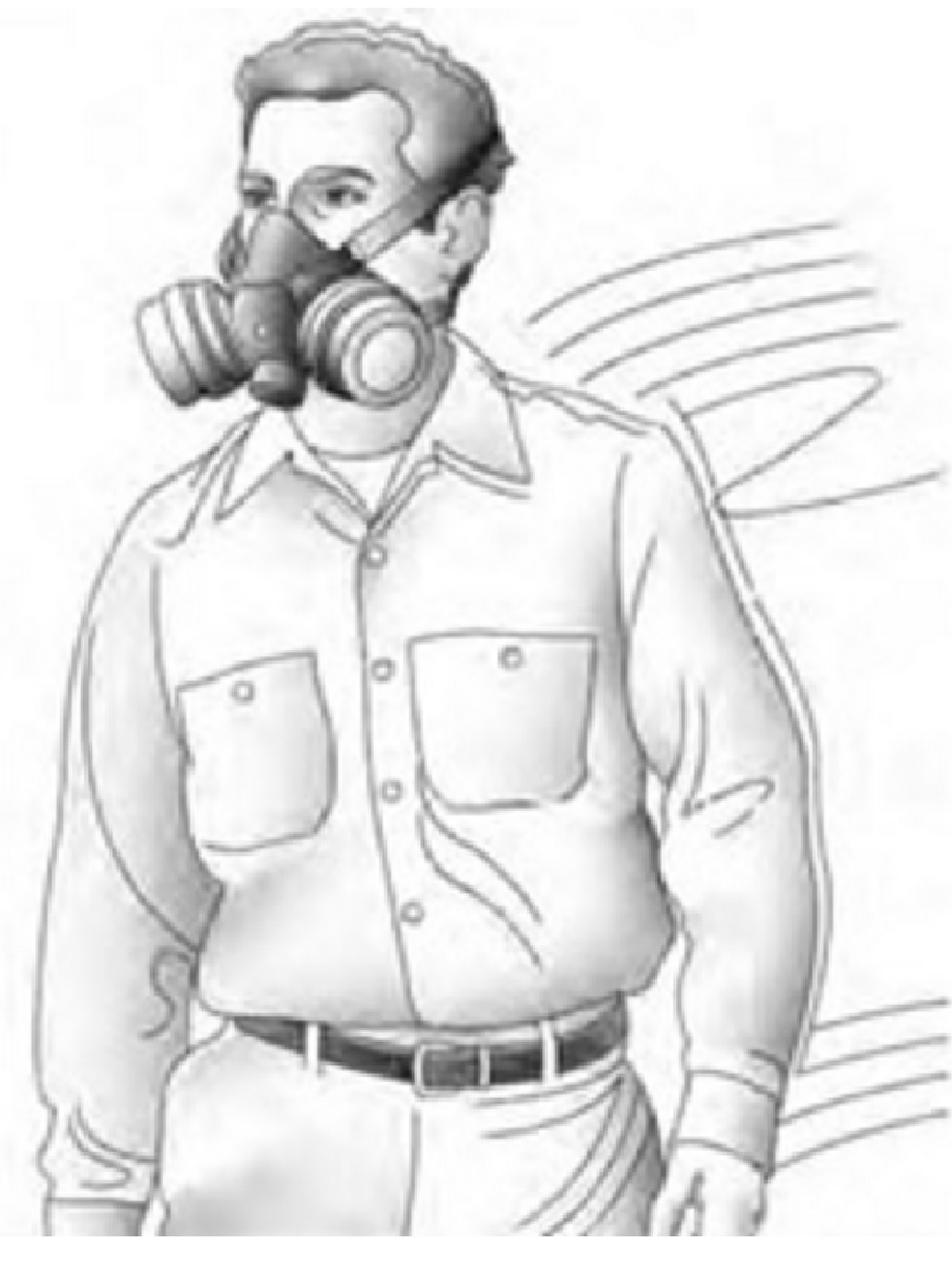
A heavy infestation — large amounts of droppings and nesting material, not a handful in one spot — is a different scenario in CDC’s own guidance, with its own PPE requirements. CDC specifies: disposable coveralls where possible, rubber boots or disposable shoe covers, gloves, protective goggles, and “appropriate respiratory protection.” Routine cleanup of a few droppings does not call for this equipment — the two scenarios shouldn’t be conflated, and CDC doesn’t ask for coveralls and a respirator to deal with a drawer.
Can you vacuum mouse droppings?
Not until they have been disinfected. CDC’s instruction is specific: vacuuming or sweeping rodent urine, droppings, or nesting material can put tiny virus-containing droplets into the air you’re breathing. CDC’s 2002 hantavirus recommendations draw the line in the same place: do not vacuum or sweep rodent urine, droppings, or contaminated surfaces until they have been disinfected. Wet everything down and wipe it up by hand, every time, no matter how small the amount.
State and federal agencies say the same. The California Department of Public Health says not to sweep or vacuum and to clean only with a wet mop or sponge. Washington State’s Department of Health, University of Arizona Cooperative Extension and the National Park Service also rule out sweeping and vacuuming.
What about a HEPA vacuum?
A HEPA filter does not change the answer. CDC’s 2006 hantavirus fact sheet says HEPA vacuums are not recommended because they blow air around and may create aerosols. CDC’s current cleanup pages do not recommend a HEPA vacuum for droppings either; where HEPA filters appear in CDC’s guidance, they are on respirators for heavy infestations. Canada’s occupational health and safety agency, CCOHS, does list HEPA vacuums among extra measures for heavily contaminated workplaces, alongside powered air-purifying respirators. That is a job for trained workers, not a household cleanup.
What about vacuuming after disinfecting?
CDC’s restriction is worded as “until they have been disinfected.” Its cleanup steps then continue with paper towels and a mop or sponge with disinfectant, and, for carpets and upholstery, shampoo or a steam cleaner (see different surfaces below). A vacuum is not part of CDC’s procedure.
Does it matter if the droppings are old?
No source we checked makes an exception for old droppings. CDC’s 2006 fact sheet notes that hantaviruses survive 2 to 3 days in the environment at room temperature and that sunlight kills them, but the age of droppings can’t be read from how they look: why appearance can’t date droppings.
Cleaning mouse droppings on different surfaces
Hard floors, cabinets, counters, and shelves
This is the standard procedure above: wet, wait, wipe, then disinfect the whole surface. Nothing changes for tile, laminate, sealed wood, metal, or painted drywall.
If the droppings are beside stored food, cleaning the shelf is only one part of the decision. See which food to discard and which cans or jars may be saved under the FDA’s food-package guidance.
Carpet and upholstery
CDC’s instruction for these surfaces is different from hard surfaces: “shampoo rugs and upholstered furniture with a commercial disinfectant or with a commercial-grade steam cleaner or shampoo,” rather than the spray-and-wipe method above.
Bedding and washable clothing
CDC’s instruction: “launder potentially contaminated bedding, clothing, or stuffed animals with hot water and detergent,” dried on the highest heat setting the fabric allows.
Cardboard
CDC’s instruction: dispose of any cardboard boxes contaminated with urine or droppings. Plastic, glass, or metal containers can be disinfected with bleach solution or disinfectant instead.
Books, papers, and other non-washable items
CDC’s instruction: leave affected papers outdoors in direct sunlight for several hours, or, if that isn’t practical, isolated indoors in a rodent-free space for “a minimum of three weeks” — six weeks “strongly suggested.”
Exposed insulation
If insulation is exposed and contaminated with urine or droppings, CDC’s instruction is to place it into plastic bags for removal rather than clean it in place. This is usually also the point where the job moves from DIY to professional — see below.
What if you already swept or vacuumed mouse droppings?
If you did this before reading any of the above, CDC’s own answer is calm and specific: “follow the cleanup guidance on this page.” There is no separate remediation procedure for having already disturbed the material. Ventilate the room now, then clean the area as described above. No CDC, state or National Park Service source we checked says how to clean the vacuum itself afterward.
Disturbing dry droppings doesn’t mean you’ve been infected. CDC has confirmed 890 hantavirus cases nationwide from 1993, when national surveillance began, through 2023, and names the deer mouse — not the common house mouse most likely to be in a city kitchen — as the main US carrier. Which rodent carries what, and which other risks are actually documented, is covered on are mouse droppings dangerous?. CDC’s own escalation advice, stated plainly on the same page: “talk to a healthcare provider if you think a recent illness may be due to a rodent-borne disease,” and tell them about the exposure. Contact your local health department if you have questions about your specific situation. RodentVerify does not diagnose; a clinician does.
When should you call a professional?
Most dropping cleanup is a DIY job. Outside of the HVAC case below — which is CDC’s own explicit instruction — CDC does not publish a checklist for exactly when to call a professional. The list below is RodentVerify’s editorial judgment about when a situation has moved past what the cleaning procedure on this page is meant to handle, not a CDC rule:
- Heavy or widespread contamination — droppings, urine, or nesting material across multiple rooms or a large area, rather than one spot.
- Large amounts of nesting material, especially somewhere hard to access.
- Extensive contaminated insulation, rather than a small exposed patch.
- Contamination inside a wall, ceiling, attic, or crawl space you can’t safely and fully reach.
- Evidence rodents have gotten into your heating or cooling system.
- A persistent problem that keeps producing new droppings after you’ve cleaned, trapped, and sealed entry points.
CDC does not give a numeric threshold for any of these — no count of droppings that tips a situation from DIY to professional — and this page doesn’t invent one either.
The clearest line: CDC’s own instruction is to “contact a professional rodent exterminating service to remove rodents when there is evidence they have accessed heating and cooling ventilation systems.” That one is not a judgment call.
Where the rest of the DIY line sits, in more detail.
What to do after you clean the droppings
Cleaning up what’s there is not the same as solving the mouse problem. A clean surface just gives you a baseline.
If the droppings were in a basement, what to do about mice in a basement covers the entry points, trap placement and sealing for that space.
- Note when you cleaned. Anything that appears after that point is current activity, not old evidence.
- Check the same spots again. New droppings on a surface you know was clean indicate active rodent presence. CDC sets no waiting period for this check — why appearance can’t date droppings, and how to run the check properly.
- Look for other current signs alongside droppings — fresh gnaw marks, a smell, scratching, an actual sighting. Reading the signs together.
- Trap what’s active inside rather than cleaning repeatedly. Choosing and placing traps.
- Find and seal how they’re getting in. Sealing guide.
- Keep monitoring until there’s a stretch with no new sign. How to tell the problem is resolved.
How to tell whether the mouse problem is still active
The test is simple: clean an area properly, note the date, and check back. New droppings after that point mean something is still moving through the space — not necessarily a large infestation, but an active one. A spot that stays clean is useful evidence for that location, though it doesn’t by itself prove the house is clear. CDC gives no fixed interval for this check, and appearance alone is a poor guide to how old droppings are — the full version of the test is here.
If you’re not certain the material you found is actually mouse droppings, see how mouse droppings compare to rat droppings before you decide how big a job this is. And if you haven’t worked out whether this is one mouse or several, this guide walks through how to estimate it.
Sources & verification
- CDC — How to Clean Up After RodentsPrimary source for the full procedure: PPE by scenario, the bleach ratio, contact time, the don’t-vacuum instruction, disposal, per-surface guidance, ventilation for closed-up structures, the already-vacuumed instruction, and the HVAC professional-referral line. Last reviewed by CDC April 8, 2024; live and current as of this guide’s last review.
- EPA — Selected EPA-Registered DisinfectantsUsed for label authority: products must be used per their Directions for Use, and the surface must stay visibly wet for the full contact time.
- CDC — The Difference Between Cleaning, Sanitizing, and DisinfectingUsed for the definitions of cleaning versus disinfecting used throughout this guide.
- CDC — About HantavirusDeer mouse named as the main US carrier, not the house mouse.
- CDC — Reported Cases of Hantavirus DiseaseTotal confirmed US cases, 1993 through 2023.
- CDC — Hantavirus Pulmonary Syndrome: Updated Recommendations for Risk Reduction (MMWR, July 2002)No vacuuming or sweeping until disinfected; disinfecting or steam-cleaning carpets; steam-cleaning or shampooing upholstery.
- CDC — Hantavirus Pulmonary Syndrome (HPS): What You Need to Know (fact sheet, 2006, CDC archive)HEPA vacuums not recommended because they blow air around and may create aerosols; virus survival of 2 to 3 days at room temperature; sunlight.
- California Department of Public Health — Hantavirus Pulmonary SyndromeNo sweeping or vacuuming; cleaning only with a wet mop or sponge.
- Washington State Department of Health — RodentsNo vacuuming, sweeping or stirring up dust in rodent-contaminated areas.
- University of Arizona Cooperative Extension — Hantavirus and Disease Prevention (August 2025)No sweeping or vacuuming rodent urine, droppings or nesting materials.
- National Park Service — Cleanup and Indoor Rodent Trapping to Prevent Hantavirus (June 2025)Never sweep or vacuum.
- CCOHS — Hantavirus (Canada)HEPA vacuums among extra measures for heavily contaminated workplaces.