
Rooms and places
Mice or Rats in the Walls: How They Get In, How to Get Them Out, and How Not to Seal Them In
Mice and rats do not stay inside a wall. They come out where pipes, wires and gaps lead into rooms, and that is where you catch them. Set snap traps where they come out, do not put poison into the wall, find out which openings are still in use, and only then seal them with metal or cement. If they have got into places you cannot reach to clean, call a professional.
Short answer: confirm it is rodents, find where they leave the wall (under sinks, behind appliances, at the floor line), trap there, check which holes are still active, then seal with steel wool, hardware cloth, metal or cement. Skip poison inside the house and do not cut open the wall just because you hear noise.
First, make sure it is mice or rats
Scratching in a wall can also be a squirrel, a bat or something mechanical, and the right response differs for each. If all you have so far is a noise, start with scratching in walls at night, which covers what the sound can and cannot tell you. Physical evidence settles it faster: droppings, gnaw marks, nesting material. Compare mouse and rat droppings, or use the wider checklist in do I have mice or rats?
How mice and rats get into walls
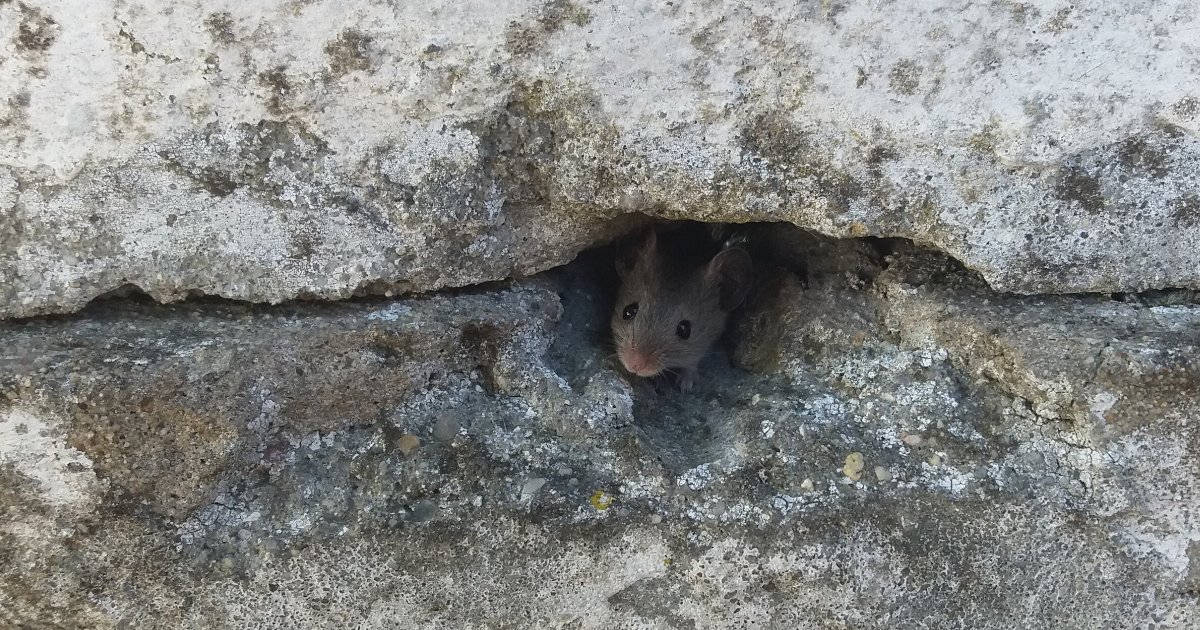
A wall is a hollow space with openings at both ends. Rodents get into it from outside through the same gaps they use to get into the house, and they move between the wall and your rooms wherever something passes through it.
CDC lists the places to check. Outside: the roof among the rafters, gables, eaves and soffits; around windows and doors; between the foundation and the ground; around attic and crawl space vents; and around holes for electrical, plumbing, cable and gas lines. Inside: behind appliances, around the pipes under sinks and washing machines, around pipes to water heaters and furnaces, around all electrical, water, gas and sewer lines, under and behind kitchen cabinets, around floor drains and vents, and between the floor and the wall.
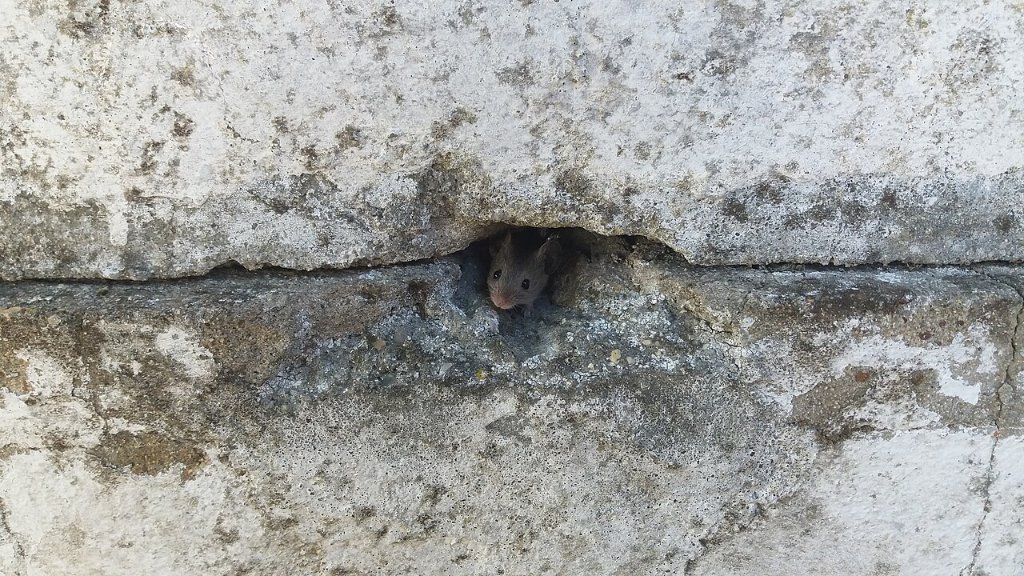
The gaps can be small. CDC says a mouse can fit through a hole the width of a pencil, 1/4 inch or 6 millimeters across. UC IPM gives the detail: house mice can squeeze under gaps 1/4 inch tall and through openings 3/8 inch wide. For rats, UC IPM notes that young rats especially can get under a door with a 1/2-inch gap.
Timing matters too. Where house mice live outdoors, UC IPM says they often move into homes in autumn, as nights get colder.
Mice or rats: who lives where
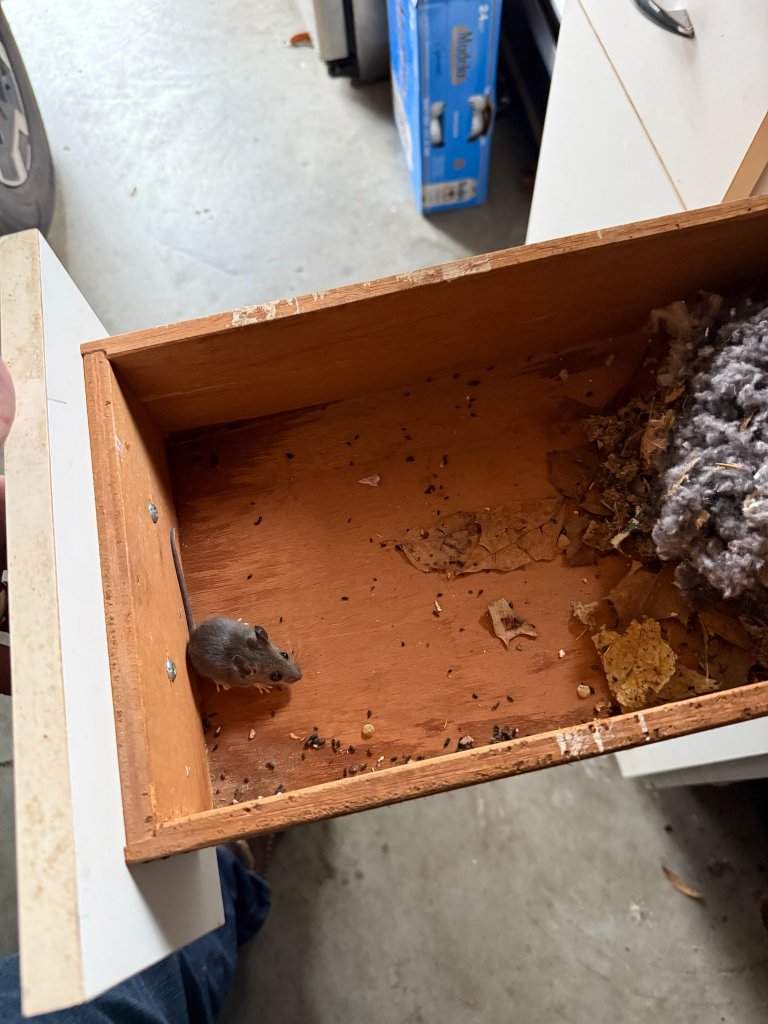
House mice stay close to home. UC IPM says they seldom go more than 30 feet from their nest and food. A mouse you hear in a kitchen wall is likely feeding in or near that kitchen. Nests are built in sheltered places from finely shredded paper or other fiber, and the gnawed shavings of insulation and wood that turn up near active spots are, according to ICWDM, a sign of current activity.
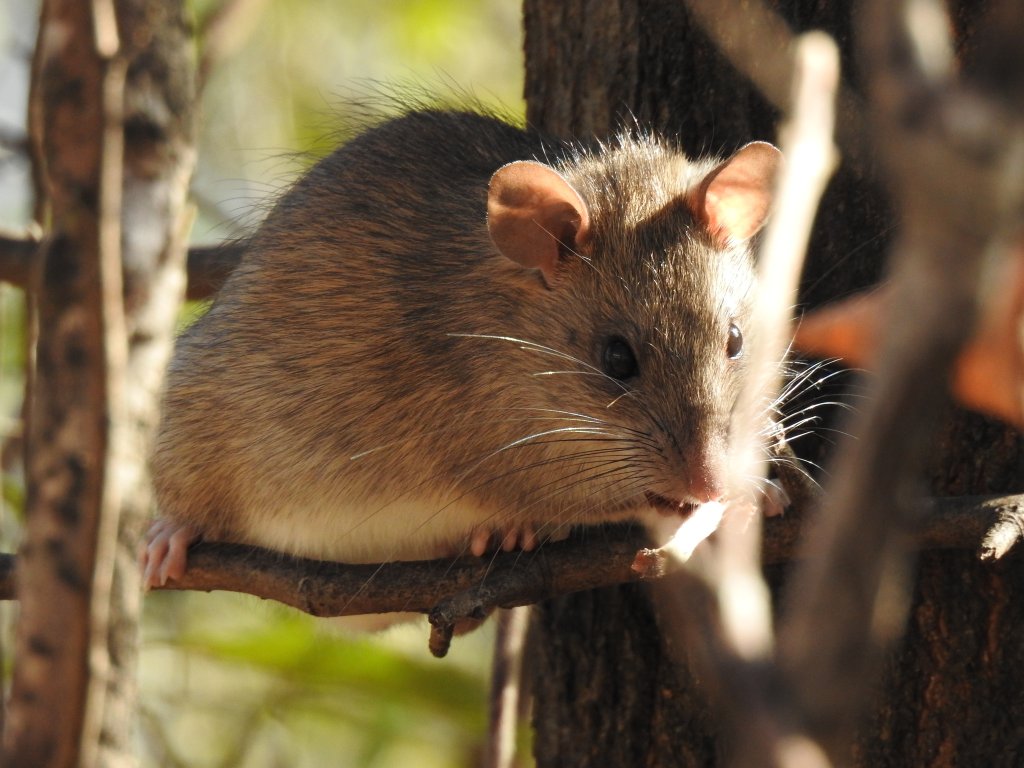
Roof rats are climbers. UC IPM says they typically nest in enclosed, elevated spaces such as attics, wall voids, ceiling voids and cabinets, and they routinely travel 300 feet or more for food.
Norway rats dig burrows along building foundations and indoors usually live in the basement and on the ground floor, although UC IPM adds that infestations in ceiling voids are not uncommon. They forage anywhere from 100 to 500 feet from the nest.
That difference changes where you look. Mice: close to where you found the signs. Roof rats: up high as well as low. Norway rats: low, and back to the foundation. If you are still unsure which rodent you have, see mouse vs rat; if rats are in the roof space, see rats or mice in the attic.
Find where they come out of the wall
You do not need to see inside the wall. You need to know where the animals leave it, because that is where traps work and what you will eventually seal.
- Start at the places CDC names. Behind the stove and refrigerator, the back of cabinets and drawers, pipes under the sink, the gap where floor meets wall.
- Look for the traffic marks. Droppings, fresh gnawing, shredded nesting material. ICWDM describes dark smudge marks on walls, pipes and beams where rats rub along the same route again and again.
- Use flour, not poison, to find a route. ICWDM suggests smoothing a patch of ordinary flour on a suspected path and checking it the next morning for tracks. Do not confuse this with toxic tracking powders: ICWDM says those are sold only to licensed applicators and are generally not recommended in and around homes because of the risk to children and pets.
- Test the holes with paper. ICWDM’s advice for rats is to plug holes with paper first to see which ones are still being used before you seal them permanently. A plug that has been pushed out or chewed means the hole is active.
Trap where they come out
CDC recommends traditional snap traps. Set each one flat on the floor with the baited end touching the wall, so the trap forms a “T” with the wall: rodents run along walls and cross the trigger. Put traps in closed areas such as behind the stove and refrigerator and at the back of cabinets and drawers, out of reach of children and pets, and check them every day.
- Mice: UC IPM says to space traps no more than about 10 feet apart where mice are active; ICWDM is stricter at no more than 6 feet. Two traps set 1 to 2 inches apart catch mice that jump over the first one.
- Norway rats: close to walls, behind objects, in dark corners (UC IPM).
- Roof rats: both on the ground and above it, on ledges, shelves and beams (UC IPM).
- Rats are wary of new objects. CDC advises baiting rat traps without setting them at first, then setting them once the rats are taking the bait.
- No glue traps or live traps. CDC advises against both: a frightened rodent urinates, which raises your exposure to disease.
Which trap to buy, which bait to use and why traps fail are in best mouse traps.
Why not poison rodents in the walls
Poison does not bring the animal out of the wall to die where you can find it. UC IPM calls trapping the preferred method in homes, partly because it avoids the smell of dead mice that can follow when poison is used inside buildings. For rats, UC IPM’s advice runs the same way: close up the building before baiting outside, to keep poisoned rats from coming in to die.
CDC’s order is snap traps first and poison or bait stations only for infestations that persist. If you do use bait, EPA sorts household bait stations into four tiers. Only Tier 1 and Tier 2 have been shown to resist tampering by both children and dogs; Tier 3 resists children only and belongs where pets cannot reach; Tier 4 has not been shown to resist tampering and may only be used where neither children nor pets can get to it. Follow the label.
If something has already died inside a wall, see what to do with a dead mouse in a wall.
Trap first, test the holes, then seal
None of the official sources we checked gives a set number of days to wait before sealing, and none recommends one-way exclusion doors for mice or rats. What follows is our reading of the CDC, UC IPM and ICWDM guidance put together, not a quote from any of them:
- Close the outside first where you can do it safely. That stops new animals arriving while you deal with the ones inside.
- Trap at the inside exits until captures stop.
- Check the openings with paper or flour, as ICWDM suggests, so you know which ones are still in use.
- Seal the openings that test quiet with gnaw-resistant material. If one is still active, keep trapping beside it rather than sealing an animal in.
Sealing a wall with animals still inside does not remove them. They chew a new way out, or die in the wall, and you get the smell.
What they damage inside the wall
UC IPM says house mice gnaw electrical wires and gas lines, including the cords of appliances and wires in walls, and that many fires of unknown origin are believed to be caused by rodents gnawing on wires. That is a belief about unexplained fires, not a measured statistic, and we have not found an official figure for how many house fires rodents cause. Rats gnaw electrical wiring too, UC IPM notes.
Insulation suffers as well: fresh piles of chewed insulation and wood are a sign of active rodents, ICWDM says, and CDC tells you to bag and remove exposed insulation that is soiled with urine and droppings.
If you find chewed wiring, have an electrician check it before you assume it is safe. That is our advice, not a quote from the sources above. For signs of gnawing and how to tell mouse from rat damage, see rodent gnaw marks.
If you open the wall: cleaning up safely
Do not open a wall just because you heard noise. If you do have to, for repairs or to reach a nest or a dead animal, follow CDC’s cleanup steps:
- Open doors and windows for 30 minutes before cleaning and leave the area during that time.
- Wear rubber or plastic gloves.
- Do not sweep or vacuum urine, droppings or nesting material.
- Soak them with disinfectant or a bleach solution of 1 part bleach to 9 parts water, wait 5 minutes or as long as the label says, then wipe up with paper towels.
- Put contaminated exposed insulation into plastic bags for removal.
For heavy infestations, CDC calls for extra protective equipment, including a half-mask air-purifying respirator with a HEPA filter for the people cleaning up. If rodents are in ventilation ducts, CDC says to call a professional rodent exterminating service.
The disease behind most of this caution is hantavirus. CDC says the most common hantavirus that causes hantavirus pulmonary syndrome in the United States is spread by the deer mouse; its brochure also names the white-footed mouse, the rice rat and the cotton rat. How to tell a deer mouse from a house mouse is in deer mouse vs house mouse, and the full cleanup procedure is in how to clean mouse droppings safely.
Seal for good
CDC’s materials: fill small holes with steel wool and hold it in place with caulk or spray foam; fix larger holes with lath screen or metal, cement, hardware cloth or metal sheeting. The foam is there to hold the steel wool, not to stop the animal. UC IPM is direct that expanding foam, wood and other gnawable materials do not work on their own, and that steel wool makes a good temporary plug but can rust. Rats, UC IPM adds, chew through plastic, foam, wood and caulk.
How big a gap to close? UC IPM says to seal every hole larger than 1/4 inch to keep out both rats and mice. ICWDM gives 1/2 inch as the threshold for rats and 1/4 inch for mice. If mice are possible, use the smaller figure.
Seal on the inside of the house as well as outside: the gaps around pipes under sinks and behind appliances are on CDC’s list for a reason. Materials and methods for each kind of opening are in how to seal mouse entry points.
How to know they are gone
CDC’s trapping guide uses a week with no captures and no new signs as the point to stop trapping. Its sentence actually says “the rats are gone,” so treat that week as a stopping point, not proof that the house is mouse-free. Keep checking and refreshing bait for at least 15 days. Silence in the wall is not proof on its own; new droppings, gnawing and disturbed flour are what to look for. More in how to know if mice are gone.
When to call a professional
CDC says to contact a pest control professional if rodents have got into areas that cannot be reached to clean, and to contact your local or state health department if you are worried about an infestation. Other sensible triggers: rats rather than mice, chewed wiring, activity in several parts of the house, or signs that continue after a couple of weeks of trapping and sealing. See when to call an exterminator.
Questions people ask
Can mice actually live inside walls?
Yes. ICWDM lists sounds of gnawing and climbing in walls among the common signs of house mice, and UC IPM names wall voids among the places roof rats typically nest. Either way, the advice is to trap where they come out into the room.
Should I put poison inside the wall?
No. A poisoned mouse or rat can die inside the structure, and UC IPM recommends trapping in homes partly to avoid that smell. CDC keeps poison for infestations that persist after trapping.
Can I just seal the holes and wait?
Not while animals are still using them. Trap first, check which holes are active with paper or flour, then seal. Sealing an active hole leaves the animal inside.
Should I cut a hole in the wall to set a trap inside?
We found no official guidance recommending traps inside a closed wall. The standard advice is to trap where the animals come out: behind appliances, in cabinets, at the floor line.
Will an ultrasonic device or peppermint oil drive them out of the wall?
Do not count on either. UC IPM says high-frequency electronic devices are not effective, and no study we found shows peppermint oil keeping mice out of a home. See do ultrasonic pest repellers work and does peppermint oil repel mice.
The bottom line
Mice and rats in walls are dealt with at the openings, not inside the wall. Find where they come out, trap there with snap traps set in a “T” to the wall, avoid poison indoors, test the holes before you close them, and seal with steel wool, hardware cloth, metal or cement. If they are in places you cannot reach to clean, bring in a professional. The whole-house plans are in how to get rid of mice and how to get rid of rats.
Sources and verification
- CDC — How to Seal Up to Prevent Rodents (April 2024)Inside and outside places to check, including behind appliances, pipes under sinks, utility lines and the floor-wall junction; the pencil-width 1/4-inch hole; steel wool with caulk or spray foam, and lath screen, metal, cement, hardware cloth or metal sheeting for larger holes; pest control professional for areas that cannot be reached to clean.
- CDC — How to Trap Up to Remove Rodents (April 2024)Snap traps set in a “T” with the wall; behind the stove, refrigerator, cabinets and drawers; check daily; no glue or live traps; pre-baiting for rats; a week without captures or new signs; at least 15 days; poison only for persistent infestations.
- CDC — How to Clean Up After Rodents (April 2024)30 minutes of ventilation; gloves; no sweeping or vacuuming; 1:9 bleach solution and 5-minute soak; bagging contaminated exposed insulation; respiratory protection for heavy infestations; professional service for rodents in ventilation ducts.
- CDC — About HantavirusThe deer mouse spreads the most common hantavirus that causes HPS in the United States.
- CDC — Hantavirus brochure (June 2021)Deer mouse, white-footed mouse, rice rat and cotton rat as carriers.
- UC IPM — Pest Notes: House Mouse (July 2025)Openings of 1/4 inch, gaps 1/4 inch tall and 3/8 inch wide; autumn entry; nests of shredded paper or fiber; 30-foot range; wires in walls, gas lines and fires of unknown origin; trap spacing about 10 feet and pairs 1–2 inches apart; trapping preferred in homes and avoids dead-mouse odors from poison; foam, wood and gnawable materials ineffective; steel wool can rust.
- UC IPM — Pest Notes: Rats (June 2025)Roof rats in attics, wall voids, ceiling voids and cabinets; Norway rats along foundations, in basements and ground floors, ceiling voids not uncommon; travel distances; trap placement for each species; 1/2-inch gap under doors; seal holes larger than 1/4 inch; rats chew plastic, foam, wood and caulk; seal before baiting outside.
- EPA — Choosing a Bait Station Product for Household Use (September 2026)Four tamper-resistance tiers and where each may be used.
- ICWDM — House MiceGnawing and climbing in walls as a sign; flour tracking patch; fresh shavings of wood and insulation as a sign of activity.
- ICWDM — House Mouse Damage Prevention and Control MethodsTraps no more than 6 feet apart, close to walls; seal openings larger than 1/4 inch; tracking powders not recommended in and around homes.
- ICWDM — Norway RatsSmudge marks on walls, pipes and beams; flour tracking patch; fresh shavings of insulation as a sign of activity.
- ICWDM — Norway Rat Damage Prevention and Control MethodsPlug holes with paper to find active ones before sealing; seal openings larger than 1/2 inch; traps along walls with the trigger facing the wall; toxic tracking powders only for licensed applicators.