
Evidence and signs
How Do Mice Get in Your House? The Ways In, Why Now, and How to Find Theirs
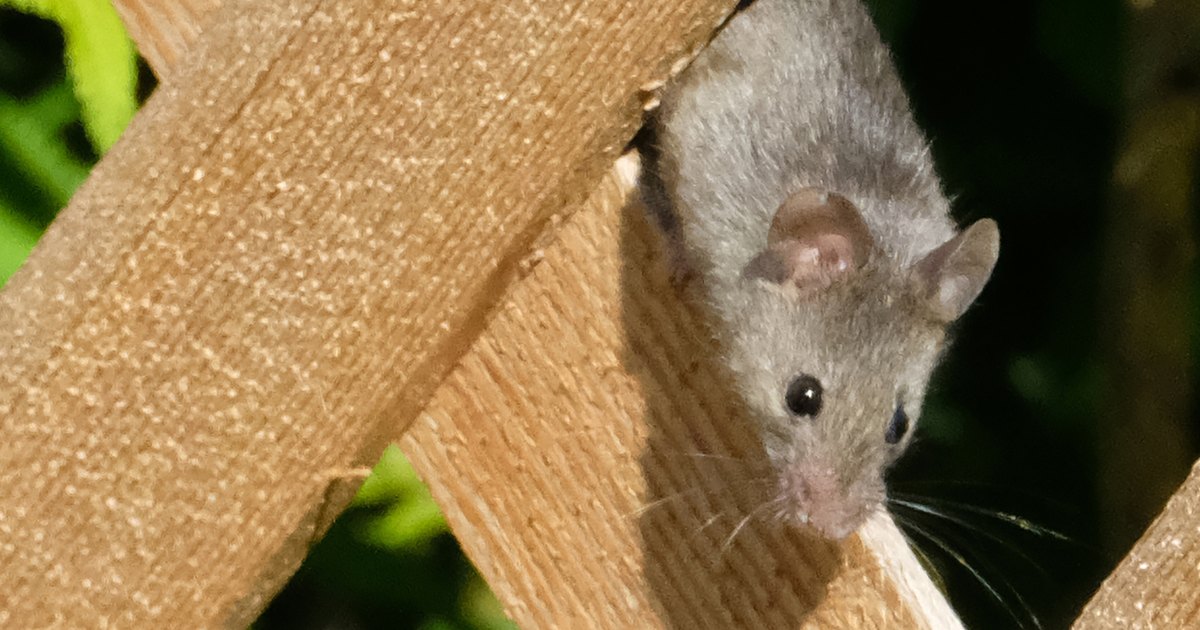
Mice rarely need a big hole or an open door. A gap the width of a pencil is enough, and they can climb, jump and run along wires to reach openings well above the ground. This page explains how a house mouse gets in, why it tends to happen in autumn, where mice usually come from, and how to prove which opening the mice in your house are actually using before you seal anything.
Short answer: house mice get in through gaps from about 1/4 inch around pipes, wires, vents, doors and the foundation, and they climb rough walls and run along cables to reach openings higher up. Most move indoors in autumn, but they are active all year. To find the route your mice use, look for smudge marks and droppings at openings, then test suspect gaps with a thin layer of flour overnight. How to close the openings is covered in how to seal mouse entry points.

How small a gap can a mouse get through?
Smaller than most people expect. CDC says a mouse can fit through a hole the width of a pencil, about 1/4 inch (6 mm). UC IPM describes the shape as well as the size: house mice can squeeze under gaps 1/4 inch tall and through openings 3/8 inch wide. The two figures do not contradict each other; one describes a round hole, the other a slot such as the space under a door.
A practical rule follows from both: if a pencil fits into an opening, treat it as a possible way in. The opening also does not have to stay that size. ICWDM notes that mice damage structures by gnawing, and the gnawed edges you sometimes see around a hole are a sign it has been widened. What mice can chew is covered in rodent gnaw marks.
We found no official source that explains the squeeze in terms of skull size or a “collapsible” body, so we do not repeat that claim here.
Can mice climb walls, jump and run along wires?
Yes, within limits the sources spell out. This is what turns a gap under the eaves or around a cable high on the wall into a real entry point.
| Ability | What the source says | Source |
|---|---|---|
| Climbing | Excellent climbers that can run up any rough vertical surface | UC IPM; NPIC also calls them excellent climbers |
| Surfaces | Can walk up surfaces such as wood or concrete, unless the surface has a slick finish | ICWDM |
| Wires and ropes | Run horizontally along wire cables or ropes | UC IPM |
| Jumping | Up to 12 inches from the floor onto a flat surface | UC IPM |
| Jumping | Up to 10 inches from a flat surface | ICWDM |
| Squeezing | A hole the width of a pencil (1/4 inch); gaps 1/4 inch tall, openings 3/8 inch wide | CDC; UC IPM |
The two jump heights come from different sources and we give both rather than averaging them. What we did not find in any official source: a maximum climbing height, how far a mouse can fall safely, how far it can jump sideways, or how far it can swim. Pages that quote exact figures for those usually cite no one.
In practice, rough surfaces such as wood and concrete are easy for a mouse, while ICWDM notes a slick finish stops them. NPIC advises trimming trees and vegetation growing along walls or near roofs.
Where mice get into a house
CDC’s inspection checklist is the best map of the usual ways in. It is not ranked: we found no official data on which opening mice use most often, so treat every item as a candidate.
- Foundation and ground level. Where the foundation meets the ground or the siding, and any cracks or holes in the foundation itself.
- Pipes, wires and lines. Holes for electrical, plumbing, cable and gas lines on the outside, and the same lines where they pass through walls and floors inside: under sinks, behind the washing machine, at the water heater and furnace. Mice in the basement covers the sill plate, rim joist and foundation penetrations.
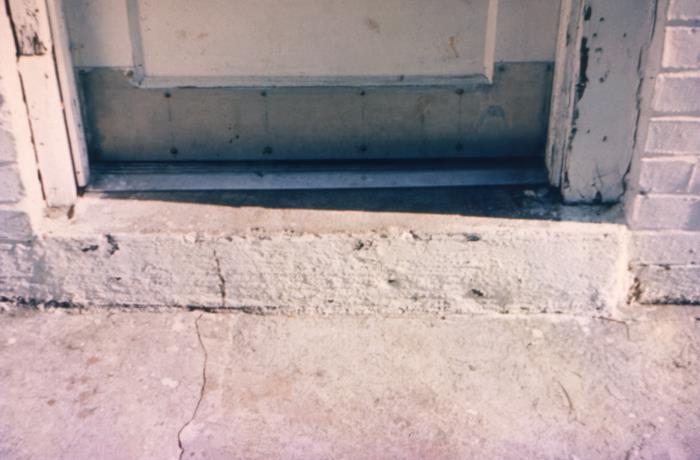
- Doors. The threshold and lower corners, especially doors without weather stripping, and the garage door. Daylight at the bottom corners of a closed door means a gap worth checking.
- Vents. Attic and crawl space vents, roof and ridge vents, and floor and dryer vents inside the house.
- The roofline. Rafters, gables, eaves and soffits. Mice can reach them by climbing rough walls or running along cables, and NPIC advises trimming trees and plants that grow along walls or near the roof.
- Attached garages and outbuildings. A garage can be the first sheltered space a mouse reaches from the yard. If it is attached, the door into the house, the base of the shared wall and every pipe or wire that passes through it are routes into the living space. See mice in the garage.
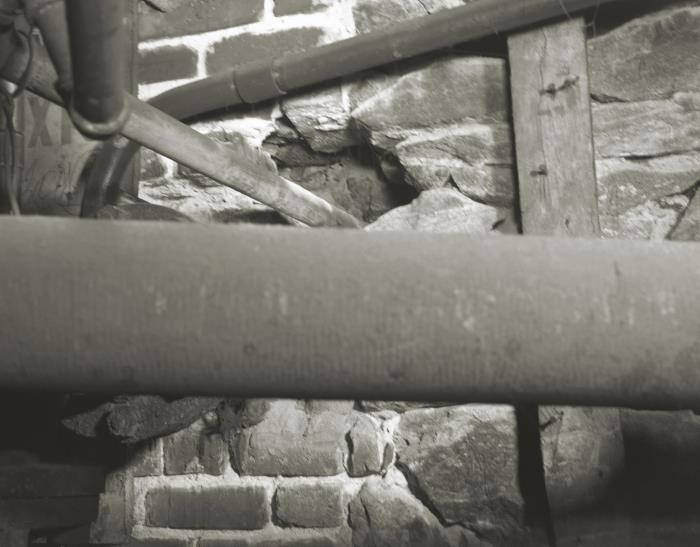
Once inside, mice use the same pathways between rooms: wall voids, gaps around pipes under cabinets, the space behind appliances. That is why a mouse seen in the kitchen may have come in at the basement or the garage. Mice in the walls explains how they move inside the structure, and mouse in the kitchen lists the spots to check there.
Why mice come in, and why now
Most people notice mice in autumn, and the sources agree on the reason. UC IPM says house mice living outdoors frequently enter homes in autumn, when nighttime temperatures become colder. ICWDM puts it the same way: mice are active year-round and are most likely to invade structures as temperatures cool in the fall.
The “year-round” part matters. A mouse that finds food and shelter in a house or garage in October will not leave in spring, and a mouse can come in during summer too. Autumn is the best time to check doors and openings, not the only time mice arrive.
What draws them in is simple: food, shelter and a warm, protected place to nest. The full list, with what does not attract mice, is in what attracts mice.
- Food. House mice eat small amounts in many places, and UC IPM notes they do not need to drink water to survive, although they will seek liquids. Dry pet food, birdseed, grass seed and pantry goods in paper or cardboard are enough. Mouse droppings in kitchen cabinets covers what to throw away if they have already reached the food.
- Shelter and nesting material. UC IPM describes nests of finely shredded paper or other fibrous material in sheltered places. Stored boxes, fabric and insulation provide both. Mouse nest signs shows where nests are usually found.
- Warmth. ICWDM says mice prefer to nest next to sources of heat, such as compressors, pilot lights and hot water heaters.
Does a clean house keep mice out?
No. Cleanliness helps, but it does not close a gap. ICWDM is blunt: even the best sanitation will not eliminate mice, although it makes their signs easier to spot. UC IPM says good sanitation will seldom completely control house mice on its own. If you have found mice in a tidy home, it says nothing about your housekeeping; it says there is an opening.
Where the mice come from
- The yard and garden. Woodpiles, dense vegetation against the walls, stored materials and outbuildings give mice cover close to the house. CDC’s distances for woodpiles, compost and vegetation are in how to get rid of mice, step 5.
- The garage. Big doors that rarely seal tightly, stored boxes, and often pet food, birdseed or grass seed on the shelves.
- Next door, in an apartment building. EPA advises residents of apartments, condominiums and other multi-unit housing to tell the housing manager right away, because neighbouring units may need to be checked to find the source. Sealing only your own unit can leave the real entry point untouched. More in when to call an exterminator.
- Fields and woods, if you live near them. In rural homes and cabins the mouse may not be a house mouse at all. UC IPM says deer mice often enter vacated homes, cabins and other structures, though they are not common in urban and residential areas unless parks or fields are nearby. That changes the cleanup rules, because CDC identifies the deer mouse as the main U.S. carrier of the hantavirus behind hantavirus pulmonary syndrome. Deer mouse vs house mouse shows how to tell them apart.
Can you bring mice in with your things?
For businesses, yes: UC IPM says that in commercial facilities, house mice are often introduced on or within packaged goods or from delivery vehicles. We found no official source that documents the same for homes — for example, mice carried in with firewood, furniture or moving boxes — so we do not claim it. It is reasonable to look over stored boxes and sacks of feed before bringing them inside, but in most homes the way in is still an opening in the building.
How to find the exact way your mice get in
Finding every possible gap is the job of a full inspection, described in how to seal mouse entry points. This section is about the narrower question: which opening are the mice in your house using right now? Answering it tells you where to put traps and which repair matters most.
1. Start where the evidence is
House mice do not travel far. UC IPM says they seldom go more than 30 feet from their nest and food supply, and ICWDM says one mouse covers an area averaging 10 to 30 feet across in its daily activity. So the opening that matters is usually near the droppings, gnawing or nesting you have already found, or along a wall or pipe that leads there. That does not mean the outside entry is always within 30 feet of the droppings; mice can travel through wall voids and along pipes before they appear.
2. Look for smudge marks at openings
Mice that use the same path repeatedly leave a mark. NPIC describes brown or gray smudges on walls and other surfaces where mice travel, and says these marks can identify heavily used paths or entrances. Cornell calls them sebum marks: an oily, brown substance that builds up on pathways rodents use often. ICWDM adds that these smudge and rub marks come from oil and dirt on the fur and show up on beams, pipes and walls along routes mice use often. A smudge around the edge of a hole, a pipe or the bottom of a door is strong evidence that the opening is in use.
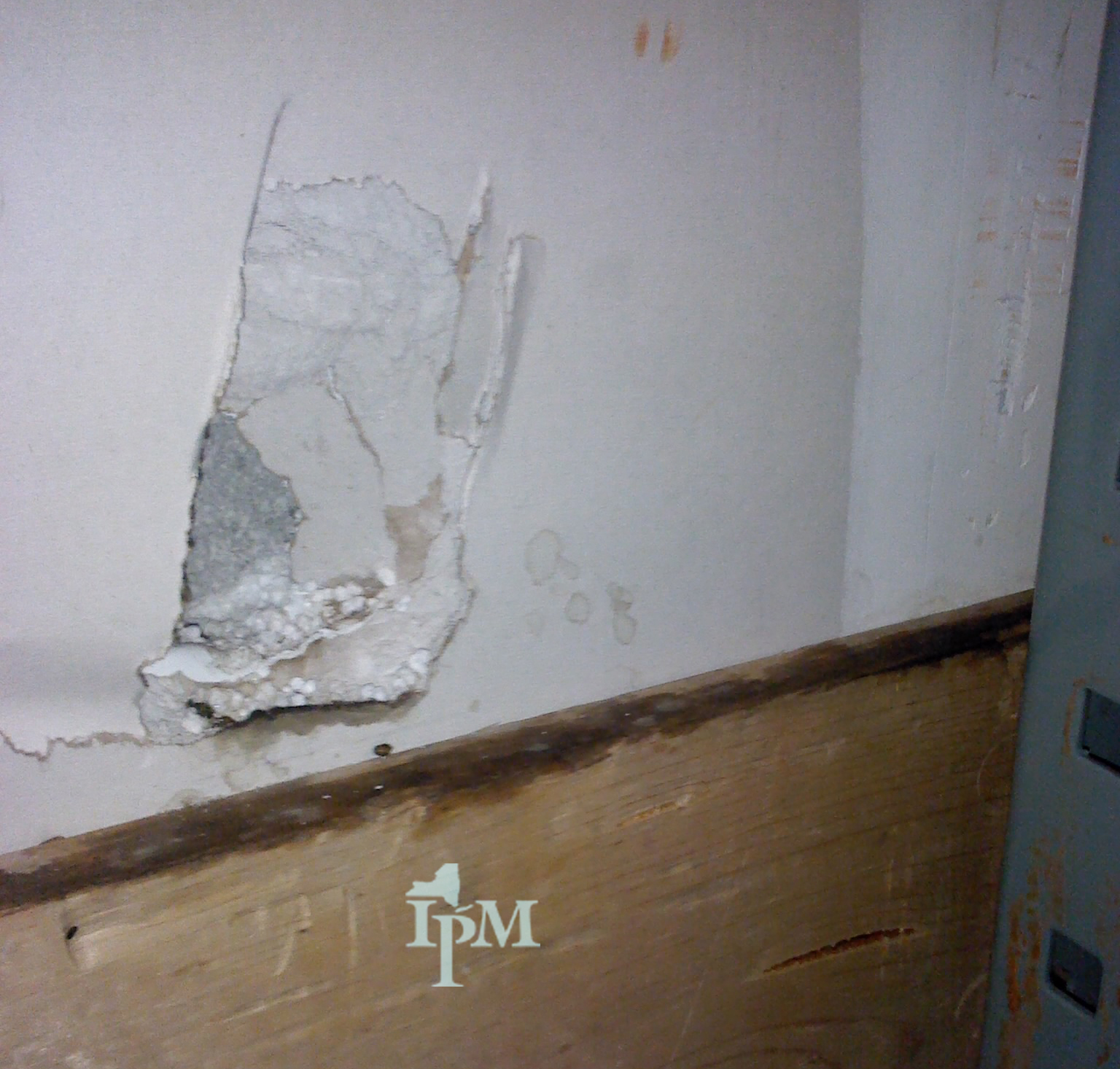
Also check the edges of the opening for fresh gnawing and the floor below it for droppings. Compare what you find with fresh vs old mouse droppings, so you do not chase an opening that was used years ago. ICWDM also notes that mouse urine can glow under ultraviolet light; how to use a UV light, and why a glow is not proof on its own, is in mouse urine smell.
3. Test the suspect openings with flour
This is the most useful home test we found in an official source. ICWDM describes a tracking patch of flour, rolled smooth with a cylindrical object, placed overnight in pathways to see whether rodents are present. ICWDM’s damage guide adds that non-toxic tracking dusts such as flour or talc can help.
- Spread a thin, even layer of flour or talc in front of the opening you suspect, or along the pipe or wall edge that leads to it.
- Smooth it so any print will show.
- Check it the next morning. Small footprints, sometimes with the drag line of a tail, mean mice are using that route. ICWDM notes the same tracks can show up in dust or mud.
- Repeat for the next opening. Work through the candidates near the activity first.
Use only flour or talc for this. ICWDM warns that the poison tracking powders sold for rodent control are generally not recommended in and around homes because of the risk to children and pets. Wipe up the flour afterwards and keep the patch where pets will not walk through it.
A second way to test an opening is to plug it loosely with paper and see whether it is pushed out. That method, and how long to wait, is in how to seal mouse entry points.
4. Watch at night
Mice are mostly active at night, which is why you see the evidence rather than the animal. Cornell suggests that inspections may need to be done at night, either by sitting quietly to watch where rodents move or by using a wildlife camera. A camera aimed at a wall where you have found droppings can show which way the mice come and go.
5. What professionals use
Cornell describes non-toxic monitoring blocks that make droppings and urine glow under UV light. If the blocks are placed outside and glowing droppings later turn up indoors, that indicates an entry point is present. This is a professional monitoring method, mentioned here so you know what an inspector may do; it is not something to improvise with household products.
Once you have found the way in
Do not seal an active opening and walk away. Mice already inside will stay inside, and if they are in a wall void, sealing every hole at once can trap them there. CDC’s order is to find how they got in, seal those openings, and trap the mice still inside at the same time.
- How to close each type of opening, and the vents and weep holes you should never block: how to seal mouse entry points.
- Where to put traps once you know the route: best mouse traps.
- The full sequence, from confirming it is mice to knowing they are gone: how to get rid of mice.
- Mice in the walls specifically: mice or rats in the walls.
Questions people ask
Can mice get under a closed door?
Yes, if there is a gap. UC IPM says house mice can squeeze under gaps 1/4 inch tall. NPIC recommends door sweeps and weather stripping to stop them crawling under doors. The daylight test in how to seal mouse entry points shows whether your door has that gap.
Can mice climb up the outside wall to the second floor or the roof?
They can climb rough surfaces such as wood and concrete and run along cables. No official source we checked gives a maximum height, so we cannot say how high. Openings at the roofline, around cables and under eaves are on CDC’s list for a reason, and NPIC advises trimming trees and plants that grow along walls or near the roof.
Can mice come up through the toilet or a drain?
We found no official source showing that house mice come in this way. The toilet and broken-drain route is described for rats; see how to get rid of rats. Floor drains are on CDC’s indoor inspection list because of the gaps around them, not because of the drain itself.
Can mice get in through a dryer vent?
Dryer vents are on CDC’s inspection list, so check the outside outlet and the opening around the duct. Do not put a screen over a dryer exhaust outlet; lint builds up. What to use instead is in how to seal mouse entry points.
Do mice keep using the same way in?
ICWDM says mice explore, learn and memorize the locations of pathways, obstacles, food, water and shelter, so an established route tends to stay in use while it is open. That is not a rule that every mouse uses only one opening, which is why you test more than one candidate.
Why do I have mice when my house is clean?
Because cleanliness does not close openings. ICWDM says even the best sanitation will not eliminate mice. A clean house just makes their signs easier to see.
The bottom line
Mice get into houses through small openings, from about 1/4 inch, at ground level and higher up, because they climb rough walls, run along cables and jump 10 to 12 inches. Most arrive in autumn, but they are active all year, and a clean house does not keep them out. To find the opening your mice are using, start near the droppings, look for smudge marks at holes and pipes, and test suspect openings with a thin layer of flour overnight. Then seal what you found while you trap the mice already inside.
Sources and verification
- CDC — How to Seal Up to Prevent Rodents (April 2024)The pencil-width 1/4-inch hole; outside and inside inspection checklists (foundation, doors, windows, utility lines, vents, roof, garages; pipes, dryer vents, floor drains).
- CDC — How to Trap Up to Remove Rodents (April 2024)Check how rodents got inside first; seal entry points and trap at the same time.
- CDC — About HantavirusThe deer mouse as the main U.S. carrier of the hantavirus that causes hantavirus pulmonary syndrome.
- UC IPM — Pest Notes: House Mouse (July 2025)Climbing rough vertical surfaces; running along wire cables or ropes; jumping up to 12 inches onto a flat surface; gaps 1/4 inch tall and openings 3/8 inch wide; autumn entry; 30-foot range; no need to drink water; nests of shredded fibrous material; sanitation alone seldom controls mice; introduction with packaged goods in commercial facilities.
- UC IPM — Pest Notes: Deer Mouse (June 2012)Deer mice entering vacated homes, cabins and other structures; not common in urban areas unless parks or fields are nearby.
- ICWDM — House Mouse Damage Prevention and Control MethodsJumping up to 10 inches; climbing wood and concrete unless the finish is slick; 1/4-inch openings; even the best sanitation will not eliminate mice; active year-round; poison tracking powders not recommended in and around homes.
- ICWDM — House Mouse BiologyActive year-round and most likely to invade as temperatures cool in fall; daily activity area of 10 to 30 feet; memorizing pathways, obstacles, food, water and shelter; nesting next to heat sources.
- ICWDM — House MiceTracks and tail marks in dust or mud; flour tracking patch rolled smooth and left overnight in pathways; smudge and rub marks on beams, pipes and walls; urine fluorescing under ultraviolet light.
- ICWDM — House Mouse Damage IdentificationNon-toxic tracking dusts such as flour or talc; damage from gnawing.
- NPIC — MiceBrown or gray smudges marking heavily used paths and entrances; excellent climbers; trimming vegetation along walls and roofs; door sweeps and weather stripping; mostly active at night; within 30 feet of the nest.
- Cornell CALS (NYS IPM) — Managing Mice and RatsNight inspections and wildlife cameras; sebum marks on frequently used pathways; non-toxic fluorescent monitoring blocks and what indoor glowing droppings indicate.
- EPA — Resources for Residents of Multi-Family HousingTelling the housing manager right away; checking neighbouring units to find the source.