
Evidence and signs
What Attracts Mice to Your House? Food, Shelter, Warmth and the Myths
Mice come indoors for three things: food, a sheltered place to nest, and warmth. They need far less of each than most people think, which is why a tidy house can still have mice. This page goes through what actually draws house mice in, according to CDC and university extension guides, what does not, and a room-by-room list of what to change.
Short answer: mice are drawn by food they can reach (grain, seeds, pet food, birdseed, crumbs and spills), quiet places to nest with paper, cardboard or fabric to shred, and warmth near appliances and heaters. They do not need standing water. Cheese is not special, and a clean house does not keep them out if there is a gap to get in. Removing food and shelter makes a house less attractive; it does not replace sealing the openings.
Why mice come inside at all
Cornell’s integrated pest management program puts it in one line: rodents often enter a building to find food, water or shelter. CDC says the same about attraction: rodents are drawn to food and water sources and to places that are convenient for building nests.
Timing adds the push. UC IPM says house mice living outdoors frequently enter homes in autumn, when nights get colder, and ICWDM notes they are active all year. Why autumn, and how they physically get in, is covered in how do mice get in your house. This page is about what keeps them there.
Food: what mice eat and how little they need
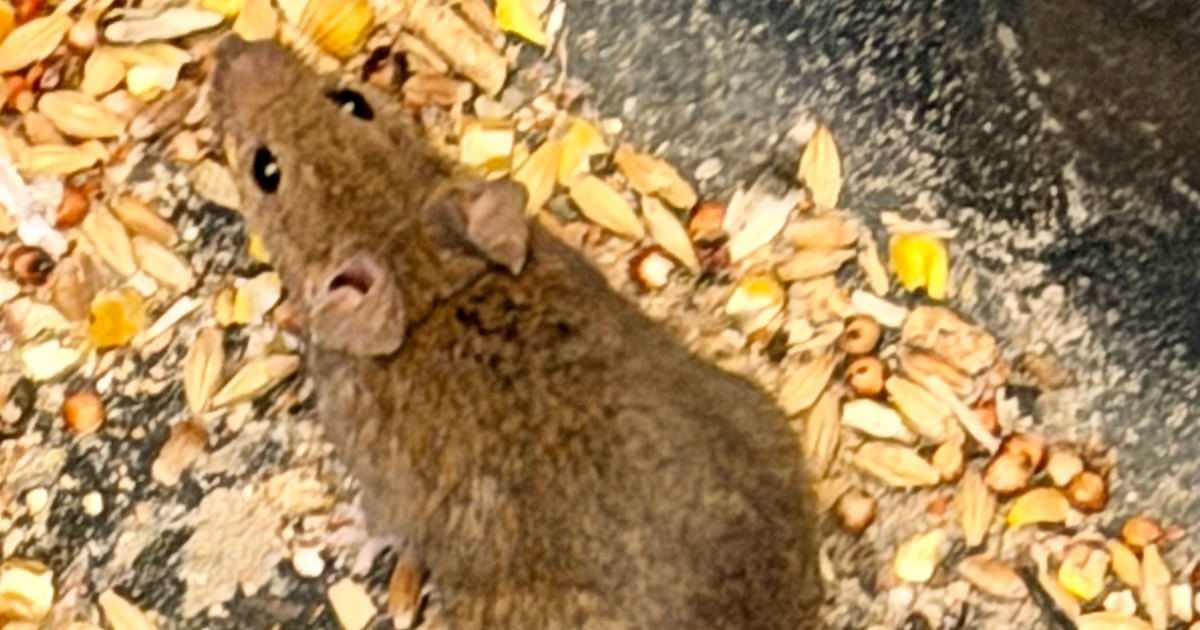
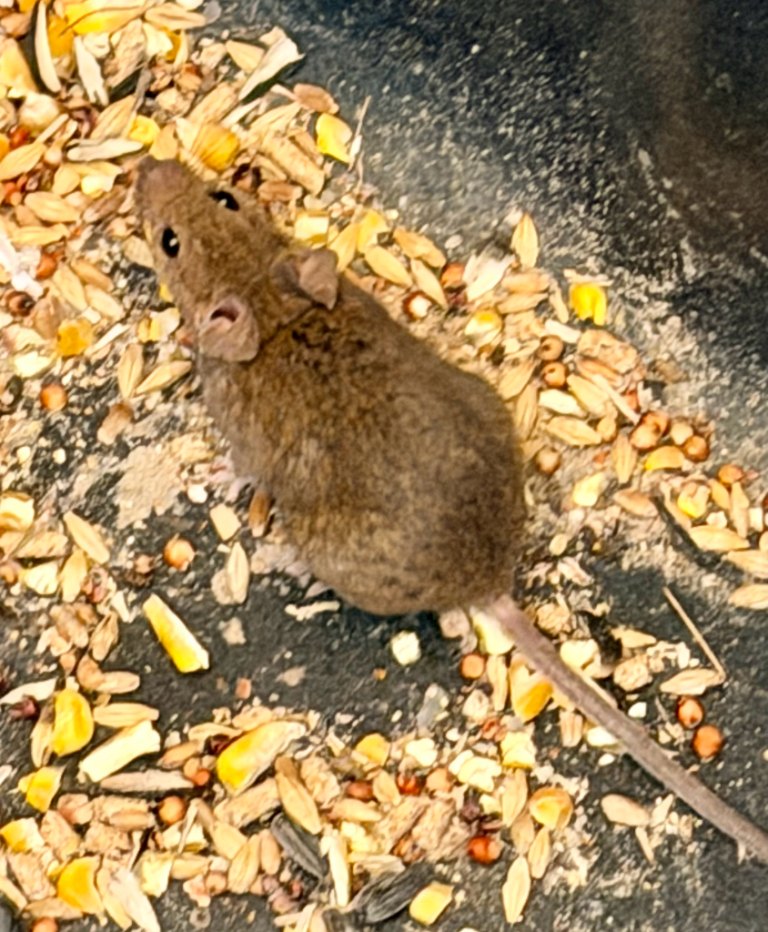
House mice are not fussy. UC IPM describes them as omnivores that will eat whatever food is available, including cereals, grasses, roots, seeds and insect larvae. ICWDM says they eat many kinds of food but prefer seeds and grain, and that foods high in fat, protein or sugar, such as bacon, chocolate, butter and nuts, may be preferred.
They also eat in an unusual way. UC IPM says a house mouse eats in about 200 small meals a night and may carry food away to eat somewhere more hidden. ICWDM calls them nibblers that sample new foods. That habit is why a few crumbs or one torn bag can feed a mouse, and why mice contaminate far more food than they eat, as ICWDM points out, through urine and droppings.
How much does a mouse eat? The two sources give different figures, so here are both: UC IPM says up to 20% of its body weight a day; ICWDM says about one-tenth of its body weight a day. Either way, it is a small amount, and a kitchen floor, a pantry shelf or a bag of birdseed can supply it.
The food sources the guides name
- Pet food. CDC says to put pet food away after use and not to leave food or water bowls out overnight. UC IPM advises feeding pets only as much as they will eat at one feeding. Cornell lists pet food left in bowls among the foods rodents take.
- Birdseed, grain and animal feed. NPIC names uncovered birdseed as an attractant. CDC says to keep grains and animal feed in thick plastic or metal containers with tight lids, and to keep bird feeders away from the house.
- Pantry goods and spills. Cornell says rodents will eat packaged food and spills in hard-to-clean areas, such as the sides of the stove or under its lid, and suggests checking the back of the pantry for spillage. CDC says to clean up spilled food right away and wash dishes and cooking utensils soon after use.
- Garbage and compost. NPIC lists uncovered garbage as an attractant. CDC wants inside trash in thick plastic or metal cans with tight lids, cleaned often, and compost bins at least 100 feet from the house. Cornell adds discarded food, compost and even pet feces to the list of things rodents eat.
- Outdoor cooking areas. CDC says to keep outside cooking areas and grills clean.
If mice have already been in your food, mouse droppings in kitchen cabinets explains what to throw away and what can be saved.
Water: less important than you think
A damp basement or a dripping tap is often blamed for mice. The sources say water matters less for mice than for rats. UC IPM says house mice do not need to drink water to survive, although they will seek liquids if their food is not moist enough. NPIC says the same. ICWDM puts a number on it: about 0.4 ounces of water a day, which mice often get by lapping condensation on pipes or drips from faucets.
So fixing leaks is worth doing, and Cornell lists condensation from refrigerator motors, water pipes and leaky connections as water sources to look for. But a dry house is not a mouse-proof house. Food and shelter matter more.
Shelter and nesting material
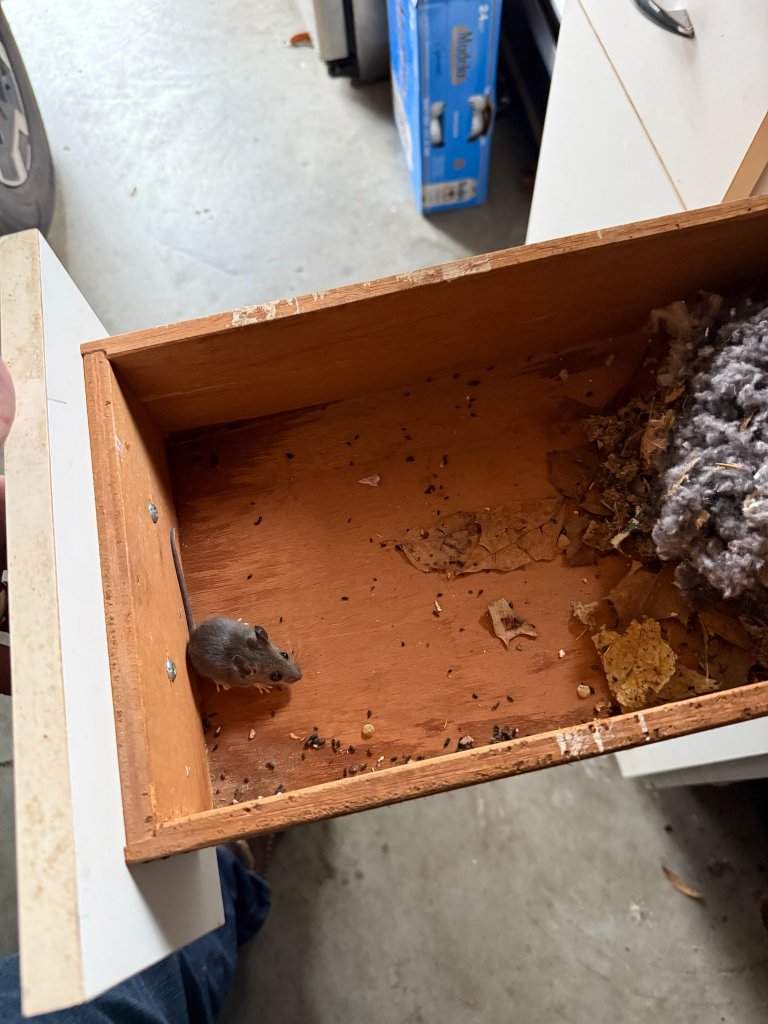
A mouse needs a protected place to rest and raise young, and it builds its nest from soft material it can shred. UC IPM says house mouse nests are built in sheltered places from finely shredded paper or other fibrous material. ICWDM says nests are usually 4 to 6 inches across and can be in any sheltered location.
Shelter may matter even more than food when a mouse first arrives. In a 2014 study at the USDA National Wildlife Research Center, wild house mice released into an unfamiliar enclosure looked for shelter first, before they investigated food smells.
- Cardboard, paper and fabric. NPIC says to remove materials mice may use for nesting or shelter, including cardboard boxes and newspapers.
- Clutter. NPIC advises reducing clutter inside and out, partly because it lets mouse activity go unnoticed. UC IPM says that if house mice have few places to hide, rest, build nests or rear young, they cannot survive in large numbers.
- Dark, undisturbed spots near food. Cornell says house mice may build a nest indoors near a food source, in places that are dark, undisturbed and warm, such as under cabinets, beside or inside stove walls and near appliance motors.
- Outdoors. CDC says to move woodpiles 100 feet or more from the house and raise the wood at least a foot off the ground, clear brush and weeds, and keep grass and shrubs within 100 feet of the house trimmed. UC IPM and NPIC both advise thinning plants that grow against the walls, because mice climb well.
What a nest looks like and where to find it is in mouse nest signs.
Warmth: why mice end up near appliances
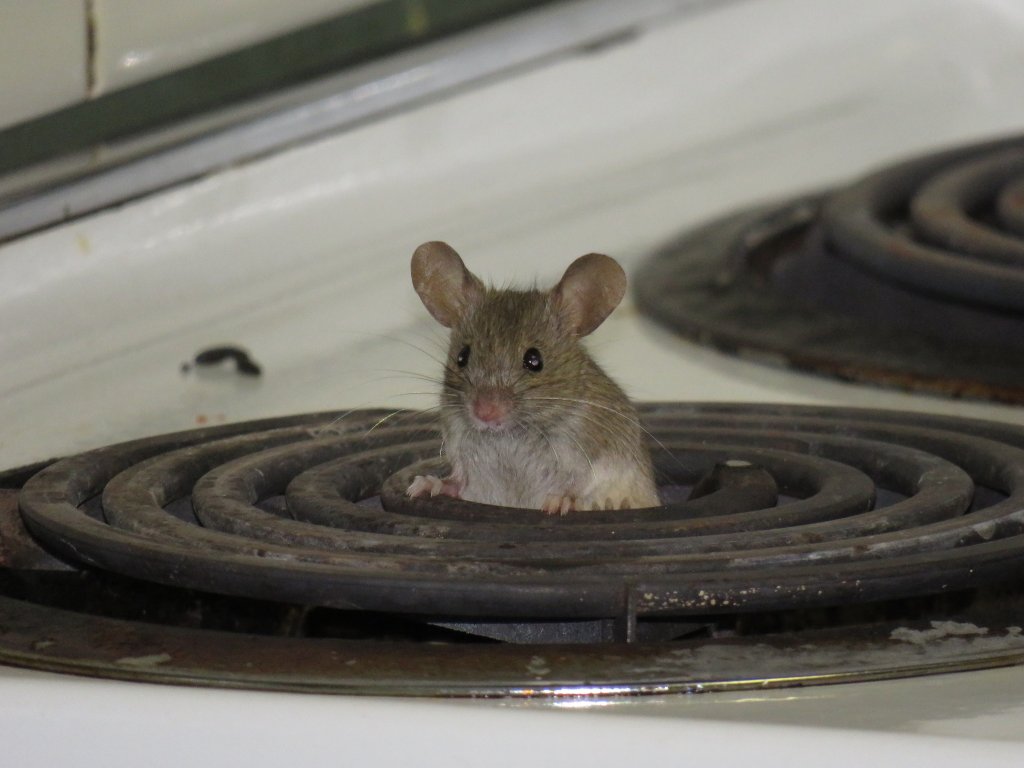
ICWDM says mice prefer to nest next to sources of heat, such as compressors, pilot lights and hot water heaters. Cornell points to the same places: inside stove walls and near appliance motors such as the refrigerator’s. So when you look for signs, check behind the refrigerator, under and inside the base of the stove, and around the furnace and water heater.
Colder nights are also why UC IPM sees house mice move indoors in autumn. But warmth alone is not the draw; a warm spot next to food and nesting material is.
Do smells attract mice?
Food smells do. The 2014 USDA study found that, among the food odors tested, wild house mice showed the most interest in bacon grease, peanut butter and cheese. UC IPM calls peanut butter very attractive to house mice, which is why it is the standard trap bait. More on baits is in best bait for mouse traps.
Do mice follow the scent of other mice? Mice do communicate through their droppings and urine. Cornell says droppings may be left as cues to navigate a new area or to identify a food source, and that removing droppings and cleaning surfaces can eliminate those cues. That is one more reason to clean up old droppings properly, wet and without sweeping, as described in how to clean mouse droppings.
What we did not find is evidence that urine marks or old droppings draw new mice into a house from outside. Most research on mouse scent marks is about how mice recognise and respond to each other in laboratory or enclosure settings. It is reasonable to clean up old signs; it is not proven that doing so keeps new mice from coming in.
Myths and common questions
Does a clean house keep mice out?
No. ICWDM says even the best sanitation will not eliminate mice, although it makes their signs easier to see. UC IPM says good sanitation will seldom completely control house mice, though poor sanitation can attract them and let them thrive in greater numbers. Cleanliness lowers the number of mice a house can support. Keeping them out depends on closing the gaps; see how to seal mouse entry points.
Do mice like cheese?
They show interest in its smell, but it is not special. In the 2014 USDA study cheese came third among food odors, after bacon grease and peanut butter. ICWDM says mice prefer seeds and grain. None of the official guides we checked recommends cheese as bait.
Do dirty dishes left overnight attract mice?
Food left out is food a mouse can reach. CDC’s advice is to wash dishes and cooking utensils soon after use and to clean up spilled food right away. A sink of dishes is one food source among many; pet bowls, open bags and crumbs under appliances count just as much.
Does pet food attract mice?
Yes. NPIC names pet food as an attractant, Cornell lists pet food left in bowls among what rodents eat, and CDC says not to leave food or water bowls out overnight. Store dry pet food in a tight-lidded metal or thick plastic container, not the paper sack.
Will a cat keep mice away?
Not reliably. UC IPM says some cats and dogs will catch mice, but warns that predators can make rodents more cryptic, giving a false impression that the population is down. ICWDM notes a cat may help keep new mice from settling in, but it will not remove the ones already there.
Are mice attracted to light, noise or a warm TV?
We found no official source that says so. What the sources describe drawing mice is food, shelter and heat sources such as appliance motors and water heaters.
Does peppermint oil or an ultrasonic device cancel out what attracts them?
The official sources we checked do not support either. See does peppermint oil repel mice and do ultrasonic pest repellers work.
What to change, room by room
This table brings together the steps CDC, UC IPM, NPIC and Cornell describe. It reduces what attracts mice; it does not remove mice already inside.
| Where | What to change | Source |
|---|---|---|
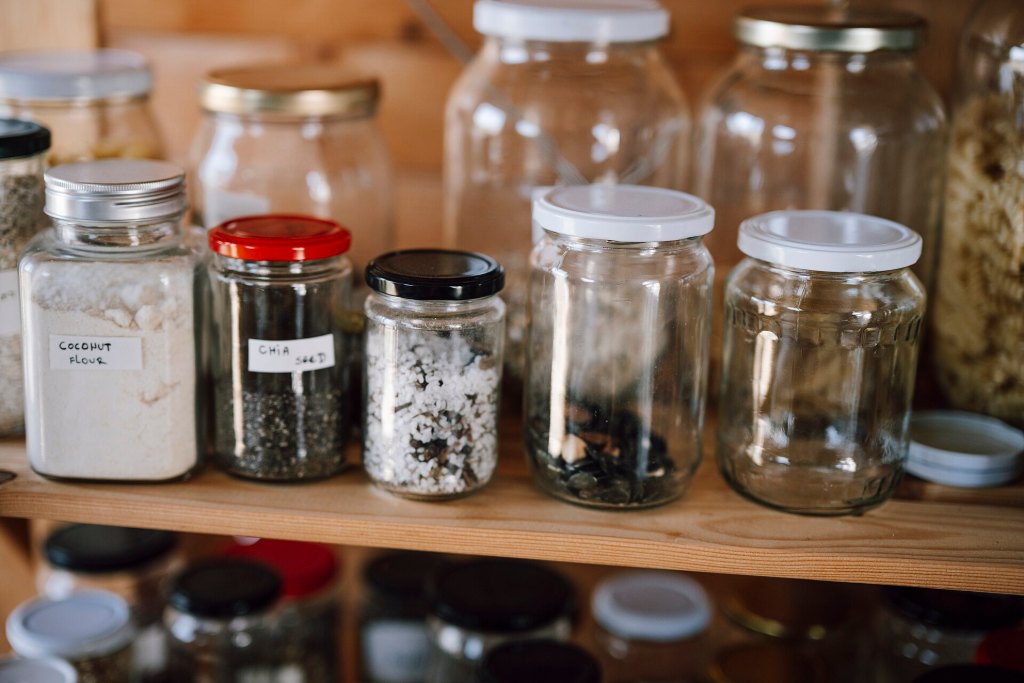
| Kitchen and pantry | Food in thick plastic, metal or glass containers with tight lids; clean spills at once, including beside and under the stove; wash dishes soon after use | CDC; Cornell |
| Pets | Feed only what they eat at one sitting; no food or water bowls out overnight; dry food in a sealed container | CDC; UC IPM |
| Trash | Thick plastic or metal cans with tight lids, inside and out; clean them often; take trash out regularly | CDC |
| Garage and storage | Birdseed, grass seed, grain and animal feed in tight-lidded metal or thick plastic bins; cardboard, newspapers and rags off the floor; less clutter | CDC; NPIC |
| Basement and utility room | Fix leaks and drips; remove cardboard and clutter, especially near the water heater and furnace, where mice like to nest | Cornell; NPIC; ICWDM |
| Yard | Compost at least 100 feet away; woodpiles 100 feet away and a foot off the ground; bird feeders away from the house, with squirrel guards; grills clean; brush cleared; grass and shrubs trimmed; plants thinned away from walls | CDC; UC IPM; NPIC |
| Vehicles | Abandoned vehicles removed or moved more than 100 feet away; check unused cars for nests | CDC; NPIC |
For a car, see mice in your car; for a garage, mice in the garage; for the kitchen, mouse in the kitchen.
If you already have mice
Removing what attracts mice is one step of several. CDC’s order is to find how they get in and seal those openings, trap the mice already inside, and clean up safely. The full sequence is in how to get rid of mice. One practical point from Cornell: when mice have plenty of other food, they are less likely to take a bait, which is another reason to remove food sources while you trap.
The bottom line
Mice are attracted by food they can reach, sheltered places with soft material for a nest, and warmth near appliances and heaters. They need very little of each and do not need standing water. Store food, pet food, birdseed and feed in tight-lidded containers, clean up spills, take away cardboard and clutter, and keep woodpiles, compost and dense plants away from the house. That makes a home less attractive, but only sealing the gaps keeps mice out.
Sources and verification
- CDC — How to Seal Up to Prevent Rodents (April 2024)Rodents attracted to food, water and nesting places; food containers; spills and dishes; pet food and bowls overnight; garbage cans; grills; compost at least 100 feet away; bird feeders and squirrel guards; grain and animal feed; abandoned vehicles; woodpiles 100 feet away and a foot off the ground; brush, grass and shrubs.
- CDC — How to Trap Up to Remove Rodents (April 2024)Find entry points, seal and trap.
- UC IPM — Pest Notes: House Mouse (July 2025)Omnivorous diet of cereals, grasses, roots, seeds and insect larvae; about 200 small meals a night; up to 20% of body weight a day; no need to drink water but will seek liquids; nests of shredded fibrous material; shelter and survival; poor sanitation attracts, good sanitation seldom controls; feeding pets one meal at a time; sealed food and garbage containers; thinning plants on buildings; peanut butter; predators and cryptic behaviour; autumn entry.
- ICWDM — House Mouse BiologyPreference for seeds and grain; high-fat, protein or sugar foods; nibbling and sampling; contamination; about one-tenth of body weight a day; water from food and about 0.4 ounces a day; nests 4 to 6 inches across; nesting next to heat sources.
- ICWDM — House Mouse Damage Prevention and Control MethodsEven the best sanitation will not eliminate mice; cats.
- NPIC — MiceUncovered garbage, pet food and birdseed as attractants; jars, tins or durable plastic; clutter; cardboard and newspapers; water and moist food; trimming vegetation; unused cars.
- Cornell CALS (NYS IPM) — Managing Mice and RatsRodents enter for food, water or shelter; packaged food, spills, pet food in bowls, discarded food, compost and pet feces; condensation and leaks; nests near food in dark, warm, undisturbed places; droppings as cues and cleaning to remove them; other food reduces bait uptake.
- Moulton R.S., Witmer G.W., Snow N.P. — Responses by wild house mice (Mus musculus) to various stimuli in a novel environment, Applied Animal Behaviour Science 159:99–106 (2014)USDA National Wildlife Research Center laboratory study; shelter sought first; among food odors, most interest in bacon grease, peanut butter and cheese (abstract).