
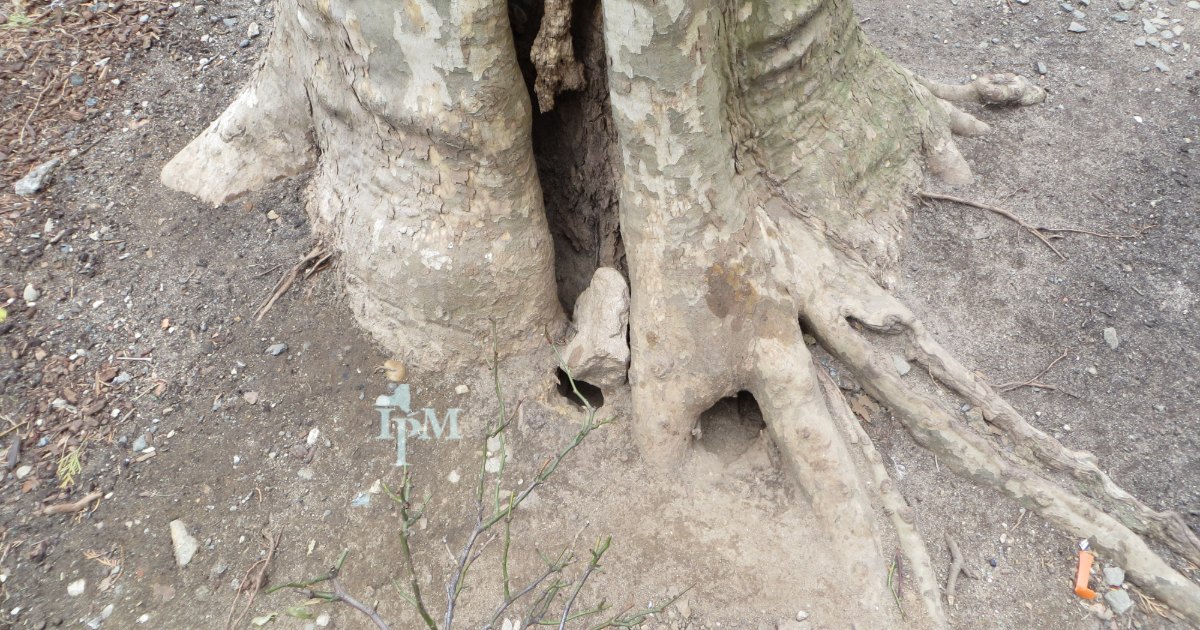
Signs and droppings
What Does a Rat Nest Look Like? Indoors, Underground and Up in the Trees
A rat nest is rarely a neat object you can point to. Indoors it is usually a loose pile of shredded paper, cloth or insulation tucked behind stored things; outdoors it is often out of sight at the end of a burrow or high in dense vines and trees. Which of these you find depends mostly on which rat you have. Here is what each kind looks like according to university and government pest guides, how to tell an active burrow from an old hole, and what to do when you find one.
Rat nests by where you find them
The two pest rats in the United States nest in different places. Norway rats are burrowers that stay low; roof rats climb and nest high (roof rat vs Norway rat; can rats climb walls). Both break the rule sometimes.
| Where | What you see | Usually | Source |
|---|---|---|---|
| Garage, storage, clutter | Shredded paper, cloth or other fibers behind boxes, in drawers, in undisturbed file boxes, in woodpiles and firewood stacks | Either rat | UC IPM; Cornell; NPS |
| Attic, wall or ceiling void | Torn-up insulation used as nesting material; nests often visible in the attic | Roof rat (Norway rats in ceiling voids are not uncommon) | UC IPM; ICWDM; NPS |
| In the ground | An open hole about 2 to 4 inches across, often along a foundation or under debris; the nest itself is underground | Norway rat (roof rats burrow occasionally) | ICWDM; NPS; UC IPM |
| Trees, shrubs, vines | A nest in dense ivy, vine-covered fences, palms, overgrown shrubs or citrus; often found only when the plants are trimmed | Roof rat | UC IPM; ICWDM; NPS |
None of the sources we checked gives a typical size for a rat nest. What they describe is the material and the place, so that is what to go by.
Rat nests indoors: what they are made of and where they are
Rats use whatever soft, fibrous material is nearby. UC IPM and ICWDM both say Norway rat nests may be lined with shredded paper, cloth or other fibrous material, and UC IPM adds leaves. In houses, UC IPM says rats shred insulation in walls and ceilings for their nests, and ICWDM notes that roof rats living in an attic and feeding outdoors may leave little damage beyond torn-up insulation and gnawed wiring.
The location is the clearer clue. UC IPM lists rat nests behind boxes, in cluttered garages, in drawers in the garage, in woodpiles and in firewood stacks among the signs of rats around a home. Cornell IPM shows rats nesting in file boxes left undisturbed near a reliable food source. Indoors, the National Park Service’s rat management manual says Norway rats nest inside walls, under equipment and in cluttered storage areas, usually on the lower floors, while roof rats prefer the upper levels: attics and ceiling and attic voids near the roofline. UC IPM names attics, wall voids, ceiling voids and cabinets for roof rats. In northern climates, ICWDM says rats prefer to nest near sources of heat. For rats in a garage, see rats in the garage.
A pile of shredded material on its own does not tell you whether it was a mouse or a rat; NPS describes their nest materials together. Look at what is around it. Droppings help most (mouse droppings vs rat droppings), and gnaw marks help too (rodent gnaw marks). If the evidence points to mice, mouse nest signs covers what their nests look like.
Rat burrows: what a Norway rat nest looks like outdoors
Outdoors, a Norway rat’s nest is usually underground. ICWDM says Norway rats usually build their nests in burrows below ground or at ground level, and Cornell says they prefer to burrow in soil. What you see from above is the hole, not the nest.
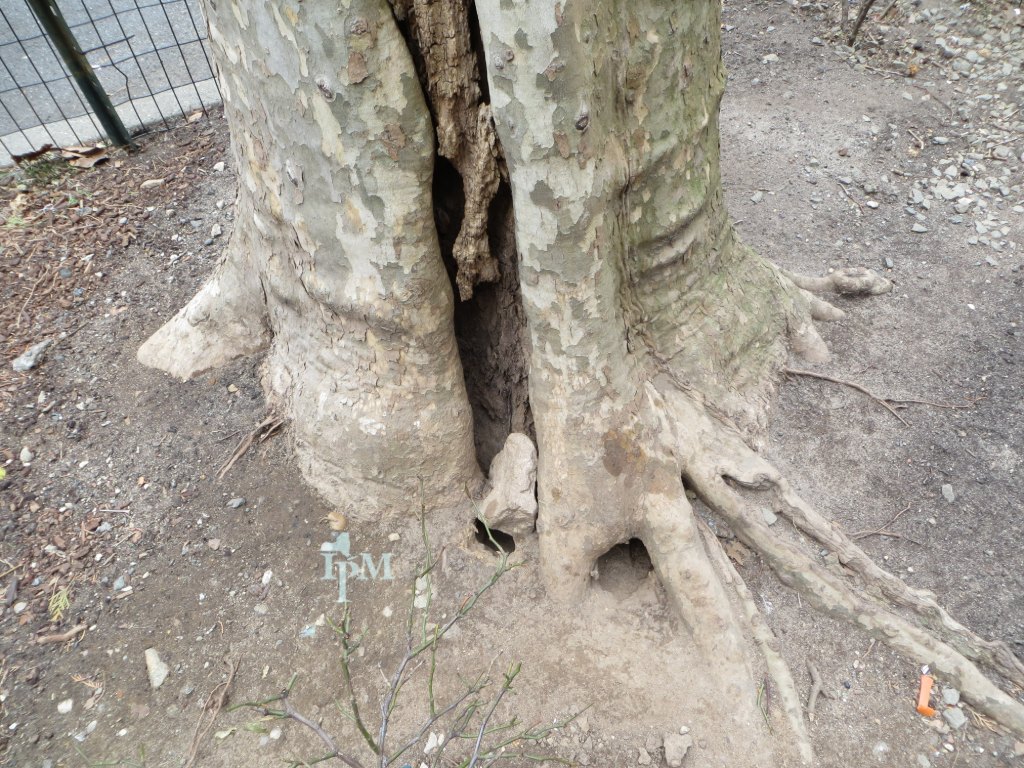
- The opening. ICWDM gives entrance holes of 2 to 3 inches in diameter. The NPS manual gives 2 to 4 inches for the main opening.
- Inside. NPS describes the burrows as shallow, generally less than 18 inches deep and 3 feet long, with a central nest. ICWDM says each female has her own nest chamber, but several Norway rats may share a burrow and raise young together.
- More than one way out. NPS says hidden “bolt holes” are used for emergency escapes; a University of Missouri Extension diagram shows the escape hole lightly covered with dirt. ICWDM and UC IPM both say burrows often have several entrances, and UC IPM warns they can extend beneath a house.
- Where. Along building foundations, beneath rubbish, trash piles or woodpiles, and around gardens and fields (UC IPM); under buildings and concrete slabs, along stream banks and around ponds (ICWDM); beneath compost piles and garbage cans, and under sheds and doghouses (UC IPM, ICWDM, Missouri Extension). UC IPM notes rats are more likely to burrow under compost that has meat, fish, eggs or eggshells in it. A hole at the edge of a slab is usually a burrow going under it, not a hole chewed through; see can rats chew through concrete?
- Paths to the hole. ICWDM says runs or burrows are found next to walls and buildings, along fences, and under bushes and debris. NPS describes outdoor runways as beaten paths in the ground where the grass is worn down.
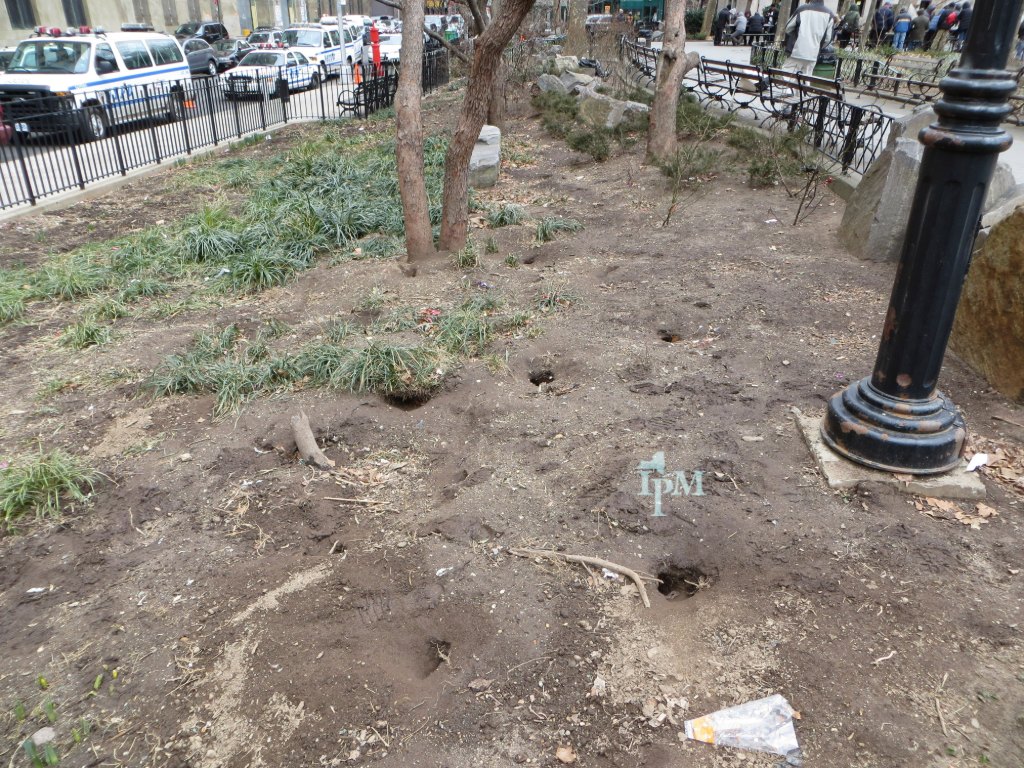
How a burrow fits with the other signs of rats is in do I have mice or rats? A hole in the yard is not automatically a rat: UC IPM describes vole burrow openings of about 1½ to 2 inches with runways through the grass (vole vs mouse). Mounds of loose soil and raised ridges in a lawn point to a mole, not a rat (vole vs mole).
Is the burrow or nest still in use?
ICWDM describes active holes as clean of debris, with rat hairs present around the entrance. The NPS manual gives a simple test: plug the openings loosely, and burrows that are reopened the following week are active. Doing the same for every hole you find also shows how many are in use.
Indoors, judge a nest the same way you judge any rodent activity: by fresh droppings, new gnawing and grease marks near it (fresh vs old droppings). Cornell adds one more clue to how close the nest is: young rodents do not travel far from where they were born, so seeing small, juvenile rats means the nest is probably nearby.
How far away the nest could be is wider for rats than for mice. UC IPM says the nightly range of a Norway rat runs from 100 to 500 feet from the nest, depending on conditions, though they stay as close as they can when food is near; ICWDM says they seldom travel more than 400 feet from their burrows. Rats in your yard may be nesting next door. The other signs to look for, indoors and in the yard, are in signs of rats in the house.
Roof rat nests in trees, vines and attics
Roof rats are the ones that nest up high. In UC IPM’s description, their usual homes are above the ground: trees, shrubs and thick growth like ivy. ICWDM says they often live in trees, including palms, or on vine-covered fences, and calls dense shrubbery, vine-covered trees and fences and vine ground cover ideal shelter for them. The NPS manual adds stacked lumber, woodpiles and overgrown landscaping.

These nests are easy to miss. NPS notes that roof rat nests are often visible in attics but outdoors may be found only when vegetation is trimmed, and ICWDM says that outdoors roof rats may leave little in the way of tracks, droppings, runs or burrows. ICWDM’s advice for citrus trees is to prune the low skirts and remove any nests built in the trees. Roof rats rarely dig burrows when there are places off the ground to nest, but UC IPM says they will sometimes burrow into soil or even live in sewers when elevated sites are not available.
In a house, roof rats nest in the attic and in wall and ceiling voids. Rats or mice in the attic covers the sounds, insulation damage and what to do there, and mice or rats in the walls explains why not to seal a hole while rats may still be behind it.
Rat nest, mouse nest, squirrel nest or woodrat house?
Other animals build nests in the same places. These are the differences the sources describe.
| Nest | What it is | Where | Source |
|---|---|---|---|
| Rat | Shredded paper, cloth, insulation, leaves; outdoors often inside a burrow | Norway rat low and in the ground; roof rat in attics, trees and vines | UC IPM; ICWDM; NPS |
| House mouse | Finely shredded paper or other fibrous material | Sheltered spots indoors, close to food | UC IPM; see mouse nest signs |
| Tree squirrel | A leaf nest (“drey”): a frame of sticks filled with dry leaves, lined with leaves, bark strips or husks; or a pile of leafy debris | Tree cavities and leafy nests in trees; also attics and soffits | ICWDM |
| Woodrat (packrat) | A large stick “house” with a nest of finely shredded plant material inside, often with collections of objects nearby (middens) | On the ground, in trees or rock outcrops; sometimes buildings and parked vehicles | ICWDM |
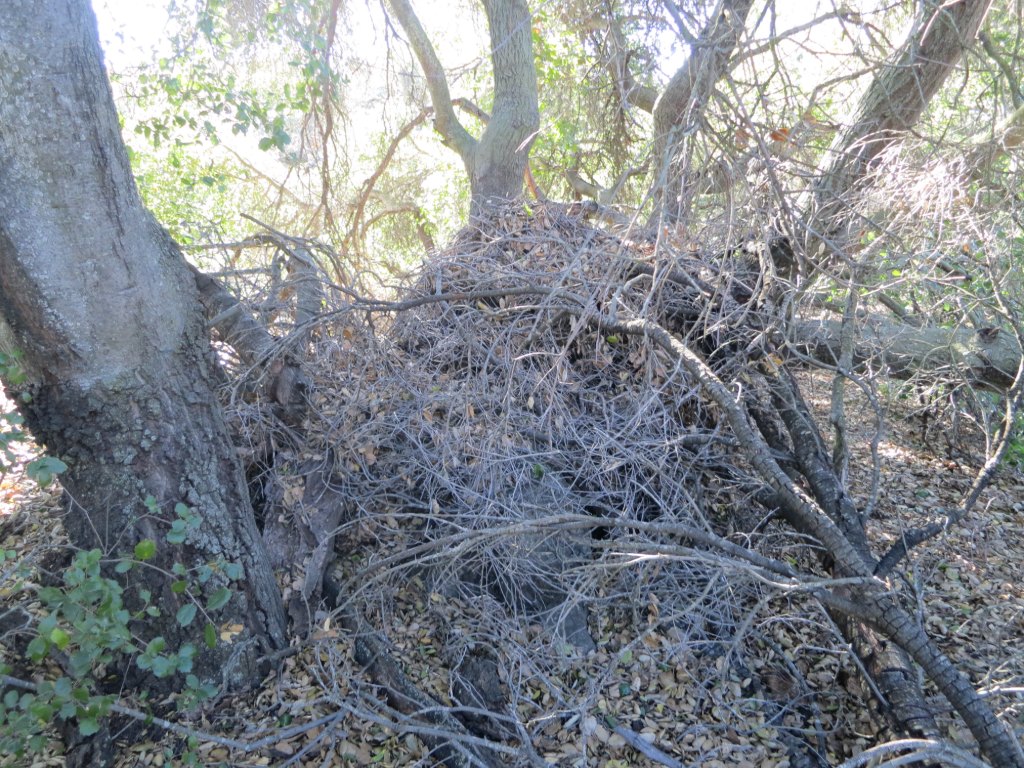
Going by these descriptions, a big bundle of sticks and dry leaves high in a tree fits a squirrel better than a rat. Noises help too: scratching in walls at night covers how rats, mice, squirrels and bats sound different.
What to do when you find a rat nest
- Deal with the rats first. The nest you found may not be the only one. NPS says rats may keep several “hotel” nest sites and move between them for days at a time. Trapping, sealing entry points and removing food are in how to get rid of rats; trap types and placement for each species are in best rat traps. Cornell says rat burrows are a sign that openings into buildings need sealing and outdoor food needs to be cut off.
- Do not sweep or vacuum the nest. Sweeping or vacuuming a nest is exactly what CDC tells you not to do, and the same goes for urine and droppings. In a closed shed, cabin or barn, CDC says to open the doors and windows for 30 minutes before cleaning.
- Wet it, bag it, throw it out. CDC’s steps for nests: wear rubber or plastic gloves; spray the nest and the area around it with a disinfectant and let it soak for 5 minutes or as the label says; put the nesting material in a plastic bag, tie it, put it in a second bag and tie that; then drop it in a lidded trash can that gets emptied often. Wash the gloves before taking them off, and your hands after. A bleach solution is 1.5 cups of household bleach in 1 gallon of water, made fresh. CDC also notes that fleas are common on rodents and suggests an EPA-registered insect repellent such as DEET on clothing, shoes and hands while handling nests. For a heavy infestation CDC lists coveralls, boots, goggles and a respirator. The rest of the area is cleaned as in how to clean mouse droppings.
- Remove the nest sites, not just the nest. Roof rats are strongly attached to their nest sites, and UC IPM warns they come back to them if the sites survive the cleanup. That means clearing the clutter, woodpile or overgrown vine where the nest was, or thinning it.
- Do not gas or smoke a burrow near the house. UC IPM does not recommend smoke and gas cartridges around homes, because Norway rat burrows can run under a house and have several open entrances, so the gas can get inside. More on burrows in the yard is in how to get rid of rats.
If the nest is in a wall, an attic full of insulation, a heating duct or a crawl space you cannot reach safely, or rats keep coming back, see when to call an exterminator.
Common questions about rat nests
How deep is a rat burrow?
The NPS rat manual says Norway rat burrows are generally less than 18 inches deep and about 3 feet long, with a nest in the middle. ICWDM and UC IPM add that a burrow often has several entrances and can extend under a building.
How big is a rat hole?
About 2 to 3 inches across according to ICWDM, and 2 to 4 inches for the main opening according to NPS. An active one is clean of loose debris and may have rat hairs around the edge (ICWDM).
Do rats go back to the same nest?
Often, yes. UC IPM says roof rats return to their nest sites if those sites are not removed. NPS says rats can also keep several secondary nests and move between them.
How many rats live in one nest?
We did not find a source that gives a number. ICWDM says each female Norway rat has her own nest chamber, but several rats may share one burrow and raise their young together.
Do rats nest in walls?
Yes. NPS lists the inside of walls among Norway rat nest sites, and UC IPM names wall voids for roof rats. See mice or rats in the walls.
What to take away
A rat nest looks like a messy wad of shredded paper, cloth, insulation or leaves, but where it is tells you more than what it is made of. Holes about 2 to 4 inches across along a foundation or under debris point to Norway rat burrows with the nest underground; nests in attics, dense ivy, palms or vine-covered fences point to roof rats. Check whether a burrow is active by plugging it loosely and looking a week later. Deal with the rats first, clean the nest wet, bag it twice, and remove the clutter or vegetation it was in, because rats come back to good nest sites.
Sources and verification
- UC IPM — Pest Notes: Rats (June 2025)Rat nests behind boxes, in cluttered garages, drawers in the garage, woodpiles and firewood stacks; Norway rat burrows along foundations, beneath rubbish or woodpiles, around gardens, under compost and garbage cans; nest linings of leaves, shredded paper and cloth; roof rats nesting in shrubs, trees and ivy and in attics, wall voids, ceiling voids and cabinets; roof rats occasionally burrowing or living in sewers; shredding insulation for nests; foraging 100 to 500 feet from nests; strong nest-site affinity of roof rats; burrows with several entrances extending under a house and why smoke and gas cartridges are not recommended near homes.
- ICWDM — Norway Rats, Norway Rat Biology and Prevention and ControlEntrance holes 2 to 3 inches; active holes clean of debris with rat hairs at the entrance; runs and burrows along walls, fences and under bushes and debris; nests in burrows below or at ground level, lined with shredded paper or cloth; a nest chamber for each female in shared burrows; nests near heat in northern climates; burrows under buildings, slabs, along streams and ponds; seldom more than 400 feet from burrows; multiple entrances; rats beneath doghouses.
- ICWDM — Roof Rat Biology, Roof Rats and Prevention and ControlNesting off the ground and rarely burrowing; trees including palms, vine-covered fences, dense shrubbery and vine ground cover; torn insulation in attics; little outdoor sign; pruning citrus skirts and removing nests in trees.
- National Park Service — Integrated Pest Management Manual: Rats (archived copy, May 2010)Norway rat burrows generally less than 18 inches deep and 3 feet long with a central nest; main opening 2 to 4 inches; hidden bolt holes; indoor nest sites of Norway and roof rats; roof rat nests in trees, vine-covered fences, stacked lumber, woodpiles and overgrown landscaping, visible in attics or found when vegetation is trimmed; several “hotel” nest sites; outdoor runways; burrows reopened the following week as active.
- University of Missouri Extension — Controlling Rats (G9446)Diagram of a Norway rat burrow with entrance, nest and an escape hole lightly covered with dirt; burrows under compost piles, garbage cans, outbuildings and doghouses.
- Cornell CALS (NYS IPM) — Mouse and Rat Biology and Behavior and Managing Mice and RatsNorway rats prefer to burrow in soil; rats nesting in undisturbed file boxes near food; burrows as a sign to seal openings and reduce outdoor food; juvenile rodents staying close to the nest.
- CDC — How to Clean Up After RodentsNot vacuuming or sweeping nesting materials; ventilating sheds and cabins for 30 minutes; gloves; disinfectant soak of 5 minutes; double bagging; bleach solution of 1.5 cups per gallon; fleas and insect repellent; protective equipment for heavy infestations.
- ICWDM — Tree Squirrel Biology and Woodrat BiologySquirrel leaf nests (dreys) of sticks and dry leaves and leafy nests in soffits; woodrat stick houses with a nest of shredded plant material inside, and middens.