
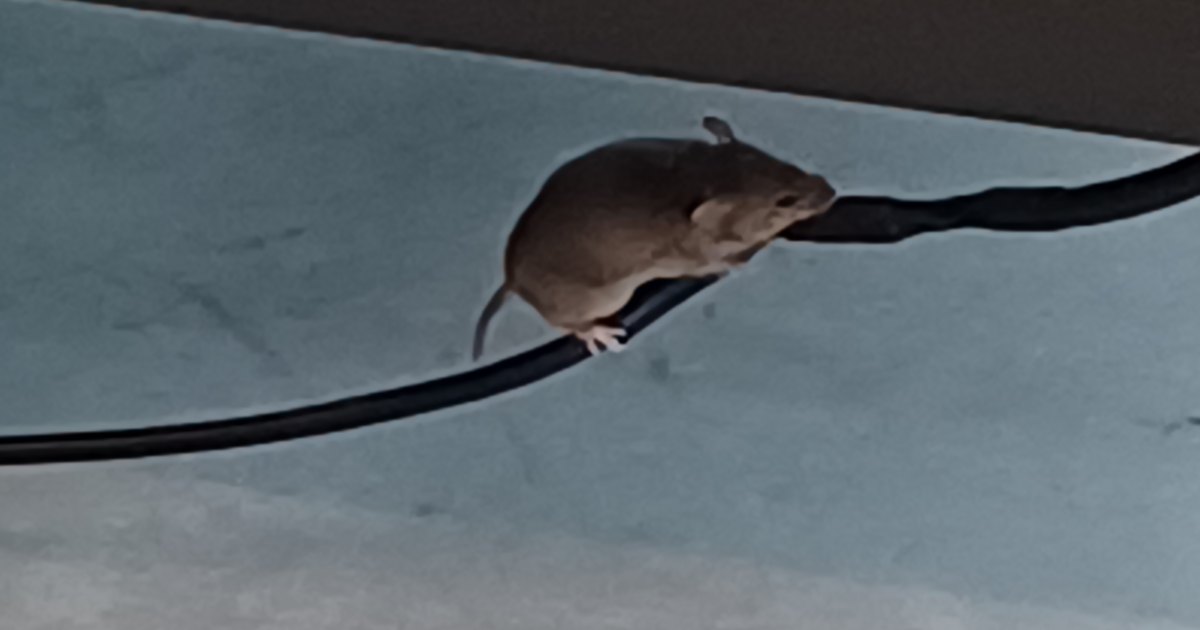
Evidence and signs
Can Mice Climb Walls? What They Can Climb, What Stops Them and Why It Matters
Yes: house mice are strong climbers, and that changes where they can get in, where they travel indoors and where traps should go. University guides describe what mice climb and what slows them down, but they are also clear about what nobody has measured. Here is what the sources say, and what it means in a real house.
Short answer: yes. UC IPM calls house mice “excellent climbers” that “can run up any rough vertical surface” and run along wire cables and ropes. ICWDM says they can walk up wood or concrete “unless the surface has a slick finish.” They can also jump 10 to 12 inches onto a flat surface (table). That is why mice reach openings high on an outside wall, travel inside wall cavities, and turn up on shelves and ledges. No official source we found gives a maximum climbing height. What stops a climbing mouse is a sealed opening, not a tall wall (what stops them).
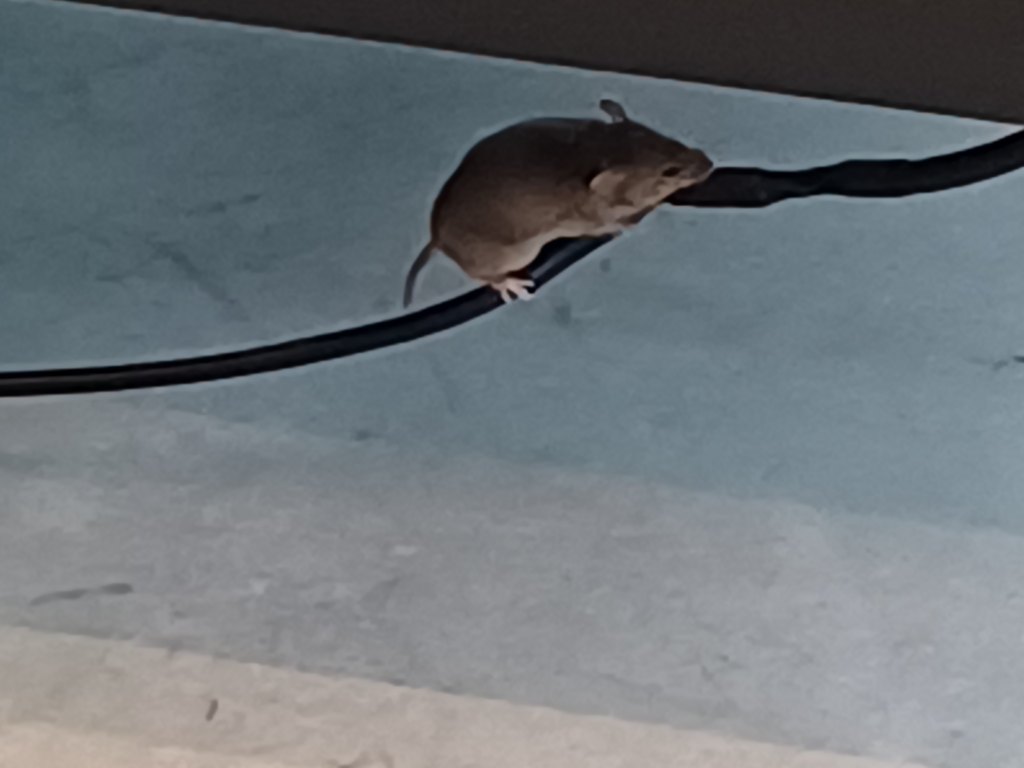
What a house mouse can climb, according to the sources
| Surface or movement | What the source says | Source |
|---|---|---|
| Rough vertical surfaces | “Excellent climbers” that “can run up any rough vertical surface” | UC IPM; NPIC also calls mice excellent climbers |
| Wood and concrete | Can walk up them, “unless the surface has a slick finish” | ICWDM |
| Slick-finished surfaces | The exception in the sentence above; no figures given | ICWDM |
| Wire cables and ropes | Run horizontally along them | UC IPM |
| Plants on buildings | Thin or remove plants next to or climbing up buildings, “since house mice are excellent climbers” | UC IPM |
| Jumping up | Up to 12 inches from the floor onto a flat surface | UC IPM |
| Jumping up | Up to 10 inches from a flat surface | ICWDM |
The two jump heights come from different guides; we give both rather than averaging them.
What we did not find in UC IPM, ICWDM, NPIC, CDC or Cornell: a maximum climbing height, how mice do on particular indoor surfaces such as painted drywall, tile, glass or plastic, or how far a mouse can fall without injury. Claims you may see elsewhere about exact heights or “mouse-proof” wall finishes are not from these sources.
Climbing inside the walls and ceilings
Mice that can run up any rough vertical surface (UC IPM) can also travel inside wall cavities, and Cornell notes that mice make nests inside walls. ICWDM lists the sounds that are common where mice live: gnawing, climbing in walls, running across the upper surface of ceilings, and squeaks. It adds that their movements, especially on drop ceilings, can be loud.
So noise that moves up and down inside a wall, or across the ceiling above you, fits mice. Scratching in walls at night covers how to tell mice from rats, squirrels and bats by sound, and mice or rats in the walls covers how to get them out without sealing them in.
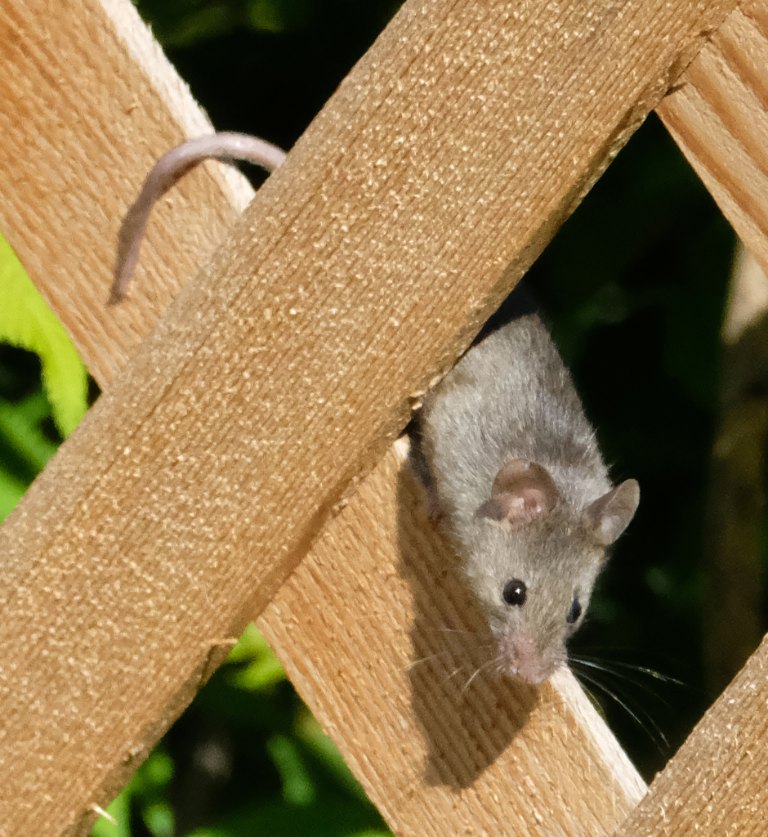
Climbing the outside wall: why high openings count
Because mice climb rough walls and run along cables, a gap under the eaves or around a cable high on the wall is a real entry point, not just the gaps at ground level. CDC’s checklist of places to inspect outside includes the roof “among the rafters, gables, eaves, and soffits,” attic and crawl space vents, and holes for electrical, plumbing, cable and gas lines. Mice need only a gap about 1/4 inch across, the width of a pencil (CDC).
Plants make the climb easier. UC IPM says to thin or remove plants next to or climbing up buildings, and NPIC says to trim or remove dense vegetation, including tree limbs, near buildings. How do mice get in your house? shows how to find the opening they are using.

Food higher up is not out of reach either. CDC advises keeping bird feeders away from the house and using squirrel guards to limit access by squirrels and other rodents. For what draws mice to a house in the first place, see what attracts mice.
Signs that mice are climbing in your house
- Smudge and rub marks. ICWDM says smudge and rub marks may appear on beams, rafters, pipes, walls and other parts of a building, left by oil and dirt rubbing off mouse fur along routes they use often. One of its photos shows a black smudge line where mice climbed concrete to reach a hole in metal. NPIC describes brown or gray smudges on walls and other surfaces where mice travel.
- Gnaw marks up high. ICWDM says gnawing may be visible on doors, ledges, stored materials and other surfaces wherever mice are present, not only at floor level. See rodent gnaw marks.
- Tracks. Footprints and tail marks may show on dusty surfaces (ICWDM), for example on top of cabinets or appliances that are rarely cleaned. A light dusting of flour or talc on a suspected route shows fresh ones; the method is in how to find their way in.
- Sounds. Climbing in walls and running across ceilings (ICWDM).
- Droppings and nests off the floor. Droppings in upper cabinets or on shelves, or a nest in a wall, attic or high storage, suggest mice are using routes above the floor. Mouse droppings in kitchen cabinets and mouse nest signs cover both.
What climbing means for where traps go
Most traps still belong on the floor, along walls: UC IPM says to set them close to walls so mice pass directly over the trigger, and in secluded spots, behind objects, in dark corners and where droppings have been found. But mice that climb use elevated routes too. UC IPM says traps can also be set on ledges, on top of pallets of stored materials, or anywhere else mice are active where children, pets and other animals are unlikely to reach them. ICWDM notes that mice can live for long periods inside a stack of stored feed without going to the floor, so traps may have to go on top of the stacks.
Jumping matters for trap layout as well: UC IPM says pairs of traps set 1 to 2 inches apart can catch mice that jump over obstacles. Trap types and numbers are in best mouse traps; kitchen placement is in mouse in the kitchen.
What stops a climbing mouse
A tall wall does not. A closed opening does. The practical steps from the sources:
- Seal openings at every height. UC IPM says to seal cracks in foundations and around openings for pipes, vents and utility cables with metal or concrete, and to close small cracks with wire screen or coarse steel wool that mice cannot chew through. Include the roofline and attic vents from CDC’s list. Materials and methods are in how to seal mouse entry points; if mice may already be inside a wall, read mice in walls first.
- Cut back the ladders. Thin or remove plants on or against the building and trim tree limbs near it (UC IPM, NPIC).
- Keep food in containers, not just up high. Because mice climb shelves and jump onto counters, height alone does not protect food. CDC advises thick plastic, metal or glass containers with tight lids.
- Do not count on smooth surfaces. ICWDM’s “slick finish” exception explains why mice struggle on some surfaces, but none of our sources recommends a smooth wall finish or coating as a way to keep mice out of a home.
The full plan, from finding the way in to knowing they are gone, is in how to get rid of mice.
Mice vs rats: who climbs better?
Both climb. Among rats, UC IPM describes roof rats as agile climbers that usually nest above ground and run along utility lines and fence tops, while Norway rats usually stay low but are not uncommon in ceiling voids. See roof rat vs Norway rat and rats or mice in the attic. Voles, often called field mice, are the opposite: UC IPM calls them poor climbers that usually stay outdoors (vole vs mouse).
Questions people ask
Can mice climb smooth walls?
The sources only go so far. ICWDM says mice can walk up wood or concrete “unless the surface has a slick finish,” and UC IPM says they run up any rough vertical surface. We found no official test of particular indoor surfaces such as painted drywall, tile or glass, so we cannot say which ones stop a mouse.
How high can a mouse climb?
No source we checked gives a maximum height. UC IPM’s description, any rough vertical surface, plus their habit of running along cables, is why guides tell you to check the roofline, eaves and attic vents, not only the ground level.
How high can a mouse jump?
Up to 12 inches from the floor onto a flat surface, according to UC IPM; ICWDM gives up to 10 inches.
Can mice climb up to the second floor or into the attic?
Yes, by climbing rough exterior walls, plants or cables, or by traveling up inside wall cavities. CDC lists the roof area and attic vents among the places to check for gaps. For the attic itself, see rats or mice in the attic.
Do mice climb inside walls?
Yes. ICWDM lists climbing in walls and running across ceilings among the common sounds of mice, and Cornell notes that mice nest inside walls.
The bottom line
House mice climb rough surfaces such as wood and concrete, run along cables and ropes, and jump 10 to 12 inches onto a flat surface. ICWDM’s one exception is a slick finish; no source gives a maximum height. In practice that means mice reach openings high on the outside wall, travel inside walls and ceilings, and use ledges and shelves. Look for smudge marks, high gnawing and tracks on dusty surfaces, put some traps on the elevated routes, and stop them by sealing openings at every height and cutting back plants against the house.
Sources and verification
- UC IPM — Pest Notes: House Mouse (July 2025)Excellent climbers that run up any rough vertical surface; running along wire cables and ropes; jumping up to 12 inches onto a flat surface; thinning plants next to or climbing up buildings; sealing cracks and utility openings; trap placement along walls, on ledges and on pallets; paired traps for jumping mice.
- ICWDM — House Mouse Damage Prevention and Control MethodsWalking up wood or concrete unless the surface has a slick finish; jumping up to 10 inches; mice living in stacked feed without going to the floor; traps on top of stacks.
- ICWDM — House MiceSmudge and rub marks on beams, rafters, pipes and walls; smudge line from mice climbing concrete; gnaw marks on doors and ledges; tracks on dusty surfaces; sounds of climbing in walls and running across ceilings; loud movement on drop ceilings.
- NPIC — MiceMice are excellent climbers; brown or gray smudges where they travel; trimming dense vegetation and tree limbs near buildings.
- CDC — How to Seal Up to Prevent Rodents1/4-inch opening; places to inspect, including rafters, gables, eaves, soffits, attic and crawl space vents and utility line holes; food containers; bird feeders and squirrel guards.
- Cornell CALS (NYS IPM) — Mouse and Rat Biology and BehaviorMice nest inside walls.
- UC IPM — Pest Notes: Rats and UC IPM — Pest Notes: VolesRoof rats as agile climbers and Norway rats in ceiling voids; voles as poor climbers.